
REVIEW · ZANZIBAR
Zanzibar: Spice Farm Tour with Traditional Cooking Class
Spice grows here, not just in souvenir bags. This six-hour outing from Stone Town takes you into rural Unguja, where you can see cardamom, ginger, vanilla, coffee, nutmeg, cinnamon, and lemongrass growing in the soil. I like the hands-on cooking class and the clear look at how spices are planted, harvested, and used in Swahili food.
I also like the personal scale. Some bookings have had only two participants, with local family members helping cook and guide the farm walk. The main point to consider is timing: the tour is sold as six hours, but one recent booking lasted about three and a half hours, which suited that couple but could disappoint you if you expect a full half-day outing.
Key points to know before you book
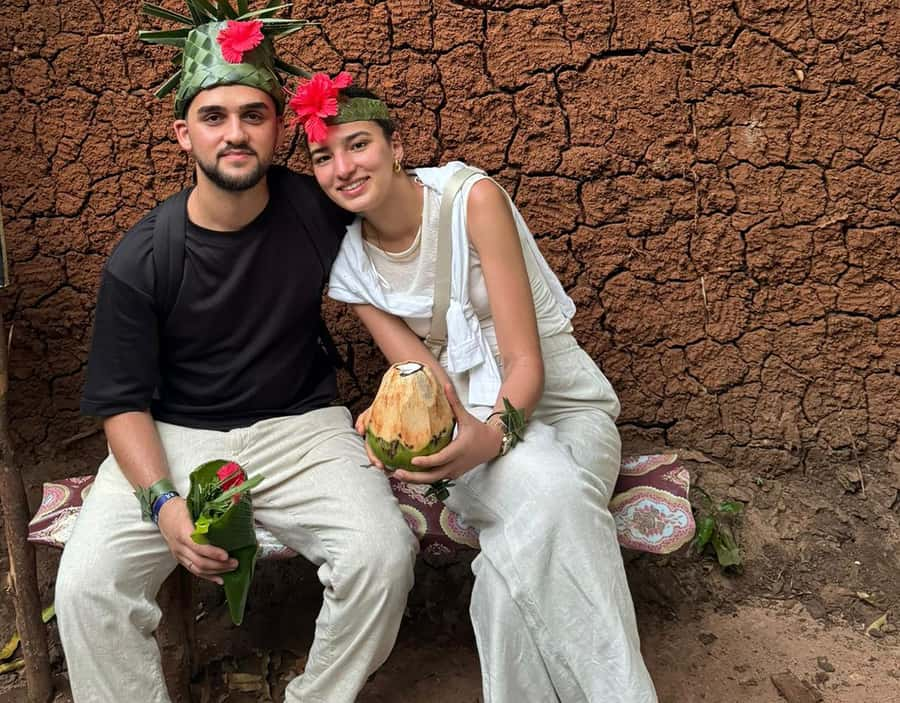
- Coconut milk is made by hand: The cooking lesson can include preparing coconut milk rather than simply watching a chef work.
- The farm visit is practical: You see several spice plants and learn how long they take to become ready for use.
- The cooking class is local and participatory: You receive ingredients to cut and prepare, then eat the finished Swahili meal.
- The coconut climber is part of the show: You may see a local coconut climber, sometimes called a butterfly, working high in a palm.
- The group may be very small: Some departures have been arranged for only two people, creating a relaxed family feel.
- Bring cash for spice purchases: Spices are available at the farm, but you should be ready to negotiate the price.
From Stone Town to Zanzibar’s spice country
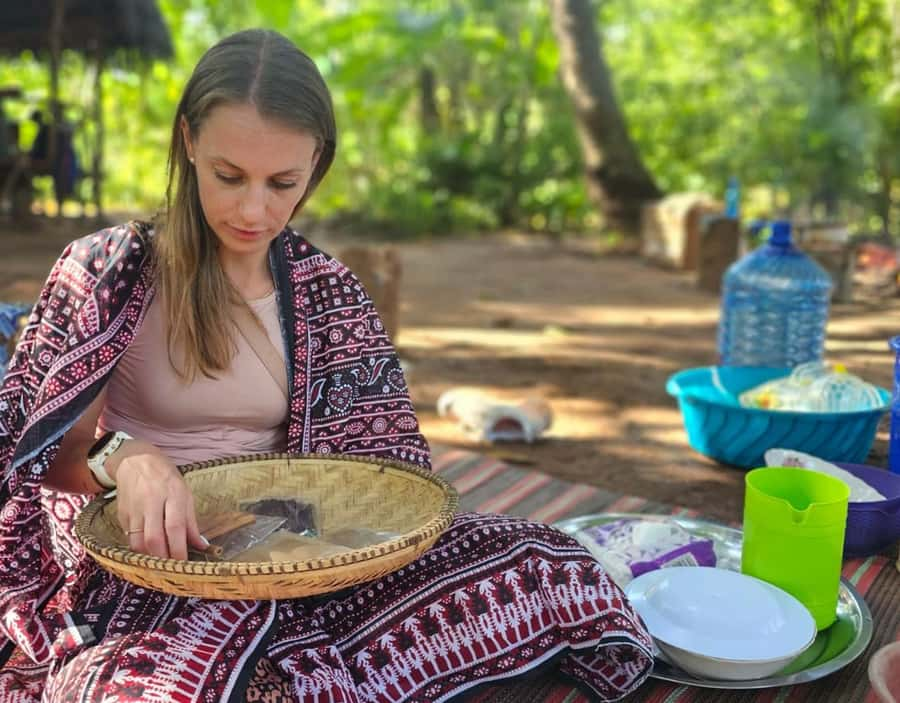
Your pickup and return point is Stone Town, with transport available around Stone Town hotels. That makes this a useful outing if you are staying in the old city and want a change from carved doors, narrow lanes, and waterfront walks.
The exact starting time depends on availability, so check before booking. A recent small group was able to shift its departure later, showing that the operator can sometimes be flexible. Do not treat that as guaranteed, but it is worth asking if your morning plans are tight.
The drive takes you away from the city and toward a small rural farm. The value of the transport is simple: you do not need to arrange a separate taxi, negotiate a private driver, or work out how to reach the farm yourself. Pickup, return transport, entrance fees, a guide, and bottled water are included in the $47 price.
That price is fair if you use the full program. You are paying for transport, a guided farm visit, a cooking lesson, food preparation, and a meal, not just a quick walk past spice plants. If your visit ends after three and a half hours, the value depends more heavily on the quality of the cooking session and how much time you spend at the farm.
More Spice Farm Tours around Zanzibar:
- Zanzibar: Prison Island, Stone Town, & Spice Farm Tour
★ 4.5 · 579 reviews - Full-Day Private Stone Town +Spice Farm and Prison Island Tour
★ 4.5 · 216 reviews - Zanzibar: Stone Town & Spice Farm Tour with Lunch
★ 4.5 · 97 reviews
Seeing cardamom, ginger, and vanilla in the soil
The farm visit is the heart of the outing. You move through three parts of the farm and see several tropical spices and plants, including cardamom, ginger, vanilla, coffee, nutmeg, cinnamon, and lemongrass.
This matters because spice names on a market stall can feel abstract. Here, you get to connect the dried pods, bark, roots, and beans with the living plants that produce them. Your guide explains how each crop is planted, how it is harvested, and how long it takes before it is ready for use.
Do not expect a formal botanical garden with polished signs at every turn. The appeal is a working rural setting and direct explanation from a local guide. You may need to ask questions if you want more detail about a particular plant, but that conversational format can be more useful than a memorized museum display.
The guide’s explanation also gives context to Zanzibar’s old nickname, Spice Island. The island’s position in Indian Ocean trade made spices important to merchants and local communities for centuries. This visit gives you a small, grounded view of that wider story through the crops themselves.
Vanilla and coffee are especially interesting because many people know the finished products but have never seen the plants. Ginger, cinnamon, and lemongrass help you understand how much of Swahili cooking depends on fresh scent as well as heat. Cardamom and nutmeg add another layer, linking everyday food with the trading past that shaped Zanzibar.
The coconut climber and the working palm

One of the more unusual parts of the visit is the chance to see a coconut climber, locally described as a butterfly. You may also see young coconuts during the stop.
This is more than a photo opportunity. Coconut is a basic ingredient in coastal East African cooking, and seeing how it is gathered connects the farm visit to the meal later in the day. The description does not promise a set performance or a particular climbing schedule, so think of this as something you may see rather than a timed stage show.
If you have never watched someone climb a coconut palm, it can be one of the most memorable moments of the farm walk. Keep your attention on the guide’s explanation too, since the point is not only the climb but also the role of coconut in local food and daily work.
Comfortable shoes are important. This is a rural farm visit, not a paved city attraction, and you will be walking between plants and activity areas. The supplied information does not specify the exact walking conditions, so sturdy casual footwear is the sensible choice.
Cooking with a local family in Zanzibar style
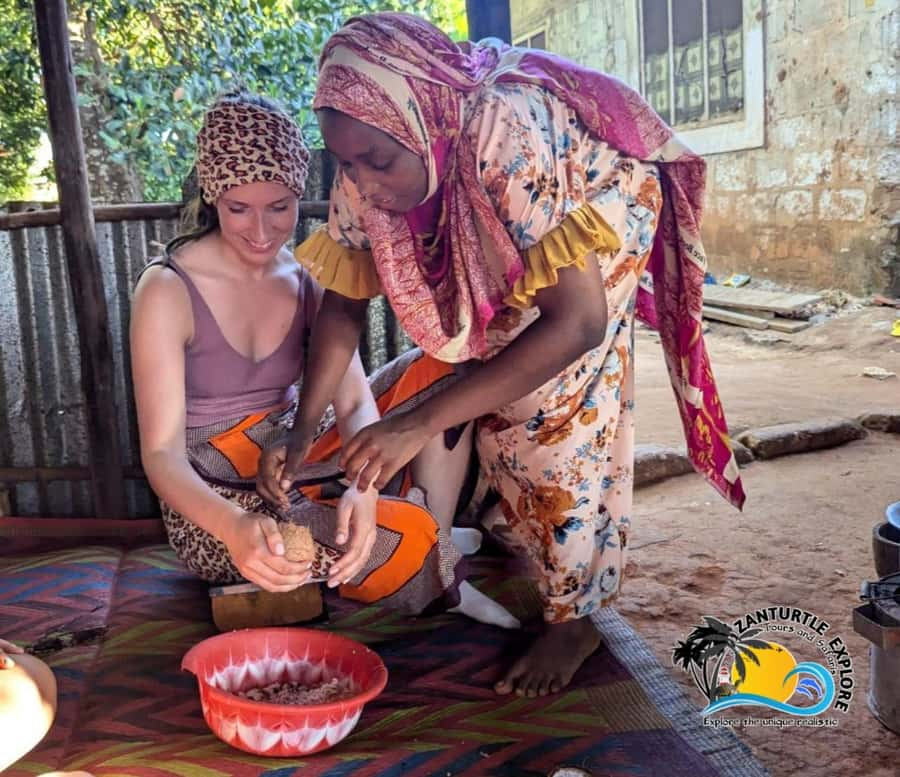
After the farm walk, the focus shifts from seeing ingredients to using them. A local woman acts as the chef and gives instructions on how to handle the ingredients and prepare original Zanzibar-style dishes.
This is where the outing becomes more personal than a standard tasting stop. You are not simply handed a plate and told what is in it. You may be given vegetables or other ingredients to cut, then take part as the dish comes together.
One recent small booking included a local African mama, a driver, and another family member helping with the cooking. The arrangement felt informal and family-run, with the participants working beside the people leading the class. That kind of setting can be a real advantage if you want conversation and participation rather than a polished demonstration.
The cooking can include making coconut milk yourself. That small task helps explain why coconut appears so often in coastal food. You see the ingredient in a more complete form, from the palm and young coconut to the preparation of the milk and its use in the meal.
The finished food is Swahili cuisine, with the spices from the farm providing the central link between the two parts of the day. Once the meal is ready, you sit and eat with the chef and talk about the food and local cooking.
A practical note: a recipe was not provided during one recent visit. If you enjoy recreating dishes at home, bring a small notebook or use your phone to record the ingredients and steps, if the chef is happy for you to do so. The lesson may teach you the method, but you should not assume you will leave with written instructions.
More Cooking Classes around Zanzibar:
- Zanzibar: Spice Farm Tour with Traditional Cooking Lesson
★ 4.8 · 77 reviews - Zanzibar: Spice Farm Tour with Traditional Cooking Class
★ 4.6 · 16 reviews - A private half day spice farm with a cooking lesson
★ 5.0 · 13 reviews - Zanzibar: Spice Farm Tour and Cooking Class with Lunch
★ 4.2 · 11 reviews
How the timing can affect the value
The advertised duration is six hours. That gives you a reasonable expectation of transport, a thorough farm walk, a cooking session, and time to eat.
Actual timing can vary. One recent outing took about three and a half hours, with the shorter schedule working well for that couple. A shorter visit is useful if you have limited time in Zanzibar or want to combine the activity with other plans. It is less appealing if you deliberately set aside most of a day for a slow farm and food program.
Ask about the expected schedule before you go. In particular, confirm how much time is planned for the cooking class, how long the farm walk usually lasts, and when you expect to return to Stone Town. That simple check helps you judge the $47 price more accurately.
The small group size can also change the pace. Some bookings have included only two participants, and a private-feeling session makes it easier to ask questions or take a larger role in preparing the meal. The tradeoff is that the exact group arrangement is not guaranteed, so do not book solely on the promise of a private class.
Buying spices at the farm
You will likely have a chance to buy spices at the farm. This can be convenient, especially after you have seen the plants and learned how the ingredients are used.
Bring cash for personal purchases. The farm does not appear to operate like a fixed-price supermarket, so be prepared to negotiate. That is normal in many local market settings, but it can make the buying process feel less straightforward if you prefer printed prices.
A sensible approach is to decide what you actually want before you start shopping. Vanilla, cinnamon, coffee, cardamom, ginger, nutmeg, and lemongrass may all be available, but the provided details do not specify exact package sizes, quality grades, or prices. Ask what you are buying, how it should be stored, and how long it will keep.
The spice stop is optional in spirit, even if it is part of the setting. You do not need to purchase something to justify the tour. The farm walk and cooking lesson are the main reasons to come.
Languages, practical details, and small drawbacks
A live guide can be provided in English, French, Italian, or German. That range is useful for couples or families who do not want to follow a food lesson through a language barrier.
Bottled water is included, but you should still bring cash for personal needs and any spice purchases. Comfortable shoes are listed as essential, and they make sense for walking around a working farm. Alcohol and drugs are not allowed.
The tour offers free cancellation up to 24 hours before departure for a full refund, and you can reserve now and pay later. Those terms help if your Stone Town plans are still shifting. Starting times vary, so check availability rather than assuming a fixed morning departure.
The main weakness is not the content. It is the lack of precision around timing and the possibility that the cooking class may not provide a written recipe. You may also find the sales stop a little awkward if you are not comfortable negotiating. None of these points ruins the outing, but they are worth knowing before you pay.
Who will enjoy this half-day outing?
I would choose this for anyone who wants to connect Zanzibar’s food with the plants that produce it. It suits curious eaters, amateur cooks, first-time visitors, and people who prefer a small local operation to a large scheduled group.
Families can enjoy the variety, especially if children are interested in plants, climbing palms, or helping with food preparation. The farm walk gives the day movement, while the cooking class provides a clear activity rather than just another sightseeing stop.
It is also a good choice if you are staying in Stone Town and have already seen the main historic streets. The trip adds rural scenery, agriculture, and food without requiring a separate overnight stay.
You may want another activity if you dislike walking on rural ground, do not want to participate in cooking, or need a tightly timed six-hour schedule. The tour is built around conversation and practical involvement. It is not designed as a fast checklist of photo stops.
Should you book the Zanzibar spice farm and cooking tour?
Book it if you want food, farming, and local contact in one outing, and if a flexible, family-run setting appeals to you. The strongest parts are the range of spices, the chance to make coconut milk, the shared Swahili meal, and the possibility of a very small group.
Before confirming, ask about the day’s expected length and the exact cooking menu. If you are happy with a program that could run shorter than six hours, the $47 cost offers good value through transport, entry, guiding, instruction, and lunch or dinner. If you need a strict full-day schedule or a printed recipe, set your expectations carefully.
FAQ
Where does the spice farm tour begin and end?
Pickup is from Stone Town, and the tour returns to Stone Town. Transport is available around Stone Town hotels.
How long does the tour last?
The stated duration is six hours. One recent booking lasted about three and a half hours, so you should confirm the expected timing when you book.
What spices can I see at the farm?
The farm visit can include cardamom, ginger, vanilla, coffee, nutmeg, cinnamon, lemongrass, and other tropical spices.
Is cooking included?
Yes. A local woman acts as the chef and teaches you how to prepare Zanzibar-style food. The class can include cutting ingredients and making coconut milk.
What languages are available for the guide?
Guides are available in English, French, Italian, and German.
What does the $47 price include?
The price includes pickup and drop-off around Stone Town hotels, entrance fees, a tour guide, and bottled water. Personal purchases and other personal needs are not included.
What should I bring?
Bring comfortable shoes and cash. Cash is useful for personal needs and for buying spices at the farm.
More Workshops around Zanzibar
- Zanzibar: Walking Spice Farm with Local Cooking Class
★ 4.4 · 9 reviews - Zanzibar Cooking Class [Swahili food test ] and Spice farm Private tour
★ 4.5 · 6 reviews - Zanzibar: Spice Farm Tour with Cooking lesson
★ 4.5 · 4 reviews - Spice Farm Tour with Traditional Cooking Lesson
★ 5.0 · 3 reviews
Just added around Zanzibar
- Zanzibar: Spice farm tour with Zanzibar fruits tasting★ 3.8 · 7 reviews
- Zanzibar: Stone Town City Tour and Spice Farm with Lunch★ 3.7 · 33 reviews
- ZANZIBAR, Stone town tour, Prison Island & Spice farm★ 5.0 · 11 reviews
- Zanzibar: Walking Spice Farm with Local Cooking Class★ 4.4 · 9 reviews
- Zanzibar: Spice Farm Tour with Traditional Cooking Class★ 5.0 · 2 reviews
- Zanzibar: Spice Farm Tour with Traditional Cooking Class★ 4.6 · 16 reviews
- Zanzibar: Spice Farm Tour with free testing fruit and Spice★ 5.0 · 2 reviews
- Zanzibar: Spice Farm Tour with Lunch & Tropical Fruits★ 4.9 · 10 reviews
Spice Farm Tours, farm by farm.
Full-Day Private Stone Town +Spice Farm and Prison Island Tour
Read our review →
Zanzibar full day Jozani forest + Spice farm and stone town
Read our review →

STONE TOWN, PRISON ISLAND AND SPICE FARM ( Lunch included )
Read our review →
Zanzibar Private Spice Farm and Stonetown Tour(Include Lunch)
Read our review →
Other lists this farm sits on