
REVIEW · CRETE
Traditional Olive Oil Making at Spiridi Olive Oil Farm – Crete
Press olives the old-fashioned way. At Spiridi Olive Oil Farm, you do not simply watch a demonstration. You weigh olives, push a stone mill, fill sacks with olive paste, and use a wooden press to extract oil. I especially like the hands-on work and the chance to enter a 130-year-old olive oil factory, though the short 90-minute format means you should not expect a full-day farm visit or meal.
The small group, capped at 10 people, gives each person a fair chance to handle the equipment. I also like that the experience ends with both an olive oil tasting and a 100ml bottle of the family’s handmade extra virgin olive oil. The main consideration is price: at $78.60 per person, this is not a bargain if you only want a quick tasting.
Key points before you book
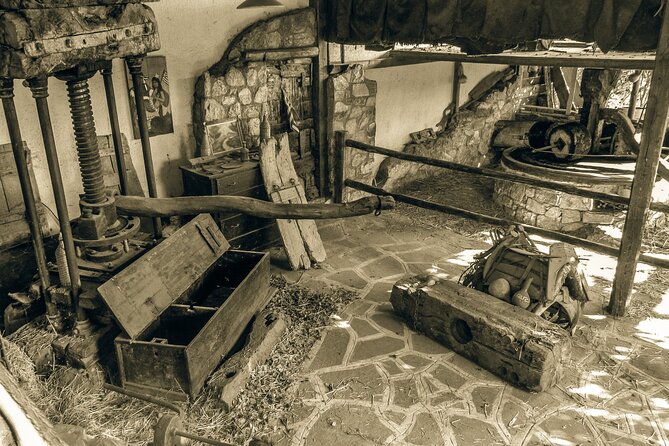
- You operate the old machinery: You weigh olives, push the stone mill, load sacks, and work the manual wooden press yourself.
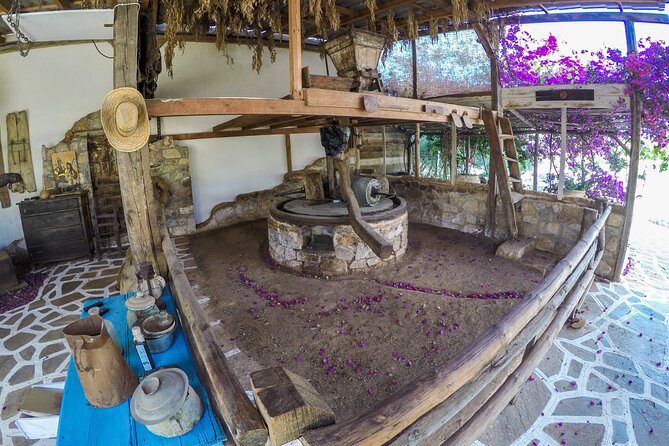
- The setting is genuinely historic: The workshop takes place inside a 130-year-old olive oil factory at Spiridi Olive Oil Farm.
- The group stays small: A maximum of 10 people helps keep the activity practical rather than turning it into a lecture.
- You get two ways to taste the product: The visit includes an olive oil tasting and a 100ml bottle of family-made extra virgin olive oil.
- The workshop starts at 10:30 a.m.: Plan for about 1 hour and 30 minutes, ending back at the farm.
- English support is available: The activity is offered in English, with help throughout each step.
Why this Cretan olive oil workshop feels different
Many food activities ask you to sit at a table, listen for a while, and sample the finished product. This one puts you into the process. You are not merely shown how olive oil was made in the past. You help recreate the work with the same basic tools.
That distinction matters. Pushing a stone mill gives you a physical sense of the effort involved. Filling large sacks with crushed olives makes the process feel less like a polished food presentation and more like farm work. The manual press then brings the steps together in a clear, satisfying way.
The workshop also gives you a direct connection to Cretan food heritage. Olive oil is not treated as a decorative extra here. It is the central product, and the old factory gives the activity a useful setting. The age of the building adds context without requiring a long museum-style explanation.
I would choose this visit if you want a short cultural activity that keeps your hands busy. It suits people who learn by doing, families with older children, and anyone curious about how a familiar kitchen ingredient is produced.
More Farm Tours around Greece:
- Mykonos: Farm, Ano Mera Village, and Beaches Guided Tour
★ 4.4 · 1,283 reviews - Crete: Road-trip to Lasithi, Zeus Cave & Olive Mill Farm
★ 4.4 · 451 reviews - Heraklion: Olive Farm Tour with Tasting of Local Delicacies
★ 4.9 · 411 reviews
Inside the 130-year-old olive oil factory
The farm is at Spiridi Olive Oil Farm, Cretan Olive Oil Farm, Agios Nikolaos 721 00, Greece. The workshop begins there at 10:30 a.m. and finishes at the same meeting point, so you do not need to arrange a separate end location.
The old factory is the main attraction before the work even begins. A 130-year-old olive oil factory is not the same as a modern industrial mill. The traditional equipment makes the process visible. You can see where physical effort once shaped every stage of production.
The setting should appeal to you if you prefer working machinery and family traditions to a standard tasting room. It also gives children something real to do. One account of the activity notes that even children were able to have a go, with supervision and a running explanation. That makes this a better family choice than an activity built around sitting quietly for an hour.
Still, keep your expectations sensible. The factory is the focus, not a large museum with extensive displays. The supplied information does not promise a long historical tour, detailed farming walk, or broad collection of exhibits. The value comes from taking part in the process.
Weighing olives and starting the work
The first practical step is weighing the olives. This may sound simple, but it gives you a useful starting point. You begin with a quantity of fruit and then follow it through the production stages.
From there, you crush the olives in a stone mill. The important detail is that you push it yourself. That physical action is what separates this workshop from a standard explanation of traditional production.
You should expect the pace to be guided by the family and their staff. They help at every stage, so you are not left guessing how to use the old equipment. The small group limit matters here. With no more than 10 people, there is a better chance for everyone to participate instead of watching one person do all the work.
If you have limited mobility, consider this part carefully. The activity involves pushing equipment and transferring material into large sacks. The information confirms that service animals are allowed, but it does not provide detailed accessibility information for the machinery or work area. Ask the provider before booking if you need specific assistance.
From crushed olives to a manual wooden press
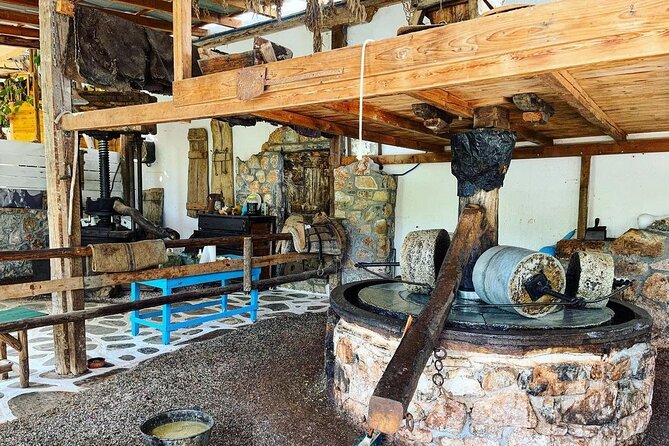
Once the olives are crushed, you transfer the olive paste into large sacks. This is another task that sounds easy until you picture the quantity and texture involved. It helps you understand that traditional production relied on repeated physical handling rather than a quick mechanical button press.
The olive paste then goes into a manual wooden press. You use the press to extract the oil. Again, the point is participation. You are shown the sequence, then given a role in carrying it out.
I like this part because it connects cause and effect. You have already weighed the olives and crushed them. Now you see how that paste produces oil. The process is straightforward enough for a first-time visitor, but it still feels substantial because you have taken part in each stage.
The family provides guidance throughout the workshop. The experience is offered in English, and the supplied information describes a running explanation and supervision during the work. That combination should help you follow both the practical steps and their place in Cretan food traditions.
Do not expect to leave with a large quantity of oil. The included gift is a 100ml bottle. It is best viewed as a compact souvenir and a useful reminder of the activity, not as the main financial return on the ticket price.
Same fields, a different sort of morning:
- Lassithi, Zeus Cave, Olive Mill Farm & Knossos Combo Tour
★ 4.6 · 404 reviews - Naxos Perivoli Farm Experience & Wood-fire Cooking Class
★ 5.0 · 339 reviews - Cretan Cooking Class and Olive Oil Tasting
★ 5.0 · 178 reviews - Melanes: Naxos Perivoli Farm & Cooking Class with Wood Fire
★ 5.0 · 177 reviews
Tasting the finished oil
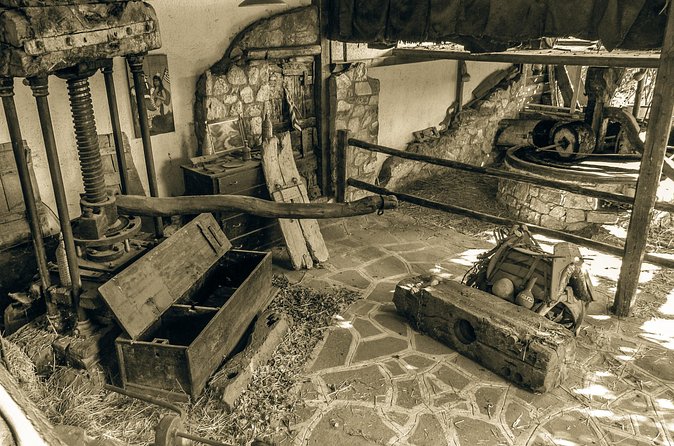
The workshop ends with an olive oil tasting. This is the moment when the earlier work becomes a food experience rather than only a demonstration of old tools.
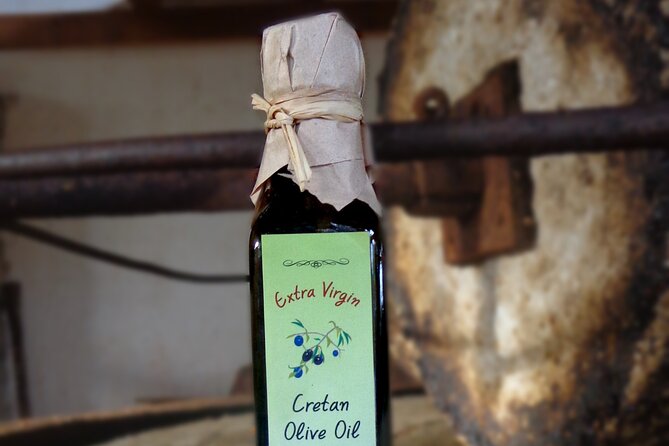
You can taste the family’s extra virgin handmade olive oil after seeing how it was produced. That gives the sample more meaning than a tasting offered without context. You have followed the oil from olives to pressing, then compare the finished product with what you have just learned.
A 100ml bottle is included as a gift. You can take it home, provided your travel plans allow it. The information describes it as the family’s extra virgin handmade olive oil, so it is a direct product of the farm’s own presentation rather than a generic souvenir.
Food and drinks are not included apart from drinking water. Plan to eat before or after the activity if you need more than a sample. The tasting should not be treated as breakfast or lunch.
There is also a small shop at the farm, with items available to buy and taste. The exact range is not specified, so I would treat this as an optional extra rather than a reason to book. It may be useful if you want to take home additional local products, but the included 100ml bottle already covers the basic souvenir.
What the 90-minute schedule really gives you
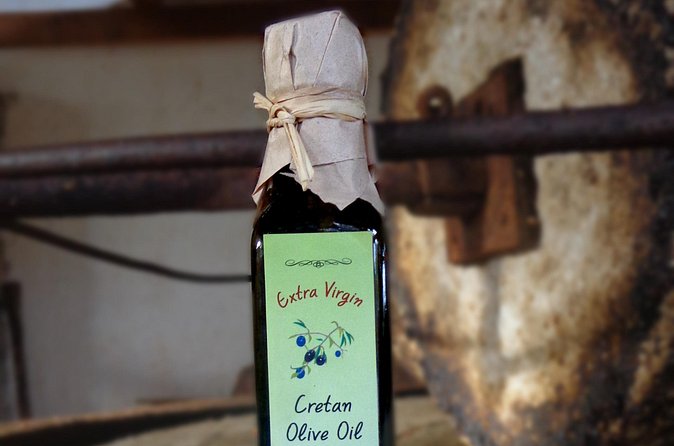
The official duration is about 1 hour and 30 minutes. Another account describes the hands-on demonstration as lasting about one hour, so the exact pace may vary. Allow the full 90 minutes rather than planning a tight connection immediately afterward.
The schedule is compact enough to fit into a morning in Agios Nikolaos. Starting at 10:30 a.m. leaves time for another activity later in the day. It also avoids turning the olive oil workshop into an all-day commitment.
At the same time, the short format limits how far the experience can go. You will take part in the core production steps, but the information does not include an olive grove walk, a farm lunch, or a long session on olive varieties. If you want a broad food day, the farm also offers other activities such as wine tasting, cheese making, and cooking, but those are separate offerings and should not be assumed to form part of this booking.
One useful nearby idea comes from the practical experience of the site: after the workshop, you may be able to walk downhill toward town and the archaeological museum. That walk is not included in the activity, and the distance or route is not provided, so check locally before setting out. Still, the combination could work well if you want to pair a morning food activity with a cultural stop.
Is $78.60 per person fair value?
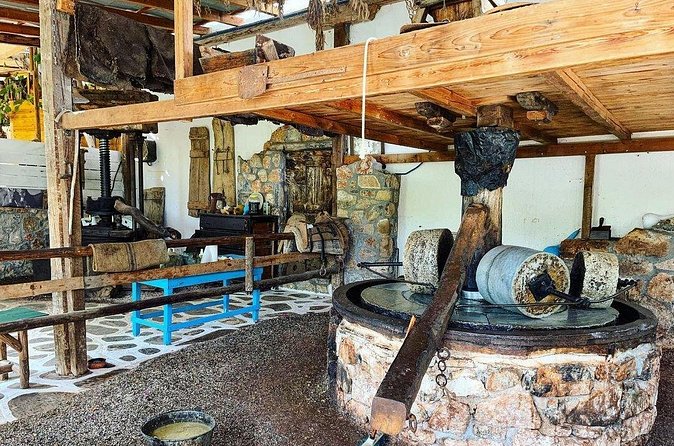
At $78.60 per person, the price is high for a 90-minute activity if you measure value by duration alone. You are not paying for a large meal, transport, or a full day of farm activities. Food and drinks beyond water are excluded.
The stronger case for the price is the level of participation. You get access to a 130-year-old factory, direct help during the traditional production process, an olive oil tasting, and a 100ml bottle of handmade extra virgin oil. The group limit of 10 also protects the hands-on nature of the visit.
For two people, the included bottle and tasting do not transform the activity into a shopping bargain. You are paying for access, instruction, equipment, and a cultural experience. I would compare it with the cost of other short food workshops in Crete rather than with the price of buying a bottle of olive oil.
The price makes the most sense if you value authentic participation over sightseeing volume. If you only want to taste oil, you can likely find less expensive options. If you want to understand traditional production by physically doing the work, this workshop offers something more specific.
A good choice for families and small groups
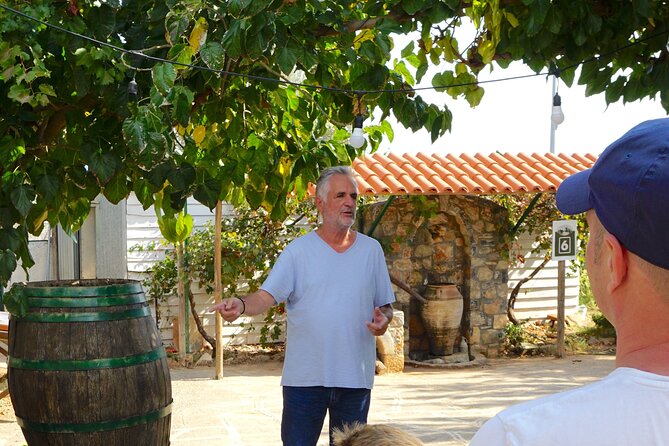
The activity is particularly suited to families with children who enjoy practical tasks. The machinery and manual steps give younger participants something concrete to watch and try, while the family’s supervision keeps the work organized.
It also works well for a small group of friends. One account describes a wider day at the farm that combined olive pressing with wine tasting, cooking, goat cheese making, and milking goats. Those extra activities are not included in the olive oil workshop described here, but they show that the farm can suit groups looking for a broader food-focused visit.
The small group maximum is important for friends traveling together. You are less likely to lose the experience in a crowd, and each person should have a chance to handle the equipment. The activity is offered in English, which removes one common barrier for international visitors.
Service animals are allowed. Beyond that, physical access details are limited. Because you push a stone mill and handle large sacks, contact the provider in advance if you have concerns about strength, balance, or movement.
A farm with more than one kind of food experience
Spiridi Olive Oil Farm is not limited to olive oil. The farm also offers wine tasting, cheese making, honey activities, cooking, and an electronic tour using provided tablets. These additions can make the site appealing if your group has mixed interests.
Do not assume they are included in the $78.60 olive oil booking. The stated inclusions cover the olive oil workshop, tasting, water, factory access, and the 100ml bottle. The other activities should be booked or confirmed separately.
The tablet-based electronic tour may be useful after the hands-on work if you want more information at your own pace. It gives the visit a second layer without changing the central character of the workshop. Still, the core appeal remains the old factory and the physical production steps.
Tassos and the staff are described as professional and accommodating, with strong English support. That is useful when you are booking a small activity with several moving parts. A clear welcome and good supervision matter here because the workshop depends on everyone taking turns with the equipment.
Practical details to know before arrival
You receive confirmation at the time of booking. The meeting point is Spiridi Olive Oil Farm, also identified as Cretan Olive Oil Farm, in Agios Nikolaos. The activity begins at 10:30 a.m. and returns to the same point.
A mobile ticket is available, so you can keep the booking on your phone. Bring water if you prefer, although drinking water is included. Since no meal is provided, arrange food separately if you expect to be hungry afterward.
The experience requires a minimum number of participants. If that minimum is not reached and the activity is canceled, you are offered another date or experience, or a full refund.
You can cancel for a full refund up to 24 hours before the start time. Changes or cancellations made less than 24 hours before the start are not accepted for a refund. The cut-off follows local time in Crete.
Who should book this olive oil experience?
I would recommend it to you if you want a short, active introduction to Cretan food traditions. It is especially suitable if you enjoy old machinery, family-run activities, and learning through your hands rather than through a long talk.
Families can benefit from the practical format. Couples and small groups may also appreciate the 10-person limit. The tasting and 100ml bottle add a pleasant finish, but they should be viewed as extras attached to the workshop rather than the main reason to pay the price.
I would hesitate if your main goal is a full meal, a long farm visit, or a broad tour of olive cultivation. The supplied details do not promise those things. I would also think twice if manual work is difficult for you and you have not checked the access arrangements first.
Should you book Spiridi Olive Oil Farm?
Book this workshop if you want to press olives the traditional way, not simply hear about the process. The stone mill, large sacks, wooden press, tasting, and old factory give the 90-minute visit a clear purpose.
At $78.60 per person, it is best for visitors who place a high value on a focused local activity. You will not get lunch or a full day of entertainment, but you will get direct contact with a Cretan food tradition and a small bottle to take home. For an authentic, hands-on morning in Agios Nikolaos, that makes it a sensible choice.
FAQ
Where does the olive oil workshop take place?
It takes place at Spiridi Olive Oil Farm, also identified as Cretan Olive Oil Farm, at Agios Nikolaos 721 00, Greece.
What time does the activity begin?
The workshop starts at 10:30 a.m.
How long does the olive oil experience last?
The stated duration is approximately 1 hour and 30 minutes.
What will I do during the workshop?
You will weigh olives, crush them with a stone mill by pushing it, transfer the crushed olives into large sacks, and press the olive paste using a manual wooden press.
Is olive oil included?
Yes. The activity includes a 100ml bottle of the family’s extra virgin handmade olive oil, along with an olive oil tasting at the end.
Is food included?
No. Food and drinks are not included, apart from drinking water.
How many people can join the activity?
The experience has a maximum of 10 participants.
Just added around Greece
- Volos: Cook Like a Local at a Greek Farm★ 5.0 · 7 reviews
- Traditional Greek Cooking Class @ Lefkada Micro Farm★ 4.7 · 32 reviews
- Visit a Farm and Horseback Riding in Nature★ 5.0 · 10 reviews
- Insightful Pistachio Orchard and Factory Tour★ 4.5 · 27 reviews
- Flavors of Santorini: Farm-to-Table Meal Wine & Authentic Village★ 5.0 · 12 reviews
- Private Olive Oil tasting & Liqueur experience★ 5.0 · 17 reviews
- Santorini 5 Hour Private Oia Tour & Lunch/Dinner at a Local Farm★ 5.0 · 40 reviews
- Cooking Class Sunset Dinner and Tour in Paros Farm★ 5.0 · 5 reviews
Crete Farm Tours, farm by farm.
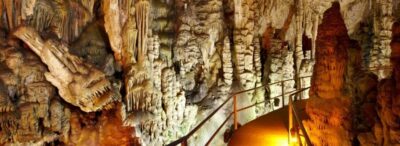
Road-trip to Lasithi, Zeus Cave & Olive Mill Farm
Read our review →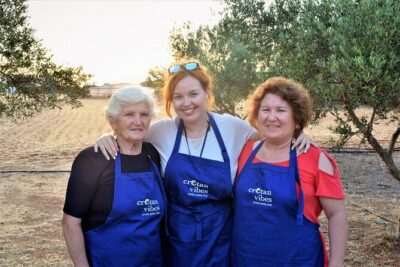
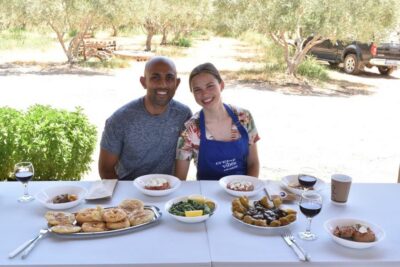
Moires: Cooking Class and Olive Oil Tasting at a Family Farm
Read our review →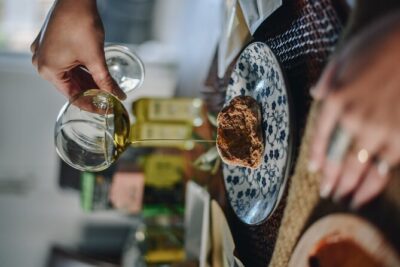
Kleanthi Olive Farm: Guided Tour with Local Delicacies Tasting
Read our review →
Chania Area: Cooking Class at a Farm in Stylos Village (organic)
Read our review →
Cretan Farm Tour with Cheese-Making, Olive Oil Tasting & Picnic
Read our review →
Cretan Cooking Class at a Farm with Hotel Pickup and Drop-Off
Read our review →Other lists this farm sits on