
REVIEW · CRETE
Cretan Cooking Class and Olive Oil Tasting
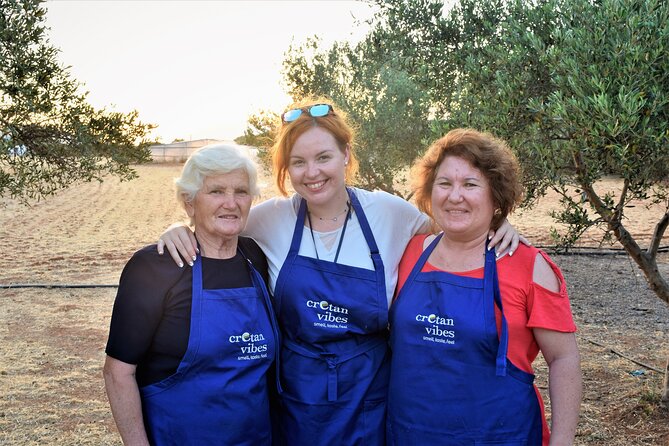
Come hungry, leave with recipes. This four-hour Cretan cooking class combines a hands-on meal in an olive grove with a useful lesson in how to judge extra virgin olive oil. I especially like the family setting with Marianna and her mother, Stella, and the fact that the food comes from fresh, farm-sourced ingredients. The main consideration is location: you must arrange your own transportation to Cretan Vibes near Moires.
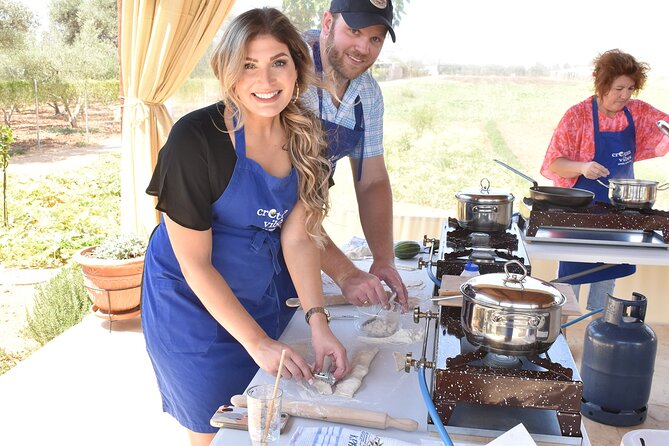
I also like the generous format. You do not simply watch someone cook. You chop, stuff, stir, shape, and eat a full meal afterward, with local wine and leftovers packed to take away. The group can reach 12 people, so the experience may feel more social than private, though smaller groups are possible.
Quick takeaways from Cretan Vibes
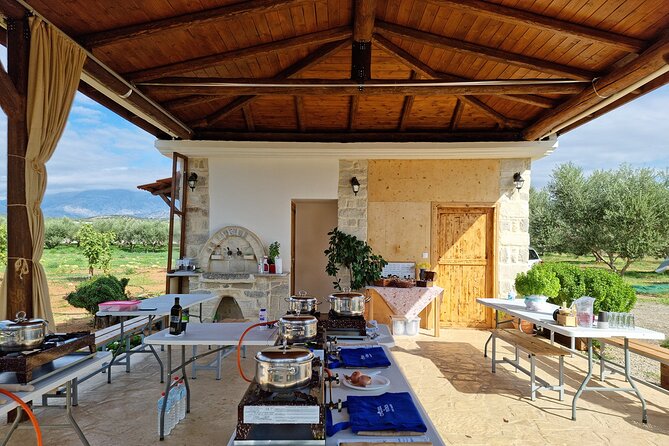
- Cook beside the olive trees: The open-air kitchen and dining area create a memorable rural setting, especially as the day cools.
- Learn from Marianna and Mama Stella: This mother-and-daughter team brings warmth, patience, and family recipes to the class.
- Make several Cretan specialties: Dishes can include dakos, stuffed grape leaves, zucchini flowers, lamb, vegetable giaxni, and local cheese pastries.
- Taste olive oil with purpose: You learn to spot aroma, flavor, bitterness, and defects in lower-quality oil.
- Eat what you prepare: A full meal follows the cooking, accompanied by local wine, coffee, tea, and homemade refreshments.
- Take something useful home: Recipes are sent by email, and extra food is packed for later.
Arriving at the olive farm near Moires
The class begins at Cretan Vibes on the national road near Moires, in southern Crete. The setting is rural and surrounded by olive trees, gardens, and working farm areas. Since private transportation is not included, you need to plan your route before booking. The meeting point is also the end point.
That detail matters. This is not a cooking school in central Heraklion where you can simply walk from a hotel. You will need your own car, a taxi, or another arranged ride. If you are staying near Heraklion, the class can still work well as part of a day in the area, but allow enough time for the drive and return.
The open-air cooking space is one of the strongest parts of the setting. It is described as modern, clean, and carefully designed to fit the farm. You cook and eat among the olive trees rather than in a sealed classroom, which gives the evening a clear sense of place.
The setting also means the weather matters. The activity requires good weather, and a poor-weather cancellation can lead to another date or a full refund. Pack lightly for outdoor conditions, and remember that the farm setting may feel cooler after sunset.
More Cooking Classes around Greece:
- Naxos Perivoli Farm Experience & Wood-fire Cooking Class
★ 5.0 · 339 reviews - Melanes: Naxos Perivoli Farm & Cooking Class with Wood Fire
★ 5.0 · 177 reviews - Santorini Family Farm Food & Wine Tour with Cooking Class
★ 5.0 · 107 reviews
A warm welcome from Marianna and Stella
Marianna leads the class with her mother, Stella, who is affectionately called Mama Stella. Their roles give the class a relaxed family rhythm. Marianna explains the process and keeps the group moving, while Stella shares cooking methods and family traditions.
You begin with homemade refreshments such as Mama Stella’s lemonade or cinnamon drink, along with water. This small touch sets the tone. The class is built around conversation and participation, not a formal chef demonstration where you sit at a distance.
The maximum group size is 12. That is small enough for a social class and large enough to meet people from different places. Some sessions may be much smaller, which makes the cooking more personal. One small group had only two couples, while another group included eight people ranging in age from 12 to 78.
That range is useful if you are planning a family activity. Children and older adults have taken part successfully, and the cooking is presented as a shared activity rather than a test of skill. Beginners are welcome. The hosts’ patient approach also helps if your knife work is less than heroic.
Cooking five dishes with Cretan ingredients
The central part of the class is fully hands-on. You receive an apron, ingredients, cookware, and utensils, then work through a selection of Cretan dishes. The exact menu can change with the season and available produce, but the examples give you a good idea of the food.
You might begin with dakos, one of Crete’s most recognizable simple dishes. A crisp barley rusk is topped with fresh tomato, local mizithra cheese, oregano, and extra virgin olive oil. It is easy to prepare, but it shows how Cretan food depends on good ingredients rather than complicated technique.
Stuffed grape leaves, called dolmadakia, provide a more involved task. You learn how to fill and roll the leaves, then cook them as part of the shared meal. Stuffed zucchini flowers are another possible dish, and they offer a close look at a seasonal ingredient that many visitors may not encounter in an ordinary restaurant.
The main course options are broad. Vegetarian and vegan giaxni may include local green beans, potatoes, zucchini, fresh tomato sauce, and ksinoxondros, a traditional Cretan product made by the family’s grandmother. Other possible dishes include lamb with artichokes, potatoes, fennel, and tomato sauce.
You may also prepare avgolemono, combining meat such as free-range pork or chicken with leek or lettuce, fresh onions, potatoes, dill, eggs, and lemon juice. Cretan stifado can be made with chicken, rabbit, or snails, and lamb with stamnagathi is another listed possibility.
The menu is appealing because it shows more than one side of Cretan cooking. You see vegetable dishes, meat stews, stuffed foods, fresh herbs, dairy products, and sour lemon-based flavors. The food is not presented as restaurant theater. You handle the ingredients and learn how the dishes fit into daily family cooking.
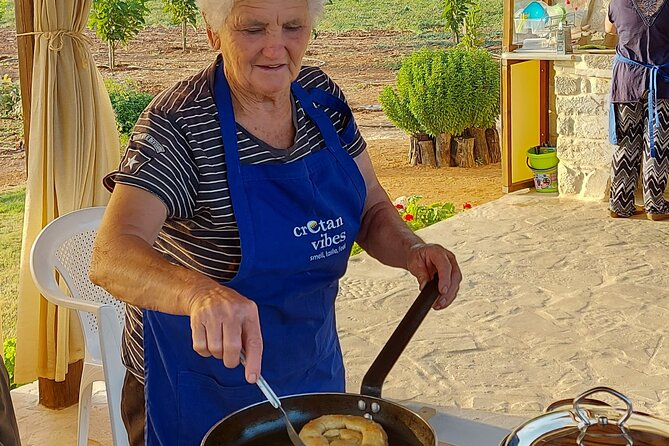
For dessert, the class may prepare sarikopites or kalitsounia. These are local pastries filled with fresh Cretan cheese made by the family. The dough is fried in the family’s own olive oil, then served as a sweet finish. Cinnamon may appear in the filling or accompanying flavors.
Because the class can include several starters, a main dish, and dessert, you should expect plenty of food. The meal is full rather than a token tasting, and leftovers are packed for you to take along. That is a practical bonus, especially if you are making this part of a long day.
The olive oil lesson is more than a tasting
The olive oil portion adds real value to the class. Crete is an olive-growing island, and the family uses its own connection to olive production to explain what you are tasting.
You learn how to recognize authentic extra virgin olive oil through its aromas and flavors. The session also covers bitterness, which can surprise people who associate good oil only with smoothness. You are shown how to identify faults in lower-quality oils and what to look for when shopping.
This is useful beyond the meal. Olive oil is one of the easiest Cretan products to buy, but labels and attractive bottles do not always tell the whole story. A short guided tasting can help you make better choices at a market or grocery store after the class.
You also see a video about the family’s olive harvest. That gives context to the oil on the table and connects the tasting to the work behind it. I like this part because it explains why olive oil matters in Cretan food instead of treating it as just another condiment.
More Food and Drink Tours around Greece:
- Heraklion: Olive Farm Tour with Tasting of Local Delicacies
★ 4.9 · 411 reviews - Wine Tasting Tour at a traditional farm in Mykonos
★ 4.5 · 114 reviews - Crete: Farm Visit with Cheese Tasting and Milking Experience
★ 4.9 · 109 reviews - Moires: Cooking Class and Olive Oil Tasting at a Family Farm
★ 5.0 · 93 reviews
Sitting down to the meal
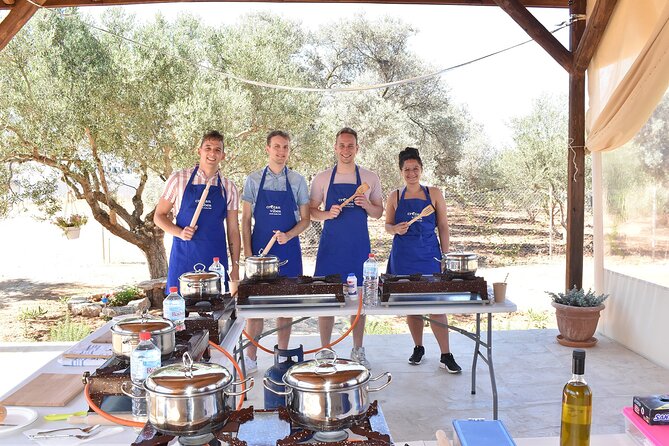
After the cooking, you eat together in the outdoor dining area. Local wine accompanies the food, and coffee, tea, water, and handmade refreshments are included. The meal is the natural payoff for the work, but it also gives the class its social heart.
The dining period can be especially pleasant near sunset, although the timing and weather will affect what you see. The olive trees, garden, and open-air setting make the meal feel separate from a standard restaurant visit. You are eating food prepared with the people who taught you how to make it.
The family atmosphere is central to the appeal. Marianna and Stella are praised for making people feel at home, and their warmth is not limited to the cooking instructions. Family members, including the grandmother who makes the mizithra and ksinoxondros, may be part of the story of the food.
That personal connection is a major reason to choose this class over a larger commercial lesson. You learn recipes, but you also hear about crops, farm work, family methods, and Cretan food customs. The result feels social and cultural without becoming a lecture.
How much value do you get for $114.93?
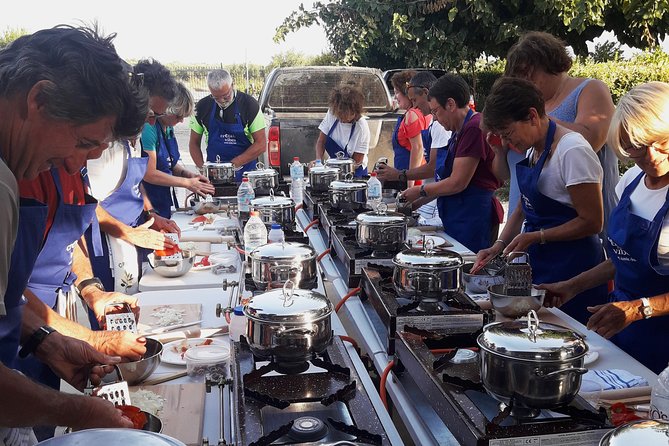
At $114.93 per person, this is not the cheapest meal you will eat in Crete. It is also more than a short demonstration or tasting. You are paying for about four hours of instruction, ingredients, a full meal, local wine, refreshments, olive oil education, recipes, photos, and packed leftovers.
The value improves if you care about food and want more than a quick activity. A restaurant meal might cost less, but it would not give you the cooking time, family contact, recipes, or understanding of olive oil. The leftovers also make the price feel more practical, particularly for couples or families.
The class is less suitable if you want a polished chef-led performance or a tightly timed sightseeing stop. The pleasure comes from taking part, talking, and eating slowly. You should also factor in the cost and effort of reaching the farm because transportation is not included.
With a 5.0 rating from 178 reviews and a 100 percent recommendation rate, the experience has a strong record. More important than the numbers is the consistency of the praise: the food, the mother-and-daughter hosts, the outdoor kitchen, and the welcoming mood receive repeated attention.
Who will enjoy this class most?
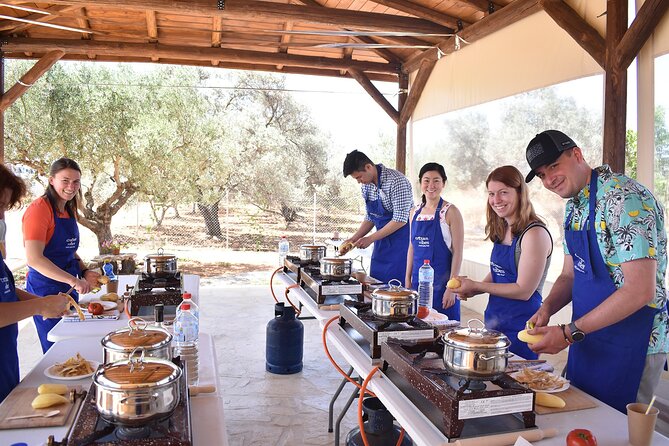
I would choose this for anyone who likes to cook, eat, and talk. It works especially well for couples, families, multigenerational groups, and people who want a break from crowded resort areas.
You do not need advanced cooking skills. The class is designed for beginners as well as experienced cooks, and the instruction is step by step. If you have a dietary restriction, an accommodation has been made successfully for a participant, but you should communicate your needs before attending rather than assume every menu can be changed.
Vegetarians and vegans have a clear option in the listed menu through vegetable giaxni. Meat eaters have several possible dishes, including lamb, pork, chicken, rabbit, and possibly snails. If you are uncomfortable with certain ingredients, ask about the planned menu before you commit.
This is also a good choice for families with children. The shared tasks, colorful ingredients, and casual setting give younger participants something to do. The age range that has worked in the past, from 12 to 78, suggests the class can suit a mixed-age group.
Practical details before you book
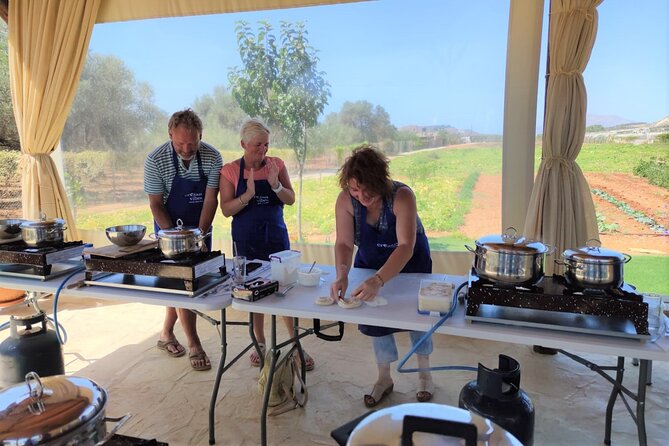
The activity lasts about four hours and is offered in English. You receive confirmation at booking, and mobile tickets are accepted. Service animals are allowed, and the meeting point is near public transportation, though private transportation is not included.
The activity is booked an average of 41 days ahead, so do not leave it until the last minute if your schedule is fixed. The group can hold up to 12 people, and the class requires a minimum number to operate.
Cancellation is free up to 24 hours before the start time. Cancelling later or making changes within that period does not qualify for a refund. If bad weather or an insufficient number of participants cancels the class, you can choose another date or receive a full refund.
Should you book Cretan Vibes?
Book it if you want to understand Cretan food through your hands, not just through a plate. The combination of family teaching, olive grove setting, local oil tasting, generous food, and recipes to use at home gives the class lasting value.
Skip it if you want a central location, private transportation, or a short activity with no planning. The farm is outside the main tourist centers, and the outdoor format depends on good weather.
For most food-focused visitors, I would make this a strong choice near Heraklion. Marianna and Mama Stella provide the human warmth, while the cooking, olive oil lesson, wine, and leftovers make the four hours feel full. Bring an appetite, arrange your ride, and expect to leave with more than a recipe.
FAQ
How long does the Cretan cooking class last?
The activity lasts approximately four hours.
Where does the experience begin and end?
It begins at Cretan Vibes on the national road in Moires, Crete, and ends back at the same meeting point.
Is transportation included?
No. Private transportation is not included, so you must arrange your own way to and from the meeting point.
What food might I prepare?
Possible dishes include dakos, stuffed grape leaves, stuffed zucchini flowers, vegetable giaxni, lamb with artichokes, avgolemono, stifado, lamb with stamnagathi, sarikopites, and kalitsounia. The menu may vary.
Is wine included?
Yes. Local wine is provided to accompany the meal. Coffee, tea, water, and handmade refreshments are also included.
Will I receive the recipes?
Yes. The recipes are sent to you by email after the class. Leftovers are also packed for you to take with you.
What happens if the weather is poor?
The experience may be cancelled because it requires good weather. You will then be offered another date or a full refund.
More Workshops around Greece
- Mykonian Farm and Bakery Class with Brunch in Greece
★ 4.5 · 39 reviews - Traditional Greek Cooking Class @ Lefkada Micro Farm
★ 4.7 · 32 reviews - From Mykonos: Mykonian Farm Baking Class with Brunch
★ 4.7 · 29 reviews - Traditional Greek Cooking Class @ Lefkada Micro Farm
★ 5.0 · 28 reviews
Just added around Greece
- Volos: Cook Like a Local at a Greek Farm★ 5.0 · 7 reviews
- Traditional Greek Cooking Class @ Lefkada Micro Farm★ 4.7 · 32 reviews
- Visit a Farm and Horseback Riding in Nature★ 5.0 · 10 reviews
- Insightful Pistachio Orchard and Factory Tour★ 4.5 · 27 reviews
- Private Olive Oil tasting & Liqueur experience★ 5.0 · 17 reviews
- Flavors of Santorini: Farm-to-Table Meal Wine & Authentic Village★ 5.0 · 12 reviews
- Santorini 5 Hour Private Oia Tour & Lunch/Dinner at a Local Farm★ 5.0 · 40 reviews
- Cooking Class Sunset Dinner and Tour in Paros Farm★ 5.0 · 5 reviews
Cooking Classes, farm by farm.
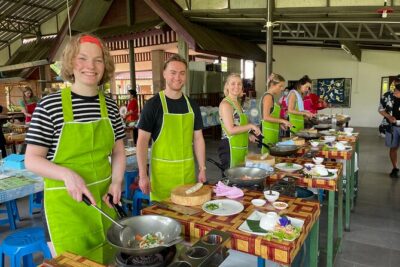
Half-Day Thai Cooking Class at Organic Farm in Chiang Mai
Read our review →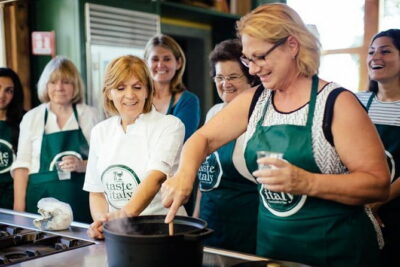
Cooking Class and Lunch at a Tuscan Farmhouse with Local Market Tour from Florence
Read our review →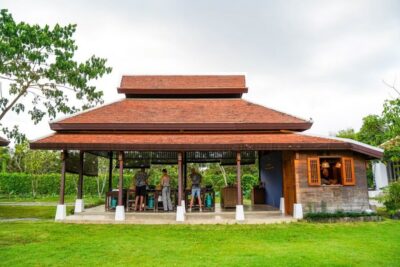
Authentic Cooking Class with Market & Farm Visit
Read our review →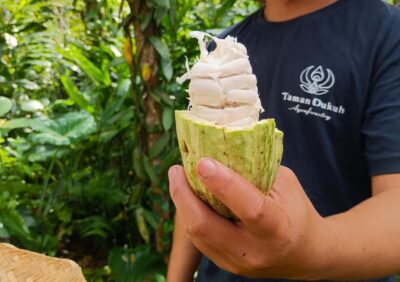


Hands-On Cooking Class & Farmhouse Tour on the Amalfi Coast
Read our review →
Other lists this farm sits on