
REVIEW · TANZANIA
Microfinance family farm tour – all proceeds to charity
A farm visit can change how you see charity. This private 2 to 3 hour experience near Arusha introduces you to Mama Max, a Tanzanian farmer who built a better life through business training and microfinance from The Small Things. I like the honest focus on practical work rather than staged entertainment, and I like that your $35 fee supports a nonprofit helping families keep children at home. The main consideration is the uneven, hilly ground, which can make the walk to Mama Max’s home tiring for some people.
The visit also gives you a useful look at Tanzanian life beyond safari parks. You can share chai tea and local coffee, see Mama Max’s businesses, and help with simple farm tasks if you wish. Child protection rules mean you will not have direct contact with children at Happy Family Children’s Village, so this is best for people who want to learn about community work without expecting an orphanage visit.
Key points about the family farm visit
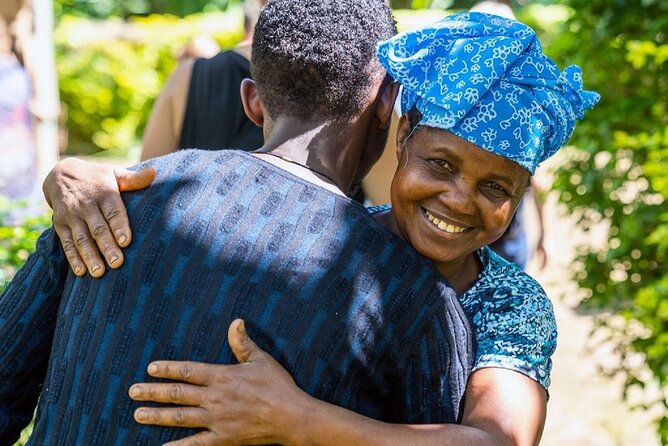
- Mama Max’s progress is the heart of the experience: You see how microfinance and business training helped her build income from banana trees, coffee, chickens, goats, and cows.
- Your payment supports The Small Things: The activity connects tourism with a nonprofit program that helps families care for children at home.
- You can choose how to reach the farm: Walk to Mama Max’s house or ask to drive, depending on your preference.
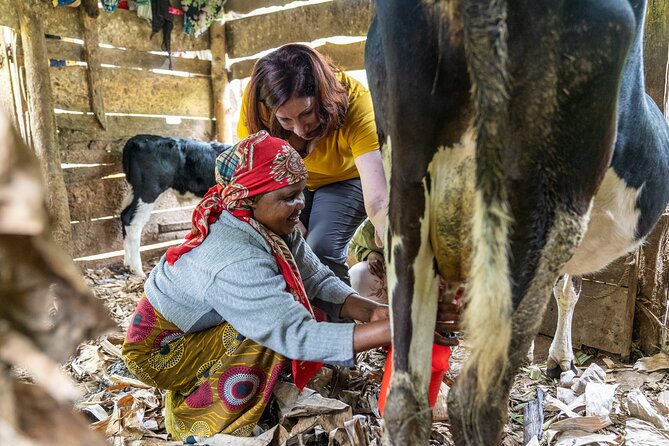
- The visit includes hands-on farm work: You might cut vegetation for animals, check chicken nests for eggs, or milk the cow.
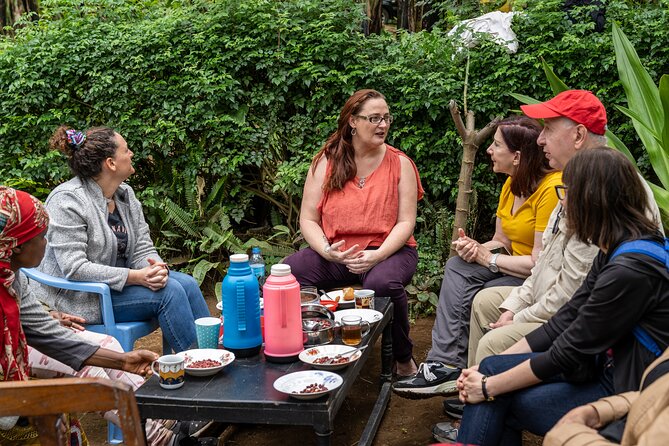
- Tea and local coffee make the stop feel personal: Mama Max welcomes you with traditional chai and locally grown coffee, along with a snack.
- Reuben and Andrew guide the experience: Their role includes explaining the nonprofit’s work and the wider social enterprise program.
Why this Arusha experience feels different from a standard tour
Most visitors come to Arusha for wildlife, but Tanzania is more than safari vehicles and national parks. This outing takes you into Nkoaranga, where the story is not about spotting animals. It is about seeing how a family creates steady income from ordinary resources.
The central figure is Mama Max, a woman who once faced severe poverty. Through business training and microfinance, she began building several small income sources. Her farm now includes banana trees, coffee, chickens, goats, and cows. Each part grew from the success of the one before it.
That detail matters. Microfinance can sound abstract when you hear about it in a presentation. Here, the idea becomes easier to understand because you can see the result in a real household. You are not simply told that a loan helped someone. You see the businesses that grew from it and hear how Mama Max moved from needing support to mentoring young women who later held the position she once did.
I also appreciate the care taken around children. The first stop gives you an overview of The Small Things and its work with children, families, and communities. But you should not expect to enter children’s daily lives or take part in direct contact. That limit is appropriate, and it keeps the visit focused on responsible community support rather than making children part of a tourist attraction.
More Farm Tours around Tanzania:
- Zanzibar: Prison Island, Stone Town, & Spice Farm Tour
★ 4.5 · 579 reviews - Full-Day Private Stone Town +Spice Farm and Prison Island Tour
★ 4.5 · 216 reviews - Zanzibar: Stone Town & Spice Farm Tour with Lunch
★ 4.5 · 97 reviews
Starting at Happy Family Children’s Village
The experience begins at Happy Family Children’s Village on an unnamed road in Nkoaranga. You receive a short introduction to The Small Things and its approach to helping families.
The visit is not designed as a tour of children or an opportunity to meet them. Child protection rules prevent direct contact, but you can learn why the organization works to improve conditions for families and communities. This is an important part of the visit because it explains the problem that the farm program addresses.
The organization began after concern about what happened to children after leaving an orphanage and returning to their villages. The solution was to look for ways to strengthen families and help children remain at home when possible. Your guide explains how business development and microfinance fit into that work.
The setting adds a pleasant visual start. From the visitor’s hut, you can see toward Lake Duluti. The stop lasts about 30 minutes, so it should not feel like a long lecture. Still, pay attention here. The farm visit makes more sense once you understand why family income and child welfare are linked.
Reuben and Andrew are named as guides for this experience. Their role includes explaining the nonprofit’s work, the business development program, and other social enterprises connected to the community. If you are curious, this is a good time to ask how the program helps families keep children at home.
Walking or driving to Mama Max’s house
After the introduction, you continue to Mama Max’s home in Nkoaranga. You can walk or drive, which is useful because the ground can be uneven or hilly. The choice also lets you shape the outing around your energy level and mobility.
If you walk, the route gives you more time to hear about the business program and the local setting. You should be ready for uneven ground, and comfortable walking shoes make sense. If you prefer not to walk, ask about driving to the house when arranging the tour.
The transfer is not just a way to fill time between stops. Your guide uses it to explain how families like Mama Max’s can build income without separating children from their homes. That is the key idea behind the experience: supporting a parent’s ability to earn can help strengthen the whole household.
Because the tour is private, only your group takes part. That gives you more freedom to ask questions and set the pace. It also makes the visit feel less like a fixed group excursion. You can spend more time on the parts that interest you, within the roughly two-hour farm visit.
Meeting Mama Max and seeing her farm businesses
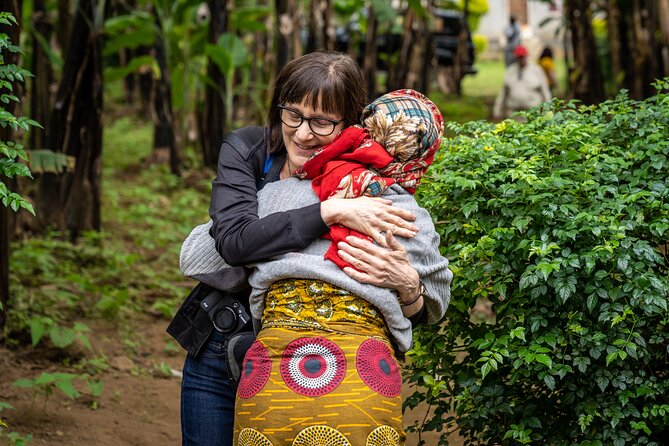
Mama Max warmly welcomes you at her home with traditional chai tea and locally grown coffee. A tea stop might sound simple, but here it gives the visit a human center. You have time to meet the person behind the program rather than only hearing about her from a guide.
She is happy to answer questions and show how her work has developed. The story is especially clear because her businesses are varied. Banana trees, coffee plants, chickens, goats, and cows each play a part in the household economy.
You can see how one successful activity helped make another possible. That step-by-step growth is more useful than a general explanation of poverty reduction. It shows that a family farm can develop through several modest sources of income instead of depending on one large business.
The farm tasks are optional. If you want a more active visit, you can help cut vegetation for the animals, check chicken nests for eggs, or milk the cow. These are basic jobs, but that is part of their value. You are seeing daily work, not a performance prepared only for visitors.
Do not expect a polished farm attraction with a long list of formal activities. The appeal is the chance to spend time at a working home and understand how the household operates. Some people will love that directness. Others may prefer a more structured tour with more sights and less conversation.
Same fields, a different sort of morning:
- Zanzibar:Stone Town & Spice Farm Private Tour Lunch Included
★ 4.2 · 94 reviews - Zanzibar full day Jozani forest + Spice farm and stone town
★ 4.7 · 90 reviews - Arusha or Moshi : Hot Spring, Waterfall & Coffee Farm Tour
★ 4.8 · 80 reviews - Zanzibar: Spice Farm & Stone Town Tour with Lunch
★ 4.5 · 80 reviews
The meaning behind the microfinance program
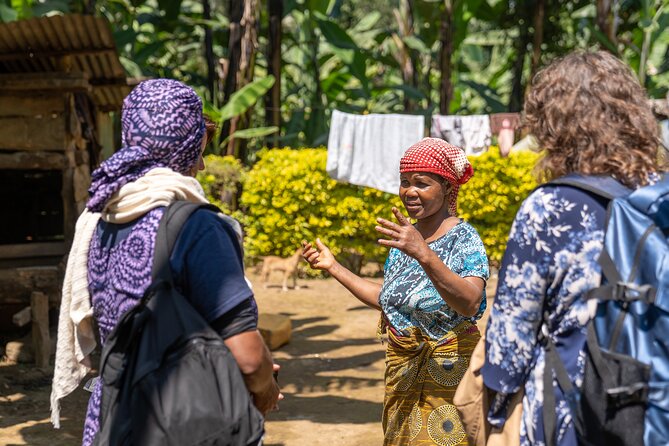
The strongest part of this experience is the connection between money, work, and family stability. The Small Things uses business training and microfinance to help people develop their own income. In Mama Max’s case, the support helped her move beyond severe poverty and build several small enterprises.
That does not mean a loan alone solved everything. The story also includes hard work, learning, patience, and the ability to grow one business from another. The tour gives you a close look at that process without reducing Mama Max to a symbol of poverty.
You can also see the longer effect of her progress. Mama Max now mentors young women who were once in her former position. That change gives the visit a sense of continuity. Support is not only reaching one household. It is helping create someone who can guide others.
For you, this makes the $35 price easier to judge. The fee is not simply payment for transport, tea, and a guide. It supports an activity run by The Small Things, with proceeds directed to charity. You still receive a personal cultural experience, but the wider purpose gives the cost added value.
The price is modest compared with many guided activities around Arusha. The tour lasts about 2 to 3 hours, includes tea and a snack, and can include a private guide for your group. Lunch is available for an extra $5 if you want to extend the visit. Group discounts are also offered, though the exact discount is not specified.
What you eat and what to expect at lunch
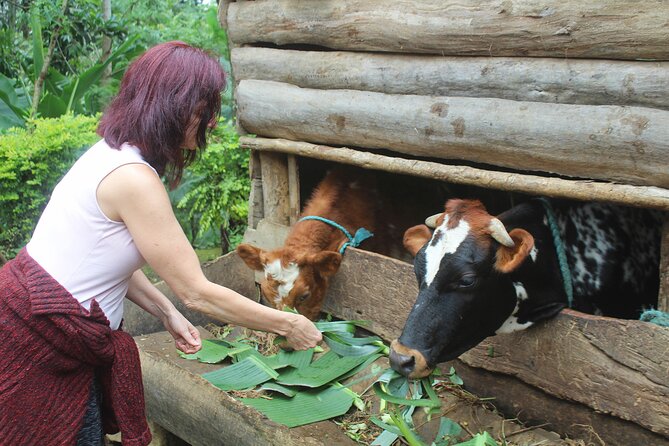
Tea and a snack are included on all tours. At Mama Max’s home, traditional chai tea and locally grown coffee are part of the welcome. These drinks help make the visit feel connected to the farm and community rather than like a quick photo stop.
Lunch is not included in the listed price, but it can be provided for an additional $5. If you want lunch, arrange it in advance. The available information does not specify the menu, so ask what will be served when you book.
The included snack should not be treated as a full meal. If you are booking the tour around midday, the $5 lunch option may be practical. If you have other plans, the shorter visit should be easy to fit around a safari departure or another Arusha activity.
Who will enjoy this visit most
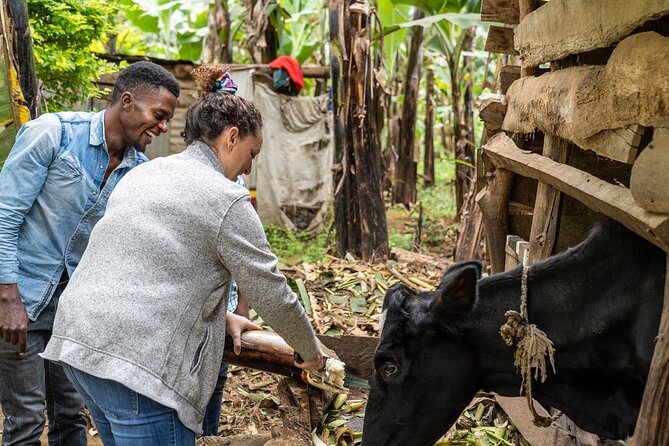
I would recommend this outing to people who want a closer look at community life near Arusha and who are comfortable with an experience built around conversation. It suits visitors who want their spending to support a local nonprofit and who prefer a personal visit over a large commercial attraction.
It is also a good match for anyone interested in women’s economic opportunities, family welfare, ethical tourism, or small-scale farming. Parents may appreciate the clear child protection boundary, especially if they want to understand community support without treating children as part of the sightseeing.
The experience may be less suitable if you want constant activity, polished facilities, or a long list of formal stops. The main rewards are the story, the discussion, the farm setting, and the chance to take part in simple work.
You should also consider your walking ability. Most people can participate, but you need to manage uneven or hilly ground if you choose to walk. Driving to Mama Max’s home may help, but confirm that preference when arranging the tour.
Practical details before you book
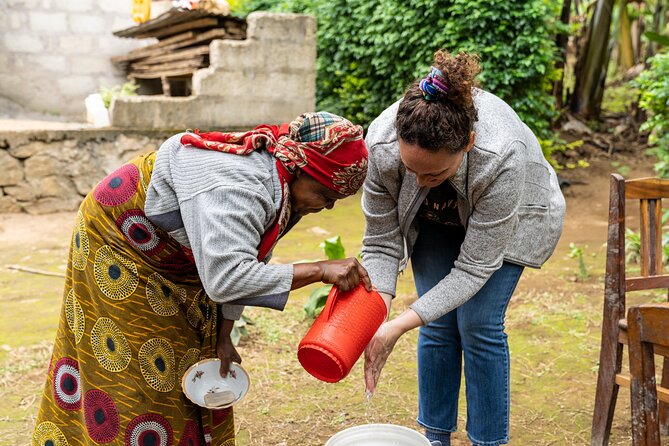
Pickup is offered, but the stated meeting point is Happy Family Children’s Village in Nkoaranga. The activity ends back at that same meeting point, so plan your onward transport from there unless pickup arrangements include something different.
Confirmation arrives when you book, and mobile tickets are available. Service animals are allowed. Since this is a private activity, only your group participates, which is useful if you have questions about the nonprofit or want to spend more time on the farm tasks.
The listed rating is 5 from two reviews, so treat that as encouraging but limited evidence. The strongest praise focuses on learning about better ways to improve local conditions and on the educational, cultural quality of the visit. Reuben and Andrew are specifically praised for explaining the work of The Small Things and other social enterprises.
Free cancellation is available if you cancel at least 24 hours before the local start time. Cancellations or changes made less than 24 hours in advance are not accepted for a refund.
Should you book the Microfinance Family Farm Tour?
Book it if you want a thoughtful half-day experience that shows how business support can affect a real family. The visit with Mama Max, the farm tasks, and the explanation from The Small Things offer more substance than a quick cultural stop.
I would make this a priority for anyone spending several days in Arusha and wanting to support a charity while meeting local people in a respectful setting. The $35 cost is good value, especially with tea, a snack, a private group format, and charitable proceeds included.
Skip it if you need a fully accessible route, dislike uneven ground, or want a conventional sightseeing tour with many major attractions. For everyone else, this is a small, personal experience with a clear purpose, and it gives you a more grounded view of Tanzania beyond safari.
FAQ
How much does the Microfinance Family Farm Tour cost?
The price is $35 per person. Group discounts are offered, but the exact discount is not specified.
How long does the experience last?
The activity lasts approximately 2 to 3 hours. The first stop takes about 30 minutes, followed by roughly two hours at Mama Max’s home and farm.
Where does the tour begin?
The stated meeting point is Happy Family Children’s Village on an unnamed road in Nkoaranga, Tanzania.
Where does the tour end?
The activity ends back at the meeting point at Happy Family Children’s Village.
Is pickup available?
Yes, pickup is offered. Confirm the pickup details when booking, since the stated meeting point is Happy Family Children’s Village.
Will I meet children at Happy Family Children’s Village?
No direct contact with children should be expected because of child protection rules. The stop provides an overview of The Small Things and its work with children, families, and communities.
Is lunch included?
No. Tea and a snack are included, while lunch can be provided for an extra $5.
Do I need to walk?
You need to be able to manage uneven or hilly ground. You can choose to walk or drive to Mama Max’s house, depending on your preference.
Can I cancel for a full refund?
Yes, if you cancel at least 24 hours before the experience’s start time. Cancellations or changes made less than 24 hours before the start time are not accepted for a refund.
Just added around Tanzania
- Zanzibar:Jozani forest, Spice farm with Swahili Cuisine clas★ 4.2 · 3 reviews
- Zanzibar: Spice farm tour with Zanzibar fruits tasting★ 3.8 · 7 reviews
- Zanzibar: Stone Town City Tour and Spice Farm with Lunch★ 3.7 · 33 reviews
- ZANZIBAR, Stone town tour, Prison Island & Spice farm★ 5.0 · 11 reviews
- Zanzibar: Walking Spice Farm with Local Cooking Class★ 4.4 · 9 reviews
- Zanzibar: Spice Farm Tour with Traditional Cooking Class★ 5.0 · 2 reviews
- Zanzibar: Spice Farm Tour with Traditional Cooking Class★ 4.8 · 6 reviews
- Zanzibar: Spice Farm Tour with Traditional Cooking Class★ 4.6 · 16 reviews
Tanzania Farm Tours, farm by farm.
Full-Day Private Stone Town +Spice Farm and Prison Island Tour
Read our review →
Zanzibar full day Jozani forest + Spice farm and stone town
Read our review →
Arusha or Moshi : Hot Spring, Waterfall & Coffee Farm Tour
Read our review →
STONE TOWN, PRISON ISLAND AND SPICE FARM ( Lunch included )
Read our review →
Zanzibar Private Spice Farm and Stonetown Tour(Include Lunch)
Read our review →Other lists this farm sits on