
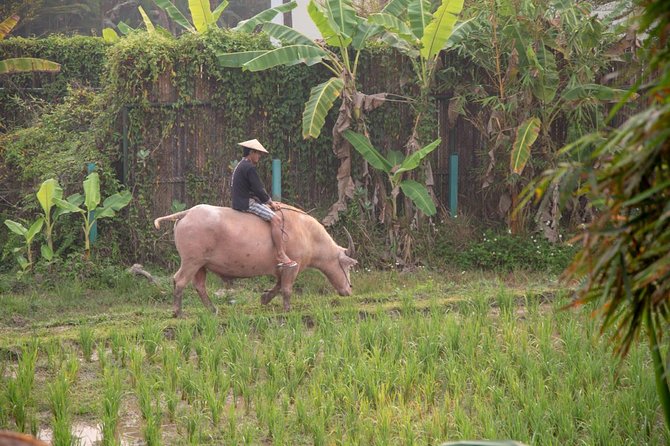
REVIEW · LUANG PRABANG
Living Land Rice Farming Experience
Rice is the real star here. I like the hands-on work in the paddies and the chance to see bamboo weaving, sugar cane pressing, and blacksmithing in one morning. The farm also supports more than 60 students and free English classes, giving the $64.17 price a useful local purpose. One caution: lunch is included only with certain booking options, and transport arrangements can be uneven.
This is a good choice if you want more than temple visits and pretty photographs. Guides such as Johnny, Kham, Geo, Sai, and Kham have helped make the program friendly and practical, but the quality of the wider transport service can depend on the operator handling your booking.
Key things to know before you book
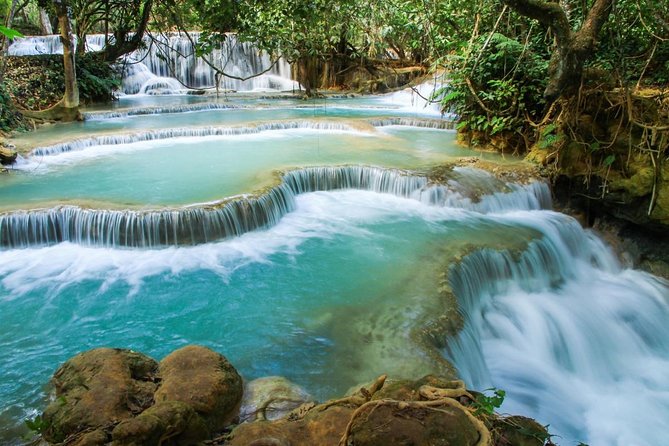
- You will work through 14 stages of rice production: Planting, harvesting, processing, cooking, and eating rice all form part of the lesson.
- Mud is part of the deal: You may work barefoot and knee-deep in a paddy, so wear shorts and clothes that can get dirty.
- The farm supports education: Proceeds help more than 60 local students with their studies and fund free English classes in the village.
- The setting is a major part of the appeal: The community farm sits just outside Luang Prabang, with rice fields and mountains around it.
- Lunch needs checking at booking: A typical Luang Prabang meal is included only when you select the option that includes lunch.
- Optional add-ons can change the day: Waterfalls and caves may be added, but confirm the transport plan so you do not lose time returning to town.
Why Living Land Farm is worth your morning
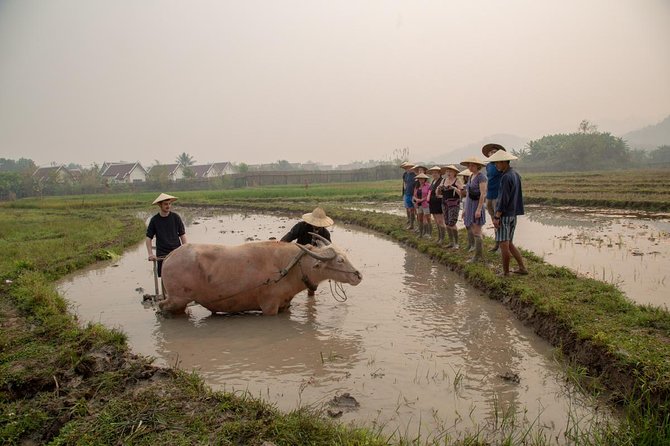
Living Land Farm offers the kind of cultural lesson that is hard to get from a bus window. Instead of simply looking at rice fields, you take part in the work that makes rice possible. That change in viewpoint matters in Laos, where rice is central to daily meals, farming families, and village life.
The half-day program begins around 8:30 a.m., with pickup listed for about 8:00 a.m. The main farm activity lasts about three hours and 20 minutes, while the full experience is generally described as roughly five hours. A group can include up to 20 people, which is large enough to make the activities social but still small enough for hands-on participation.
The farm is just outside Luang Prabang, in a rural setting backed by mountains and rice fields. You get a quick change from the town’s lanes and monasteries to a working community farm. That short drive is part of the value: you do not need to spend a full day getting to a remote village to see rural life.
I especially like that the program does not stop with a quick rice-planting photo. It follows the crop through many stages, helping you understand why a bowl of rice represents so much labor. The activity is educational, but it is not a classroom lecture. You learn by pulling, pressing, planting, threshing, and handling the materials yourself.
More Rice Farming Experiences around the world:
- The Rice Barn Thai Cooking Farm Chiangmai
★ 5.0 · 603 reviews - Hoi An Wet Rice Farming Tour Private Round Boat Fishing & Lunch
★ 5.0 · 13 reviews - Hoi An Wet Rice Farming Tour-Basket Boat Tour Fishing-Lunch
★ 4.1 · 11 reviews
Getting your feet into the rice paddy
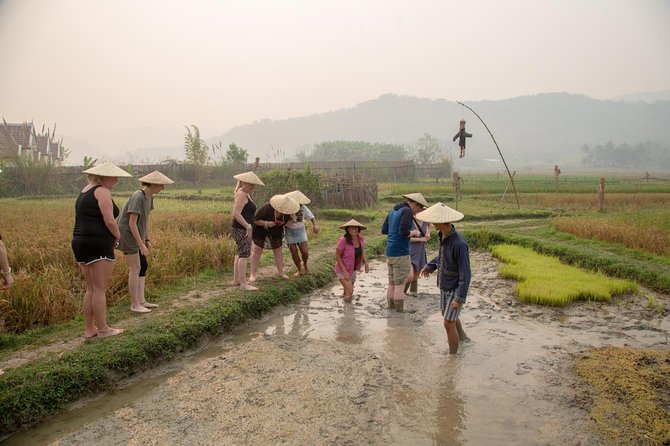
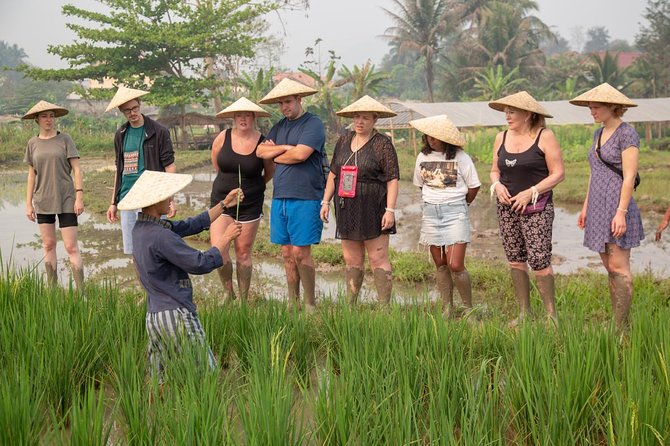
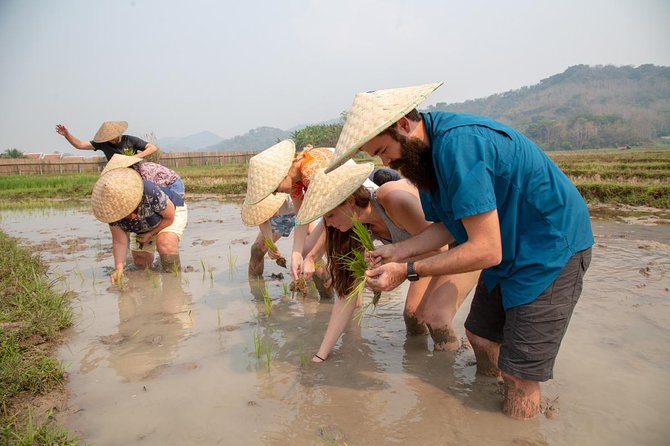
The farming section is the heart of the experience. You may be asked to remove your shoes and work directly in the field. Several parts of the program can involve mud, and one account describes going knee-deep into it. That is not a minor detail. If you want clean shoes and dry trousers, choose a different morning.
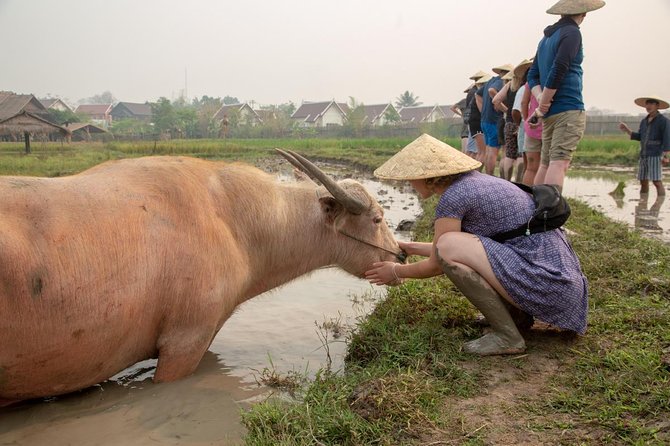
The farming lesson covers the work behind rice from field preparation to harvest. Activities described include digging a planting trench, using a water buffalo to till the soil, planting rice, transplanting seedlings, harvesting mature rice, and preparing it for the table. The buffalo is part of the traditional method, and the program gives you a close look at how animal power fits into farm work.
You are not expected to become a rice farmer in one morning. The useful point is seeing the sequence and trying enough of each task to understand the effort involved. One stage makes little sense on its own. Taken together, the steps show how much time and physical work sits behind an everyday staple.
The exact tasks may vary with the season because rice is planted throughout the year. That seasonal pattern is worth keeping in mind. You may not see every field at the same stage, but the teaching program is designed to explain the process and offer practical activities across the cycle.
Guides make a large difference here. Johnny has been praised for explaining the work through family stories, while Kham has been described as friendly, fun, and a good teacher. Sai has also led a clear and practical session, and Geo has received praise for guiding the day. The experience is strongest when your guide explains not only what you are doing, but why the task matters to local families.
From rice grain to snack
After the field work, the program moves from farming to processing and food. This is where the morning becomes especially useful for anyone who thinks of rice as a simple side dish. You see how harvested rice is handled and prepared before it reaches the cooking pot.
The final part includes a tasting of rice-based snacks. This is a welcome reward after the muddy work, and it gives you a small sample of how rice appears in Lao food beyond a plain bowl of steamed grain. The snack tasting is part of the half-day program, even if you do not choose the lunch option.
The process also includes cooking rice. You get a direct link between the paddy, the harvested grain, and the meal. That connection is easy to miss on a normal sightseeing day, especially when food arrives at your table with none of the work visible.
The activities are suitable for most people, according to the supplied information, but you should be comfortable with physical participation and getting dirty. The program is not presented as a strenuous athletic challenge, yet farming is real work. If you have limited mobility or do not want to remove your shoes, check the practical details before paying.
Bamboo, sugar cane, and blacksmithing
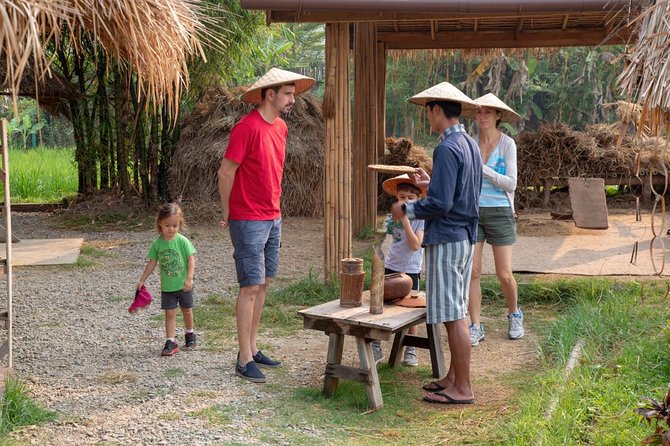
Rice is the main subject, but the farm adds several other demonstrations and activities. Bamboo weaving shows how a common local material becomes useful household or farm equipment. It gives you a different view of village skills, one based on patient handwork rather than machinery.
Sugar cane pressing adds another sensory part of the morning. You can see how the cane is processed and get a better idea of the tools involved. It is a simple activity, but it helps break up the rice lesson and gives younger visitors something different to try.
Blacksmithing is also included among the farm activities. The program does not provide a detailed account of every item made, so you should not expect a full workshop course. Think of it as a short introduction to another practical village craft.
Some parts may appeal more to you than others. One account found an interaction with Bentley unnecessary, though the specific detail is not explained. That is a reminder that not every activity will feel equally important to every person. The rice work and food preparation are the strongest reasons to book.
More Farm Tours around the world:
- Half-Day Thai Cooking Class at Organic Farm in Chiang Mai
★ 5.0 · 19,087 reviews - Florence Pizza or Pasta Class with Gelato Making at a Tuscan Farm
★ 5.0 · 6,801 reviews - From Porto: 2 Wine Regions, Farm-to-Table Lunch & Boat
★ 4.9 · 5,724 reviews - Cooking Class and Lunch at a Tuscan Farmhouse with Local Market Tour from Florence
★ 5.0 · 4,831 reviews
A Lao lunch worth adding
If your booking includes lunch, you eat at the farm after the activities. The meal is described as a selection of typical Luang Prabang dishes and fruit. It is a useful part of the day because you have just learned where one of the meal’s main ingredients comes from.
I would choose the lunch option if your schedule allows. The food has received strong praise, and skipping it means losing one of the simplest links between the farm lesson and local life. The meal also gives you a chance to sit down after the field work instead of rushing straight back to town.
Pay close attention when selecting the package. The general description presents lunch as part of the program, but the inclusion details specify that lunch is included only with the option that includes lunch. At $64.17 per person, you should know exactly what you are buying before confirming payment.
The farm also provides fruit and rice-based snacks as part of the broader experience. If you choose a package without lunch, do not assume that the full meal will be waiting. Confirm the lunch option and any extra cost in advance.
The community purpose behind the farm
The social purpose gives this experience more weight than a standard commercial activity. Proceeds from the rice program support more than 60 students with their studies. The farm also runs free English classes for the whole village.
That does not make every part of the tour perfect, but it gives your spending a clear local connection. You are paying for an activity, a meal if selected, and the work of the people who run it. You are also helping fund education in the surrounding community.
This is one reason I would choose the farm over a short photo stop in the countryside. A photograph can show you a rice field. Working in it, then learning how the money supports local students, gives you a better sense of how tourism can connect with village life.
The program is most rewarding when you approach it with respect. You are visiting a working community space, not a theme park. Listen to the explanations, follow instructions around the buffalo and tools, and accept that the field may be muddy, uneven, or less polished than a sightseeing attraction.
Transport, timing, and optional add-ons
The listed start time is 8:00 a.m., and the farm program begins around 8:30 a.m. Pickup is offered, but the experience is operated through Manifa Travel, so you should confirm the pickup point and return plan before the morning begins.
Extra excursions to waterfalls and caves may be available. These can turn the morning into a longer day, but transport needs careful attention. There have been cases where a group was taken back to town after lunch, then driven out again to the waterfall, wasting about two hours.
If you combine the farm with a waterfall, tell the driver clearly that you want to go directly from the farm when that is the plan. Do not assume the vehicle arrangement is obvious to everyone. The farm itself can be excellent while the wider day becomes frustrating if different groups are being collected and dropped off.
The main farm activity is listed at three hours and 20 minutes, while the overall experience is about five hours. An add-on excursion will change that timing. If you have an evening train, flight, or fixed appointment, leave plenty of room rather than treating the schedule as exact.
The group limit is 20 people. That keeps the program manageable, though a full group may mean waiting briefly at some stations. Group discounts are available, which could improve the value for families or larger parties.
Is $64.17 good value?
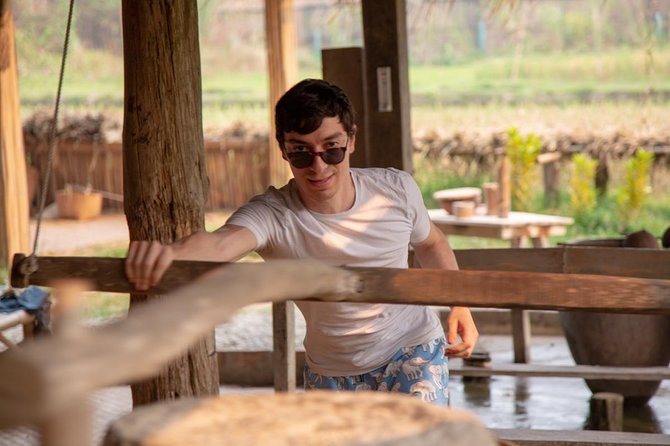
The price is not the cheapest way to see the countryside around Luang Prabang. It becomes more reasonable when you count the farm instruction, hands-on activities, snack tasting, possible lunch, transport, and community benefit. The value is strongest for people who want to take part rather than simply look around.
You should compare the price with the exact package. Lunch may be extra, and additional excursions may also change the total. One serious complaint involved a family being charged much more through an intermediary than by booking directly with the farm. That does not prove every booking has the same problem, but it is a clear reason to check the final per-person amount and compare it with the farm’s direct rate.
The high overall rating, 4.9 from 93 ratings, reflects how well the central activity works for most people. The 97 percent recommendation figure points in the same direction. Still, the transport complaint is important because a good farm program does not automatically guarantee a well-run full-day add-on.
For me, the price makes sense if you select lunch, value the educational side, and want your money to support local study programs. It makes less sense if you only want a quick look at rice fields or are mainly using it as a cheap way to reach a waterfall.
Who will enjoy this experience most?
You will likely enjoy Living Land Farm if you:
- Like practical cultural activities more than passive sightseeing
- Want to understand how rice is planted, harvested, processed, and cooked
- Are happy to work barefoot or get muddy
- Enjoy local food and want lunch in a rural setting
- Prefer a small group activity with a clear community purpose
- Are visiting Luang Prabang with children or friends who like trying new tasks
It may not suit you if you dislike mud, physical work, farm animals, or early starts. It is also not the best choice if you need a perfectly timed day with several separate stops.
Most people can participate, and the group size is capped at 20. Still, the supplied information does not give detailed accessibility guidance, so contact the operator if you have specific mobility, footwear, or medical concerns.
The experience is also a good fit for repeat visitors to Luang Prabang. If you have already visited the main temples and markets, a morning at the farm gives you a different way to understand the region.
Booking and cancellation points
Confirmation is sent within 48 hours of booking, subject to availability. The activity requires good weather and a minimum number of participants. If poor weather or low numbers force cancellation, you are offered a different date or experience, or a full refund.
Your own cancellation is stricter. The experience is non-refundable and cannot be changed for any reason. Check your schedule carefully before paying, especially if your Luang Prabang visit is short.
Should you book Living Land Rice Farming Experience?
Yes, if you want a practical, muddy, food-centered lesson in Lao rural life. The best parts are the rice process, the warm farm setting, the guides who explain the work through family experience, and the education programs supported by the proceeds.
Choose the lunch option, wear clothes you can stain, and ask for a clear transport plan if you add a waterfall or cave. I would book it for the farm itself, not as a complicated way to bundle several attractions into one day.
If you want polished sightseeing with little physical effort, skip it. If you want to plant rice, work with a water buffalo, learn why farming takes so many steps, and sit down to a Luang Prabang meal afterward, this is one of the more useful half-day experiences near town.
FAQ
Where is the Living Land Rice Farming Experience?
It takes place at Living Land Farm just outside Luang Prabang, overlooking rice fields and mountains.
How long does the experience last?
The overall experience lasts about five hours. The main farm program is listed as approximately three hours and 20 minutes.
What time does the tour start?
The listed meeting or pickup time is 8:00 a.m. The half-day farm program begins around 8:30 a.m.
Is lunch included?
Lunch is included only when you select the booking option that includes lunch. That meal features typical Luang Prabang dishes and fruit.
Will I get muddy?
You should expect to get dirty. The program can involve removing your shoes and working in a rice paddy, including mud that may reach your knees.
What activities are included at the farm?
Activities can include rice planting, harvesting, processing, cooking, bamboo weaving, sugar cane pressing, and blacksmithing. The program also includes a rice-based snack tasting.
How many people can join the experience?
The maximum group size is 20 people.
Can I add a waterfall or cave visit?
Additional excursions to waterfalls and caves may be available. Confirm the transport plan before starting, especially if you want to go directly from the farm rather than returning to town first.
Just added around the world
- Zanzibar: Spice farm tour with Zanzibar fruits tasting★ 3.8 · 7 reviews
- Zanzibar:Jozani forest, Spice farm with Swahili Cuisine clas★ 4.2 · 3 reviews
- Zanzibar: Stone Town City Tour and Spice Farm with Lunch★ 3.7 · 33 reviews
- ZANZIBAR, Stone town tour, Prison Island & Spice farm★ 5.0 · 11 reviews
- Zanzibar: Walking Spice Farm with Local Cooking Class★ 4.4 · 9 reviews
- Zanzibar: Spice Farm Tour with Traditional Cooking Class★ 5.0 · 2 reviews
- Zanzibar: Spice Farm Tour with Traditional Cooking Class★ 4.8 · 6 reviews
- Zanzibar: Spice Farm Tour with Traditional Cooking Class★ 4.6 · 16 reviews
Rice Farming Experiences, farm by farm.
Hoi An Wet Rice Farming Tour Private Round Boat Fishing & Lunch
Read our review →
Hoi An Wet Rice Farming Tour-Basket Boat Tour Fishing-Lunch
Read our review →
Hoi An Rice Farm Tour and Buffalo Riding with Local Home Meal
Read our review →
Plough to Plate: Be A Rice Farmer in Phetchaburi from Hua Hin
Read our review →
Cultural immersion: Thai cooking, rice farming, eco printing
Read our review →
Other lists this farm sits on