
REVIEW · ROME
From Rome: Pasta Fresca Cooking Class in a Farmhouse with a Local
Leave Rome hungry. Return with pasta skills.
This 3.5-hour cooking class in Zagarolo trades a city classroom for Claudia and Bruno’s farmhouse, garden, olive trees, vineyard, and family table. I like the hands-on cooking, especially the chance to make fresh pasta, ravioli, and seasonal dishes with local ingredients. I also like the personal welcome, which can include a train-station pickup, a garden walk, homemade wine, and Bruno playing music on the keyboard.
The main consideration is the logistics. You need to reach Zagarolo, and one unfortunate booking ended with no one meeting the guest at the station. Most of the available feedback is glowing, but I would confirm the pickup details and train information directly before leaving Rome.
What makes this farmhouse class special
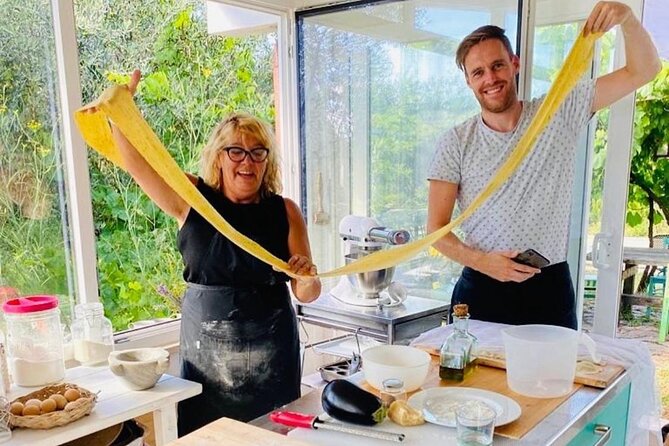
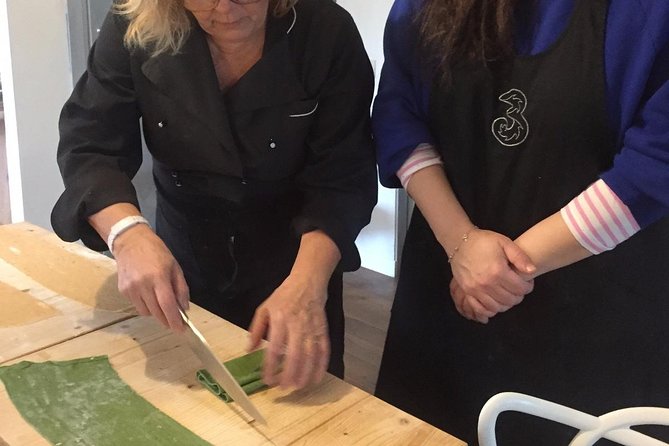
- Fresh pasta made by hand: Work with flour from a local mill and farm eggs to prepare dishes such as ravioli, fettuccine, lasagne, or cannelloni.
- A real Roman Sunday lunch: The meal can include starters, pasta, a second course, dessert, wine, and time at the family table.
- Claudia’s seasonal menus: Summer may bring sorbet and ice cream, while winter can mean sfogliatelle and stuffed pasta.
- A countryside setting near Rome: Zagarolo is about a 30-minute train ride from Roma Termini, followed by a local pickup arrangement.
- Small groups: The class accepts a maximum of eight people, helping keep the cooking personal.
- Food, music, and family hospitality: Bruno may sing and play keyboard while you cook, then share homemade wine and olive oil at lunch.
Leaving Rome for Zagarolo
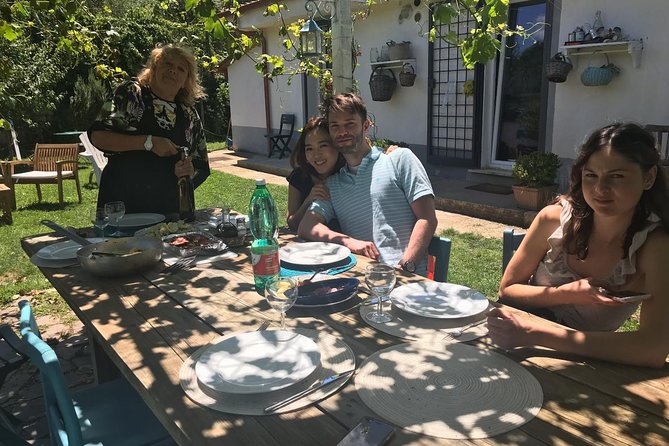
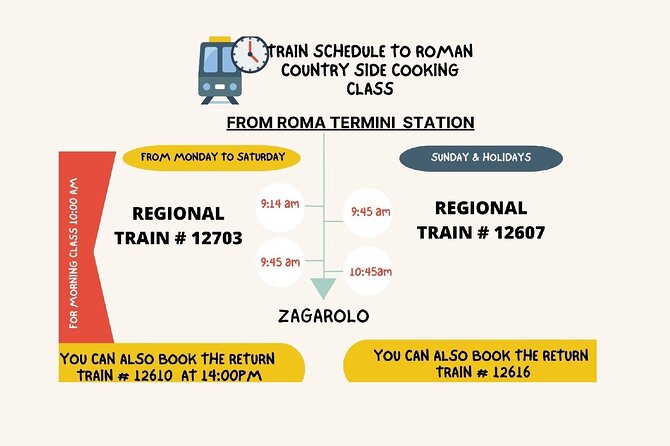
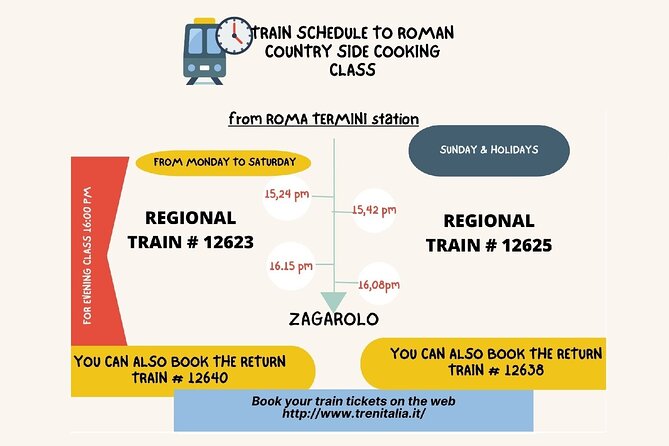
The day begins at the stated meeting point in Zagarolo, in the Metropolitan City of Rome. The practical route described by several visitors is a train from Roma Termini, taking about 30 minutes, followed by a pickup at Zagarolo station.
That short ride matters. Rome can be tiring, especially after several days of museums, traffic, and crowded streets. Zagarolo gives you a different view of the area without requiring a full day of travel. You trade stone streets and scooters for gardens, olive trees, vineyards, and a family home.
The train is not included in the price information, so plan that part separately. The hosts have contacted people before the class to clarify train times, and Bruno has picked up participants at the station. Still, I would not leave this to chance. Confirm the meeting point, pickup time, and return plan before the morning of your class.
One guest was picked up by Bruno and given a quick tour of the medieval village before heading to the house. That extra stop is not guaranteed, but it shows how this outing can become more than a cooking lesson. You are getting a small taste of life outside Rome.
The activity ends back at the meeting point. Since the full session lasts about three and a half hours, allow extra time for the train ride and the station transfer when planning the rest of your day.
More Cooking Classes around Rome:
- Farmers’ Market Shopping with Cooking Class and Pasta Making
★ 5.0 · 91 reviews - Farmer’s Market and Pasta Making with Italian Wine
★ 5.0 · 15 reviews - Half-Day Thai Cooking Class at Organic Farm in Chiang Mai
★ 5.0 · 19,087 reviews
Meeting Claudia, Bruno, and the farmhouse family
Claudia leads the cooking. Bruno often handles transportation, conversation, music, and the general welcome. Angela, Julia, Jules, and other family or friends have also helped with particular classes, so the exact cast may vary.
The welcome is informal. You might begin with espresso and biscuits, then walk around the property. The grounds include a small vineyard, olive trees, fruit trees, herbs, and a vegetable garden. Depending on the season, you may pick items such as rosemary, olives, cherries, mulberries, berries, or fresh vegetables for the meal.
That garden visit gives the food some meaning. Instead of hearing a broad speech about Italian ingredients, you can see where part of the meal comes from. Herbs gathered outside may go straight into the cooking, and home-produced olive oil and wine may appear at the table.
The setting is rustic rather than polished. That is part of its charm, but it also means you should not expect the tidy, timed format of a commercial cooking studio. The pace may change with the menu, the season, and the size of the group.
Claudia’s cooking has received attention from major newspapers, including The Guardian and The Wall Street Journal. The more useful point for you is her teaching style. She explains, demonstrates, and then lets you take part. Several dishes may be prepared during the session, so this is more than a quick lesson in shaping one type of pasta.
The cooking: from garden vegetables to handmade pasta
The exact menu changes. Italian home cooking depends on the season, and Claudia adjusts the dishes accordingly. A typical Roman-style meal may include vegetable fritters or savory strudel, vegetable and cheese croutons, handmade pasta, a second course, and dessert.
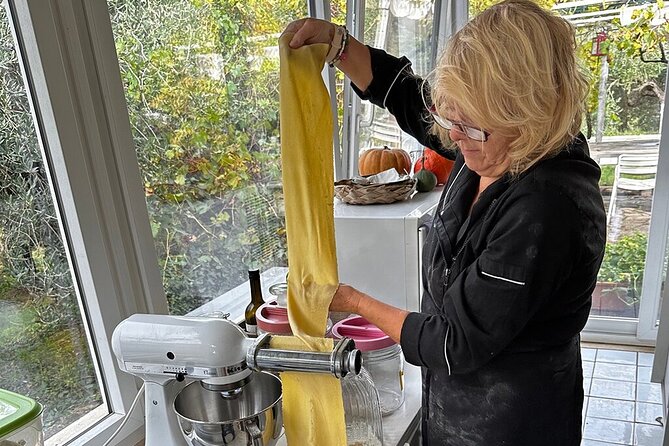
The pasta is the heart of the class. You may make spinach pasta, fettuccine, ravioli, lasagne, cannelloni, or another seasonal shape. Past classes have included spinach and ricotta ravioli, pumpkin ravioli, Swiss chard ravioli, gluten-free ravioli, and fettuccine with Amatriciana sauce.
You may also learn two different types of pasta in one session. That is useful if you want to cook at home because the lesson covers more than a single recipe. You see how dough behaves, how filling is handled, and how sauce fits the finished pasta.
The ingredients have a strong local connection. The flour comes from a local mill, and the eggs are described as coming from a farmer. Garden vegetables, herbs, olive oil, and fruit can all become part of the menu. The result is not a fixed restaurant dish prepared for you in advance. You help build the meal.
Past menus have included fried zucchini blossoms, fried sage leaves, grilled eggplant with garlic and vinegar, vegetables, artichokes, and stuffed zucchini. One menu included spinach pasta carbonara, stuffed ravioli, and beef rolls filled with prosciutto, cheese, and herbs.
Vegetarians can receive a special dish. Dietary adjustments have also been made, including a gluten-free preference. I would still share dietary needs when booking and confirm them before the class. The kitchen has shown flexibility, but it is better to give Claudia time to plan.
The Roman Sunday lunch at the family table
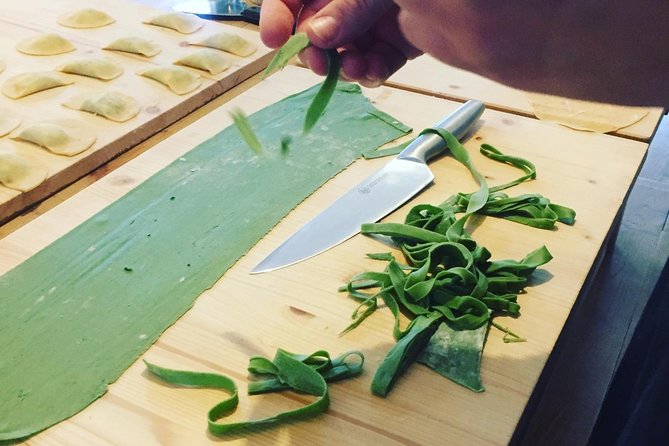
The meal follows the idea of an Italian Sunday lunch, a long family gathering rather than a quick plate of food. After the practical work, you sit down to eat what you made, often with the hosts and other people in the group.
A full menu can include small starters, handmade pasta with its sauce, a second course, and dessert. Dessert may be a tart, parfait, sorbet, ice cream, or another seasonal sweet. Some sessions have included tiramisu, cherries and mulberries in sorbetto, and rum baba.
The food is only half the point. You are also given time to talk, drink homemade wine, and enjoy the view from the house or garden. Bruno has played keyboard and sung during or after the cooking, including American songs. This musical touch is not the reason to book the class, but it can turn a good lunch into a memorable afternoon.
The pace seems generous. One couple described sitting outside near the olive grove with homemade wine and olive oil. Another said the group ate with the whole family. If you prefer a quick class followed by sightseeing, this may feel slow. If you like long meals and conversation, the extra time is a major benefit.
You should also expect wine to be part of the meal. Homemade wine is offered, so use your own judgment and plan the return journey sensibly. The class is about food and hospitality, not drinking heavily.
More Pasta Experiences around Rome:
- Florence Pizza or Pasta Class with Gelato Making at a Tuscan Farm
★ 5.0 · 6,801 reviews - Florence: Pizza or Pasta Class with Gelato at a Tuscan Farm
★ 4.9 · 1,181 reviews - Alghero Home Cooking Pasta Class at a Farmhouse with Wine
★ 5.0 · 130 reviews - Bardolino: Garda Lake Pasta Cooking Class at Agritourism
★ 5.0 · 114 reviews
Why the small group size matters
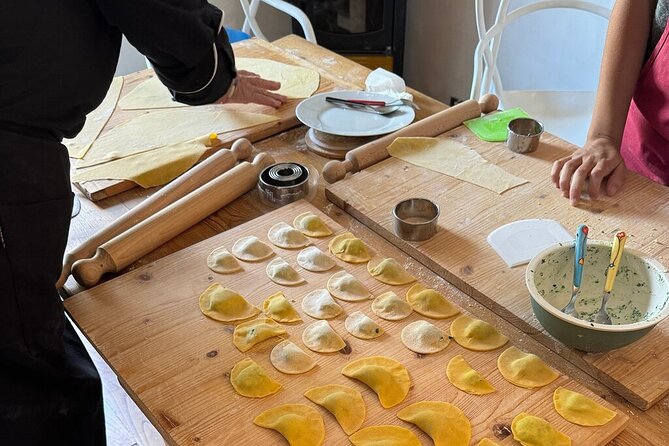
The maximum group size is eight people. That is small enough for Claudia to watch your technique and answer questions without the class becoming a stage show.
A few sessions have effectively been private when only one couple or a very small group booked. You should not count on having the house to yourself, but the group limit gives the class a more personal feel than a large city workshop.
The description presents the experience as having a private instructor, while the maximum capacity allows for several participants. In practical terms, expect a host-led, small-group lesson with direct instruction. Ask ahead if you need a fully private booking.
The social side can be just as important as the recipes. You may cook with your partner, family, or new companions, then share the meal together. Claudia and Bruno’s warmth is repeatedly praised, but remember that this is a family home, not a formal restaurant. Good manners and flexibility will make the day better for everyone.
Price and what you receive for $119.48
At $119.48 per person, this is not the cheapest way to eat pasta in Rome. A basic city pasta class may cost less and require no train connection.
The value is in the whole day rather than the pasta lesson alone. Your fee covers a host-led cooking class, a multi-course Roman meal, the farmhouse setting, garden and property time, and homemade wine. You also get a countryside outing and the chance to learn several dishes instead of preparing one bowl of pasta and leaving.
Transportation to Zagarolo is a separate practical matter. Even so, the short journey keeps the total cost and effort reasonable for someone who wants a more personal day outside central Rome.
I would consider it good value if you care about local food, conversation, and a slower pace. It is less attractive if you want a polished culinary school, a guaranteed fixed menu, or a tightly scheduled sightseeing stop.
The class is booked an average of 45 days ahead, and the 4.9 rating from 62 reviews, with 98 percent recommending it, suggests strong demand. Book early if your Rome dates are fixed. Free cancellation is available until 24 hours before the start time, but changes or cancellations inside that window are not accepted.
What can go wrong, and how to reduce the risk
The overwhelming pattern is positive, but one serious problem should not be ignored. A person booked a month ahead, received no reply to messages, and found no one at the station on the day. Customer service also could not reach the provider at that point.
That appears to be an exception, but it creates a clear tip: message the provider before your travel day. Confirm the train, station, pickup location, host phone number, and expected return. Save the confirmation on your phone.
There is also some uncertainty in the exact menu. The class is seasonal, and the dishes can change according to what is available. That is good for freshness, but not ideal if you are booking specifically for one dish.
The experience is offered in English. Still, cooking involves gestures, demonstration, and shared work, so the lesson can remain practical even if your food vocabulary is limited.
Finally, allow the day to unfold. Bruno’s village tour, garden walk, music, or family meal may add time. The listed duration is approximately three and a half hours, not a promise that every moment will run like a train timetable.
Who should book this cooking class?
I would recommend it most strongly to couples, families, honeymooners, and food-focused visitors who want to leave central Rome for a few hours. It also suits people who enjoy meeting hosts in their home and learning recipes they can repeat later.
It is a particularly good choice for a second or third day in Rome, when you want a break from major sights. The countryside setting gives you a change of rhythm without demanding a long excursion.
You may also like it if you want practical cooking skills. The menu can include several pasta forms, sauces, vegetable dishes, meat, and dessert. The instruction is active, so you are not simply watching Claudia cook.
I would hesitate if you dislike group meals, have a very strict schedule, or want a class within walking distance of your hotel. I would also choose a city class if your main goal is a short, predictable lesson with no transport planning.
Final call: book it if food and people matter most
I would book this class if I wanted a personal food day near Rome rather than another restaurant meal. The handmade pasta, garden ingredients, farmhouse setting, family lunch, homemade wine, and Bruno’s music create a full experience that a standard city class cannot easily copy.
Before booking, confirm the Zagarolo train and pickup details, share dietary needs, and leave room in your schedule. If you do that, you are likely to get a warm, memorable day with recipes you can take home, not just photographs of lunch.
FAQ
Where does the cooking class take place?
The class takes place in a farmhouse in Zagarolo, in the Metropolitan City of Rome. The stated meeting point is in Zagarolo, and the activity ends back there.
How long does the experience last?
The cooking class lasts approximately 3 hours and 30 minutes. You should allow additional time for the train journey from Rome and the pickup at Zagarolo station.
How do I reach Zagarolo from Rome?
The practical route described for the experience is a train from Roma Termini to Zagarolo, which takes about 30 minutes. Bruno has picked up participants at the Zagarolo train station, so confirm the pickup details before setting out.
What food will I make?
The menu changes by season. Possible dishes include handmade ravioli, fettuccine, lasagne, cannelloni, pasta with Amatriciana sauce, vegetable dishes, fried zucchini blossoms, meat rolls, tiramisu, sorbetto, tart, or parfait.
Can vegetarian or gluten-free diets be accommodated?
Vegetarians can receive a special dish, and gluten-free adjustments have been made for some classes. Share your dietary needs when booking and confirm them before the experience.
How large is the group?
The maximum group size is eight people. Some sessions may have fewer participants, but a fully private class should be confirmed in advance.
What is the cancellation policy?
You can cancel up to 24 hours before the experience for a full refund. Cancellations or changes made less than 24 hours before the start time are not accepted for a refund.
More Workshops around Rome
- Farmers Market Shopping with Roman Full Course Class – (SHARED)
★ 5.0 · 23 reviews - Farmers Market Shopping and Roman Full Course Class – SHARED
★ 5.0 · 12 reviews - Harvest & Flavor: Pastamaking Class/Wine Tasting – Countryside
★ 5.0 · 2 reviews - Cooking Class and Lunch at a Tuscan Farmhouse with Local Market Tour from Florence
★ 5.0 · 4,831 reviews
Just added around Rome
- Private Farmer’s Market Tour & Tasting in Rome★ 5.0 · 2 reviews
- Rome: Small-Group Tasty Food Tour Around Farmers Market★ 4.5 · 6 reviews
- Wine Tasting and Food Tour at Vatican and Trionfale Farmers★ 5.0 · 12 reviews
- Rome Street Food Tour and Jewish Ghetto Area Guided Sightseeing★ 5.0 · 13 reviews
- Farmers Market Shopping with Roman Full Course Class – (SHARED)★ 5.0 · 23 reviews
- Rome City Center Largest Farmers Market and Street Food Tour★ 5.0 · 5 reviews
- Harvest & Flavor: Pastamaking Class/Wine Tasting – Countryside★ 5.0 · 2 reviews
- Farmer’s Market and Pasta Making with Italian Wine★ 5.0 · 15 reviews
Cooking Classes, farm by farm.
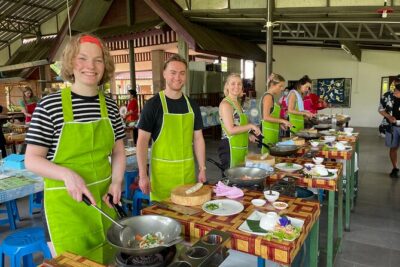
Half-Day Thai Cooking Class at Organic Farm in Chiang Mai
Read our review →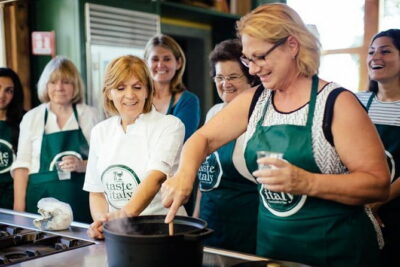
Cooking Class and Lunch at a Tuscan Farmhouse with Local Market Tour from Florence
Read our review →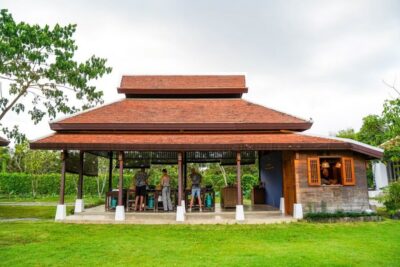
Authentic Cooking Class with Market & Farm Visit
Read our review →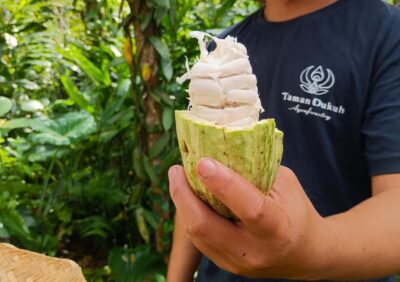
Hands-On Cooking Class & Farmhouse Tour on the Amalfi Coast
Read our review →
Other lists this farm sits on