
REVIEW · SABARAGAMUWA PROVINCE, SRI LANKA
Udawalawe: Farm to Table Cooking & Authe: Village Experience
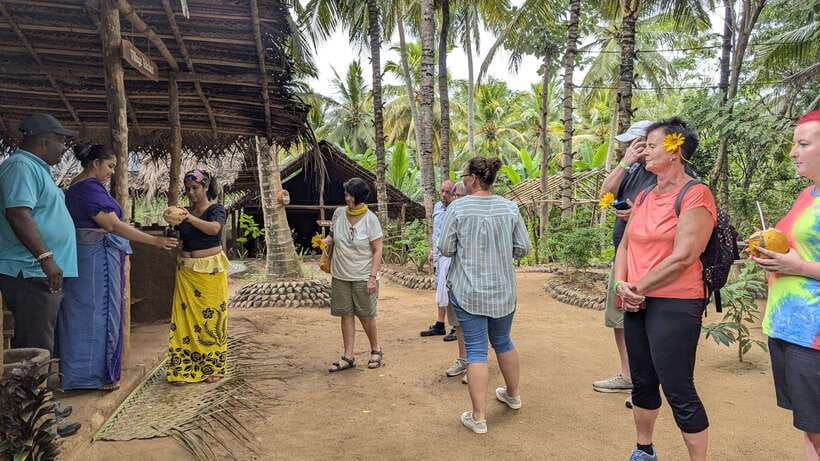
Step into village life. Just 1.2 kilometers from the Udawalawe Elephant Orphanage, this two-hour experience gives you a close look at old Sri Lankan foodways, farming, craft, and customs in a reconstructed 200-year-old village setting. The pace is active, with about 90 minutes spent walking between the garden, mine, demonstrations, and kitchen.
I especially like the hands-on cooking class, where you pick vegetables and prepare dishes with local women rather than simply watching a chef work. The cinnamon peeling and ancient mine visit also add useful local context. My main caution is value: at $30 per person, the price is reasonable if you take part in every activity, but drinks served with the meal may cost extra, and one account found them priced at up to four times the shop rate.
Key things to know before you go
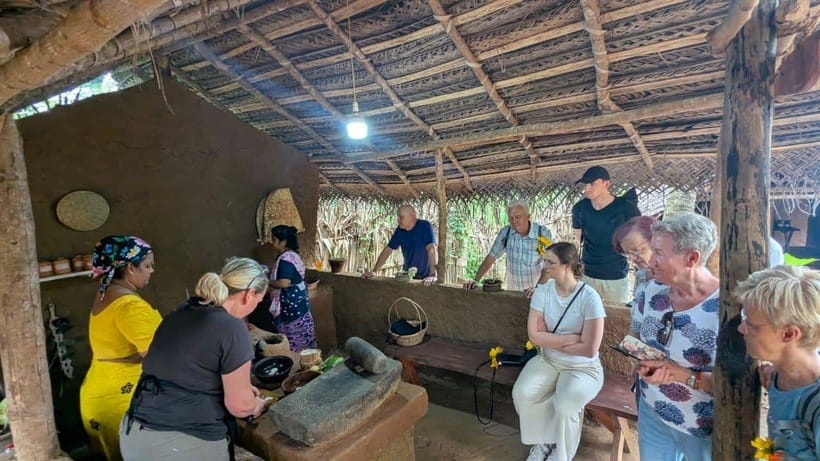
- The cooking is the heart of the visit: Pick produce from the garden, help grind spices, and cook in a traditional village kitchen.
- The old mine adds a second story: You see how local miners once searched for Sri Lankan stones and how the process works.
- Cinnamon is shown, not just served: A peeling demonstration explains how this important spice is prepared.
- Expect a walking-heavy outing: The full route takes about 90 minutes on foot, with the overall activity lasting two hours.
- The meal is made by you: Coconut sambal and dahl were especially praised for their flavor.
- Check the drink arrangement: The welcome drink is described as cinnamon tea in one place and king coconut in another, while meal drinks may be charged separately.
A reconstructed village near Udawalawe
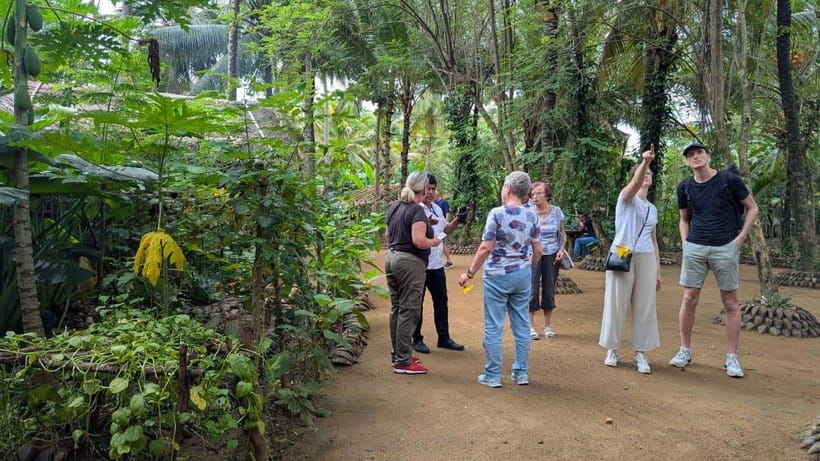
The setting is designed to show how an agricultural village in Sri Lanka might have worked around 200 years ago. That gives the experience a clear purpose. You are not only eating a plate of curry. You are following food from soil to kitchen to table, while also seeing two traditional rural trades.
The location is handy if you are visiting the Udawalawe Elephant Orphanage. The village is only 1.2 kilometers away, so it can fit neatly into a day based around Udawalawe. Still, the listed activity is a private group experience, and exact start times depend on availability, so you should allow enough time between this and any fixed wildlife or transport plans.
I like the scale of the outing. Two hours is long enough to include several activities without turning the cooking lesson into an all-day commitment. At the same time, you should not expect a slow, leisurely village stay. The walking portion alone takes about 90 minutes, so comfortable shoes and protection from the sun make sense.
More Cooking Classes around the world:
- Half-Day Thai Cooking Class at Organic Farm in Chiang Mai
★ 5.0 · 19,087 reviews - Cooking Class and Lunch at a Tuscan Farmhouse with Local Market Tour from Florence
★ 5.0 · 4,831 reviews - Chiang Mai: Authentic Cooking Class with Market & Farm Visit
★ 4.9 · 4,546 reviews
Starting with a welcome drink
The experience begins with a local drink. The main description names cinnamon tea, while the included features also mention refreshing king coconut. Since those are different drinks, it is worth confirming what will be served when you book.
Either option fits the setting. Cinnamon connects directly to the next demonstration, while king coconut is a familiar Sri Lankan refreshment. This opening drink is a small detail, but it helps set the tone before the walking tour begins.
Do not treat it as a full break or meal. The main food comes later, after you have helped gather and cook the ingredients. If you arrive hungry, plan around the timing rather than counting on the welcome drink to carry you through the morning or afternoon.
Seeing how an old mine worked
The visit to the ancient mine gives the tour a useful change of subject. Sri Lanka is known for its stone-mining tradition, and here you get a guided look at the methods used by earlier miners. The focus is on the process, not on shopping or a sales pitch in the information provided.
That distinction matters. A mine visit can sometimes feel like a quick photo stop, but this one is meant to explain how stones were uncovered. You can expect a demonstration and a short account of the work involved, rather than a full underground expedition.
The mine is also a good reminder that rural Sri Lankan life was built around more than farming. Agriculture, spice work, and mining all shaped local livelihoods. For a short tour, that combination gives you a broader picture than a cooking class alone.
The practical drawback is that the supplied information does not say how long the mine section lasts or how much walking it involves. If you have mobility concerns, ask for a clear route description in advance. Wheelchair users are specifically advised not to book this activity.
Cinnamon peeling in the traditional way
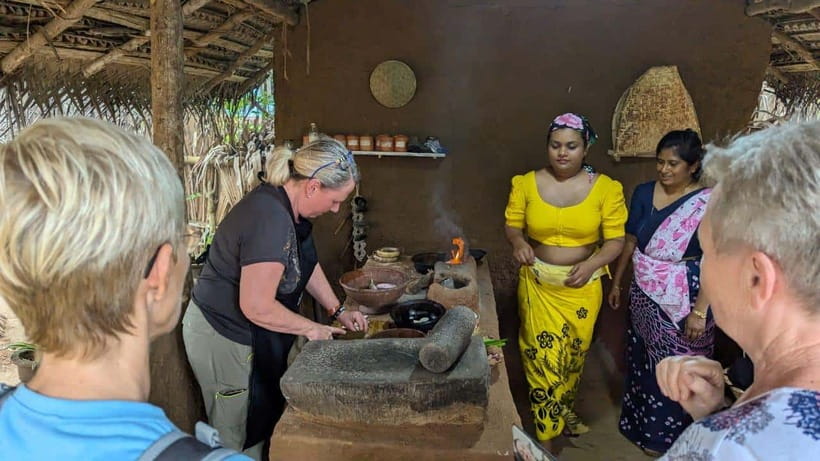
The cinnamon demonstration is one of the more distinctive stops. Skilled artisans show how the bark is peeled and prepared into sticks, giving you a look at the work behind a spice that often arrives in a supermarket jar with no explanation.
You will see why this is careful handwork. Cinnamon preparation is not simply a matter of cutting a branch and drying it. The demonstration connects the plant, the craft, and the wider importance of spice production in Sri Lanka.
I like this stop because it is brief but meaningful. It gives you something to watch, smell, and remember, and it fits naturally with the cooking later. If you enjoy food-focused sightseeing, this will likely be more useful than another generic cultural display.
Do not expect a full cinnamon workshop. The information promises a peeling demonstration, not a separate hands-on class for every participant. The practical value comes from seeing the technique and understanding where the ingredient begins.
More Farm Tours around the world:
- Florence Pizza or Pasta Class with Gelato Making at a Tuscan Farm
★ 5.0 · 6,801 reviews - From Porto: 2 Wine Regions, Farm-to-Table Lunch & Boat
★ 4.9 · 5,724 reviews - Maui Pineapple Farm Tour in Haliimaile
★ 5.0 · 2,855 reviews - Sorrento Farm and Food Experience including Olive Oil, Limoncello, Wine tasting
★ 5.0 · 2,524 reviews
Picking vegetables from the garden
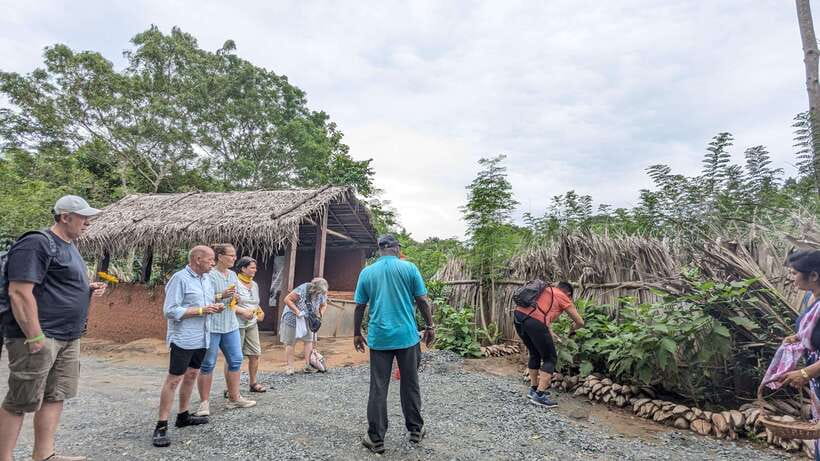
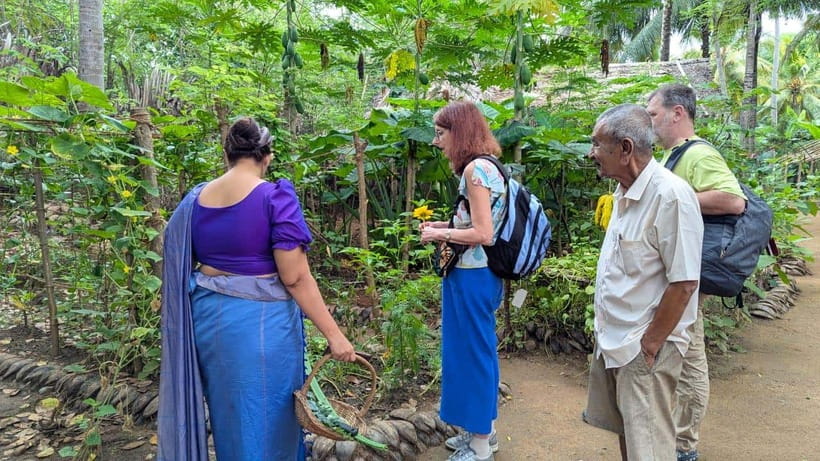
The farm-to-table idea becomes real in the garden. You walk through the property and pick fresh produce for the cooking lesson. This is simple work, but it changes how you experience the meal because you are handling at least part of the food before it reaches the kitchen.
The garden is also one of the strongest parts of the visit for anyone interested in Sri Lankan home cooking. You can see the raw ingredients before they are mixed with coconut, spices, and other components. That helps you understand why local meals can taste so fresh without relying on complicated equipment.
The produce is described as organic, though no specific vegetables are listed. That means the exact harvest may vary. You should be ready to work with what is growing rather than arrive expecting one particular recipe or ingredient.
This part is especially good for families and curious eaters because it gives you a job to do. It is less suitable if you want a purely seated demonstration. The walking route and garden paths also explain why the activity is not suitable for wheelchair users.
Cooking with local women
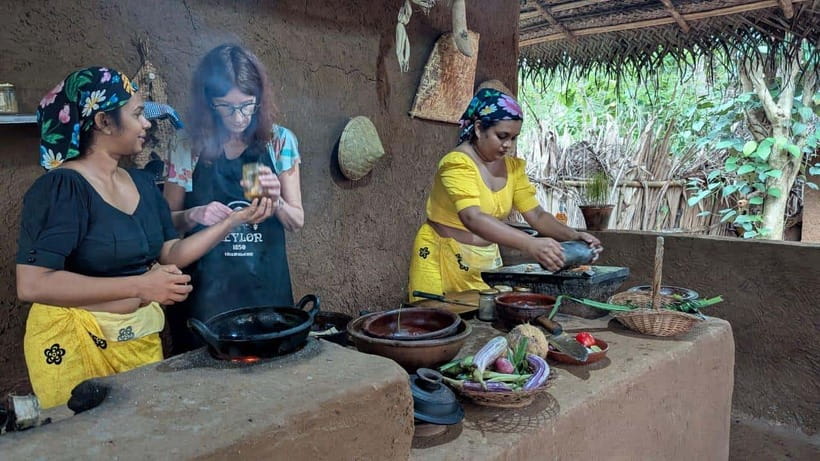
The kitchen is the main event. You join local women and prepare traditional Sri Lankan dishes using older recipes and methods. The experience includes tasks such as grinding spices and cooking over an open flame, so you are involved in the process rather than standing at a distance.
That hands-on approach earned the strongest praise in the available feedback. The cooking was described as informative, friendly, and fun, with the staff making a real effort to explain what they were doing. One particularly useful detail is the praise for the coconut sambal and dahl, both described as among the best sampled by that participant.
The presence of local women in the kitchen gives the lesson a domestic feel. You are learning food preparation in the place where the cooking makes sense, rather than in a polished demonstration kitchen built only for visitors. That can mean a less formal presentation, but it also makes the activity feel more connected to everyday village life.
You should expect a practical lesson, not a professional chef course. The information does not list the exact dishes, recipe cards, or cooking equipment. If you want to reproduce the meal at home, take notes as you go and ask questions while each dish is being prepared.
The open-flame cooking is another reason to wear practical clothing. Loose sleeves, expensive shoes, or anything you do not want exposed to smoke and food splashes would be poor choices. The activity is designed to be participatory, so be ready to stand, move, and help.
Sitting down to eat what you made
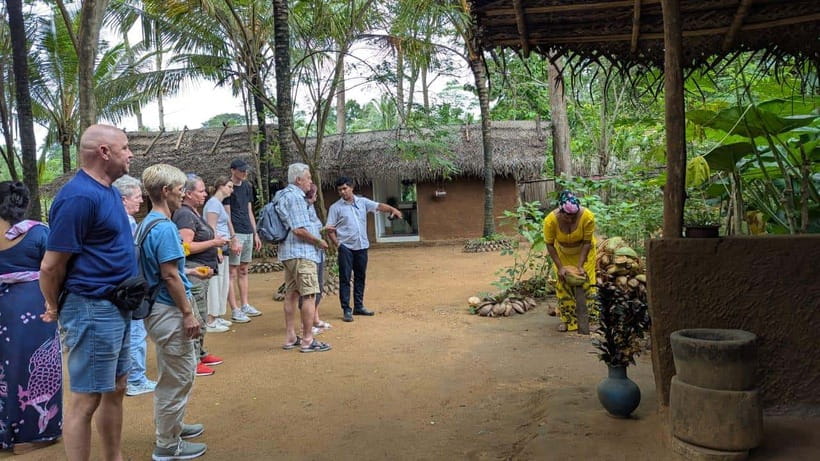
The final meal gives the cooking class a clear reward. You sit down to eat the dishes prepared during the lesson, including the local food you helped make. This is more satisfying than being handed a meal at the start because you have seen the ingredients and methods first.
I like this part as a measure of value. At $30 per person, the meal alone would not justify the price. The cost makes more sense when you count the mine visit, cinnamon demonstration, garden work, guided walk, cooking lesson, and shared meal as one package.
There is one important point to clarify. Drinks with the meal may not be included. One participant reported being charged much more than shop prices for drinks, without being told beforehand that they were separate. That is a fair reason to ask about beverage prices before ordering. The food itself received strong praise, but surprise charges can quickly change how you feel about an otherwise enjoyable outing.
The meal is also a chance to ask about the dishes you have just prepared. You can learn which ingredients make the dahl creamy, how the coconut sambal is balanced, and how the recipes fit into local meals. The experience does not promise a printed recipe sheet, so your questions and notes are valuable.
Local melas and the final cultural section
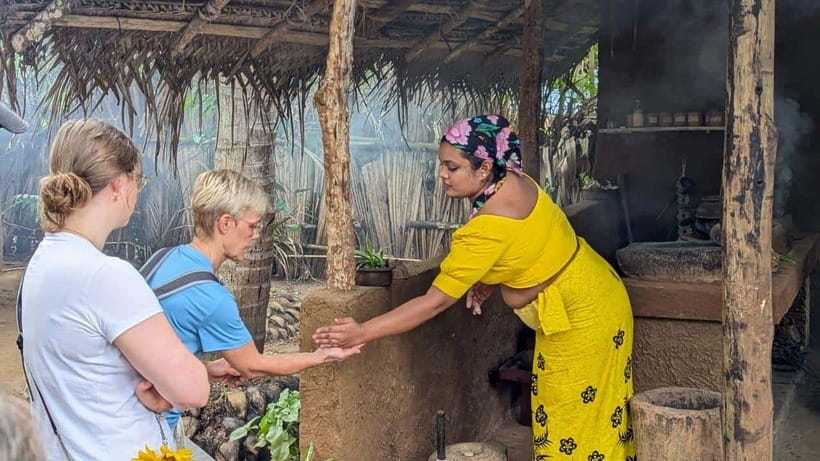
The advertised final section includes participation in local melas, with crafts, music, dance, and local foods. The word refers to a traditional fair or gathering, so this part is intended to connect the cooking visit with wider community customs.
Because the activity lasts two hours, the amount of time available for this section may vary. You should see it as part of the cultural program rather than assume you will attend a large, full-day fair. The exact presentation and timing are not specified.
This is potentially the most social part of the outing. After the quieter work of peeling cinnamon and cooking, the mela setting gives you a chance to see crafts and local delicacies in a more festive context. It also helps show that food is tied to music, gathering, and celebration, not just household work.
The key question is timing. If the garden and cooking class run long, the mela portion may be shorter. I would book this for the overall village experience, not for one particular dance, craft, or performance that is not guaranteed in the details provided.
What $30 buys you
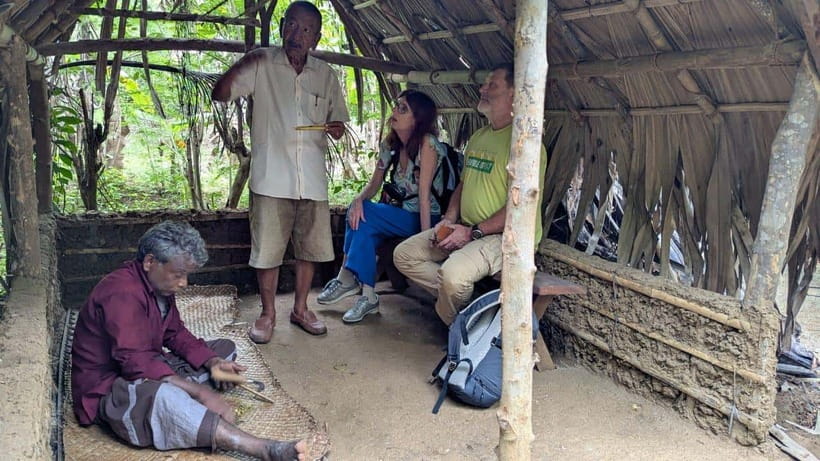
At $30 per person, this is not the cheapest way to eat in Udawalawe. You can find a local meal for far less. The price needs to be judged against the complete two-hour program.
You are paying for a private-group activity with a guide in English or Sinhala, a guided mine visit, a craft demonstration, garden access, a cooking lesson, the meal, and the cultural activities. If you take part fully, the package offers solid value for someone who wants contact with local food and rural traditions.
The value is weaker if you mainly want lunch. It is also weaker if you dislike walking, hands-on work, or group cooking. In that case, the same money may be better spent on a meal and a different short visit.
The drink issue deserves attention because it affects the final cost. Ask three questions before the meal: what is included, which drinks cost extra, and what is the price of each drink. The advertised welcome drink and the meal drinks should not be assumed to be the same thing.
Who will enjoy this most
I would recommend the experience to you if you want:
- A short cultural activity near Udawalawe
- A cooking lesson with real participation
- A meal built around fresh garden produce
- A look at cinnamon preparation and traditional mining
- A private-group setting with English or Sinhala guidance
- A practical alternative to spending the entire day at an attraction
It suits couples, families, and food-focused visitors who like to ask questions and get their hands busy. The friendly staff and welcoming kitchen atmosphere are a major part of its appeal.
I would hesitate to recommend it to you if you need step-free access, since wheelchair users are not considered suitable for the activity. I would also choose something else if you want a quiet, seated tour or a fully planned culinary syllabus with exact recipes and fixed dishes.
The overall rating of 4.7 from four reviews points to a very good experience, but the small number of ratings means you should keep expectations sensible. The strongest praise is consistent around the garden, cooking, staff warmth, and meal. The main warning is the unclear drink pricing.
Should you book this Udawalawe village experience?
Book it if you want to understand Sri Lankan food by helping make it. The garden, spice work, open-flame kitchen, and final meal form a useful chain, and the mine visit gives the outing more range than a standard cooking class.
Before paying, confirm the welcome drink, ask about extra beverage prices, and check the walking route. If you are comfortable with 90 minutes on foot and want an active cultural stop near the elephant orphanage, the $30 price is fair. If you only want a meal, or if accessibility is a concern, skip it.
FAQ
Where is the experience located?
It is in Sabaragamuwa Province, Sri Lanka, about 1.2 kilometers from the Udawalawe Elephant Orphanage.
How long does the experience last?
The activity lasts two hours. The walking portion around the village takes about 90 minutes.
What languages are available?
The live guide service is available in English and Sinhala.
Is this a private tour?
Yes. It is offered as a private-group experience.
What is included in the experience?
It includes a welcome drink, a guided visit to an ancient mine, a mining demonstration, cinnamon peeling, vegetable picking, a traditional cooking class, the meal you prepare, local mela activities, crafts, and local delicacies.
Is the experience suitable for wheelchair users?
No. Wheelchair users are listed as unsuitable for this activity.
Can I cancel and receive a refund?
Yes. You can cancel up to 24 hours in advance for a full refund. You can also reserve now and pay later.
Just added around the world
- Zanzibar:Jozani forest, Spice farm with Swahili Cuisine clas★ 4.2 · 3 reviews
- Zanzibar: Spice farm tour with Zanzibar fruits tasting★ 3.8 · 7 reviews
- Zanzibar: Stone Town City Tour and Spice Farm with Lunch★ 3.7 · 33 reviews
- ZANZIBAR, Stone town tour, Prison Island & Spice farm★ 5.0 · 11 reviews
- Zanzibar: Walking Spice Farm with Local Cooking Class★ 4.4 · 9 reviews
- Zanzibar: Spice Farm Tour with Traditional Cooking Class★ 5.0 · 2 reviews
- Zanzibar: Spice Farm Tour with Traditional Cooking Class★ 4.8 · 6 reviews
- Zanzibar: Spice Farm Tour with Traditional Cooking Class★ 4.6 · 16 reviews
Cooking Classes, farm by farm.
Half-Day Thai Cooking Class at Organic Farm in Chiang Mai
Read our review →
Cooking Class and Lunch at a Tuscan Farmhouse with Local Market Tour from Florence
Read our review →
Authentic Cooking Class with Market & Farm Visit
Read our review →

Hands-On Cooking Class & Farmhouse Tour on the Amalfi Coast
Read our review →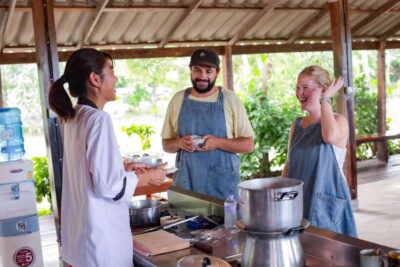
Other lists this farm sits on