
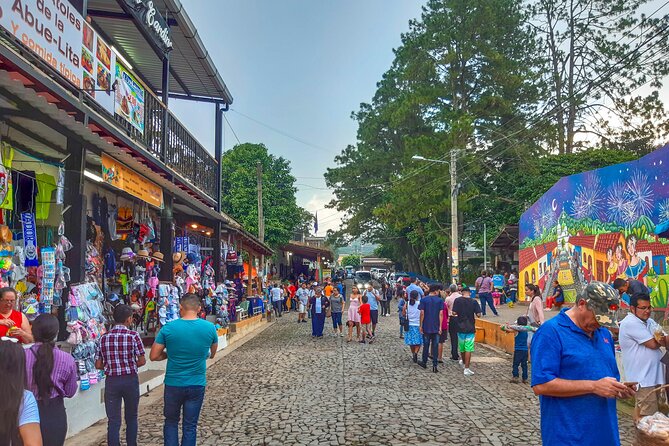
REVIEW · SAN SALVADOR, EL SALVADOR
Ruta de Las Flores Adventure, Relax at Hotsprings + 1930’s farm Coffee Tour
Small towns, strong coffee, warm water. This full-day trip brings together Nahuizálco and Ataco, a coffee estate operating since 1930, and volcanic hot springs in one efficient outing from San Salvador. I like the mix of local markets and colonial streets, and I like that the guides, including Herbert, Osmaro, Francisco, and others, often add history, Spanish or Nawat words, food stops, and photo help along the way. The main drawback is time: the towns can feel brief, especially if you want to shop, eat, or linger in Ataco.
The tour costs $115.85 per person, includes hotel pickup in San Salvador, a professional guide, transport, taxes, the coffee tour, and hot springs admission. Lunch, drinks, bottled water, and towels are not included, so plan ahead. With a maximum of 10 people, it offers a more personal day than a large coach tour, but traffic can stretch the day beyond eight hours.
Key points before you book
- Nahuizálco offers a real local market stop, with tropical fruit and wicker and tule crafts.
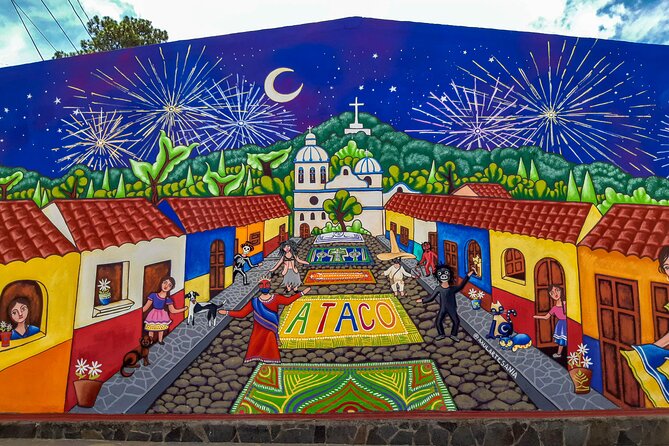
- Ataco is the visual highlight, with murals, cobblestone streets, churches, shops, and coffee culture.
- El Carmen Estate shows coffee from truck to cup, inside a processing plant operating since 1930.
- Termales de Santa Teresa ends the day with several hot-water pools, fed by volcanic activity.
- Guides make a major difference, with Herbert, Osmaro, Francisco, Antonio, Rafa, and others praised for history, flexibility, and care.
- Bring a swimsuit, towel, sunscreen, light clothes, and a sweater or jacket, and expect a long day on the road.
What this San Salvador day trip actually delivers
Ruta de las Flores is a practical choice if you have only one free day for western El Salvador. You get countryside views, small towns, cultural stops, coffee production, and a soak at the end, all without arranging several separate excursions.
The schedule begins with hotel pickup in San Salvador, often around 8:30 a.m. The stated duration is about eight hours, though the actual return can be later. Some outings have ended near 6 p.m., while another reached the hotel around 8 p.m. Traffic, weather, lunch, and the pace of the group all matter.
The vehicle is shared by a small group of no more than 10 people. That size is useful. You can ask for a bathroom stop, a snack break, a photo pause, or a clearer explanation without trying to get the attention of 40 other people.
The guides are one of the strongest parts of the experience. Herbert is praised for turning the drive into an informal lesson, sometimes testing guests on Spanish, Nawat, and Salvadoran history. Osmaro is noted for taking photos and adjusting the day to individual needs. Francisco received special praise for helping older family members on stairs. These details matter because the tour involves several stops, different surfaces, and a fair amount of getting in and out of the vehicle.
More Coffee Farm Tours around the world:
- Award Winning Farm Tour: Coffee, Chocolate and Unique Gifts
★ 5.0 · 484 reviews - La Herradura Coffee Farm: tour in Europe’s only plantation
★ 4.8 · 430 reviews - Big Island: Volcanoes, Waterfalls, & Coffee Farm Day-Trip
★ 4.9 · 414 reviews
Nahuizálco and the market’s local rhythm
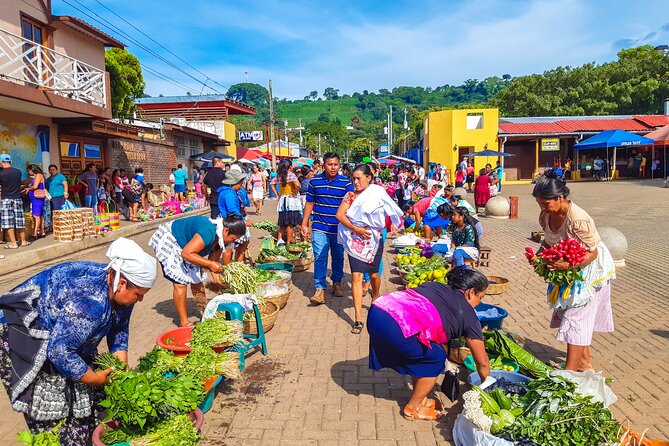
The first stop is Nahuizálco, a town whose name in Nahuatl means the four Izalcos. The visit lasts about 45 minutes and has no separate admission charge.
This is not a grand museum visit. It is a short introduction to daily life, with time to see the municipal market, look at fresh produce, and try tropical fruit. Nahuizálco is also known for wicker and tule handicrafts. These natural materials are used for baskets, chairs, mats, and other household pieces.
I like this stop because it gives the route a human scale. You are not only photographing pretty streets. You are seeing where people shop and where local craft traditions remain part of ordinary work.
The short timing is also the limitation. Forty-five minutes lets you look around, taste fruit, and hear some context, but it does not leave much room for careful shopping or a long conversation with vendors. If you want to buy handicrafts, ask your guide how much time is available before you begin browsing.
Nahuizálco also carries painful cultural history connected to El Salvador’s Indigenous legacy. The tour description points to a major historical event that affected Indigenous culture, though the exact depth of the explanation can depend on your guide. Herbert, Osmaro, Francisco, and the other guides are praised for explaining history clearly, so ask questions rather than treating this as a quick photo stop.
Ataco’s murals, streets, and coffee identity
Concepción de Ataco is the most memorable town on the route for many visitors. The streets are cobbled, the walls are covered with murals, and the town has a slower feel that makes it easy to imagine an earlier era of travel.
The stop is listed at about 45 minutes, with no separate admission charge. That is enough to walk, take photos, see some shops, and get a sense of the town. It is not enough for a leisurely café visit, extended shopping, and a full exploration of every side street.
This is where I would pay close attention to the clock. Several people enjoyed the coffee estate and hot springs but wished they had more free time in the towns, especially Ataco. Another person felt the towns received too much time compared with the hot springs. That difference tells you something important: the ideal balance depends on your interests.
If you love murals, small-town streets, local shops, and coffee, Ataco may deserve more than 45 minutes. If you mainly want the hot springs, you may prefer the schedule as it is. The guide can sometimes adjust the pace, but the full route has several fixed elements, and traffic can reduce flexibility.
Ataco is also known for high-quality coffee. That makes the next stop feel connected rather than random. You first see the town’s coffee identity, then visit a working estate to understand how the drink is made.
El Carmen Estate and coffee from harvest to cup
The coffee tour at El Carmen Estate lasts about one hour and admission is included. The estate has a coffee processing plant that has operated since 1930.
This is the most educational stop for anyone who wants more than a tasting. You learn what happens after freshly cut coffee arrives by truck. The tour follows the transformation through processing and drying before the coffee is served in a cup.
The exact hands-on experience can vary, but one outing included helping move coffee during the drying process and sampling the finished product. That small physical task helps explain the work better than a quick explanation alone.
I especially like the connection between the machinery, the workers, and the final drink. Coffee is often presented as a polished café product. Here, you get a look at the less glamorous stages that make the cup possible.
The one-hour visit is well judged for a day trip. It gives you enough time to understand the process without turning the day into a specialist coffee seminar. Still, coffee lovers who want a long farm walk or a detailed tasting session should check the exact format before booking. The supplied details confirm a processing plant tour and coffee sampling, but not an extended plantation hike.
The estate is also a good place to ask questions. How does the plant handle freshly picked coffee? What changes during drying? Which stages affect flavor? Guides have been praised for making the information interactive, so this is a chance to turn a standard tour into a useful lesson.
More Farm Tours around the world:
- Half-Day Thai Cooking Class at Organic Farm in Chiang Mai
★ 5.0 · 19,087 reviews - Florence Pizza or Pasta Class with Gelato Making at a Tuscan Farm
★ 5.0 · 6,801 reviews - From Porto: 2 Wine Regions, Farm-to-Table Lunch & Boat
★ 4.9 · 5,724 reviews - Cooking Class and Lunch at a Tuscan Farmhouse with Local Market Tour from Florence
★ 5.0 · 4,831 reviews
Termales de Santa Teresa and the final soak
After the towns and coffee stop, the tour heads to Termales de Santa Teresa, a small mountain resort with hot-water pools at different temperatures. The water comes from volcanic activity, and the included visit lasts about one hour.
This is a sensible ending. You have spent the day walking, riding, listening, and taking photos. A warm pool gives you time to stop thinking about the next turn in the road.
Some descriptions of the resort refer to around 30 pools and hot tubs, though the exact experience can depend on which areas are open. The main point is that you are not limited to one single pool. You can try different temperatures and find a spot that suits you.
Bring a swimsuit. Also bring your own towel, since towels are not listed among the inclusions and one person specifically wished they had known to bring one.
The hot springs are not universally appealing. One person found the facilities dirty and was disappointed by the lack of a shower and clean restroom. That concern deserves attention. This is a simple hot-springs stop, not a luxury spa, and you should keep expectations at the level of a casual resort visit.
The weather also matters. El Salvador can be hot, so you may wonder why you need hot water in a warm climate. In practice, the appeal is less about escaping cold weather and more about resting in mineral and volcanic water after a full day. If you dislike hot pools or prefer more town time, this part may feel long.
The guides turn a busy day into a personal one
The route covers a lot, but the guide determines how much meaning you take away. The strongest guide comments focus on four things: history, patience, flexibility, and safe driving.
Herbert is frequently praised for being friendly, careful, and entertaining. He has been described as both guide and driver, which makes his role especially important on a full day with several stops. Osmaro is praised for local knowledge, photos, snack and restroom stops, and a willingness to shape the outing around the group.
Francisco’s thoughtful help with two older relatives shows what a good guide can add. The tour is described as suitable for most people, but that does not mean every stop is effortless. Cobblestones, stairs, and getting in and out of the vehicle may be tiring. If you have bad knees or limited mobility, explain your needs at booking and again at the start.
Other named guides include Smart, Antonio, David, Rafa, and Osmara. The names vary because the operator uses a team, but the pattern is consistent: the best day comes when you speak up. Ask for a slower explanation, a photo stop, a bathroom break, or help understanding a local custom.
Is $115.85 a fair price?
At $115.85, this is not the cheapest way to see western El Salvador. The value depends on what you would otherwise need to arrange.
The price includes pickup and drop-off in San Salvador, a professional guide, small-group transport, taxes, coffee estate admission, and hot-springs admission. You are paying for a full day of logistics as well as the visits themselves.
Food and drinks are extra, and lunch is not included. Some guides stop at local food places or make practical breaks when the group is hungry. One outing included a meal at the hot springs, while another person wished they had eaten in one of the towns instead. I would not assume a particular lunch arrangement. Carry water and snacks, then ask the guide about the food plan at the beginning.
The value is strongest for a first visit, a short stay, or anyone who does not want to rent a car and manage the route. It is weaker for independent visitors who want to spend several hours in Ataco, choose their own café, or move at a very slow pace.
The 99 percent recommendation rate and 4.9 rating from 83 reviews point to a reliable experience, but the criticism is useful too. The route is packed, the hot springs are basic, and the town stops may not satisfy someone who wants a relaxed village day.
Practical advice for a smoother day
Wear comfortable shoes. Nahuizálco and Ataco involve walking, and cobbled streets are rarely kind to flimsy footwear.
Use sunscreen and wear light clothing. Add a sweater or jacket because the highland route and vehicle air-conditioning may feel cooler than San Salvador.
Bring a swimsuit and towel for Termales de Santa Teresa. Bottled water is not included, so bring your own or plan to buy it during a stop.
Keep some flexibility in your schedule after the tour. The planned duration is about eight hours, but traffic and stops can push the return later.
The tour requires good weather. If poor weather causes cancellation, you are offered another date or a full refund. If the minimum number of participants is not reached, the same options apply. You can cancel for a full refund up to 24 hours before the start time, but changes or cancellations inside that window are not refunded.
Who should book this Ruta de las Flores tour?
I would choose this tour if you want to see several sides of El Salvador in one day: Indigenous craft traditions, a working market, colorful colonial towns, coffee production, and volcanic hot springs.
It suits solo visitors, couples, families, and small groups who value a guide’s explanations and do not mind a long road day. Families may especially appreciate the comfortable vehicle, flexible stops, and guides who help children follow the explanations.
I would think twice if your main goal is slow photography in Ataco, a long sit-down lunch, or a polished spa experience. In that case, a private custom outing or a night in the Ruta de las Flores area may fit better.
For most first-time visitors based in San Salvador, I think the tour offers strong value. Book it for the range of experiences, not for unlimited time at any one stop. Bring water, a towel, and an open schedule, then let the guide help you make the day work.
FAQ
Where does the tour begin and end?
Hotel pickup and drop-off are available only in San Salvador.
How long does the tour last?
The planned duration is approximately eight hours. Actual return times can vary, with some outings returning around 6 p.m. and others closer to 8 p.m.
What is the maximum group size?
The tour has a maximum of 10 travelers.
Is lunch included?
No. Lunch, food, and drinks are not included unless specifically stated. Bottled water is also not included.
Should I bring a swimsuit?
Yes. A swimsuit is recommended for the hot springs at Termales de Santa Teresa.
Should I bring a towel?
Yes. Towels are not listed as included, and bringing your own is advised.
What should I wear?
Bring comfortable shoes, light clothing, sunscreen, and a sweater or jacket.
Is the coffee tour included?
Yes. Admission to the El Carmen Estate coffee tour is included.
What happens if the tour is canceled because of bad weather?
You will be offered a different date or a full refund. The same applies if the minimum number of participants is not reached.
Just added around the world
- Zanzibar:Jozani forest, Spice farm with Swahili Cuisine clas★ 4.2 · 3 reviews
- Zanzibar: Spice farm tour with Zanzibar fruits tasting★ 3.8 · 7 reviews
- Zanzibar: Stone Town City Tour and Spice Farm with Lunch★ 3.7 · 33 reviews
- ZANZIBAR, Stone town tour, Prison Island & Spice farm★ 5.0 · 11 reviews
- Zanzibar: Walking Spice Farm with Local Cooking Class★ 4.4 · 9 reviews
- Zanzibar: Spice Farm Tour with Traditional Cooking Class★ 5.0 · 2 reviews
- Zanzibar: Spice Farm Tour with Traditional Cooking Class★ 4.8 · 6 reviews
- Zanzibar: Spice Farm Tour with Traditional Cooking Class★ 4.6 · 16 reviews
Coffee Farm Tours, farm by farm.
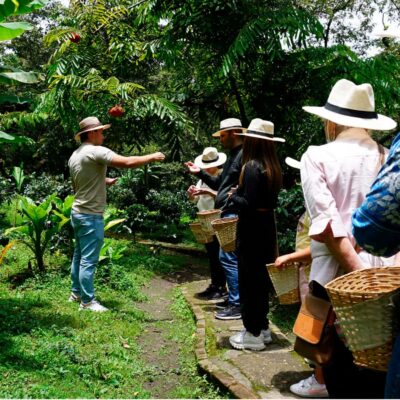
Award Winning Farm Tour: Coffee, Chocolate and Unique Gifts
Read our review →
La Herradura Coffee Farm: tour in Europe’s only plantation
Read our review →
Small-Group Big Island Tour: Hawaii Volcanoes National Park and Kona Coffee Farm
Read our review →
Medellín Coffee Farm Tour with Trolley and Cable Car Ride
Read our review →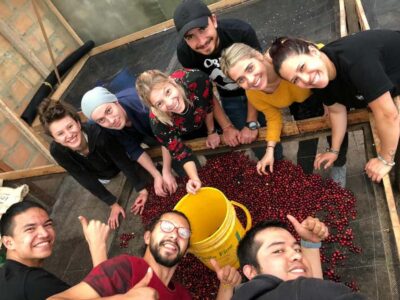
Private Cocora Valley, Salento & Coffee Farm Tour
Read our review →
Liamuiga Natural Farm Tour – St.Kitts’ Coffee Farm
Read our review →
Other lists this farm sits on