
REVIEW · GREECE
Phyllo Pie Baking Class @ Lefkada Micro Farm
Slow food tastes better in the open air. This four-hour class at Lefkada Micro Farm gives you a hands-on way to learn traditional Greek phyllo baking, from kneading and stretching dough to filling a rustic pie with garden greens. I especially like the family recipes passed down for 100 years and the use of the farm’s own extra virgin olive oil. The wood-burning oven and shared Farmer’s Table add real character.
I also like that the class keeps the group small, with no more than 10 people, and teaches recipes you can repeat at home. The main consideration is the price: at $123 per person, this is not a quick cooking demonstration. You are paying for four hours, food, instruction, ingredients, and a full farm experience. If you want a short lesson or a polished restaurant meal, this may not be the right fit.
Key points to know before booking
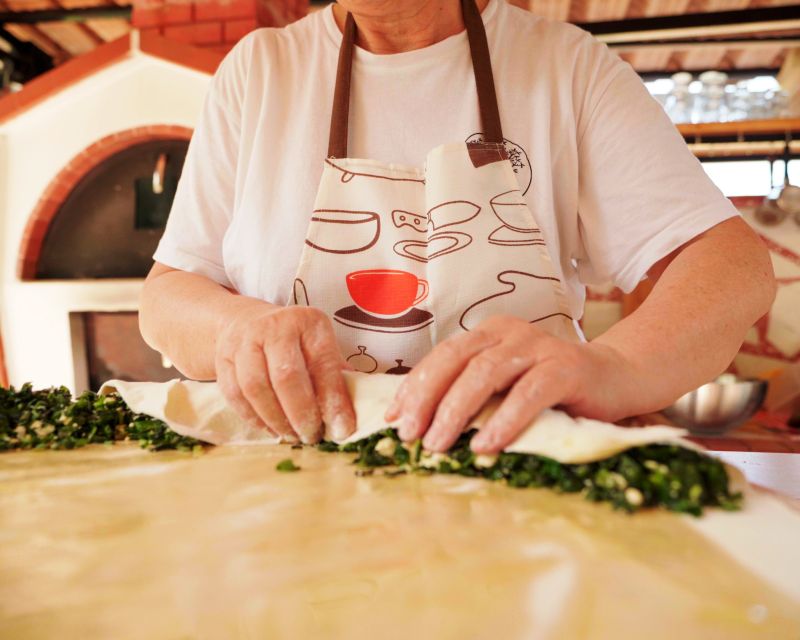
- You make phyllo dough from scratch, then knead, roll, stretch, fill, and bake it.
- The garden supplies seasonal greens and herbs, giving the class a direct connection to the farm.
- A wood-burning oven cooks the pies, bringing a traditional finish that a home oven may not quite match.
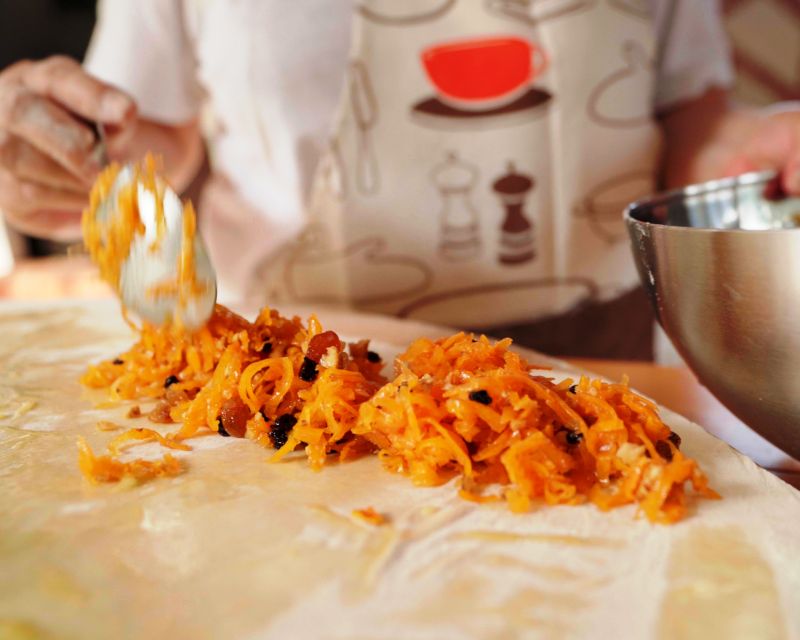
- Four recipes are part of the cooking experience, including savory pies, pumpkin pie, and baklava.
- The meal is shared at a large Farmer’s Table, turning the class into a social farm lunch or dinner.
- The group is limited to 10 people, and the class is taught in English.
Why this Lefkada cooking class feels different
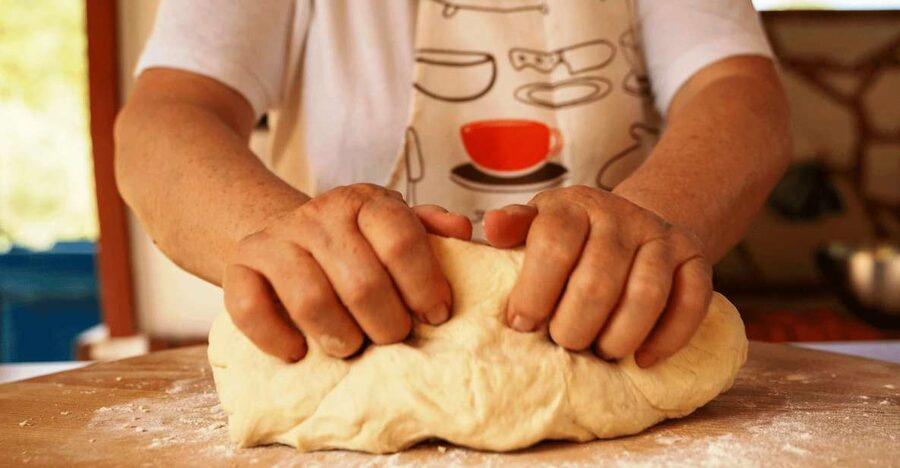
Many cooking classes focus on a finished dish. This one focuses on the dough itself. Phyllo can seem delicate and fussy when you buy it in thin packaged sheets, but the countryside style taught here is thicker, rustic, crunchy, and made for hearty pies.
That makes the class useful beyond the day itself. You are not simply watching someone prepare a local specialty. You are learning a method you can try in your own kitchen, with ordinary ingredients and a little patience.
The recipes come from the family’s cooking tradition and are described as being around 100 years old. That detail matters because the class is built around practical home cooking rather than restaurant tricks. The goal is a country-style pie with honest texture and strong flavor, not a perfect pastry sculpture.
I also appreciate the setting. Lefkada Micro Farm combines cooking with gardening, olive oil, fire, and a shared meal. Those pieces make the experience feel connected from start to finish.
More Cooking Classes around Greece:
- Naxos Perivoli Farm Experience & Wood-fire Cooking Class
★ 5.0 · 339 reviews - Cretan Cooking Class and Olive Oil Tasting
★ 5.0 · 178 reviews - Melanes: Naxos Perivoli Farm & Cooking Class with Wood Fire
★ 5.0 · 177 reviews
Starting in the organic garden
The class begins with a walk through the organic garden. You harvest seasonal greens and herbs that will be used in the recipes, rather than starting with ingredients already measured and waiting on a counter.
This is a small part of the schedule, but it gives you useful context. Greens are not just an abstract filling. You see where they come from and how a farm meal begins. The exact harvest depends on the season, so the class can vary slightly in flavor and ingredients.
You should tell the farm about food allergies or dietary restrictions before attending. That is especially important here because the recipes include feta, goat cheese, walnuts, honey, and other ingredients that may not suit every diet.
The garden visit also sets the pace. This is a slow, hands-on activity, not a class built around rushing from one station to another. A previous attendee, Sue from the United Kingdom, gave the experience a five-star rating and described the farm as peaceful. That calm setting is one of the strongest reasons to choose this class.
Learning the family phyllo method
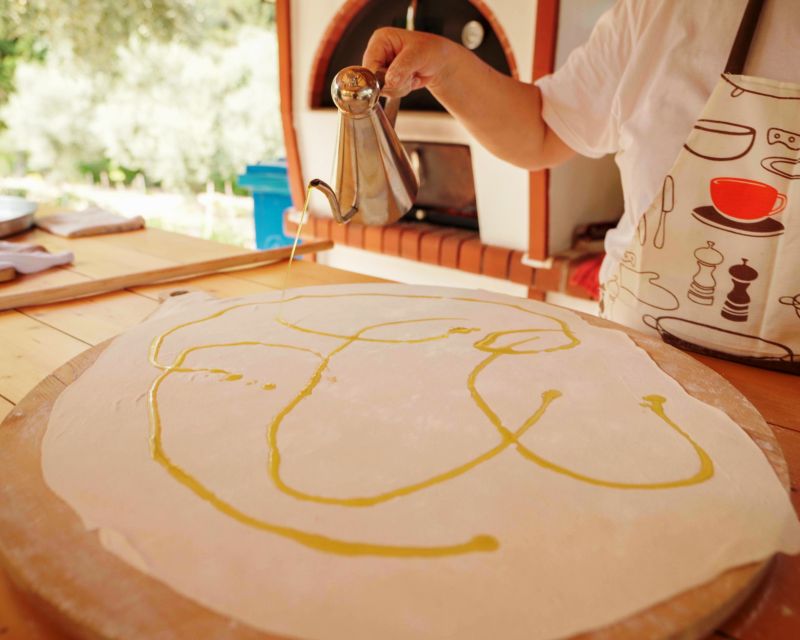
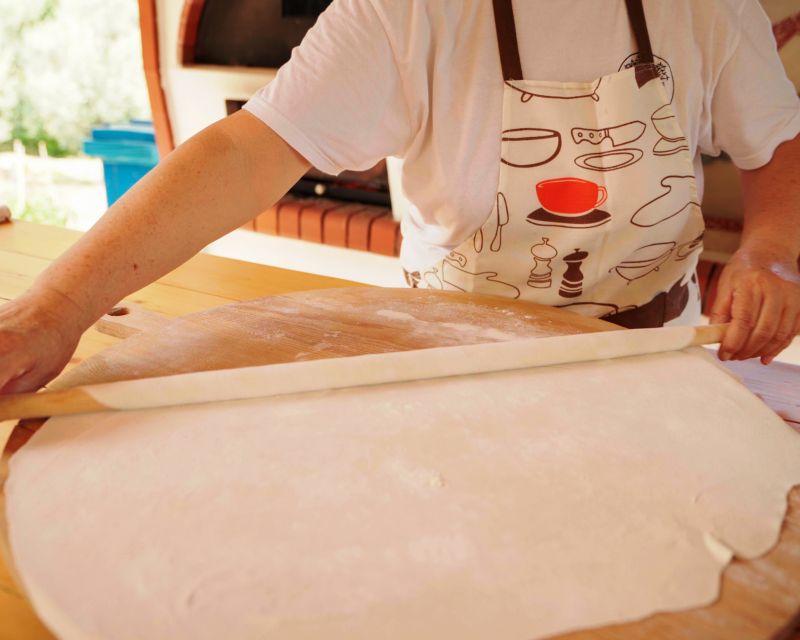
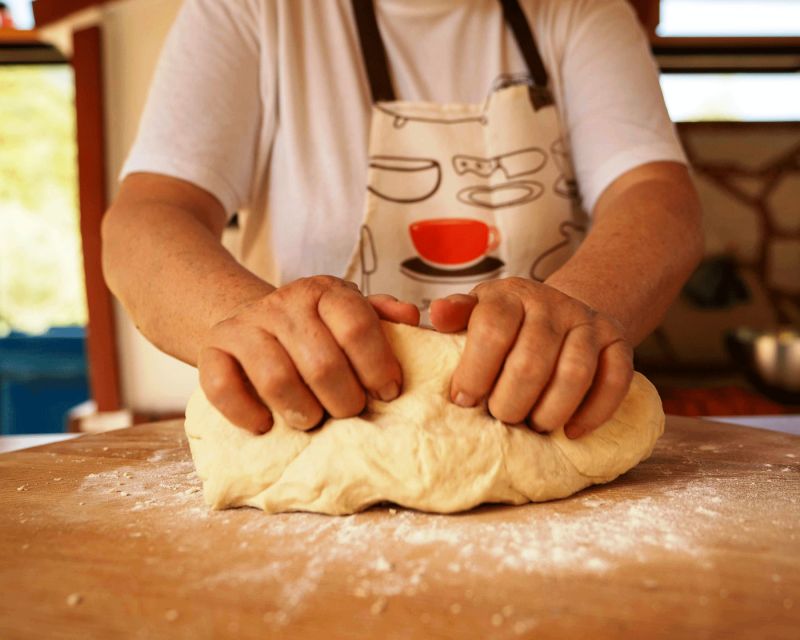
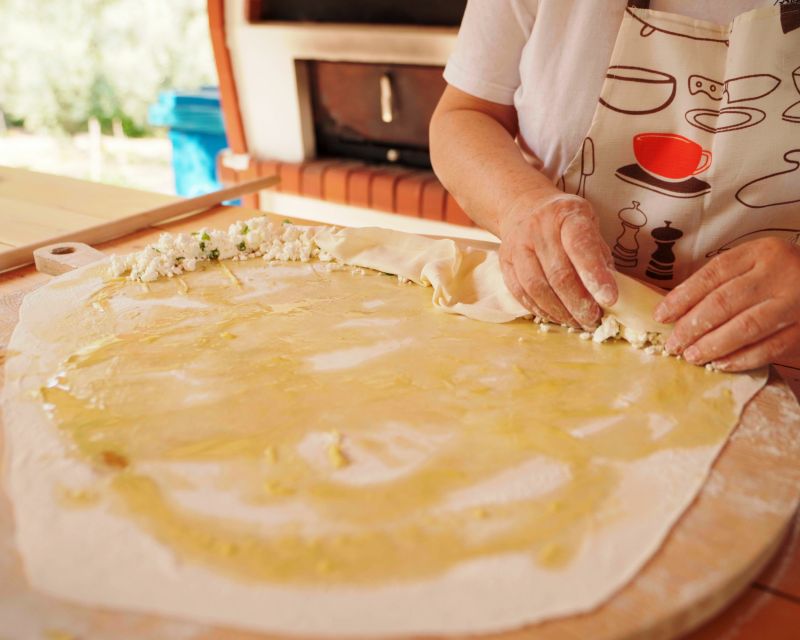
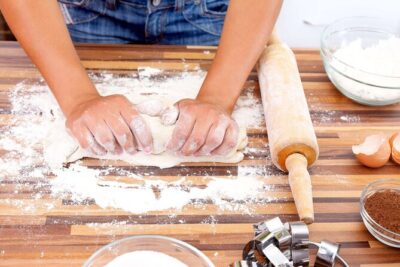
Back in the open-air kitchen, you work with the dough. You learn how to knead it, roll it, and stretch it into the thick, rustic crust used for Greek countryside pies.
The class promises a method that is easy to take home. That does not mean the dough requires no effort. Rolling and stretching by hand takes practice, and the first crust you make may not look perfectly even. That is part of the appeal. The finished pie is meant to be rustic, crunchy, and substantial.
The farm uses its own selection extra virgin olive oil in the recipes. Olive oil plays an important role in Greek cooking, and using the farm’s own oil gives the lesson a clear local link. You are learning not only how to shape dough, but also how a few good ingredients can carry a dish.
Cooking utensils and an apron are included. You do not need to arrive with specialist equipment, which makes the class easier to fit into a holiday schedule.
Four recipes, from greens to baklava
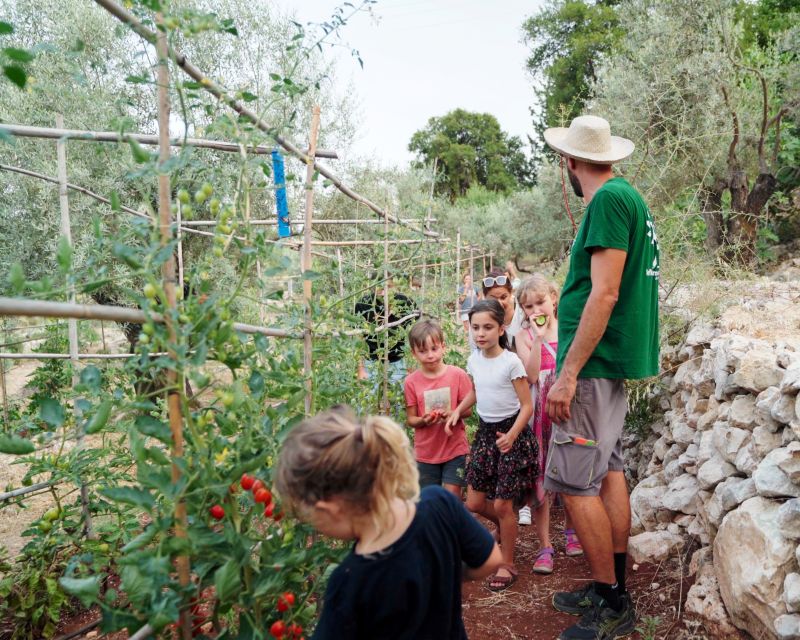
The class includes several recipes, giving you a broad introduction to Greek pie-making rather than just one dish.
More Workshops around Greece:
- Santorini Family Farm Food & Wine Tour with Cooking Class
★ 5.0 · 107 reviews - Moires: Cooking Class and Olive Oil Tasting at a Family Farm
★ 5.0 · 93 reviews - Mykonian Farm and Bakery Class with Brunch in Greece
★ 4.5 · 39 reviews - Traditional Greek Cooking Class @ Lefkada Micro Farm
★ 4.7 · 32 reviews
Wild greens and feta
This is the recipe most closely tied to the garden walk. Seasonal greens and herbs go into the filling, with feta adding salt and creaminess. The appeal is its simplicity. You can learn a basic savory pie method, then adapt it later to greens available at home.
The changing seasonal ingredients are a plus for cooks who like flexibility. The possible drawback is that you should not expect exactly the same greens every time. The farm’s cooking follows what is available.
Goat cheese, sun-dried tomatoes, olives, and oregano
This pie brings stronger, saltier flavors. Goat cheese provides a sharper filling, while sun-dried tomatoes, olives, and oregano give it a clear Mediterranean profile.
It is a useful lesson in balance. The ingredients are bold, so the dough needs to be sturdy enough to hold them. If you prefer mild flavors, this may be the most assertive of the savory options.
Pumpkin with walnuts, cinnamon, and raisins
This sweet pie shows how the same dough can move from savory to dessert. Pumpkin, walnuts, cinnamon, and raisins create a warm filling with contrasting textures.
This is also a good reminder that Greek pies are not limited to greens and cheese. The walnuts add crunch, while cinnamon and raisins shift the dish toward a spiced sweet. You get more value from the class because the technique works across several types of filling.
Baklava with honey, cinnamon, and walnuts
Baklava rounds out the lesson with another classic combination. Honey, cinnamon, and walnuts create a rich dessert that pairs naturally with layers of pastry.
The class does not promise a separate dessert tasting menu. Instead, these recipes form part of the hands-on baking program. You should expect to share what is prepared rather than take home a large quantity of each dish.
Waiting for the wood-burning oven
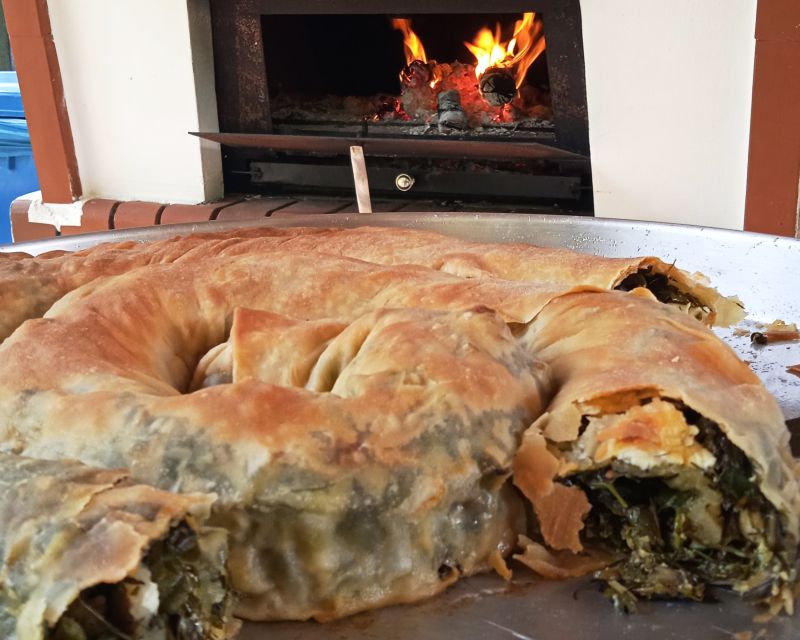
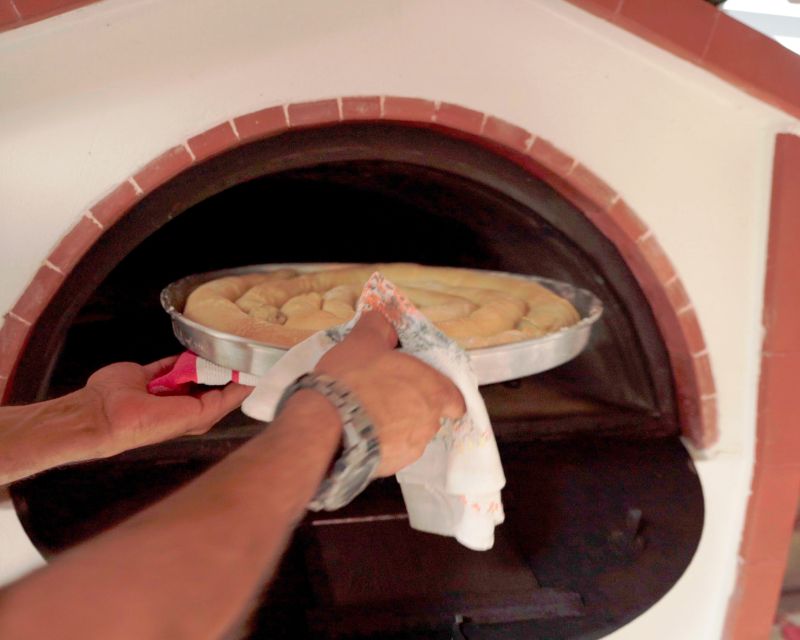
The pies bake in a traditional wood-burning oven. This is one of the most appealing details of the experience, since the oven connects the food to older village cooking methods.
A wood oven also changes the rhythm of the class. After the hands-on work, you have time to pause while the pies cook. Rather than filling every minute with instruction, the schedule allows the food to finish properly.
The exact baking time is not provided, so you should not plan another tightly timed activity immediately afterward. The class lasts four hours, and the meal at the end is part of the experience, not an optional extra.
The oven is also a practical reminder that this is farm cooking. You are not working in a sleek professional kitchen with a row of identical appliances. The setting is more traditional and relaxed, which may appeal to you if you care more about process than polish.
The Farmer’s Table meal
Once the pies are ready, the group gathers at the large Farmer’s Table to eat together. This shared meal is a key part of the class, not simply a reward after the cooking ends.
I like this format because it gives the food a proper finish. You have harvested ingredients, prepared dough, worked with fillings, and watched the pies bake. Eating together closes the loop.
The table also makes the experience social without requiring a large group. With a maximum of 10 participants, you have a better chance of following the instruction and talking with the other people in the class. It is still a group activity, so you should be comfortable sharing a meal and working around others.
The peaceful farm setting received specific praise from Sue, who attended on September 4, 2025. Her five-star feedback points to the atmosphere as much as the cooking. If your holiday includes too many busy sightseeing stops, this class offers a welcome change of pace.
What $123 includes, and what it does not
The price is $123 per person. That is a considerable amount for a cooking class, but the cost covers more than a short lesson. You receive four hours of instruction, cooking utensils, an apron, garden harvesting, ingredients, access to the open-air kitchen, wood-oven baking, and a shared meal.
You also get instruction in several recipes instead of one. The value is strongest if you want a skill you can use after returning home. The class explains techniques for making the dough and fillings, so you are paying for practical knowledge as well as lunch or dinner.
The price may feel high if your main goal is simply to eat Greek food. You could spend less at a local restaurant and avoid the work. This class makes sense when you want the work to be part of the pleasure.
The current rating is five out of five from three ratings, including Sue’s verified booking. That is a very small sample, so I would treat it as a positive sign rather than proof that every visitor will have the same experience.
Group size, timing, and practical details
The class lasts four hours, with starting times based on availability. Check the available time before booking, especially if you are arranging transport or planning an evening activity afterward.
Instruction is in English. The experience is wheelchair accessible, and the group is limited to 10 participants. Those details make the class more manageable than a large commercial cooking event, though the work still involves handling dough, moving through the cooking area, and taking part in a shared meal.
You can cancel up to 24 hours in advance for a full refund. A reserve-now, pay-later option is also available, which helps if your plans in Western Greece are still changing.
Tell the farm about allergies or dietary restrictions before the class. Do not wait until you arrive, since the recipes and shared meal include several specific ingredients.
Who will enjoy this class most
I would recommend the class to cooks who enjoy learning by doing. You will get more from it if you want to knead dough, handle ingredients, and share the results rather than sit back and watch.
It also suits couples, families, and small groups looking for a slower activity in Western Greece. The farm setting and communal table make it a good break from standard sightseeing.
Food-focused visitors will appreciate the use of seasonal garden produce, family recipes, extra virgin olive oil, and the wood-burning oven. You do not need advanced baking skills. The method is presented as approachable, and the rustic style is forgiving.
I would hesitate to recommend it if you have a strict schedule, dislike group meals, or want a highly polished cooking studio. The four-hour length and relaxed pace are central to the experience. Also check the ingredients carefully if you have allergies or dietary restrictions.
Should you book the Lefkada Micro Farm class?
Book this class if you want to understand Greek food through its ingredients, dough, fire, and shared table. The best features are the small group, the garden harvest, the old family recipes, and the chance to make several types of pie.
At $123, it is a special activity rather than a budget meal. For me, the price is easier to justify because you leave with a usable cooking technique and a full four-hour experience, not just a plate of food.
If the idea of a peaceful farm, handmade phyllo, and a wood-burning oven appeals to you, this is a strong choice. If you only want to sample Greek pastries, spend your money at a bakery and keep your afternoon free.
FAQ
How long does the Phyllo Pie Baking Class last?
The class lasts four hours. Starting times vary, so check availability before booking.
What recipes are included?
The recipes include wild greens and feta, goat cheese with sun-dried tomatoes, olives, and oregano, pumpkin with walnuts, cinnamon, and raisins, and baklava with honey, cinnamon, and walnuts.
Is the class taught in English?
Yes. The instructor language is English.
How many people can join the class?
It is a small-group experience limited to 10 participants.
Is the activity wheelchair accessible?
Yes, the activity is listed as wheelchair accessible.
What is the cancellation policy?
You can cancel up to 24 hours in advance for a full refund. A reserve-now, pay-later option is also available.
Just added around Greece
- Volos: Cook Like a Local at a Greek Farm★ 5.0 · 7 reviews
- Traditional Greek Cooking Class @ Lefkada Micro Farm★ 4.7 · 32 reviews
- Visit a Farm and Horseback Riding in Nature★ 5.0 · 10 reviews
- Insightful Pistachio Orchard and Factory Tour★ 4.5 · 27 reviews
- Flavors of Santorini: Farm-to-Table Meal Wine & Authentic Village★ 5.0 · 12 reviews
- Private Olive Oil tasting & Liqueur experience★ 5.0 · 17 reviews
- Santorini 5 Hour Private Oia Tour & Lunch/Dinner at a Local Farm★ 5.0 · 40 reviews
- Cooking Class Sunset Dinner and Tour in Paros Farm★ 5.0 · 5 reviews
Cooking Classes, farm by farm.
Half-Day Thai Cooking Class at Organic Farm in Chiang Mai
Read our review →
Cooking Class and Lunch at a Tuscan Farmhouse with Local Market Tour from Florence
Read our review →
Authentic Cooking Class with Market & Farm Visit
Read our review →
Hands-On Cooking Class & Farmhouse Tour on the Amalfi Coast
Read our review →
Other lists this farm sits on