REVIEW · KOTOR, MONTENEGRO
Olive oil farm to fork experience & short walking tour of Kotor
History tastes better with lunch. This five-hour private outing pairs a short walk through Kotor with a visit to a family olive estate in the Lustica region. I especially like the chance to see both a 150-year-old olive mill and a modern anaerobic press, then sit down to olive oil, cheese, prosciutto, olives, and homemade food. The family has owned the estate for 200 years, and nearly 1,000 olive trees give the visit a real sense of place.
I also like the human side of the tour. Guides Daniel and Lisette bring you from the old town to the farm, while Ilija explains the family business and daily life in the area. The main consideration is the price: $863.54 per private group of up to six, which is fair for a full vehicle and private hosts, but expensive for one or two people.
Key details at a glance
- A 200-year family estate: You visit a working olive farm that has been in the same family for two centuries.
- Two methods of olive-oil production: The old 150-year-old mill shows traditional work, while the newer anaerobic press explains modern production.
- Nearly 1,000 olive trees: Many are centuries old, giving the farm a strong connection to Montenegro’s agricultural past.
- A full local tasting: Expect olive oil, homemade bread, cheese, prosciutto, olives, smoked meats, sausages, salad, and apple pie, with a welcome drink.
- Kotor and countryside in one morning: The outing starts with a short walking tour in Kotor and continues by vehicle to the olive estate.
- Private and flexible in feel: Only your group takes part, with pickup available in Kotor Old Town or at the port.
Starting in Kotor Old Town
The day begins in Kotor, either at your agreed meeting point or with pickup from the Old Town or port. If you meet in the old town or harbor, the guide will hold a sign with your name. That small detail matters after a busy arrival, especially if your ship has just docked and the waterfront is crowded.
The walking portion is short. It is not designed as a full city tour, a museum program, or a demanding climb. Instead, it gives you a quick introduction to Kotor before the farm visit takes over the day.
Daniel and Lisette have led this portion, and both are described as warm, funny, and well informed about Kotor’s past. That combination suits a short orientation walk. You get enough context to understand the town, but the schedule does not spend the whole morning on streets and stone buildings.
This is useful if you are visiting Kotor for only a day. You can see part of the old town, then get beyond the usual port area and into the countryside. If you have already spent several days in Kotor, the walk works as a brief refresher rather than a repeat-heavy city tour.
More Farm Tours around the world:
- Half-Day Thai Cooking Class at Organic Farm in Chiang Mai
★ 5.0 · 19,087 reviews - Florence Pizza or Pasta Class with Gelato Making at a Tuscan Farm
★ 5.0 · 6,801 reviews - From Porto: 2 Wine Regions, Farm-to-Table Lunch & Boat
★ 4.9 · 5,724 reviews
Driving toward the Lustica olive country
After the town walk, the experience shifts from urban Montenegro to the Lustica region. Olive growing and oil production have been part of local life here for more than 2,000 years, so this is not a decorative farm stop added for tourists. The olives are tied to the food, work, and family traditions of the area.
The drive also gives the day a useful change of pace. Kotor can feel compact and busy, particularly around cruise arrivals. At the farm, you trade stone lanes and waterfront traffic for open views, old trees, and a working family home.
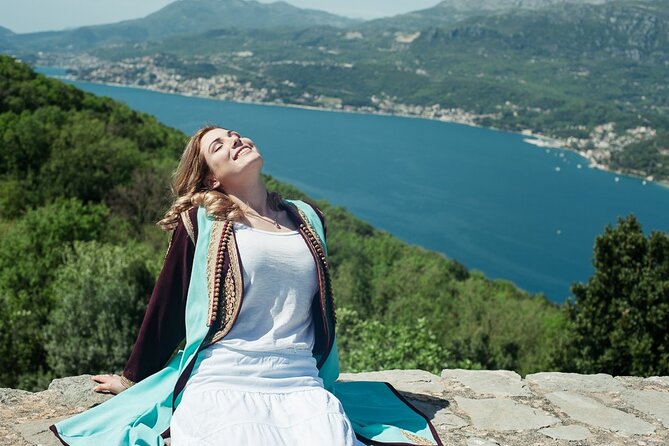
A harbor viewpoint may also be included along the way. Daniel has taken groups slightly out of their way for a good view over the harbor, which adds a welcome photo stop without turning the day into a long sightseeing circuit.
The exact amount of driving time is not given, so you should think of this as a five-hour outing rather than a tour with every minute tightly assigned. The farm visit and food are the heart of the program.
Walking among centuries-old olive trees
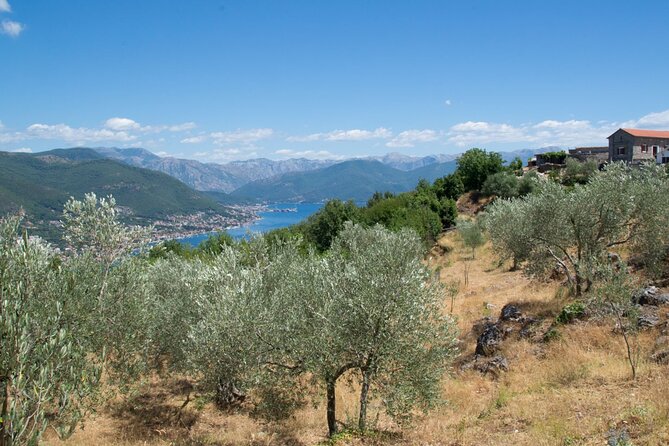
The estate is one of the most memorable parts of the day. The family has owned it for 200 years, and nearly 1,000 olive trees grow across the property. Many are centuries old, so you are looking at living trees that were already here long before modern machinery or organized tourism reached the region.
That setting gives the olive oil tasting more meaning. You are not simply sampling bottles at a shop. You can see where the olives grow, hear how the family works the land, and connect the finished oil with the trees around you.
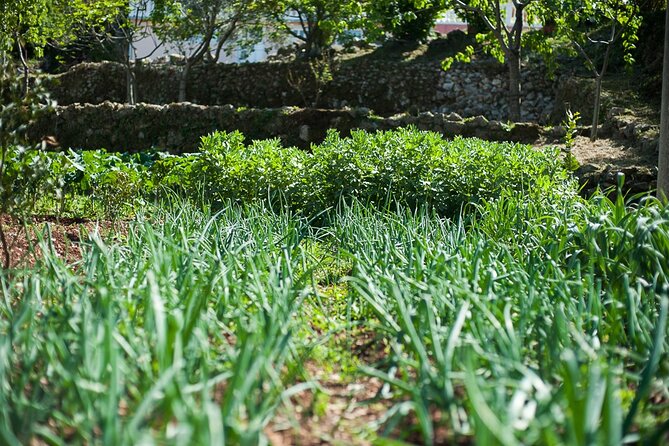
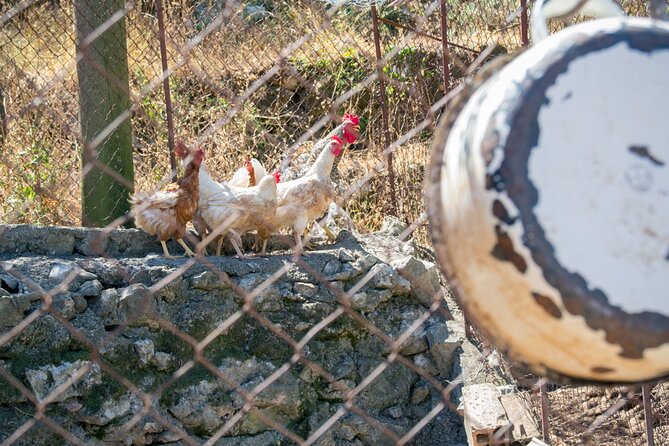
The family also grows vegetables and keeps animals on the estate. The supplied details do not specify which animals you will see or how close you will get to them, so do not expect a formal farm-animal program. The point is the working character of the property and the way food is produced for the household.
I would allow yourself time to look around before sitting down to eat. The scenery and the old trees are part of the experience, not just a backdrop for lunch.
Seeing the 150-year-old olive mill
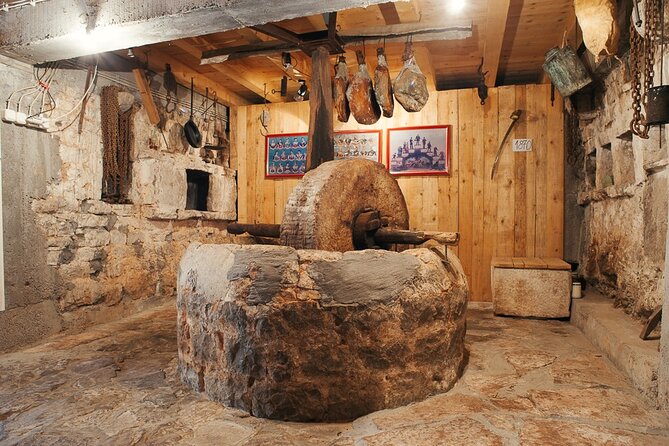
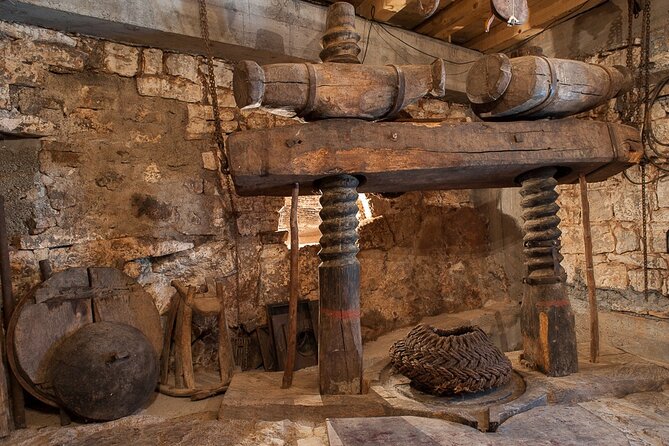
The old mill is the strongest historical object on the property. At 150 years old, it shows how olive oil was made before modern presses changed the pace and scale of production.
You will learn about the traditional method and see the equipment used in the old process. It is worth asking questions here, especially if you have tasted olive oil before but never understood how it was made. The mill helps explain the amount of labor once involved and why olive oil was such a valuable household product.
The old method is not presented as a museum display detached from family life. It is part of the estate’s story. You can see how one generation’s tools relate to the newer equipment now used by the family.
Do not expect a long technical demonstration with every stage performed in front of you. The information describes a tour of the authentic mill and an explanation of the old way of producing oil. The appeal comes from the setting, the age of the equipment, and the family connection.
Same fields, a different sort of morning:
- Cooking Class and Lunch at a Tuscan Farmhouse with Local Market Tour from Florence
★ 5.0 · 4,831 reviews - Chiang Mai: Authentic Cooking Class with Market & Farm Visit
★ 4.9 · 4,546 reviews - Maui Pineapple Farm Tour in Haliimaile
★ 5.0 · 2,855 reviews - Sorrento Farm and Food Experience including Olive Oil, Limoncello, Wine tasting
★ 5.0 · 2,524 reviews
Comparing the old mill with the modern press
The newer olive press provides a useful contrast. The family now uses anaerobic production, a modern approach that changed how they work and live. You will hear how the new press affected the family business and their daily routine.
This comparison is more valuable than seeing only traditional machinery. The old mill explains the past, while the new press shows that olive farming is still a working trade. The family is not simply preserving an old custom for display. It has adapted its methods while keeping the estate in production.
If you are curious about food production, this may be the most informative part of the outing. You can ask how the two methods differ, what changed for the family, and how the modern process affects the oil. The tour promises explanations rather than a formal class, so the depth will depend partly on your questions and conversation with Ilija.
Learning to taste olive oil
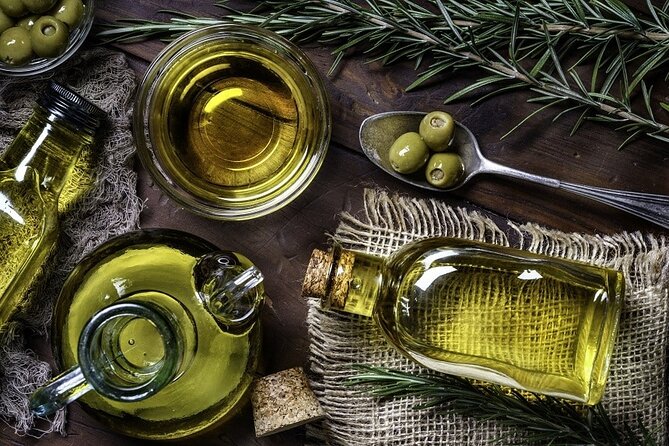
After the farm and mill tour, you sit down for an olive oil tasting. You will learn to notice differences in flavor and quality instead of treating oil as just another ingredient on the table.
That makes the tasting practical. You can take the lesson with you to a restaurant or market later in Montenegro, where olive oil appears often in local cooking. The experience does not list a set number of oils, so you should not expect a large professional tasting flight. The focus is on understanding the family’s oil and recognizing what makes a good one.
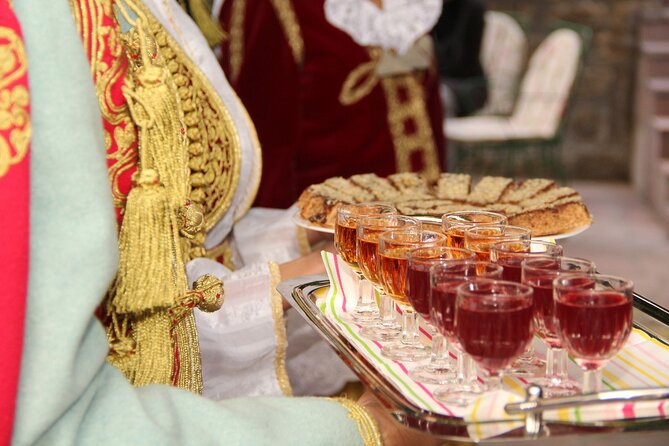
The tasting begins with organic olive oil and homemade-style bread. A welcome drink is also included, with homemade cherry or grape brandy listed as an option. Alcohol is part of the food program, so tell the host if you do not drink or prefer to skip it.
The tasting is also a natural time to talk with Ilija. He is described as the person behind the estate and oil business, and the conversation can cover local life, the family property, and the work involved in making oil. This direct contact gives the visit a more personal feel than a standard commercial tasting room.
Sitting down to a Montenegrin farm meal
The food is generous for what is described as a light lunch or substantial snack. The sample menu begins with a welcome drink, organic olive oil, homemade bread, cheese, prosciutto, and olives.
The wider meal may include smoked ham, bacon, sausages, homemade cheese, salad, and apple pie. These are simple foods, but that is exactly why they fit the setting. You taste the oil with bread, then pair it with cured meat, cheese, and olives. The meal shows how the estate’s products fit into everyday local eating.
The family grows vegetables and keeps animals, adding context to the food on the table. The information does not promise that every item comes from the estate, so I would treat the meal as homemade local fare rather than a fully farm-to-table menu in the strictest sense.
Bring an appetite, but keep expectations sensible. The menu is described as a snack or light lunch, not a formal multi-course restaurant meal. For most people, it should be enough to carry you through the rest of the tour.
What the five-hour schedule feels like
Five hours is a good length for this combination. You have time for a short Kotor walk, transport to the estate, the farm visit, olive-oil instruction, tasting, food, and the return to the meeting point.
The private format helps. Your group does not need to wait for a large bus or follow a fixed public-tour pace. If you are traveling with family or friends, the private setting also makes it easier to ask questions and spend time with the hosts.
The tour is offered in English. Pickup is available, and the activity ends back at the meeting point. The listed operating hours are 9:00 a.m. to 2:00 p.m., from October 4, 2025, through July 12, 2026, Monday through Sunday.
Because the tour includes food, transport, and a private guide team, the timing may feel fuller than a simple two-hour tasting. If your ship is in port, check your return schedule carefully and allow yourself a buffer. The stated duration is approximate, and the price does not make the outing a good choice if you must rush back to the ship.
Is $863.54 a fair price?
The price is $863.54 for a private group of up to six people. With six people sharing the cost, that works out to about $144 per person. For two people, the per-person cost is much higher, so the value depends heavily on your group size.
You are paying for more than an olive-oil sample. The price covers a private five-hour program, Kotor guiding, transport, a visit to a family estate, instruction about two production methods, the tasting, and a homemade meal. The personal welcome from Ilija and the time with Daniel and Lisette also help explain the cost.
Still, this is not a bargain tour. A solo visitor or couple focused mainly on seeing Kotor may prefer a less expensive city walk or a basic tasting. I would consider this a good value for a group of four to six people that wants a private day outside the city and enjoys food-based experiences.
The strongest value comes from the combination. You would pay separately for transport, a guide, a farm visit, and a meal if you tried to arrange all of this yourself. The tour puts those pieces together without making you plan the route.
Who will enjoy this outing most?
I would recommend it to families, food lovers, small groups, and repeat visitors who want more than Kotor’s walls and waterfront. It also suits people who like meeting local producers and hearing how a family business operates.
The tour is a good fit if you enjoy unhurried meals, simple local food, and countryside views. It is less suitable if you want a long guided tour of Kotor, a full cooking class, or a large professional olive-oil seminar.
Most people can participate, and service animals are allowed. The available details do not specify the walking distance, terrain, or accessibility of the farm, so anyone with mobility concerns should ask the provider before booking.
Free cancellation is available if you cancel at least 24 hours before the start time. Changes made inside that period are not accepted, and a minimum number of participants is required for the tour to operate.
Should you book the olive oil farm tour?
Book it if you can share the cost with a group and want a personal look at Montenegro beyond Kotor’s old town. The old mill, centuries-old trees, modern press, and homemade table create a full story about how olive oil connects land, family, and food.
I would skip it if your budget is tight, you have only a short window in port, or you want a detailed city tour. For everyone else, this is one of the more distinctive ways to spend five hours around Kotor, especially if Daniel and Lisette guide the day and Ilija is available for the farm conversation.
FAQ
Where does the olive oil farm experience begin?
It begins in Kotor, Montenegro. Pickup is offered, including from Kotor Old Town or Kotor port.
Where does the activity end?
The activity ends back at the meeting point in Kotor.
How long does the experience last?
The experience lasts approximately five hours.
How much does the private tour cost?
The price is $863.54 per private group of up to six people.
Is the tour private?
Yes. Only your group participates in the activity.
Is the experience offered in English?
Yes. The experience is offered in English.
What food is included?
The menu includes a welcome drink, homemade cherry or grape brandy, organic olive oil, homemade-style bread, cheese, prosciutto, and olives. The family may also share smoked ham, bacon, sausages, salad, and apple pie.
Can I cancel for a full refund?
Yes, if you cancel at least 24 hours before the experience start time. Cancellations made less than 24 hours before the start time are not refunded.
Are service animals allowed?
Yes. Service animals are allowed, and most people can participate.
Just added around the world
- Zanzibar:Jozani forest, Spice farm with Swahili Cuisine clas★ 4.2 · 3 reviews
- Zanzibar: Spice farm tour with Zanzibar fruits tasting★ 3.8 · 7 reviews
- Zanzibar: Stone Town City Tour and Spice Farm with Lunch★ 3.7 · 33 reviews
- ZANZIBAR, Stone town tour, Prison Island & Spice farm★ 5.0 · 11 reviews
- Zanzibar: Walking Spice Farm with Local Cooking Class★ 4.4 · 9 reviews
- Zanzibar: Spice Farm Tour with Traditional Cooking Class★ 4.6 · 16 reviews
- Zanzibar: Spice Farm Tour with Traditional Cooking Class★ 5.0 · 2 reviews
- Zanzibar: Spice Farm Tour with Traditional Cooking Class★ 4.8 · 6 reviews
Tours, farm by farm.
Cooking Class and Lunch at a Tuscan Farmhouse with Local Market Tour from Florence
Read our review →
Reindeer Camp and Sami Cultural Tour with Lunch
Read our review →

Half-Day Thoroughbred Horse Farm Tour in Kentucky
Read our review →
Amazing Yarra Valley Wine Tour + Chocolate, Farm Fresh, Gin
Read our review →
Premium Amish Country Tour including Amish Farm and House
Read our review →
Farm, Ano Mera Village, and Beaches Guided Tour
Read our review →