
REVIEW · BIG ISLAND
Edible Hibiscus Guided Farm Tour (Big Island)
Flowers can be part of lunch here. Set in the Hamakua Coast countryside near Honokaa, this 90-minute visit offers a close look at culinary hibiscus, hydroponic farming, and the small-batch foods made at Hawaiian B Natural Farms. I especially like the hands-on tasting and the chance to tour with the owners, Susan and Lance, rather than listening to a generic scripted talk. I also like the small group size, capped at 12 people, which gives the farm visit a personal feel.
The main consideration is simple: this is a specialized tour. If you enjoy gardening, unusual foods, or local agriculture, you may find it fascinating. If you want a broad Big Island sightseeing stop, the farm is more focused, and the greenhouse and plant discussion may feel slow. The outdoor flowers can also show signs of insect damage, a normal part of growing plants but not something to ignore when setting expectations.
Key things to know before you go
- You taste hibiscus in several forms: Expect flowers, preserves, tea, and other on-site samples, including unusual sweets and snacks.
- The tour explains two very different hibiscus uses: You learn why ornamental hibiscus is not the same as culinary hibiscus.
- Susan and Lance lead the visit: Their personal farming experience gives the discussion a direct, practical tone.
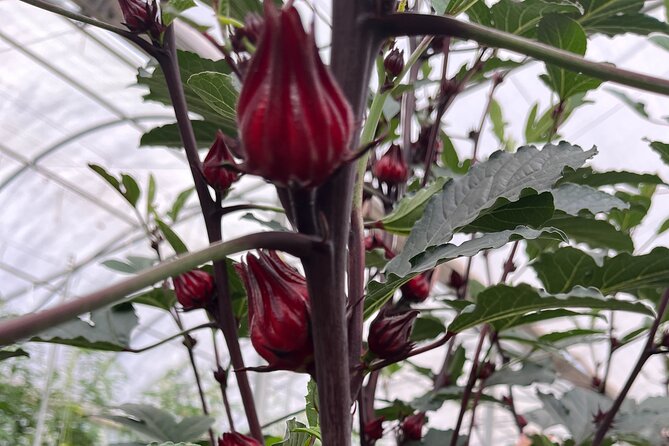
- The greenhouse is part of the story: You see the hydroponic production area and learn how the farm grows its crops.
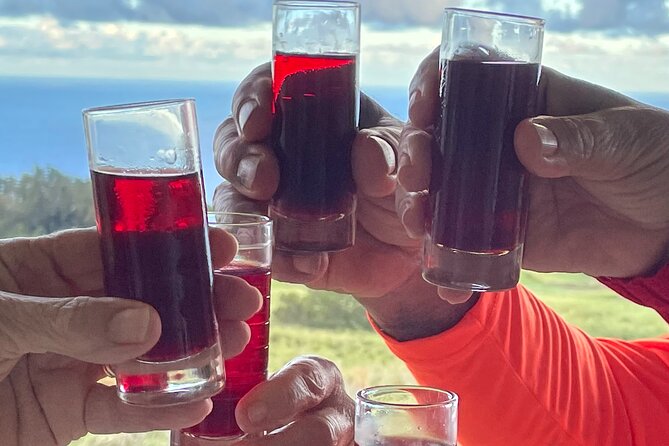
- Ocean views add a pleasant bonus: The farm’s countryside setting includes views toward the coast.
- Plan for about 90 minutes: The visit begins and ends at 44-2790 Kalopa Mauka Road in Honokaa.
Why this small farm visit feels different
The Big Island offers plenty of dramatic scenery, but agriculture gives you another way to understand the place. On this farm outside Honokaa, the focus shifts from volcanoes and beaches to flowers, food production, and the work behind a local product.
Hibiscus is usually something you notice in a garden. Here, you learn that some varieties are grown for eating, while others are planted mainly for their appearance. That distinction gives the tour a useful purpose. You are not simply looking at pretty flowers. You are learning how plant variety, growing method, and preparation change what ends up on your plate.
I like the scale of this visit. A maximum of 12 people keeps it from feeling like a bus stop with a few plants attached. The farm is run by its owners, Susan and Lance, and that makes the conversation more direct. Susan is described as warm, quick with a comeback, and easy to enjoy. Lance adds farming experience to the discussion.
This is also a good choice if you prefer an activity with a clear local connection. The farm grows and processes its own hibiscus products, so the tasting is not an unrelated add-on. You get to see the plants, learn about production, then try the finished foods.
More Guided Tours around Big Island:
- Mykonos: Farm, Ano Mera Village, and Beaches Guided Tour
★ 4.4 · 1,283 reviews - Lahaina: Maui Ku’ia Estate Guided Cacao Farm Tour and Tasting
★ 5.0 · 1,103 reviews - Kaneohe: Kualoa Ranch Guided UTV Tour
★ 4.8 · 335 reviews
Reaching the farm near Honokaa
The meeting point is 44-2790 Kalopa Mauka Road, Honokaa, on the north side of the Big Island. The tour takes place in the countryside along the Hamakua Coast, away from the more built-up visitor areas.
Finding the farm is described as easy, but you should still allow enough time to reach this rural address. The experience lasts about an hour and a half, and it returns to the same meeting point. That makes it simple to fit into a day in the Honokaa area, especially if you are already exploring the north side of the island.
The setting matters. You are not visiting a shop in a commercial center. You are going to an operating farm with an outdoor garden and greenhouse production area. The countryside location also brings ocean views, an appreciated extra during the open-air portion of the visit.
The tour is offered in English, and confirmation is provided at booking. Most people can participate. The supplied information does not describe special access arrangements, so if you have mobility concerns, contact the provider before booking rather than guessing about the farm surfaces or greenhouse access.
Starting with Hawaii agriculture and hibiscus basics
The first part of the tour places hibiscus farming within Hawaii’s agricultural story. This gives the plant a wider context. You learn how farming has shaped the islands and how this particular operation fits into that tradition.
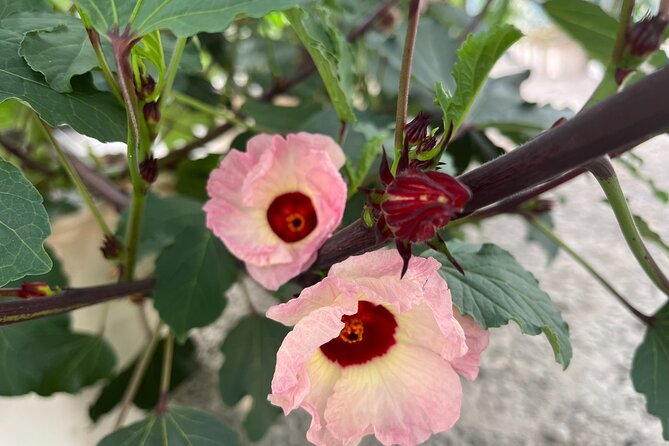
The key lesson is the difference between ornamental and culinary hibiscus. The flowers may look related, but that does not mean every hibiscus growing in a yard belongs in a recipe. This is one of the most useful parts of the visit because it keeps the subject practical. You leave with a better sense of why identification matters.
You also see several types of hibiscus plants and flowers in the demonstration garden. The garden is not presented as a polished botanical display. It is a working example, and some flowers may show insect damage. If you garden at home, that detail may make the stop feel more honest. Farming is not a postcard without pests, blemishes, or failed plants.
If you are mainly interested in flowers as decoration, the garden portion may be enough for you. If you want a large collection or a formal garden tour, this probably is not the right activity. The emphasis is on cultivation and food production, not on displaying every possible ornamental variety.
Inside the hydroponic greenhouse
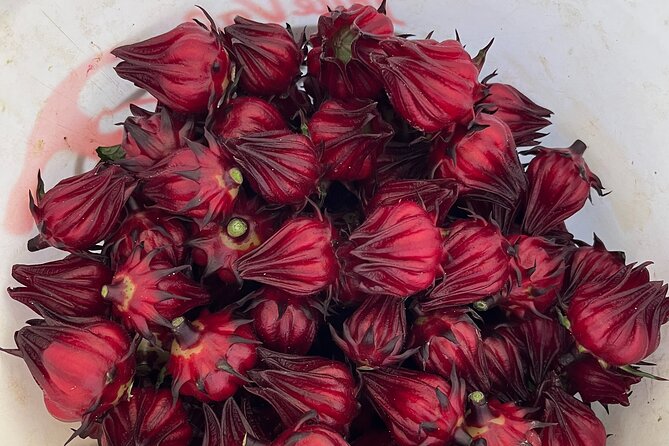
The tour then continues to the hydroponic greenhouse production area. This is where the visit becomes especially useful for anyone interested in how food is grown.
Hydroponic farming uses a controlled growing system rather than relying only on ordinary soil beds. The tour explains the farm’s approach and shows you the production area, connecting the growing process to the products you taste later.
I would give this section more time if you are a gardener or curious about small-scale farming. You can ask questions and see how a specialty crop is produced in a setting designed for consistency. It also helps explain why the farm can focus on culinary hibiscus rather than treating the flowers as a side crop.
The greenhouse will not appeal equally to everyone. One four-star account specifically points out that the tour is best suited to people interested in hydroponics and gardening. That is fair advice. If you are looking for constant movement, big scenery, or a hands-on agricultural chore, this section may feel more like a talk and demonstration than an active workshop.
Still, the greenhouse gives the experience substance. Without it, the visit might be little more than a tasting with flowers nearby. With it, you see the link between plant care, growing systems, harvesting, and food preparation.
More Farm Tours around Big Island:
- Hawaiian Salt Farm Tour in Kona
★ 5.0 · 767 reviews - Award Winning Farm Tour: Coffee, Chocolate and Unique Gifts
★ 5.0 · 484 reviews - Small-Group Big Island Tour: Hawaii Volcanoes National Park and Kona Coffee Farm
★ 5.0 · 343 reviews - Big Island ATV Tour at Ohana Ranch
★ 5.0 · 254 reviews
The tasting: tea, flowers, preserves, and sweets
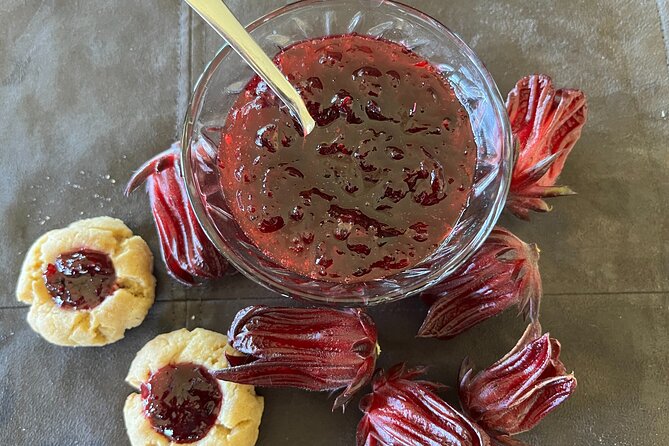
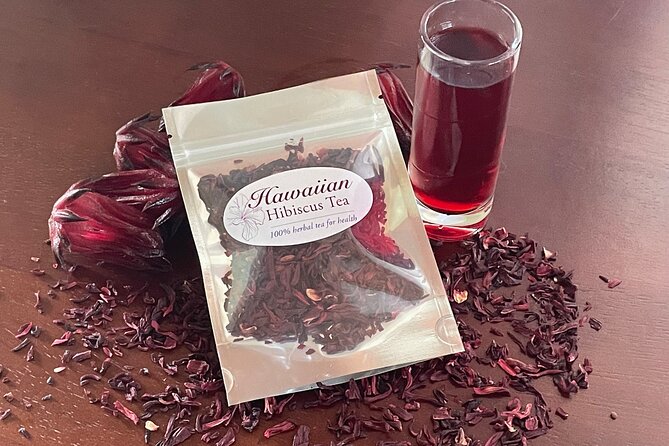
The final portion is the part most people will remember. You sample hibiscus flowers, preserves, teas, and other products made at the farm.
Hibiscus tea receives especially strong praise for its flavor and refreshing quality. The tasting also includes flowers in syrup, hibiscus preserves, and other creative preparations. Depending on what is being served, you may try items such as hibiscus panacotta or shortbread with jam, both singled out as enjoyable combinations.
This is a smart way to finish. You first learn what culinary hibiscus is, then see the plants and greenhouse, and only after that taste the results. The food becomes easier to appreciate because you understand where it began.
The flavors also show how flexible the flower can be. Tea presents hibiscus in a clean, drinkable form. Preserves turn it into something spreadable. Flowers in syrup make the ingredient feel almost decorative, while desserts and shortbread show how it can work in sweet dishes.
I recommend bringing money if you think you may want to buy products. Farm sales are available at the end, and the preserves and tea are the items most often singled out for purchase. The tour itself lists admission as free, but that does not mean the products cost nothing. Think of the shop as a chance to take the tasting home, not as a required part of the visit.
Because the samples are central to the tour, tell the provider about dietary concerns before you arrive if needed. The supplied information does not give a complete ingredient list or allergy policy, so do not assume every sample will suit your diet.
Meeting Susan and Lance, the owners behind the tour
An owner-led visit changes the tone. Susan and Lance are not simply pointing out plants from a distance. They discuss their farm, their products, and the decisions involved in producing hibiscus in Hawaii.
Susan’s humor is part of the appeal. Her quick comebacks help keep the tour lively, while her explanations make the farm feel personal. You are hearing about a real operation from the people responsible for it, not from a guide repeating a general description.
The owners also give the experience a useful human scale. Small farms involve trial and error, pests, growing challenges, and decisions about what to make with the harvest. Even when the tour does not show every part of that work, the owner-led format helps you see the farm as an active business rather than a staged attraction.
The group limit of 12 supports that style. A small group gives you a better chance to hear the discussion, ask questions, and stay engaged during the greenhouse and tasting. It also keeps the tasting from feeling like a crowded sample counter.
Ocean views and the Hamakua Coast setting
The farm’s location adds more than a convenient address. The Hamakua Coast is known for its rural setting, and this visit places you in the countryside just outside Honokaa.
Ocean views are an added bonus during the farm visit. They are not the main attraction, and you should not book this as a scenic overlook, but they give the outdoor demonstration garden a pleasant sense of place.
That combination is one of the strongest parts of the experience. You get agriculture, views, and food without needing a full-day commitment. The farm visit can fit into a larger north Big Island outing, though the exact timing of your wider day depends on your own plans.
The setting may also appeal to photographers, but the information provided does not promise a formal photo stop or a particular view at a specific time. Treat the scenery as a welcome part of the farm rather than the purpose of the tour.
Who will enjoy this tour most
I would recommend this experience most strongly to:
- Gardeners and plant enthusiasts
- People interested in hydroponic growing
- Visitors seeking a small, local food experience
- Families and adults who enjoy tastings and unusual ingredients
- Anyone already planning time near Honokaa or the Hamakua Coast
- Curious eaters who want to try something beyond standard Hawaiian dishes
You do not need a farming background. The tour covers basic distinctions and explains how hibiscus becomes tea, preserves, flowers in syrup, and other foods.
Still, your interests matter. If you dislike plant-focused talks, the greenhouse may test your patience. If you want a major historical site or a high-energy outdoor activity, choose something else for this part of the day.
The 90-minute length is a strength. It is long enough to cover the garden, greenhouse, discussion, and tasting, but short enough to pair with other plans. Since the group is limited to 12, booking ahead is sensible, especially if your schedule on the Big Island is tight.
Value, timing, and practical expectations
The listed admission is free, which makes the educational portion a strong value. You receive a guided look at the farm, an explanation of hibiscus cultivation, access to the demonstration garden and greenhouse, and a tasting of farm products. You can then decide if you want to spend more on tea, preserves, or other items.
The value is less about the length and more about the combination. A short visit that includes only a sample would be easy to forget. Here, the sample has context, and the context comes from the farm itself.
Set aside the full 1.5 hours rather than assuming you can rush through. The tour has several connected parts, and the tasting works better when you have heard the explanation first.
The experience depends on good weather. If poor weather cancels the tour, you can receive a full refund or choose another date. A minimum number of participants is also required, and if that is not met, you are offered another date or experience, or a full refund.
You may cancel for a full refund up to 24 hours before the start time. Changes or cancellations made less than 24 hours ahead are not accepted for a refund. Since the farm visit is a scheduled activity, keep these rules in mind before arranging a tightly packed day.
Should you book the edible hibiscus farm tour?
Book it if you want a small, unusual Big Island activity with real food, local farming, and time with the people who run the operation. The tasting is the strongest draw, especially the tea, preserves, flowers in syrup, and sweet preparations.
I would also book it if hydroponics interests you or if you enjoy seeing how a specialty crop moves from plant to finished product. Susan and Lance add warmth and personality, and the 12-person limit keeps the visit manageable.
Skip it if your idea of a farm tour means large fields, animal encounters, or active harvesting. The outdoor garden is modest, some plants may show insect damage, and the greenhouse discussion will appeal most to people who like growing systems.
For the right audience, this is a memorable 90-minute stop near Honokaa. It gives you a taste of a less familiar side of Hawaii, then lets you take that taste home.
FAQ
Where does the Edible Hibiscus Guided Farm Tour take place?
The tour takes place at 44-2790 Kalopa Mauka Road, Honokaa, Hawaii 96727, on the Hamakua Coast.
How long does the farm tour last?
The experience lasts approximately 1 hour and 30 minutes.
Where does the tour end?
The tour ends back at the same meeting point where it begins.
What language is the tour offered in?
The tour is offered in English.
How many people can join the tour?
The tour has a maximum capacity of 12 participants.
What will I learn about hibiscus?
You will learn about hibiscus cultivation, hydroponic farming, Hawaii agriculture, and the difference between ornamental and culinary hibiscus.
Will I visit a greenhouse?
Yes. The tour includes a visit to the farm’s hydroponic greenhouse production area.
What food and drinks are included in the tasting?
The tasting includes hibiscus flowers, preserves, teas, and other hibiscus products made at the farm. Specific samples can include flowers in syrup, panacotta, shortbread with jam, and hibiscus tea.
Can I buy hibiscus products at the farm?
Yes. Farm products are available for purchase after the tour. Bringing money is recommended if you may want tea, preserves, or other items.
What happens if the tour is canceled because of weather?
You will be offered a different date or a full refund if poor weather causes the tour to be canceled.
Just added around Big Island
- Sunset Kona Salt Farm Tour★ 5.0 · 55 reviews
- Hala Tree Coffee Farm Tour★ 5.0 · 44 reviews
- Farm to Table Cooking Class at Kulaniapia Falls★ 4.5 · 36 reviews
- Hamakua Coast Farm Small-Group Walking and Tasting Tour★ 5.0 · 4 reviews
- Big Island Family Off Road Farm Adventure at Ohana Ranch★ 5.0 · 43 reviews
- Bottle Feed & Cuddle Baby Goats at Ohana Ranch (Big Island)★ 5.0 · 29 reviews
- Farm-to-Table Chef’s Dinner at Kulaniapia Falls★ 4.5 · 42 reviews
- Kona Coffee Farm Tour from Tree to Tasting Room★ 5.0 · 36 reviews
Big Island Farm Tours, farm by farm.
Award Winning Farm Tour: Coffee, Chocolate and Unique Gifts
Read our review →
Small-Group Big Island Tour: Hawaii Volcanoes National Park and Kona Coffee Farm
Read our review →
Waipi’o on Horseback: Mountain Ocean Views Working Cattle Ranch
Read our review →
Other lists this farm sits on