
REVIEW · MOROCCO
Berber Cooking Class at a Farm in the Countryside & shopping at a rural Souk.
Moroccan cooking starts at the market. This seven-hour outing takes you 35 kilometers south of Essaouira into the Haha region, where a rural souk supplies the ingredients for a hands-on Berber meal. I like the direct link between shopping and cooking, and I like that the class takes place in an authentic farm kitchen rather than a polished culinary studio.
The small group, limited to eight people, should make the day feel personal. A German-speaking guide named Nicole has led at least some departures, which is useful if you prefer help in German. The main drawback is the long day and rural setting: you will spend much of the experience driving, walking around a local market, and cooking over fire, so it may not suit anyone wanting a quick or highly polished food demonstration.
Key points at a glance
- A rural souk comes first: Shop for the fruit, vegetables, meat, eggs, and honey that become part of your lunch.
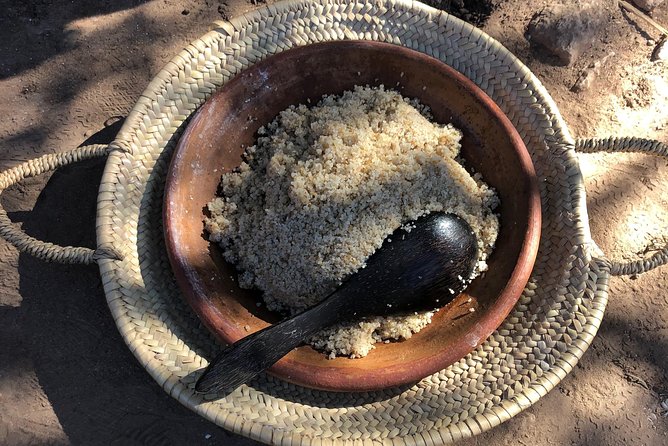
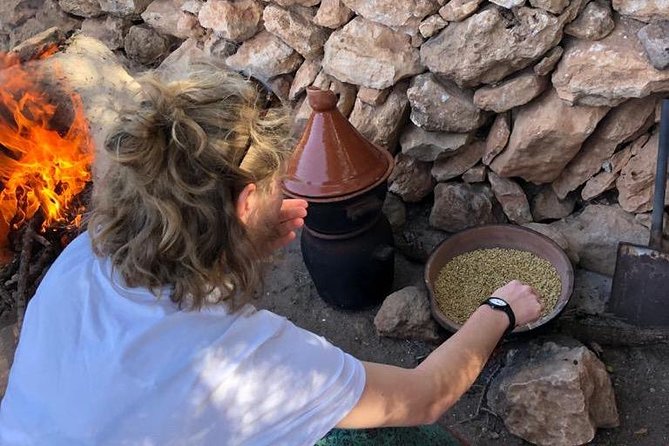
- Barley is prepared by hand: Watch barley grains roast over a fire, then grind them in a stone mill for bread and couscous.
- The menu is genuinely local: Prepare flat bread, couscous, and a vegetable and goat meat tagine with Moroccan spices.
- Lunch is part of the lesson: Depending on the weather, eat outdoors at the ecological farm, followed by fresh herb tea.
- The group stays small: A maximum of eight people allows more room for questions and hands-on work.
- The route adds regional flavor: An optional Argan oil cooperative visit and a chance to spot goats in trees add variety.
Why this day gets beyond the cooking classroom
Many cooking classes begin with ingredients already measured and waiting on a clean counter. This one begins at a rural souk. That difference matters. You see how food is bought for daily life, then use some of those supplies in the kitchen.
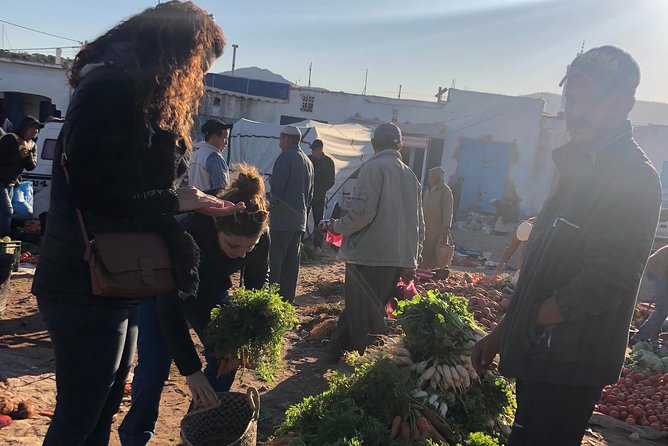
The market carries freshly harvested fruit and vegetables, along with meat, eggs, and honey. These are not decorative stops added to fill time. They are the building blocks of the meal you will prepare later.
I like this arrangement because it gives you a clearer sense of Moroccan food culture. You are not simply copying a recipe. You are seeing the raw materials, watching them move from market stall to farm kitchen, and then eating the finished dish.
The Haha region is home to Morocco’s Indigenous Amazigh population, often called Berbers. Communities in the hills cultivate crops and keep animals, especially goats and sheep. The setting helps place the food in its local context, especially the use of goat meat, barley, olive oil, and couscous.
More Cooking Classes around the world:
- Half-Day Thai Cooking Class at Organic Farm in Chiang Mai
★ 5.0 · 19,087 reviews - Cooking Class and Lunch at a Tuscan Farmhouse with Local Market Tour from Florence
★ 5.0 · 4,831 reviews - Chiang Mai: Authentic Cooking Class with Market & Farm Visit
★ 4.9 · 4,546 reviews
Starting at 9:00 am in Essaouira
The day begins at 9:00 am at Labo Abdelkrim Khatabi d’Analyses Médicales, 287 Rue Oued El Makhazine, Essaouira. The experience returns to this same meeting point at the end.
Because the farm sits 35 kilometers south of the city, the outing is not a quick walk from the medina. Plan for a full day, with transport between Essaouira, the souk, the farm, and any optional stop. The seven-hour schedule leaves time for several different parts of the day, but you should not expect a short class followed by an afternoon free in town.
The small maximum of eight people is a real advantage here. A traditional kitchen has limited space, and a large group could turn the class into a demonstration where you watch from the edge. With fewer people, you should have a better chance to take part in grinding, baking, seasoning, and shaping food.
Nicole, a German-speaking guide, has led a departure, so German-speaking participants may want to request or confirm that language before booking. Guide availability can vary.
Shopping for lunch at the rural souk
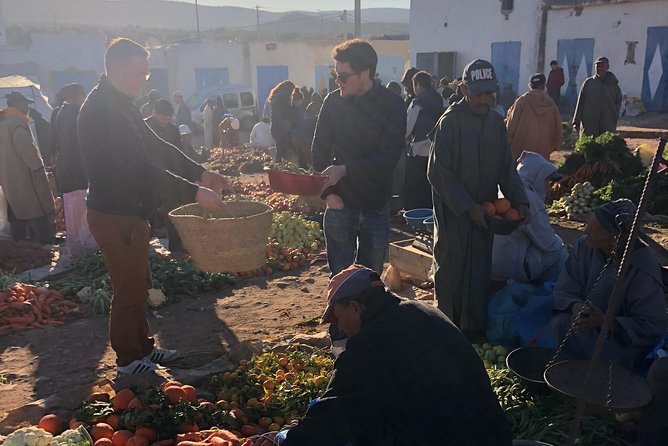
The souk is the first major stop, and it gives the tour its strongest sense of place. You will see the foods used in ordinary household cooking, including produce, meat, eggs, and honey. The shopping is tied to the class, so the market visit has a clear purpose.
A local souk can be more demanding than a tidy food hall. You may find uneven ground, unfamiliar displays, and a quick flow of daily commerce. That is part of the point, but it also means this is not the best outing if you want a quiet, controlled shopping experience.
The food selection also helps you understand the practical side of rural cooking. A meal is built from what is available, seasonal, and useful. The class does not treat Moroccan cuisine as a list of exotic spices. It shows how a household assembles a meal from staple foods.
If you enjoy taking photographs, be considerate. This is a place where people are buying food, not performing for visitors. Keep your camera discreet and follow your guide’s lead.
Entering the ecological farm kitchen
After the souk, the group continues to an ecological farm in the Haha region. The cooking takes place around an authentic Berber kitchen stocked with traditional preparation tools.
The kitchen setup is important. You are not only learning what goes into the food. You are seeing how the food is made without modern restaurant equipment. Fire, clay, stone, and hand preparation all play a part.
The farm also produces some of the ingredients used in the meal. The olive oil comes from olive trees growing on the property, which gives the cooking a direct connection to the land around you. That detail is easy to overlook, but it makes the class feel less like a staged recipe lesson.
The surroundings are described as calm and natural, and lunch may be served outdoors if the weather allows. Good weather should make the meal especially pleasant, but it is also a practical condition of the experience. Poor weather can lead to a rescheduled date or a full refund.
More Workshops around the world:
- Florence Pizza or Pasta Class with Gelato Making at a Tuscan Farm
★ 5.0 · 6,801 reviews - Ubud: Balinese Cooking Class at an Organic Farm
★ 5.0 · 1,786 reviews - Sorrento: Pizza Lesson, Wine, and Limoncello at a Local Farm
★ 5.0 · 1,513 reviews - Florence: Pizza or Pasta Class with Gelato at a Tuscan Farm
★ 4.9 · 1,181 reviews
Roasting barley and grinding it in a stone mill
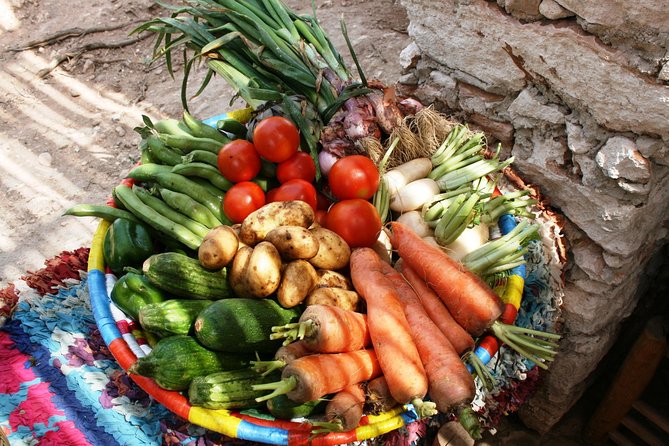
One of the most distinctive parts of the class is the barley preparation. Khadija and Khadija, two local women, show you how barley grains are roasted over the fire and then ground in a stone mill.
This is a slower process than opening a bag of flour, which is exactly why it is worth your attention. You see how grains become the flour and semolina used for the meal. The stone mill turns a basic ingredient into something you can work with directly.
For me, this is the most meaningful part of the cooking lesson. It connects farming, tools, labor, and food in one clear sequence. It also gives you a better appreciation for couscous and flat bread, which can seem simple on the plate but require several careful steps before lunch.
The fire-based work may be less comfortable than a modern kitchen class. Smoke, heat, and hands-on preparation are part of the setting. Wear practical clothing and shoes you do not mind wearing in a rural kitchen.
Baking flat bread in a clay oven
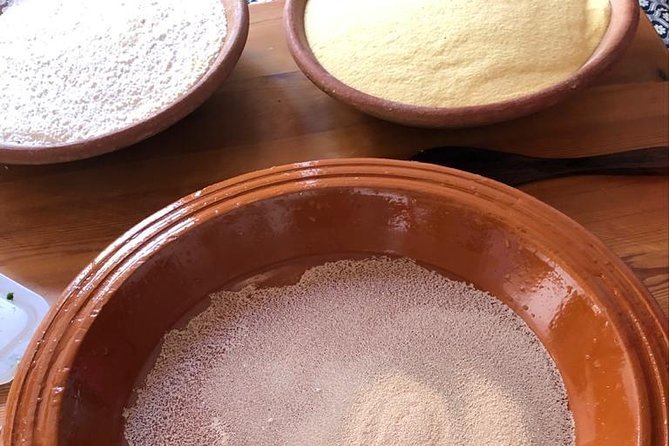
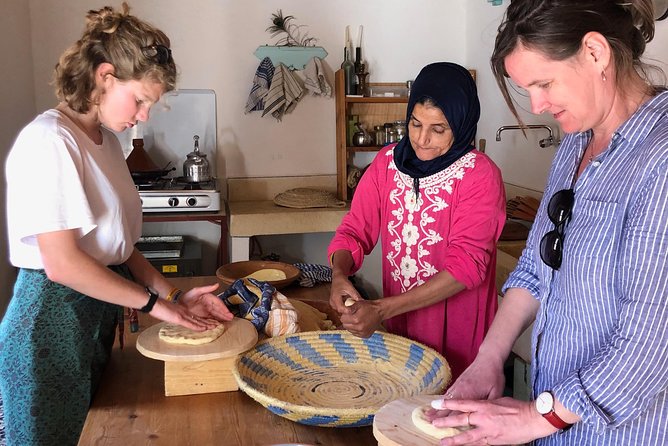
The freshly prepared grain products are used for traditional flat bread. You will help make the bread and bake it in a clay oven.
A clay oven brings a different rhythm to the class. You need to pay attention to heat and timing rather than relying on a standard electric oven with precise controls. The result is not just a recipe to take home. It is a lesson in how bread is prepared with basic tools and local ingredients.
This should appeal to anyone who likes the physical side of cooking. If you prefer to sit back and watch, you can still follow the process, but the experience is designed around participation.
The bread also gives lunch a practical purpose. You are preparing something that will be eaten that same day, not making a sample that disappears into the kitchen.
Steaming couscous in a traditional clay pot
Couscous is prepared in a traditional clay pot, another detail that sets this class apart from a standard urban cooking workshop. The grains are steamed rather than treated as a quick side dish.
The process takes patience. That is useful for anyone who has eaten couscous in Morocco but never considered how its texture is developed. The traditional pot shows the difference between a food prepared with care and a convenience product made in a hurry.
You should not expect a formal cooking lecture about every regional variation. The focus is on what is made at this farm and how the local women prepare it. That makes the class more specific and grounded, though it may feel less suited to someone looking for a broad survey of Moroccan cuisine.
Making the goat and vegetable tagine
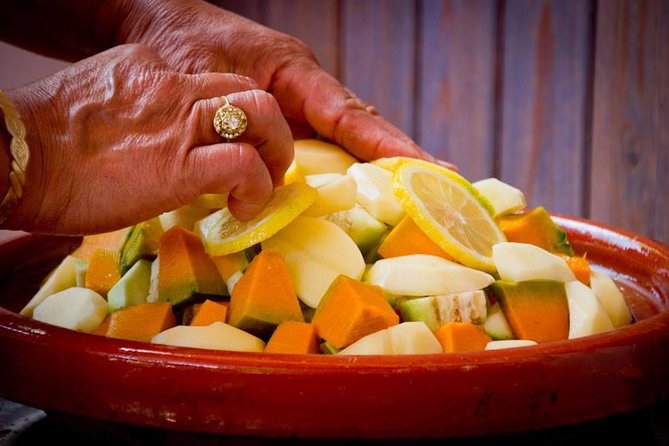
The main cooked dish is a traditional tagine with vegetables and goat meat. Moroccan spices and olive oil bring the ingredients together, with the oil sourced from olive trees on the farm.
Goat is an important detail. It reflects the animals raised in the Haha hills and gives the meal a clear local identity. If you enjoy trying regional food, this is more revealing than a generic chicken tagine. If you do not eat goat meat, check the available arrangements before booking. The supplied details do not promise a substitute.
The tagine also demonstrates the value of slow cooking. The spices are not there simply to make the dish hot. They build flavor around vegetables, meat, and oil. You get to see how a familiar Moroccan dish comes together from ingredients bought at the morning market.
The cooking class is therefore useful even if you do not plan to recreate every step at home. It teaches you to pay attention to the quality and source of ingredients, not just the final list of instructions.
Lunch outdoors, weather permitting
After the work is finished, lunch is served at the farm. If the weather is suitable, you may eat outside in the quiet surroundings.
This is the point where the separate parts of the day connect. The fruit and vegetables from the souk, the barley from the fire, the bread from the clay oven, the couscous from the clay pot, and the tagine from the farm kitchen all arrive at the same table.
Outdoor dining is appealing, but it depends on conditions. The experience requires good weather, and the meal may be served indoors if necessary. Do not book this expecting guaranteed outdoor seating.
After lunch, you drink tea flavored with fresh herbs from the garden. It is a simple finish, but a good one. The herbs bring the meal back to the farm and give you a quiet pause before the return trip.
The Argan region and optional cooperative stop
The route passes through the Argan zone, a part of southern Morocco known for Argan trees and their oil. You may choose to visit an Argan oil cooperative to learn how the oil is produced.
The cooperative stop is optional, so it should not be the main reason to book the day. Still, it adds useful regional context. Argan oil is unique to this area, and the cooperative offers a taste of products made with it.
You will see how a local specialty connects agriculture, processing, and commerce. The stop may be especially worthwhile if you want to buy or taste Argan-based products, though the supplied details do not specify what purchases are available or how long the visit lasts.
The trip may also bring you close to one of Morocco’s most famous rural sights: goats in Argan trees. The wording is careful, and so should you be. You are likely to see them, but no animal sighting is guaranteed.
Price, group size, and practical value
At $98.76 per person, this is not a bargain-priced cooking lesson. The value comes from the full day rather than from the class alone. The price covers a souk visit, transport through the countryside, a farm-based cooking session, lunch, and possibly the Argan cooperative stop.
The maximum group size of eight improves the value. You are paying for a more personal experience, with enough room for questions and hands-on work. A larger group might reduce the cost, but it could also make the traditional kitchen harder to enjoy.
The activity is booked an average of 55 days ahead, so advance planning is sensible. Confirmation arrives within 48 hours, subject to availability. Free cancellation is available until 24 hours before the start time. If you cancel later, changes are not accepted and the payment is not refunded.
Most people can take part, and service animals are allowed. The details do not describe specific mobility conditions at the farm or souk, so anyone with access concerns should confirm before booking.
Who should book this Essaouira cooking day?
You should consider it if you want:
- A small-group outing with a maximum of eight people
- A cooking class tied to a real rural market
- Traditional preparation using fire, stone, clay, and hand work
- A full-day trip beyond Essaouira
- A chance to taste goat tagine, couscous, flat bread, and fresh herb tea
- Regional context about Berber foodways and Argan oil
You may want another activity if you have limited time in Essaouira, dislike rural markets, or want a polished kitchen with modern equipment. This is also not ideal if you need a fully fixed schedule, since weather and minimum numbers can affect the departure.
Should you book it?
Book this experience if you want food to be the doorway into rural Morocco. The strongest parts are the market-to-table format, the traditional tools, the small group, and the chance to eat food prepared from scratch at an ecological farm.
Skip it if you are mainly seeking a short class in Essaouira itself. For the right person, the price pays for a complete regional day, not just a plate of tagine. Reserve ahead, confirm your meeting point, and treat the fire, clay oven, and souk as part of the experience rather than as inconveniences.
FAQ
Where does the experience take place?
The cooking class takes place in the Haha region, about 35 kilometers south of Essaouira, at an ecological farm with a traditional Berber kitchen.
What time and where does the tour start?
It starts at 9:00 am at Labo Abdelkrim Khatabi d’Analyses Médicales, 287 Rue Oued El Makhazine, Essaouira 44000, Morocco.
How long does the experience last?
The experience lasts approximately seven hours and ends back at the meeting point in Essaouira.
What food will I prepare?
You will prepare traditional flat bread, couscous, and a vegetable and goat meat tagine seasoned with Moroccan spices and olive oil.
Is the Argan oil cooperative visit included?
The visit is optional. The route passes through the Argan region, and you may visit a cooperative to learn about Argan oil production and taste products made with the oil.
Can I cancel for a full refund?
Yes. You can cancel at least 24 hours before the local start time for a full refund. Poor weather or failure to meet the minimum number of participants may also lead to a different date or a full refund.
Just added around the world
- Zanzibar:Jozani forest, Spice farm with Swahili Cuisine clas★ 4.2 · 3 reviews
- Zanzibar: Spice farm tour with Zanzibar fruits tasting★ 3.8 · 7 reviews
- ZANZIBAR, Stone town tour, Prison Island & Spice farm★ 5.0 · 11 reviews
- Zanzibar: Walking Spice Farm with Local Cooking Class★ 4.4 · 9 reviews
- Zanzibar: Stone Town City Tour and Spice Farm with Lunch★ 3.7 · 33 reviews
- Zanzibar: Spice Farm Tour with Traditional Cooking Class★ 5.0 · 2 reviews
- Zanzibar: Spice Farm Tour with Traditional Cooking Class★ 4.8 · 6 reviews
- Zanzibar: Spice Farm Tour with Traditional Cooking Class★ 4.6 · 16 reviews
Cooking Classes, farm by farm.
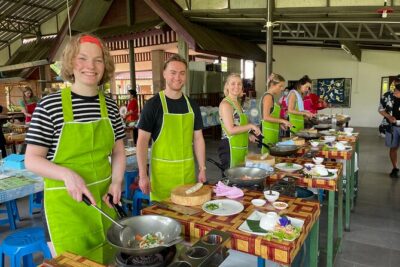
Half-Day Thai Cooking Class at Organic Farm in Chiang Mai
Read our review →
Cooking Class and Lunch at a Tuscan Farmhouse with Local Market Tour from Florence
Read our review →
Authentic Cooking Class with Market & Farm Visit
Read our review →
Hands-On Cooking Class & Farmhouse Tour on the Amalfi Coast
Read our review →
Other lists this farm sits on