
REVIEW · LUANG PRABANG
Luang Prabang: Bamboo Forest Cooking-class & Farm Visit
Cut your lunch from the forest.
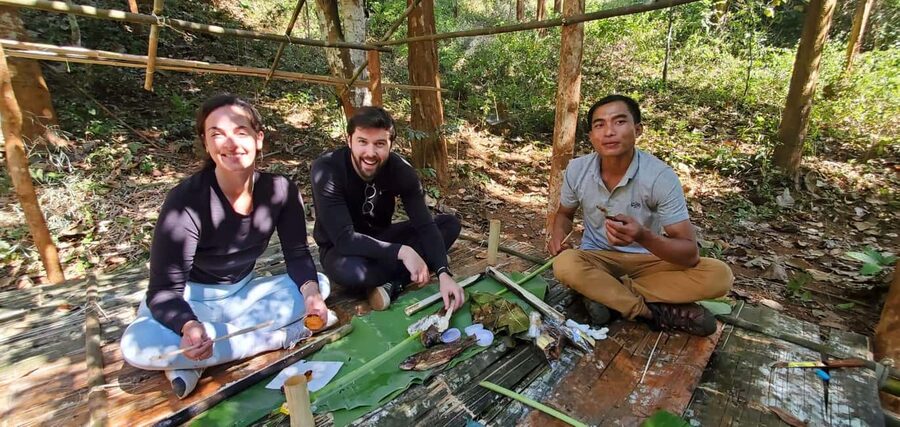
This six-hour Khmu cooking experience takes you well beyond a standard Lao food lesson. You visit a working vegetable farm, learn about edible and medicinal plants, build a cooking fire area, and prepare lunch with bamboo in the forest. I especially like the hands-on work and the chance to take home a bamboo cup and chopsticks you make yourself. The small group, limited to 10 people, also keeps the day personal.
The main consideration is that this is an active outdoor outing, not a polished kitchen class. You will walk in the forest, handle natural materials, and spend time around smoke, insects, and uneven ground. Bring long trousers, suitable shoes, mosquito spray, a hat, and any medication you need.
Key points at a glance
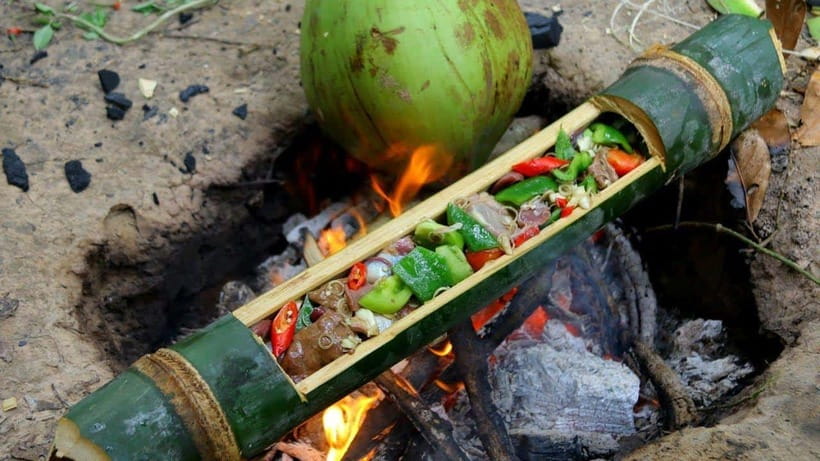
- Khmu cooking in the forest: Learn traditional methods for preparing rice, meat, and fish with bamboo.
- A farm visit comes first: Pick vegetables and plants for your lunch while learning their everyday uses.
- You make your own tools: Craft a bamboo cup and chopsticks, then take them home.
- Small groups matter: With no more than 10 people, you get more room to ask questions and take part.
- A guide with local insight: A guide named Peng was praised for making the experience friendly, practical, and easy to follow.
- Good value at $100: Hotel transfers, ingredients, guiding, entrance fees, and handmade souvenirs are included.
Why this is more than a Lao cooking class
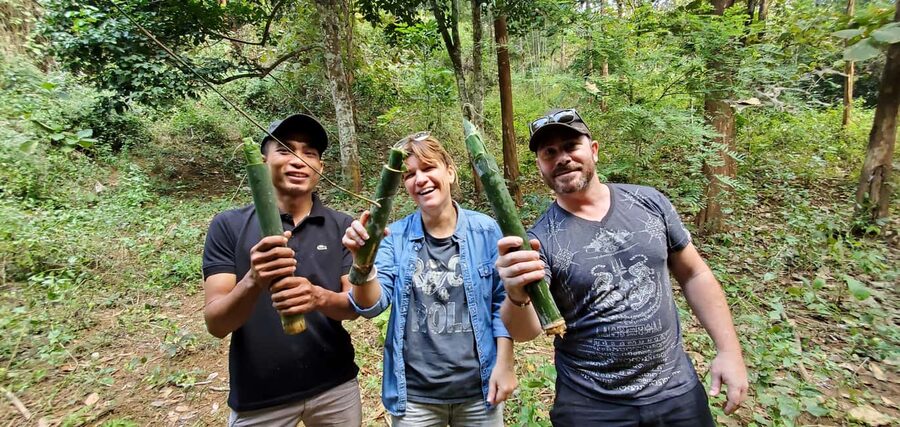
Many cooking classes begin with prepared ingredients and a tidy work surface. This one starts earlier, with the plants, tools, and fuel that make the meal possible.
From 9 AM to 3 PM, you learn how food connects with daily Khmu life. The point is not only to produce lunch. You also see how natural materials can become drinking cups, chopsticks, cooking vessels, and serving pieces.
I like this approach because it gives the meal a story. You do not simply eat bamboo-cooked rice. You learn why bamboo is useful, how to select and prepare it, and how families use traditional methods in the forest.
The experience is led in English, French, Thai, or Lao. The guide helps you understand the work at your own pace. You can take an active role, or take a quieter approach if you would rather watch and ask questions.
That flexibility matters. Cutting bamboo and preparing a forest meal will appeal to curious, practical people. It may feel like too much work if you want a short demonstration followed by a restaurant-style lunch.
More Cooking Classes around the world:
- Half-Day Thai Cooking Class at Organic Farm in Chiang Mai
★ 5.0 · 19,087 reviews - Cooking Class and Lunch at a Tuscan Farmhouse with Local Market Tour from Florence
★ 5.0 · 4,831 reviews - Chiang Mai: Authentic Cooking Class with Market & Farm Visit
★ 4.9 · 4,546 reviews
The 9 AM start and hotel transfer
Your day begins with transfer to and from your hotel, with the meeting point listed as the provider’s showroom. The exact pickup details should be confirmed when you book, since the information gives the showroom as the meeting point but also includes hotel transfers.
The 9 AM to 3 PM schedule uses the day well. You have enough time to visit the farm, walk into the forest, make utensils, cook, and eat without rushing through every task.
A small group of up to 10 people is a real benefit here. Outdoor cooking involves tools, plants, bamboo, and several stages of preparation. With fewer people, you should have a better chance to handle the materials yourself instead of standing behind a crowd.
A guide named Peng received particular praise for clear communication and an easygoing style. Another guide described in the experience grew up living off the land and has a degree in agriculture. That combination of local experience and formal plant knowledge is useful when you are trying to tell an edible plant from one used for medicine or everyday purposes.
Picking ingredients at the vegetable farm
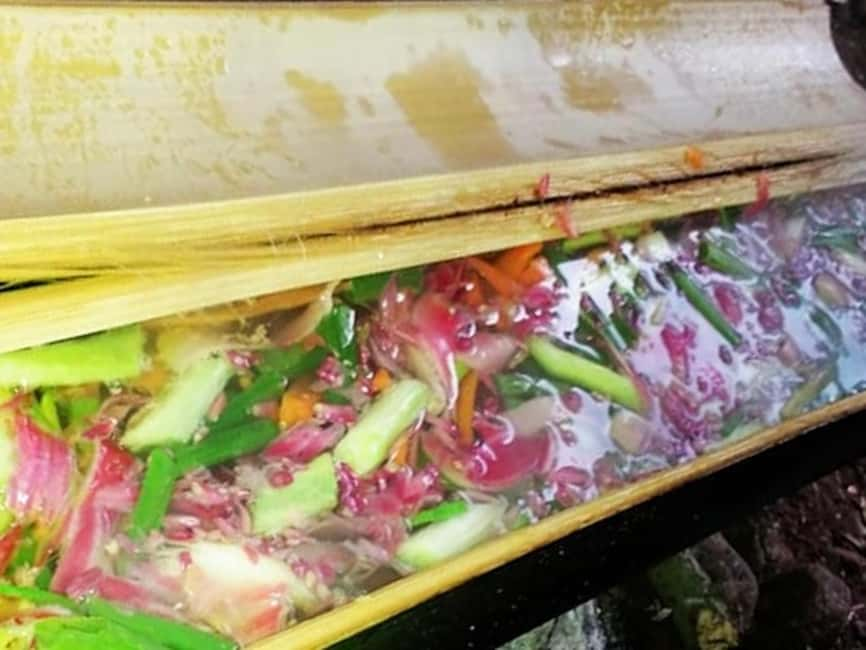
The first major stop is an authentic vegetable farm. You pick the vegetables and plants needed for your meal, rather than receiving everything in a basket prepared in advance.
This part helps you understand the food before it reaches the cooking area. The guide explains how to identify plants used for eating, healing, and ordinary village life. That makes the farm visit more than a quick photo stop.
You may find this section especially useful if you enjoy learning through small details. A plant can be food, medicine, or a material for daily use, and the guide’s job is to explain those differences in a clear way.
The provided meal ingredients include rice, meat, fish, fruit, and drinking water. The farm supplies the vegetables and plants you need for the cooking session, while the basic staples are already covered.
Dietary needs should be shared in advance. The meal can be adjusted to suit dietary preferences or restrictions, but you should not wait until the morning of the activity to mention them.
Walking into the primary forest
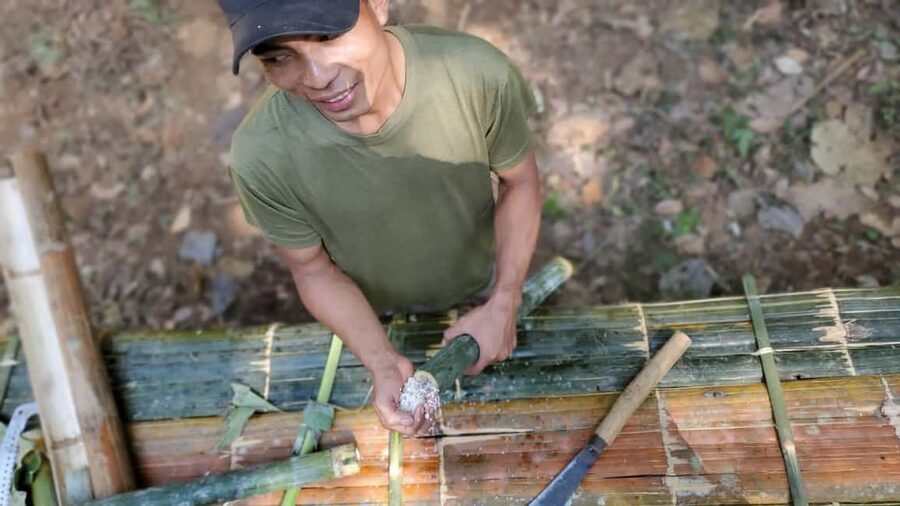
After the farm visit, you head into the primary forest for the cooking portion. The setting gives the class its character, but it also means you should dress for the outdoors.
Long trousers protect your legs from brush and insects. Suitable footwear is important because the experience involves walking in the forest, and mosquito spray is specifically recommended. A cap or hat will also make the time outside more comfortable.
This is not described as a strenuous hike, so I would not treat it as a fitness test. Still, you should be comfortable walking on natural ground and spending several hours outside.
The forest setting changes the mood of lunch. Instead of watching a cooking demonstration in a built-up space, you work with bamboo and plants where those materials belong. The result feels closer to a practical cultural lesson than a conventional food tour.
More Workshops around the world:
- Florence Pizza or Pasta Class with Gelato Making at a Tuscan Farm
★ 5.0 · 6,801 reviews - Ubud: Balinese Cooking Class at an Organic Farm
★ 5.0 · 1,786 reviews - Sorrento: Pizza Lesson, Wine, and Limoncello at a Local Farm
★ 5.0 · 1,513 reviews - Florence: Pizza or Pasta Class with Gelato at a Tuscan Farm
★ 4.9 · 1,181 reviews
Making bamboo cups, chopsticks, and cooking tools
One of the strongest parts of the day is making your own utensils. You use bamboo to create tools for drinking, eating, and cooking, including a cup and chopsticks that you can take home.
This work gives the experience a satisfying rhythm. You are not only told about traditional methods. You shape part of the equipment, use it during lunch, and then carry it away as a useful reminder.
The handmade items also have more meaning than a ready-made souvenir from a shop. You spent time making them as part of the meal, so the cup and chopsticks connect to a specific place, guide, and day.
I would expect the finished pieces to have a handmade look rather than perfect symmetry. That is part of the appeal. If you want a flawless craft item, buy one in town. If you want something linked to your own effort, make it here.
The bamboo work is also the part that may surprise you. One participant said they never expected to be cutting bamboo in the forest for their meal. That is a good warning and a good reason to book this instead of an ordinary kitchen class.
Preparing rice, meat, and fish with forest methods
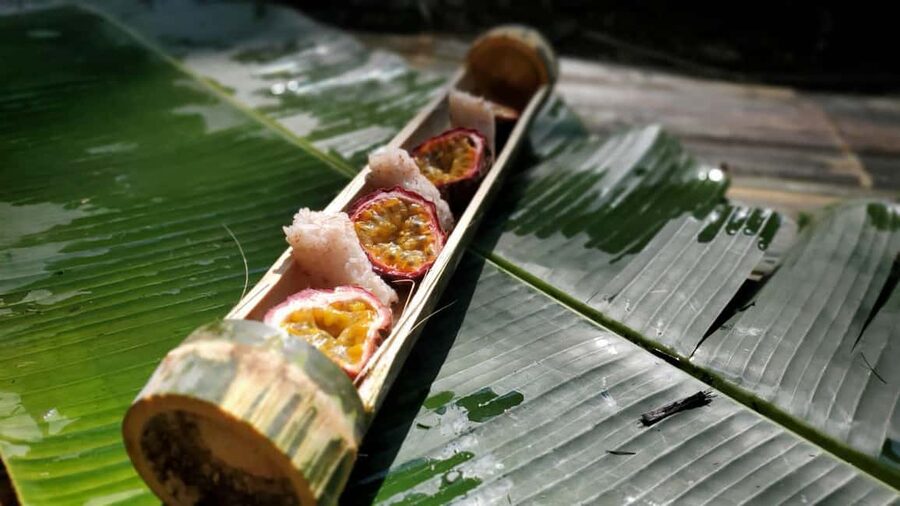
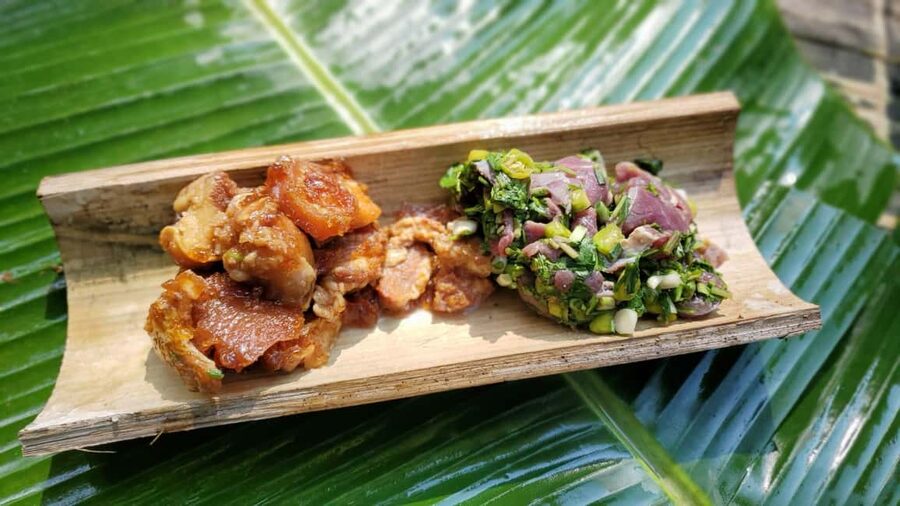
Once the cooking space and utensils are ready, you learn how to select and prepare bamboo for cooking. The methods include preparing fragrant rice, grilling meat or fish, and presenting the finished food in a traditional Khmu style.
The meal is the payoff, but the process matters just as much. Bamboo can serve as a container, utensil, or cooking aid, and the guide shows you how these uses fit together.
All basic ingredients are included. Rice, meat, fish, fruit, and drinking water are provided, so the $100 price is not just paying for instruction. It also covers the food, transport, guide, tax, entrance fees, and the bamboo items you make.
The meal may be particularly appealing if you like food with a strong sense of place. You pick some ingredients at the farm, prepare them with natural tools, and eat in the forest. That chain from plant to plate is the main value of the day.
You should tell the provider about dietary restrictions before booking. The experience says it can be tailored to your needs, but the exact replacement ingredients are not specified.
Lunch in the forest and the pace of the day
Lunch is served in the forest after the cooking work is complete. The setting provides a calm end to a busy morning, with time to eat the food you helped prepare and use the bamboo utensils you made.
The word conviviality fits the format well. You are sharing a meal after working together, rather than simply sitting down at a table as a customer.
Still, keep your expectations practical. This is a forest lunch, not a restaurant meal with a broad menu or extra drinks. Additional food and drink are not included, so bring or budget for anything beyond the supplied meal and drinking water.
The six-hour duration also means you should not plan another demanding activity too tightly around it. The schedule is listed as 9 AM to 3 PM, but outdoor activities can feel longer when you are learning several hands-on tasks.
What the $100 price includes
At $100 per person, this is not the cheapest cooking activity in Luang Prabang. The price makes more sense when you count what the day includes.
You receive hotel transfer, all meal ingredients, an English, French, Thai, or Lao-speaking guide, taxes, entrance fees, and two handmade bamboo items. You also get a farm visit and several hours of instruction rather than a short meal demonstration.
The small-group size improves the value. A class limited to 10 people gives you more access to the guide and materials. That matters when the activity depends on doing the work yourself.
I would consider this good value for someone who wants culture, food, crafts, and time outdoors in one outing. It is less attractive if your main goal is to learn several Lao recipes that you can easily repeat in a home kitchen.
An optional craft village stop may be available on the way home. Since it is optional and no further details are given, treat it as a possible extra rather than a central part of the experience.
The practical drawbacks to consider
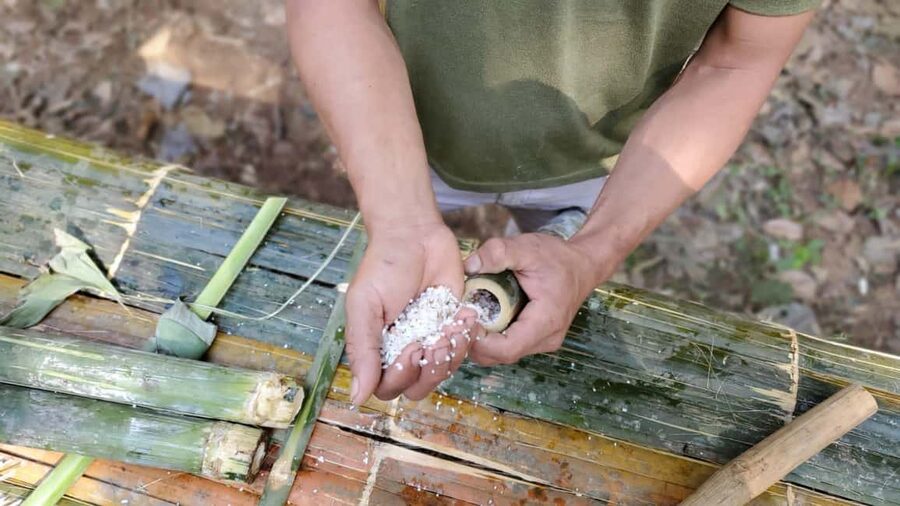
The biggest drawback is the outdoor setting. Forest conditions are part of the point, but they may not suit everyone. You need long trousers, suitable walking shoes, mosquito spray, and a hat, plus any personal medication.
There is also physical participation. You may cut and shape bamboo, walk through the forest, and work around a cooking area. The experience is designed to be interactive, but the information does not give specific accessibility details, so ask the provider if you have mobility or other access concerns.
The menu is also not fully specified. Rice, meat, fish, fruit, vegetables, and drinking water are included, but you should confirm the details if you have strong food preferences or restrictions.
Finally, the group can include up to 10 participants. That is small compared with a large commercial tour, but it is not necessarily private. If you want a fully private outing, ask before booking.
Free cancellation up to 24 hours in advance and the option to reserve now and pay later make the booking less risky. Those policies are useful when your Luang Prabang plans may change.
Who will enjoy this experience most?
I would recommend this outing to you if you like learning by doing. It suits people who enjoy food, plants, village traditions, simple crafts, and outdoor time.
It is also a strong choice for anyone who wants a closer look at Khmu culture without a staged performance. The guide’s explanations about edible and medicinal plants add useful context, while the cooking gives you a practical way to understand traditional life.
Families with older children may enjoy the bamboo work, though the provided information does not set an age range. Couples and small groups of friends should find the shared meal and handmade utensils easy to appreciate.
You may want to choose a different activity if you want air conditioning, a fixed indoor kitchen, a large menu, or a quick class with little physical effort. This experience asks you to take part, and that is both its main strength and its main limitation.
Should you book the Khmu forest cooking class?
Book it if you want a personal, hands-on day that connects food with plants, tools, and Khmu tradition. The farm visit, forest cooking, bamboo utensils, and small group format give you much more than a standard cooking demonstration.
The $100 cost is fair for the amount included, especially with hotel transfers, ingredients, guide service, entrance fees, and handmade items. I would pack for heat, insects, and walking, and I would send dietary information before the day begins.
Skip it if you want a polished indoor class or a simple lunch with no physical work. For the right kind of visitor, though, this is one of the more memorable ways to connect a meal with daily life in Luang Prabang Province.
FAQ
How long is the Luang Prabang bamboo forest cooking experience?
The experience lasts six hours, from 9 AM to 3 PM.
What languages can the guide speak?
Guides may speak English, French, Thai, or Lao.
How many people can join the group?
The group is limited to 10 participants.
Is hotel transfer included?
Yes. Transfer to and from your hotel is included. The listed meeting point is the provider’s showroom.
What food and ingredients are provided?
Basic ingredients include rice, meat, fish, fruit, vegetables, and drinking water. Dietary preferences or restrictions should be shared in advance so the meal can be tailored.
What should I bring?
Bring long trousers, suitable footwear for walking in the forest, mosquito spray, a cap or hat, and essential personal items such as medication.
Can I take anything home?
Yes. You can take home the bamboo cup and chopsticks you make during the activity.
Can I cancel the booking?
You can cancel up to 24 hours in advance for a full refund. You can also reserve now and pay later.
Just added around the world
- Zanzibar:Jozani forest, Spice farm with Swahili Cuisine clas★ 4.2 · 3 reviews
- Zanzibar: Spice farm tour with Zanzibar fruits tasting★ 3.8 · 7 reviews
- Zanzibar: Stone Town City Tour and Spice Farm with Lunch★ 3.7 · 33 reviews
- ZANZIBAR, Stone town tour, Prison Island & Spice farm★ 5.0 · 11 reviews
- Zanzibar: Walking Spice Farm with Local Cooking Class★ 4.4 · 9 reviews
- Zanzibar: Spice Farm Tour with Traditional Cooking Class★ 5.0 · 2 reviews
- Zanzibar: Spice Farm Tour with Traditional Cooking Class★ 4.8 · 6 reviews
- Zanzibar: Spice Farm Tour with Traditional Cooking Class★ 4.6 · 16 reviews
Cooking Classes, farm by farm.
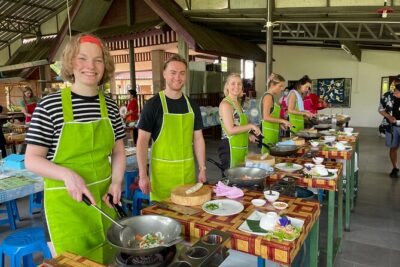
Half-Day Thai Cooking Class at Organic Farm in Chiang Mai
Read our review →
Cooking Class and Lunch at a Tuscan Farmhouse with Local Market Tour from Florence
Read our review →
Authentic Cooking Class with Market & Farm Visit
Read our review →

Hands-On Cooking Class & Farmhouse Tour on the Amalfi Coast
Read our review →
Other lists this farm sits on