
REVIEW · INDIA
Mulgao Folk Village & Coconut Farming Experience – Make It Happen
A coconut grove can tell Goa’s story. This three-hour outing pairs Mulgao’s ancient shrines with a working organic coconut farm, so you get more than a quick look at village scenery. I like the mix of folklore and practical farming, and I like that lunch is prepared by local residents rather than served as a generic tourist meal. The main drawback is simple: you must arrange your own transport between the meeting point and the experience stops.
The tour begins at Sateri Temple at 11 a.m. and ends there, with a maximum of 15 people. Pritam, praised for making the temple portion both informative and fun, has helped make this a favorite for visitors who want a warm, personal introduction to Goa beyond its beaches. The farm visit and lunch are the day’s big rewards, but anyone expecting a continuous walking tour should adjust plans.
Key points to know before booking
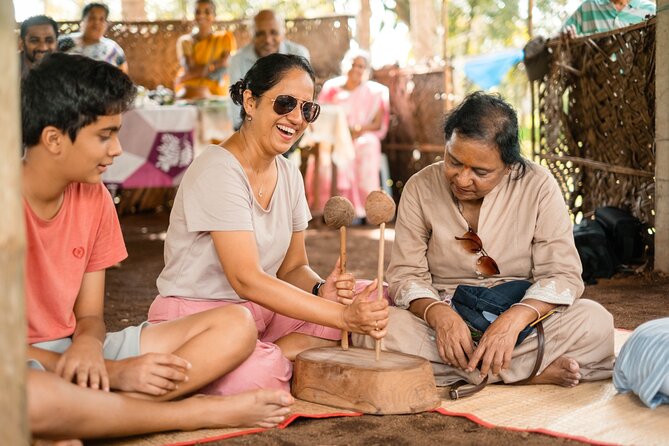
- More than 50 shrines shape the Mulgao route: The village offers a close look at local guardian deities and pre-Portuguese traditions.
- The tour uses your own transport: This is not a walking trail, and hotel pick-up and drop-off are not included.
- Virgin coconut oil is made part of the story: You learn how coconuts become oil and other useful products.
- Lunch is served in an organic coconut farm: The meal is a traditional Goan farm-to-table experience hosted by local residents.
- Sustainability is practical here: The program covers organic farming, coconut uses, and the Zeroposro zero-waste approach.
- The group stays small: Up to 15 people can join, giving the village storyteller and farm owners room to explain things properly.
Why Mulgao makes a good change from beach Goa
North Goa is often treated as a strip of sand, restaurants, and nightlife. Mulgao offers a different picture. This village is known for nature, folk culture, farming traditions, and more than 50 temples and shrines. The result is a quieter look at how community life and worship fit together.
The village also carries traces of Goa’s pre-Portuguese heritage. That does not mean you should expect a formal history lecture or a grand monument at every turn. The appeal is more intimate. You move through sacred places tied to local beliefs, then connect those traditions with the land that still supports daily life.
I like this pairing because it gives the visit a clear purpose. You are not simply passing through a rural area to take photographs. You are learning why certain shrines matter, how the community relates to guardian deities, and how coconut farming remains part of Goan life.
The experience is led by a local storyteller, which matters here. Stories about village gods and sacred sites can lose their meaning when you see them without context. Pritam has been especially praised for making the temple section lively and easy to follow. If you enjoy local stories more than a list of dates, this style should suit you.
More Farm Tours around the world:
- Half-Day Thai Cooking Class at Organic Farm in Chiang Mai
★ 5.0 · 19,087 reviews - Florence Pizza or Pasta Class with Gelato Making at a Tuscan Farm
★ 5.0 · 6,801 reviews - From Porto: 2 Wine Regions, Farm-to-Table Lunch & Boat
★ 4.9 · 5,724 reviews
Starting at Sateri Temple at 11 a.m.
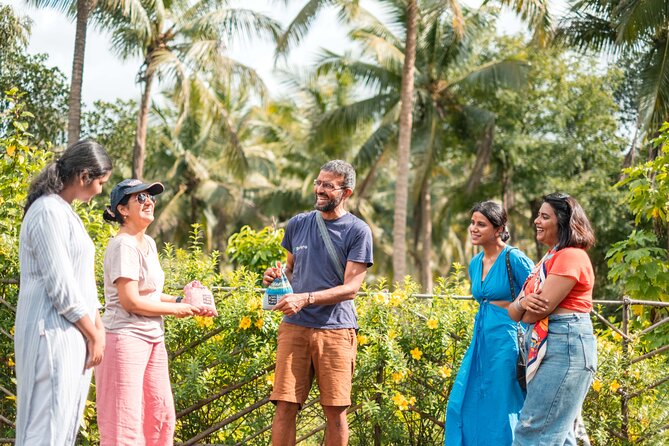
Your meeting point is Sateri Temple in Mulgao, at JW59+WVQ on an unnamed road. The start time is 11 a.m., so plan your route carefully and allow extra time to find the temple. Since transport is not supplied, you need to arrive with your own vehicle or with transportation arranged independently.
That transport detail is the most important practical point. This is not a continuous walking route. You will explore the village and reach the farm using your own transport mode, so confirm the sequence and driving instructions with the operator before setting out.
The timing also shapes the day. Three hours is enough for a focused introduction to the village, sacred sites, farm work, and lunch, but it is not an all-day rural expedition. You get a useful taste of Mulgao without giving up an entire day of your Goa holiday.
At Sateri Temple, the local guide sets the cultural frame. You can expect explanations of the shrines and the guardian deities respected by the village community. The value lies in the stories and beliefs attached to these places, not in checking off a long list of temple buildings.
Dress and prepare for a warm outdoor visit. The operator does not provide umbrellas, raincoats, hats, caps, face masks, or sanitizers. These are small items, but they matter in Goa, especially when weather changes or the sun feels strong.
Mulgao’s shrines and guardian deities
The sacred sites are the first major part of the experience. Mulgao has more than 50 temples and shrines, giving the village an unusually concentrated link to local folk culture. You will visit various holy places rather than spend the entire morning inside one large temple complex.
The guide helps explain the role of revered guardian deities. These figures are part of the village’s shared identity, and the stories surrounding them offer a window into beliefs that are not always visible in standard Goa sightseeing.
I appreciate that this portion is not presented as a rushed photo stop. A shrine may look modest, but its meaning comes from the people who worship there and the traditions passed down through the community. That is why a storyteller such as Pritam can make a real difference.
Keep your expectations realistic. The tour does not promise elaborate monuments, theatrical performances, or a formal religious ceremony. The experience is about interpretation and local connection. If you want polished attractions, this may feel simple. If you want to understand the cultural life behind Goa’s popular coast, it is a strong use of your time.
The shrines also prepare you for the farm visit. Both parts of the tour show a relationship with place. At the temples, that relationship is spiritual and communal. At the farm, it is agricultural and practical.
Mulgao Verde and the working coconut farm
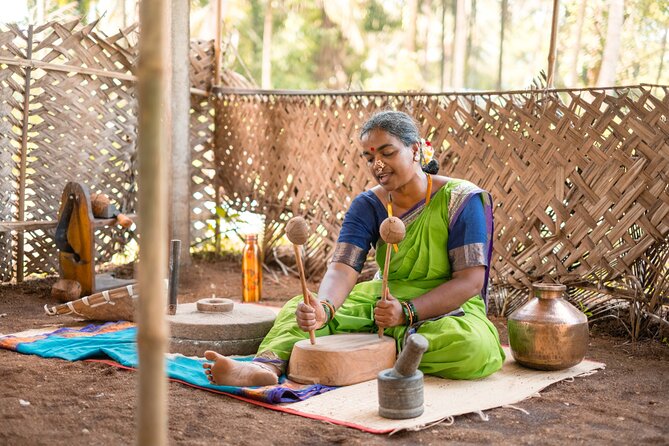
The farm portion takes place at Mulgao Verde, an organic coconut farm run by its owners. Here, agritourism means you are introduced to real farming processes rather than simply shown a scenic grove.
You learn about different stages of farming and the local crops connected to village life. The exact activities can vary, but the focus is on understanding how the farm operates and how coconut palms support many areas of daily life in Goa.
That broad use of the coconut palm is one of the most interesting themes. Coconut is not treated as a single food item. The tour explains its many household and farming uses, along with newer products made from it.
The owners also explain how virgin coconut oil is produced. You should come away with a clearer idea of the work involved before the finished oil reaches a kitchen or shop. The tour also introduces other novel products connected with the farm, showing how agricultural resources can support small-scale enterprise.
I like this part because it turns a familiar tropical image into something useful. A row of palms can look beautiful, but the farm visit asks you to think about labor, processing, waste, and value. You see how a crop can support food, household needs, and environmentally aware business practices.
The organic approach is another reason to pay attention. You learn about sustainable farming methods and how they can apply beyond this one farm. The ideas are relevant if you are interested in food production, small businesses, or making your own daily habits less wasteful.
Same fields, a different sort of morning:
- Cooking Class and Lunch at a Tuscan Farmhouse with Local Market Tour from Florence
★ 5.0 · 4,831 reviews - Chiang Mai: Authentic Cooking Class with Market & Farm Visit
★ 4.9 · 4,546 reviews - Maui Pineapple Farm Tour in Haliimaile
★ 5.0 · 2,855 reviews - Sorrento Farm and Food Experience including Olive Oil, Limoncello, Wine tasting
★ 5.0 · 2,524 reviews
The Zeroposro Store and zero-waste ideas
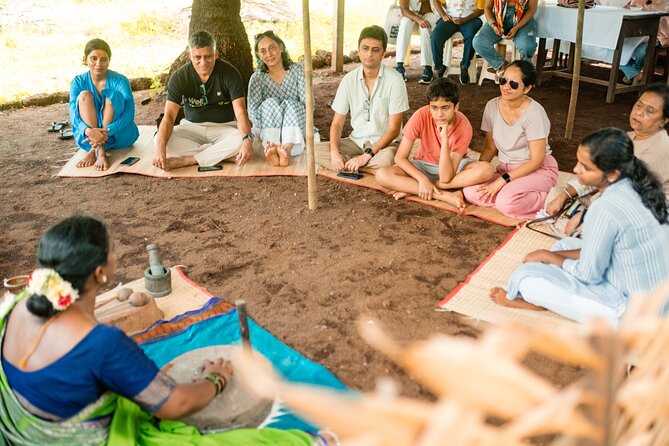
The experience also introduces the Zeroposro Store, an eco-conscious initiative focused on supporting zero-waste kitchens. This gives the tour a modern edge. Mulgao is not presented only as a place preserving old customs. It is also testing ways to reduce waste in present-day life.
You learn how sustainable practices can work in a kitchen and how similar thinking might apply to personal or professional routines. The information is practical rather than abstract. It connects farming, food preparation, purchasing, and waste reduction.
This section will appeal most if you already care about sustainable living or want clear ideas you can use at home. You may find it less engaging if your main goal is temple architecture or a food-focused outing. Still, it adds useful context to the farm visit.
The connection between the store and coconut farming is especially sensible. A crop has greater value when more of it can be used and less of it is discarded. That principle links the traditional farm setting with newer efforts to build low-waste kitchens and businesses.
Do not expect a long retail stop or a large shopping component. The emphasis is on learning about the initiative and its methods. If products are available, treat them as an extra rather than the main purpose of the tour.
Lunch under the coconut palms
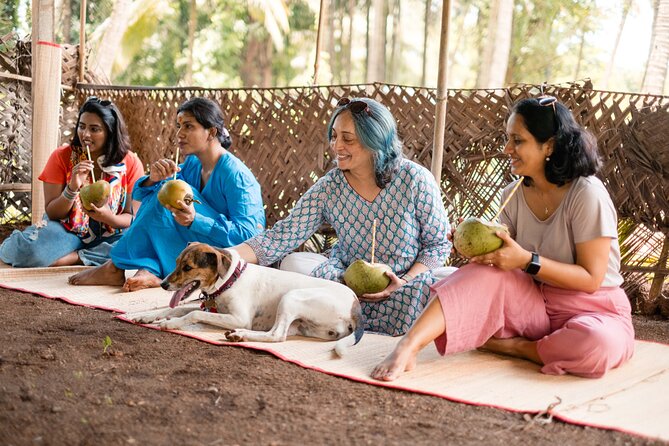
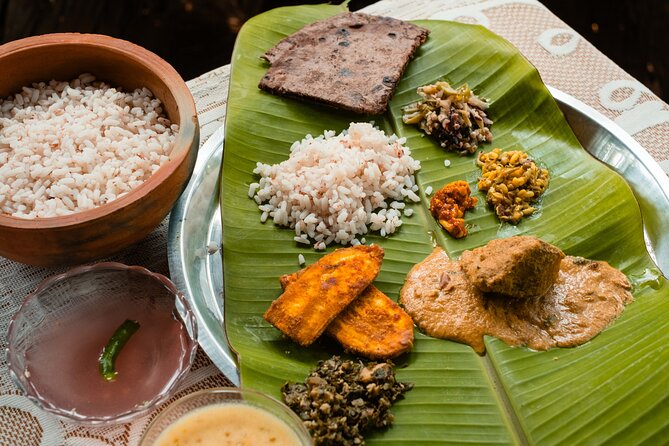
Lunch is one of the strongest parts of the experience. It is a traditional Goan farm-to-table meal prepared by people from the village and served at the organic coconut farm.
The setting matters. You eat amid a coconut grove, with the gentle breeze around you rather than the noise of a standard restaurant. After the shrine visits and farm explanations, the meal gives the morning a relaxed finish.
The available information does not provide a fixed menu, so you should not book this expecting a specific dish. What you can count on is a wholesome meal connected to the farm and village setting.
One particularly strong account of the experience praised both the coconut farm and the lunch, calling the food amazing and the morning educational and fun. That fits the structure of the outing: the meal is not an isolated restaurant stop, but the point where the cultural and agricultural parts come together.
I also like that lunch is hosted locally. It keeps more of the experience tied to the village and makes the food part of the cultural introduction. You are eating in the same community whose shrines and farming traditions you have just been learning about.
The meal may be less suitable if you need strict dietary arrangements or a highly predictable menu, since no specific dietary details are supplied. Ask the operator ahead of time if you have important food restrictions.
What $31.18 gets you
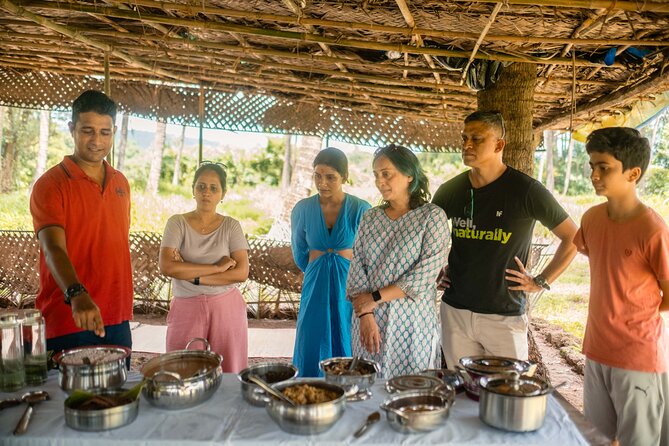
At $31.18 per person, the price is fair if you value local interpretation, lunch, and access to a working farm. You are paying for a three-hour experience with a storyteller, visits to several sacred sites, farm activities hosted by the owners, a meal, and discussion of sustainable practices.
The value is not in the number of attractions. This is not a ticket bundle packed with monuments. Its worth comes from the combination of people, explanation, and setting.
A private meal at a farm, a local guide, and time with the owners could easily make a short outing feel worthwhile, especially if you are tired of generic sightseeing. The small maximum of 15 people is also helpful. It should be easier to hear the guide and ask questions than in a large coach group.
The price is less compelling if you already have transport costs that are high or if you want a full-day tour. You must arrange transport yourself, and the activity ends after about three hours. Think of it as a focused half-day addition to a North Goa itinerary, not a complete day of sightseeing.
The fact that it is commonly booked well ahead, around 47 days in advance, suggests you should not leave it until the last moment if the date matters. Confirmation is provided at booking, and the free cancellation policy allows a full refund when you cancel at least 24 hours before the start time.
Who should book this Mulgao experience?
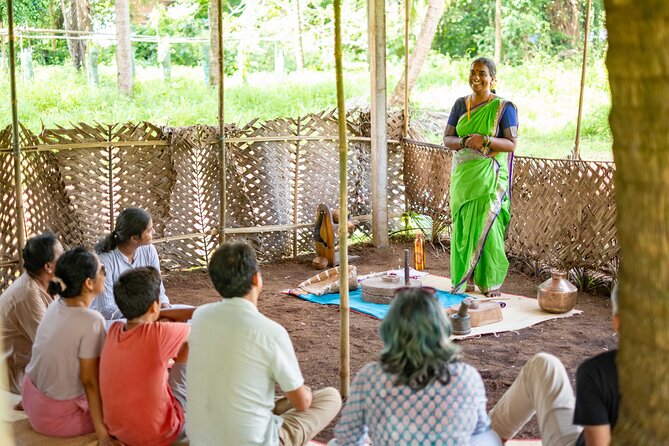
I would recommend this outing to you if you want to see a side of Goa shaped by village beliefs, farming, and food. It suits couples, families, and small groups who enjoy listening to local stories and asking questions.
It is also a good match if you care about sustainability. The organic farm, virgin coconut oil production, and Zeroposro discussion give the day a clear environmental focus without making the whole experience feel like a lecture.
Food lovers should like the farm-to-table meal, especially if the setting matters as much as the menu. The lunch is repeatedly singled out as a highlight, but remember that no menu is promised in advance.
You may want to skip it if you dislike arranging your own transport, need a fully guided walking route, or prefer large monuments and polished attractions. The shrines are meaningful because of their local role, not because they are grand tourist sights.
The experience also requires reasonable comfort with outdoor conditions. The operator does not supply rain gear, sun hats, umbrellas, face masks, or sanitizer. Pack what you need and check the weather before leaving.
Should you book it?
Book this Mulgao experience if you want a compact, personal look at Goa’s village culture and farming traditions. The best reasons are the local storytelling, the chance to visit sacred sites rarely included in standard beach itineraries, and the farm lunch beneath the coconut palms.
The strongest practical warning is transportation. You must get to Sateri Temple and move through the experience using your own vehicle or independently arranged transport. Once that is sorted, the $31.18 price offers good value for a small-group outing that combines culture, food, farming, and useful sustainability ideas.
I would especially choose it for a free morning in North Goa when you want something more grounded than another beach stop. Pritam’s warm approach, the working farm, and the local meal give the experience a human scale. Just allow for weather, bring sun or rain protection, and do not mistake this for a conventional walking tour.
FAQ
How long does the Mulgao Folk Village and Coconut Farming Experience last?
The experience lasts approximately three hours and begins at 11 a.m.
Where does the experience begin and end?
It begins at Sateri Temple in Mulgao, Goa, at JW59+WVQ, Unnamed Road, Mulgaon, Goa 403503. It ends back at the same meeting point.
Is transportation included?
No. You must use your own vehicle or arrange transportation independently. Hotel pick-up and drop-off are not included.
What is included in the price?
The price includes lunch, a local storyteller, visits to shrines and holy sites in Mulgao, a traditional Goan farm-to-table meal, farm activities hosted by the farm owners, and information about sustainable farming and zero-waste practices.
How many people can join the experience?
The activity can accommodate a maximum of 15 people.
Can I cancel for a full refund?
Yes. You can cancel at least 24 hours before the local start time for a full refund. Changes or cancellations made less than 24 hours before the start time are not accepted for a refund. If poor weather causes the experience to be canceled, you will be offered another date or a full refund.
Just added around the world
- Zanzibar:Jozani forest, Spice farm with Swahili Cuisine clas★ 4.2 · 3 reviews
- Zanzibar: Spice farm tour with Zanzibar fruits tasting★ 3.8 · 7 reviews
- Zanzibar: Stone Town City Tour and Spice Farm with Lunch★ 3.7 · 33 reviews
- ZANZIBAR, Stone town tour, Prison Island & Spice farm★ 5.0 · 11 reviews
- Zanzibar: Walking Spice Farm with Local Cooking Class★ 4.4 · 9 reviews
- Zanzibar: Spice Farm Tour with Traditional Cooking Class★ 5.0 · 2 reviews
- Zanzibar: Spice Farm Tour with Traditional Cooking Class★ 4.8 · 6 reviews
- Zanzibar: Spice Farm Tour with Traditional Cooking Class★ 4.6 · 16 reviews
India Farm Tours, farm by farm.



Farm stay in Sikkim to explore monasteries and villages over 5 days
Read our review →
Nandi hills trek sunset or sunrise drive from Bangalore
Read our review →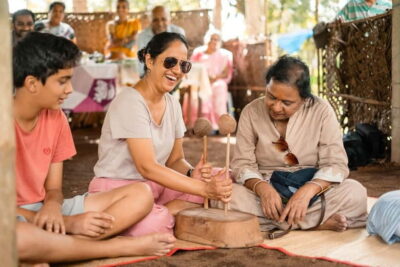
North Goa: Mulgao Village and Coconut Farming Experience
Read our review →

Coorg: Mercara Gold Estate Coffee/Spice Farm and Museum Tour
Read our review →Other lists this farm sits on