
REVIEW · MEXICO
Urban Orchard in Desierto de los Leones in Mexico City
Trade city noise for birdsong and fresh herbs. This private orchard visit in Desierto de los Leones gives you five calm hours with plants, birds, insects, chickens, and the people who care for them. I like the hands-on approach, especially the chance to crush leaves, taste edible plants, and forage for ingredients. I also like meeting Rubén and David, whose personal stories make the garden feel like a living project rather than a standard sightseeing stop.
The main consideration is the drive. Getting from Avenida Chapultepec in Roma Norte to the orchard can take 45 minutes to an hour, depending on traffic, and the day depends on good weather. At $75 per person, this is not a cheap garden stroll, but the private format, transport, snacks, drinks, and guided food activity make it a fair choice for anyone who values time outdoors and close contact with local plants.
Key points before you book
- A private orchard visit with Rubén and David: Your group is the only group taking part, so the pace can stay personal and relaxed.
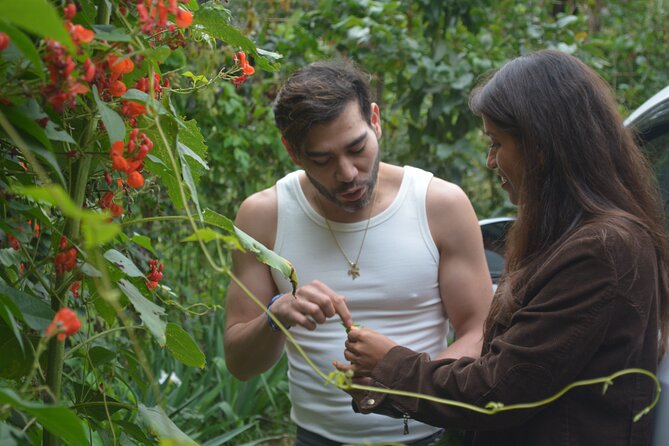
- Use your senses, not just your camera: Crush leaves, smell plants, taste edible flowers and herbs, and notice the garden’s changing sounds.
- Learn practical growing methods: The visit covers composting, soil care, chickens, and techniques used to build an urban orchard.
- Forage, then make something to eat: Fresh produce becomes part of a simple snack or dish, with cooking ideas drawn from the garden.
- Escape to Desierto de los Leones: The orchard offers a quiet break from central Mexico City, with birds, insects, bees, and hummingbirds visiting the plants.
Why this orchard visit feels different from a normal garden tour
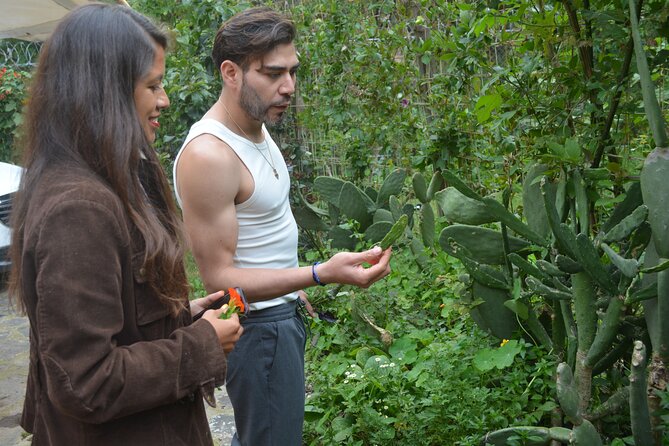
Most city sightseeing keeps you moving from one famous object to the next. This experience asks you to slow down and pay attention to small things: the smell released by a crushed leaf, the taste of a plant, the sound of insects, or the way chickens fit into a working garden.
That change of pace is the point. You are not simply shown a collection of plants. Rubén and David explain how they have adapted or developed growing methods while building the orchard, and how different plants, soil, animals, and people depend on one another.
I like that the tour links botany with daily life. You can learn about local plants, medicinal uses, edible flowers, ornamental varieties, composting, and cooking in the same visit. The result is practical rather than overly academic, but people with interests in sustainability, urbanism, gardening, and biodiversity should also find plenty to think about.
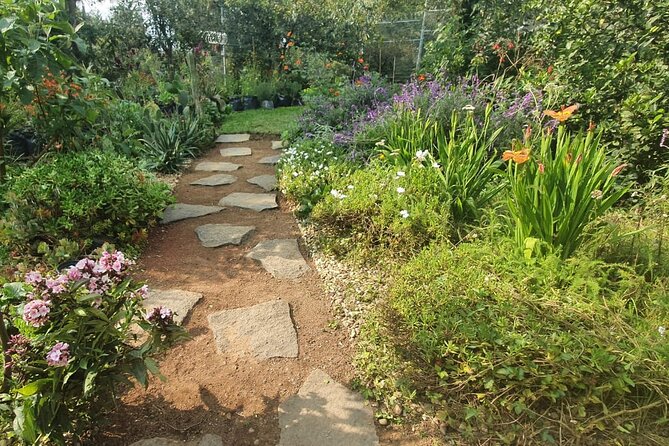
The setting adds another layer. Desierto de los Leones offers a marked change from Mexico City’s traffic and hard surfaces. The orchard itself has become a place where birds, insects, bees, and hummingbirds stop for food and shelter. You might hear more than you see, but that is part of the experience. It encourages you to notice the garden as a working ecosystem.
More Fruit Picking Farms around Mexico:
- Valencia: Orange Farm and Orchard Trip with Tastings
★ 4.9 · 702 reviews - Kamananui Cacao Orchard Tour
★ 5.0 · 132 reviews - Traditional Olive Grove and Dragon Fruit Farm Tour
★ 4.8 · 118 reviews
The ride from Roma Norte to Desierto de los Leones
The meeting point is on Avenida Chapultepec in Roma Norte, at the listed address in Mexico City. From there, the air-conditioned vehicle takes you toward the orchard. Allow 45 minutes to an hour for the ride, since Mexico City traffic can change the timing.
That transfer matters when you plan the rest of your day. The experience lasts about five hours and returns to the same meeting point, so I would not schedule a tight appointment immediately afterward. You will have a smoother day if you treat this as a half-day outing rather than trying to squeeze in another major activity.
One visit included a cable car ride on the way to the area, but the standard description confirms the air-conditioned vehicle rather than promising a cable car for every departure. If that sounds important to you, ask before booking.
The ride also gives the outing a useful rhythm. You leave the city, arrive at a greener setting, spend time learning and tasting, then return without having to arrange separate transport back. That convenience helps justify part of the $75 price.
Meeting the orchard and its gardeners
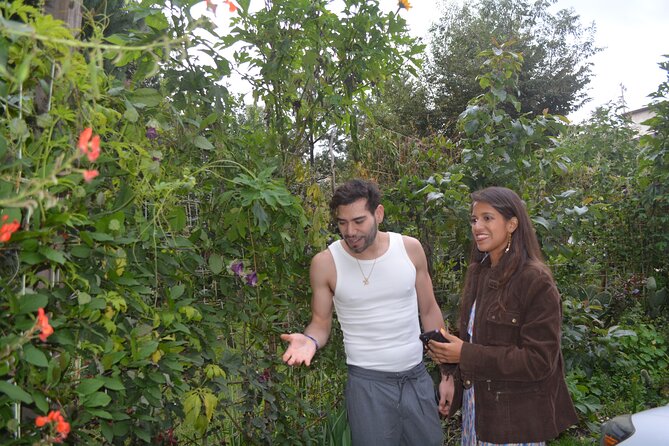
Rubén and David are central to the character of the experience. Rubén is described as warm, welcoming, communicative, and a good storyteller. David explains plant qualities and also brings cooking skill to the visit, including traditional Mexican food preparation.
That combination works well. One host can help you connect plants to culture and personal stories, while the other shows how those plants can move from soil to plate. You are not left with a list of names that quickly slips from memory. You get reasons to care about what each plant does and how it can be used.
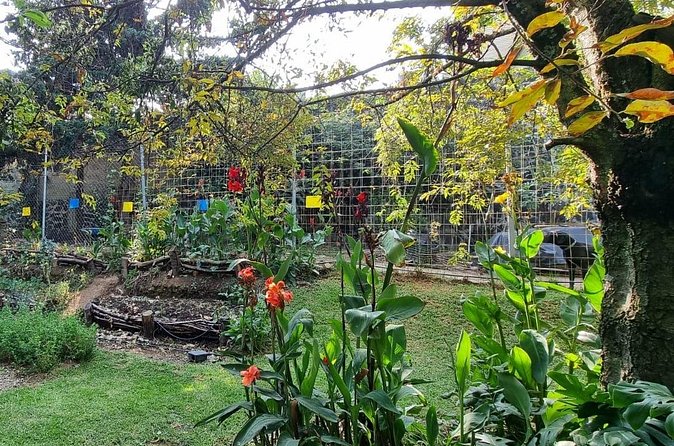
The garden itself is presented as orderly, thriving, and carefully tended. Expect a place with something to notice in nearly every corner, from local plants and edible flowers to ornamental species and vegetables. The visit is not only about identifying plants. It also explains why certain species were selected and how they support the soil and wider garden.
For plant lovers, this is the strongest part of the experience. You may come away with ideas for a home garden, a better sense of biodiversity, or a new appreciation for how much food is often wasted.
Exploring plants through smell, taste, and sound

The orchard tour uses several senses. You might crush a leaf to release its fragrance, taste a plant to discover a new flavor, or listen for birds and insects moving through the space.
That hands-on element gives the information a practical edge. Reading that a plant is edible is one thing. Smelling it after crushing a leaf or tasting a small piece gives you a memory you can carry home. The experience also makes clear that tasting should happen under guidance, since not every garden plant is meant for eating.
The sound of the place matters, too. Various birds and insects visit throughout the day, and hummingbirds have been seen around the flowers. Bees, hens, and other creatures form part of the garden’s daily life. You may not see every animal on every visit, but the orchard has been designed and cared for in a way that invites them.
I especially like the way this encourages patience. Mexico City can reward fast sightseeing, but this outing rewards close attention. You may spend a few minutes with a single plant and learn more than you would from racing through a larger botanical collection.
Same fields, a different sort of morning:
- Chapala Lake & Ajijic Tour with “Tres Potrillos Ranch”
★ 4.5 · 85 reviews - Horseback, Culture & Mexican Flavors Experience
★ 4.5 · 67 reviews - 3 Palos Lagoon AfroMex Village Turtle Release & Croc Farm Visit
★ 4.5 · 22 reviews - Full-Day Ranch Adventure and Horseback Riding Tour
★ 5.0 · 19 reviews
Compost, chickens, soil, and the work behind the beauty
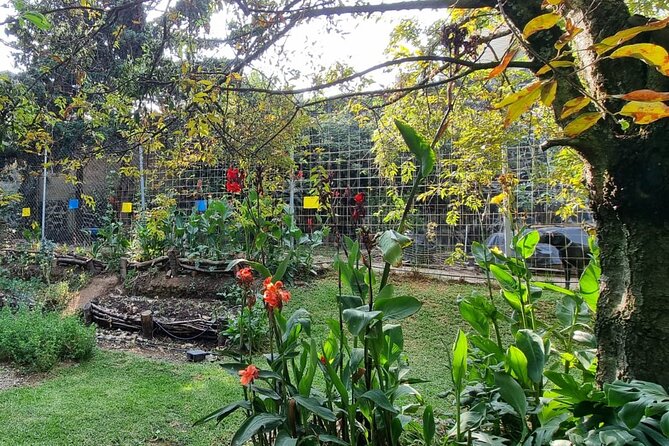
The orchard is not just a pretty place for photos. It is also a working example of how people can build a productive green space in or near a major city.
The visit includes discussion of composting, care for a flock of chickens, and the methods used to improve the garden. These details are valuable because they show the labor behind the plants. A thriving orchard depends on soil, water, food scraps, animal care, planting choices, and steady maintenance.
The chickens are not just a charming extra. They help you understand that the garden is planned as a connected system. The same goes for bees, birds, insects, and flowers. The hosts explain how selected species relate to the soil and to one another, which gives the tour more substance than a simple plant walk.
If you are interested in sustainability, you will likely get the most from this section. The experience does not promise a formal class or a complete farming course, but it offers useful examples and ideas. You can ask questions directly because the activity is private, and the small format should make conversation easier.
Foraging and making a fresh garden snack
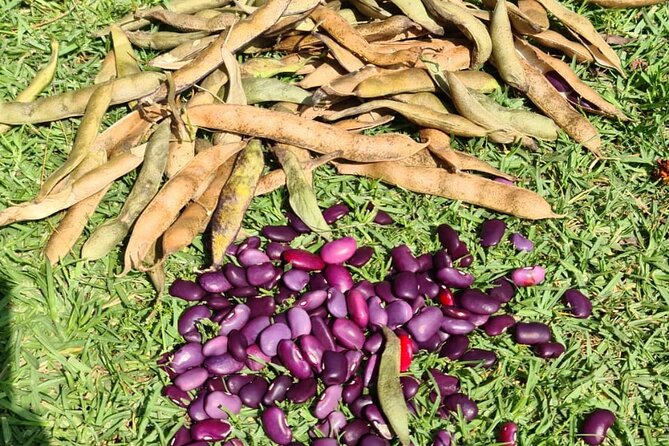
The most memorable part for many people will be the shift from looking at food to collecting it. You will forage among whatever the garden offers at that moment, then use those ingredients to imagine or prepare something simple to eat.
The seasonal wording matters. The exact produce, flowers, herbs, and flavors will vary, so you should not expect a fixed menu. That uncertainty is part of the charm, but it also means you should arrive ready to work with what is available rather than expecting a specific dish.
David’s cooking background adds a useful cultural connection. One visit included making oleocitrate of lemon, a preparation that highlights how much flavor and value can remain in parts of food people often discard. Another account describes learning about traditional Mexican cooking. These examples suggest that the food portion is about ideas as much as eating.
Coffee, tea, and snacks are included. Alcoholic drinks are not, so plan accordingly. If you have a strong interest in food, gardening, or reducing waste, this part alone may make the outing worthwhile.
What $75 buys you, and who gets the best value
The price is $75 per person. That is a significant amount for a half-day activity in Mexico City, especially if you are mainly seeking a quick look at plants.
The value improves if you use everything included: round-trip transport from the meeting point, a private activity, English-language guiding, coffee or tea, snacks, plant education, and the food preparation. You are also paying for access to a personal garden project and for the time Rubén and David spend explaining their methods.
I would compare it with a private workshop rather than with a public park visit. A free or low-cost park can give you open space, but it will not usually give you direct access to gardeners, guided tasting, foraging, composting ideas, or a meal-related activity.
The experience suits you best if you enjoy plants, food, quiet places, or thoughtful conversation. It also works for people interested in biodiversity, sustainability, urban gardening, or local culture. Families may participate because most people can take part, though the supplied information does not give a minimum age or a child-specific program.
You should think twice if you dislike long transfers, hands-on activities, tasting unfamiliar plants, or weather-dependent plans. There is no promise of a particular harvest, animal sighting, or menu.
Practical details that shape the day
The activity is offered in English and uses a mobile ticket. Confirmation comes at booking, and service animals are allowed. The meeting point is near public transportation, but the actual orchard transfer is handled by the included vehicle.
The scheduled operating period runs from July 15, 2024, through December 9, 2026, from Monday to Saturday, 9:30 a.m. to 4 p.m. The activity ends back at the starting point.
Good weather is required. You can cancel for a full refund up to 24 hours before the start time. Cancellations or changes made within 24 hours are not refunded or accepted, and a weather cancellation offers either another date or a full refund.
The private format is a real advantage. Your group alone participates, so you can ask about a plant, spend longer with the food activity, or keep the pace gentle without being tied to a large tour group.
Should you book the Urban Orchard experience?
I would book this if you want a quieter, more personal side of Mexico City and genuinely enjoy plants, food, or ecological projects. Rubén and David receive the highest praise for their hospitality, storytelling, plant expertise, cooking, and care for the orchard. The strongest feature is the way the visit connects local flora with real action: composting, growing, tasting, cooking, and attracting wildlife.
I would skip it if you want major sights, a fast schedule, or a guaranteed menu. The drive can be long, the weather can interfere, and $75 is a serious spend for a garden visit.
For the right person, though, this is a special half-day. You leave the city’s noise, spend time in a functioning orchard, meet two passionate gardeners, and gain ideas you can use long after the snacks are gone.
FAQ
Where does the Urban Orchard experience begin?
It begins at the listed meeting point on Avenida Chapultepec in Roma Norte, Mexico City, CDMX 06700.
Where does the experience end?
The activity ends back at the same meeting point.
How long does the experience last?
The experience lasts approximately five hours.
How long is the drive to the orchard?
The ride usually takes between 45 minutes and one hour, depending on traffic.
Is transportation included?
Yes. An air-conditioned vehicle is included for the transfer to and from the orchard.
Is the tour private?
Yes. Only your group participates in this private activity.
Is the experience offered in English?
Yes. The activity is offered in English.
What food and drinks are included?
Coffee or tea and snacks are included. Alcoholic beverages are not included.
Can I cancel for a full refund?
Yes, if you cancel at least 24 hours before the experience start time. Cancellations within 24 hours are not refunded. If poor weather causes the activity to be canceled, you can choose another date or receive a full refund.
Just added around Mexico
- *Turtle Hatching + 3 Palos Lagoon Boat Ride & Crocs Farm★ 4.8 · 6 reviews
- The Colors of Coffee in the Farms of Coatepec★ 5.0 · 3 reviews
- Full-Day Ranch Adventure and Horseback Riding Tour★ 5.0 · 19 reviews
- Farm to Table Cooking Experience in San Miguel★ 5.0 · 4 reviews
- Hands-on Mexican Farm Experience: from Cow to Cheese★ 5.0 · 9 reviews
- La Paz: Pearl Farm Experience and shop★ 5.0 · 3 reviews
- La Paz: Coral Farm Snorkel Tour★ 5.0 · 3 reviews
- Cozumel: Hands-On Chocolate, Tortilla, Salsa & Honey Experience★ 5.0 · 6 reviews
Fruit Picking Farms, farm by farm.

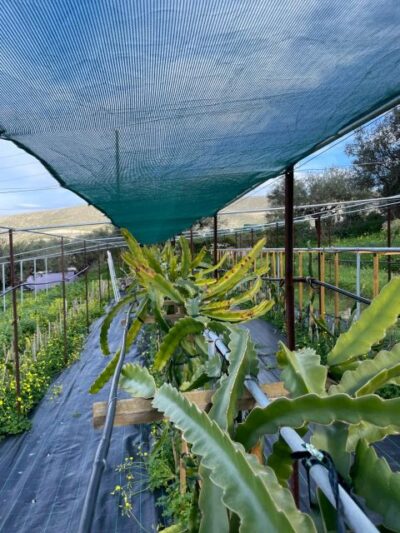
Traditional Olive Grove and Dragon Fruit Farm Tour
Read our review →
Cai Rang floating market, see sunrise, CaCao orchard, small canal
Read our review →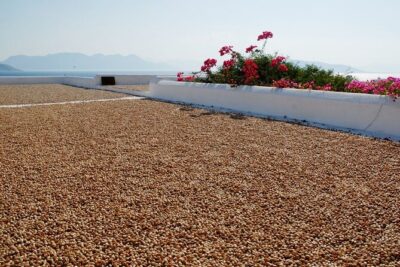
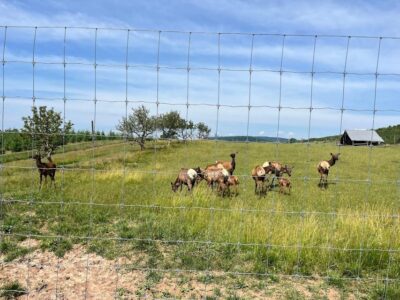
Gettysburg: Horse-Drawn Carriage Tour Countryside & Orchards
Read our review →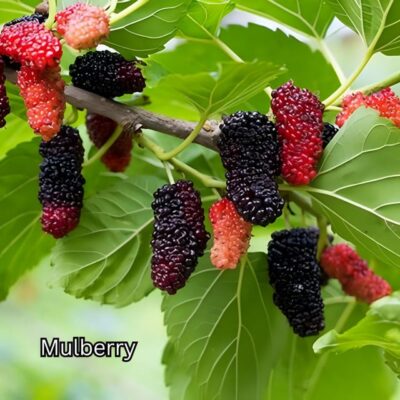

Aegina: Organic Pistachio Orchard Tour with Factory Visit
Read our review →Other lists this farm sits on