
REVIEW · GREECE
Traditional Greek Cooking Class @ Lefkada Micro Farm
Food tastes better when you meet its makers. At Lefkada Micro Farm, you spend about four hours learning how seasonal produce becomes a simple Greek meal, beginning with the soil and ending at a shared farmer’s table. I like the farm’s focus on regenerative growing and the chance to cook in an open-air kitchen rather than a polished culinary studio. I also like that the menu is practical: bread, tzatziki, Greek salad, and briam are dishes you can make again at home.
The main consideration is the price, $152.58 per person, which is a serious spend for a cooking class. The value depends on how much you want the full farm visit, food, conversation, and slow pace. If you only want a quick recipe lesson, this will feel long and costly. If you want a small-scale food experience in Lefkada, it offers much more than a standard class.
Key points at a glance
- The meal begins in the soil: You learn about the farm’s regenerative practices before harvesting seasonal organic ingredients.
- The cooking happens outdoors: An open-air kitchen and traditional wood-burning oven keep the focus on old-fashioned methods.
- The menu is simple and useful: You make bread, tzatziki, Greek salad, and briam with produce from the farm.
- Andreas brings personal warmth: Early arrivals may be welcomed with coffee, fresh fruit, cakes, and a chance to feed the animals.
- The group stays small: A maximum of 10 people gives the class a more personal feel.
- The meal is part of the lesson: You sit down together at the Farmer’s Table and eat what you prepared.
Why this Lefkada cooking class feels different
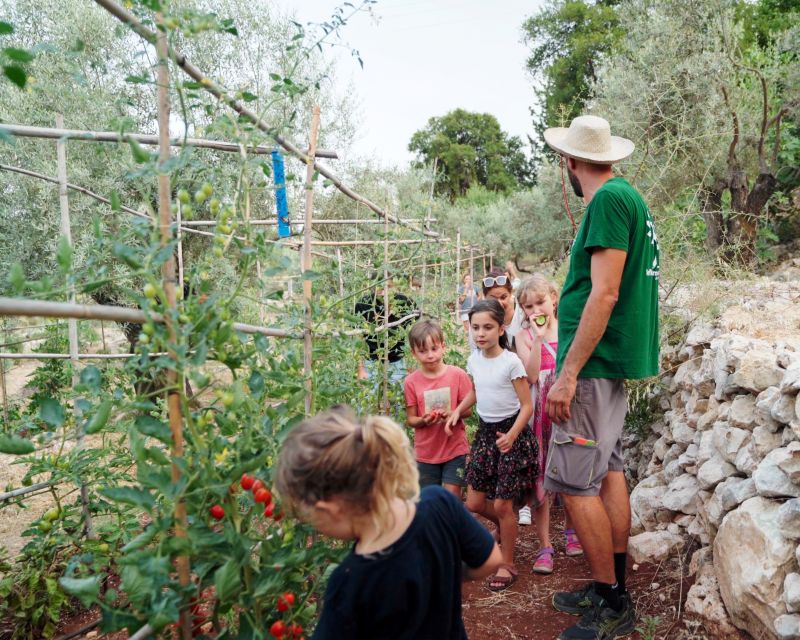
Many cooking classes begin with ingredients already measured and waiting on a counter. This one starts earlier, with the land that produced them. You first learn how Lefkada Micro Farm works to keep its ecosystem healthy, then gather seasonal ingredients for the meal.
That order matters. It helps you understand why Greek cooking can be so direct. When the vegetables are fresh and properly grown, they do not need a long list of sauces or complicated methods. The class centers on freshness, seasonality, and simplicity, the three ideas that shape the cooking here.
I especially like the way this makes the food feel connected to place. You are not just preparing generic Mediterranean dishes. You are seeing where the vegetables come from, handling them yourself, and then eating them in the same setting.
The class is offered in English, so you can follow the explanations and cooking instructions without needing Greek. It is also limited to 10 people, a useful detail for anyone who dislikes crowded demonstrations where you can barely see the work surface.
More Cooking Classes around Greece:
- Naxos Perivoli Farm Experience & Wood-fire Cooking Class
★ 5.0 · 339 reviews - Cretan Cooking Class and Olive Oil Tasting
★ 5.0 · 178 reviews - Melanes: Naxos Perivoli Farm & Cooking Class with Wood Fire
★ 5.0 · 177 reviews
From farm soil to seasonal ingredients
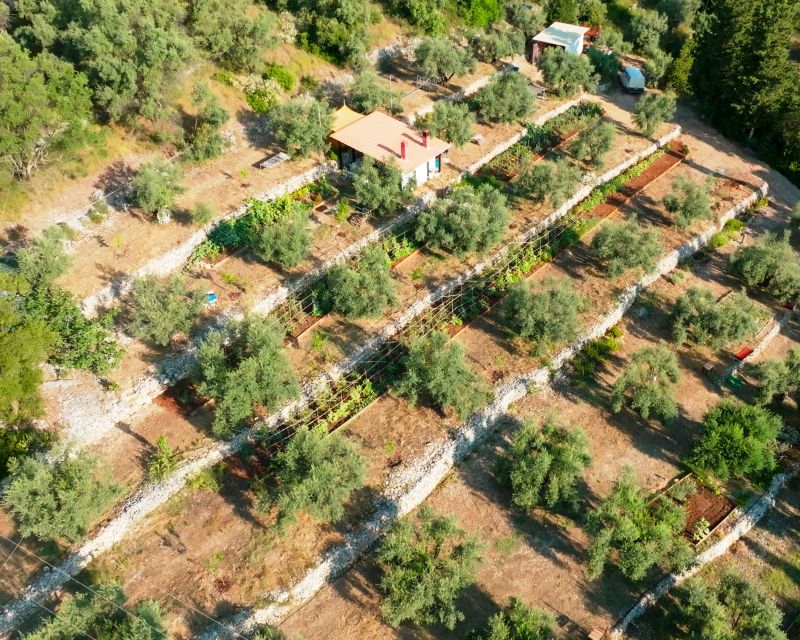
The first part takes place around Lefkada Micro Farm, described as an open-air museum. The emphasis is on the farm itself and its growing methods, including regenerative practices designed to support the surrounding ecosystem.
You should expect this to be more than a quick walk past a few garden beds. The experience is built around understanding how food is grown and harvested. You learn about the relationship between soil, plants, and responsible farming before helping collect ingredients for the meal.
The exact produce will depend on the season. That is a strength, not a gap in the plan. Greek cooking works best when it follows what is available, and the menu is designed around farm-to-table vegetables rather than a fixed selection shipped in from elsewhere.
An early arrival may receive a particularly friendly start. Andreas has welcomed people with coffee, fresh fruit, and cakes, and some have been invited to feed the animals while waiting. These touches are not guaranteed as a formal part of the menu, but they show the relaxed family tone of the farm.
The farm visit also gives you context for the meal. A Greek salad is no longer just chopped vegetables with cheese and oil. You have seen the produce growing, learned about the farm’s approach, and then used it at the table.
The open-air kitchen and wood-burning oven
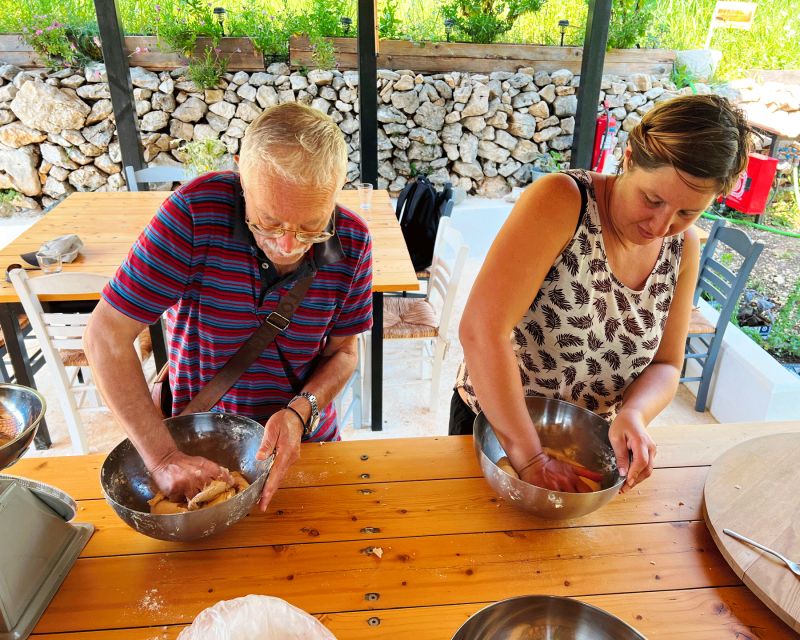
After the farm visit, you move into the open-air kitchen to prepare the meal. This is hands-on cooking rather than a lecture about Greek food. You work as a group, preparing the dishes under the guidance of the host and chef.
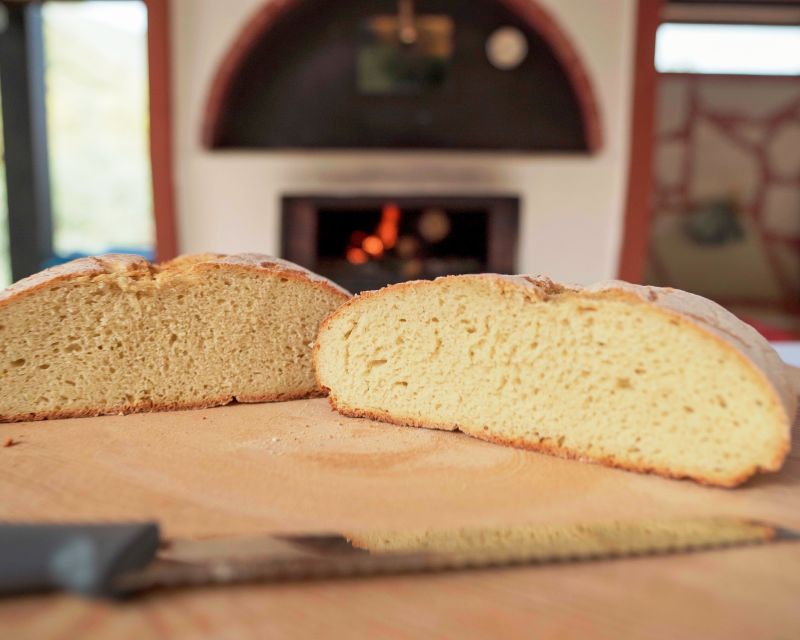
The traditional wood-burning oven is one of the most memorable parts of the class. Bread is baked there, and the briam is roasted there as well. The oven gives the class a slower rhythm, since wood-fired cooking asks you to pay attention to heat and timing rather than simply pressing a button.
You also get to see how the farm’s extra virgin olive oil is used with fresh produce. The description calls it an award-winning oil, but the important point for you is practical: the class shows how good oil can carry a dish when the vegetables are already fresh.
This is not a technical pastry course or a restaurant-training session. You will not be promised advanced knife work, elaborate sauces, or restaurant plating. Instead, you learn a small group of useful dishes and the basic idea behind them: treat good ingredients simply.
That approach should suit cooks who want food they can repeat at home. It may be less satisfying if you are searching for difficult techniques or a large range of recipes.
What you make: bread, tzatziki, salad, and briam
The menu is short, but it makes sense as a complete Greek meal.
More Workshops around Greece:
- Santorini Family Farm Food & Wine Tour with Cooking Class
★ 5.0 · 107 reviews - Moires: Cooking Class and Olive Oil Tasting at a Family Farm
★ 5.0 · 93 reviews - Mykonian Farm and Bakery Class with Brunch in Greece
★ 4.5 · 39 reviews - Traditional Greek Cooking Class @ Lefkada Micro Farm
★ 4.7 · 32 reviews
Wood-fired bread
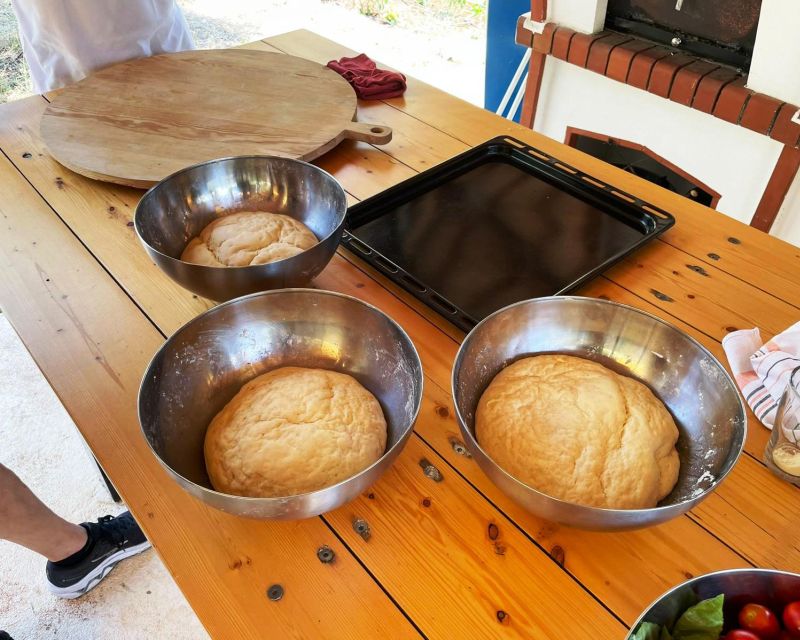
The meal starts with bread baked in the traditional oven. Bread gives the class a practical introduction to the farm’s cooking style: simple ingredients, patient preparation, and heat from wood rather than a modern kitchen appliance.
The bread also becomes useful at the table. It pairs naturally with tzatziki and helps turn the shared meal into something filling rather than decorative.
Farm-to-table tzatziki
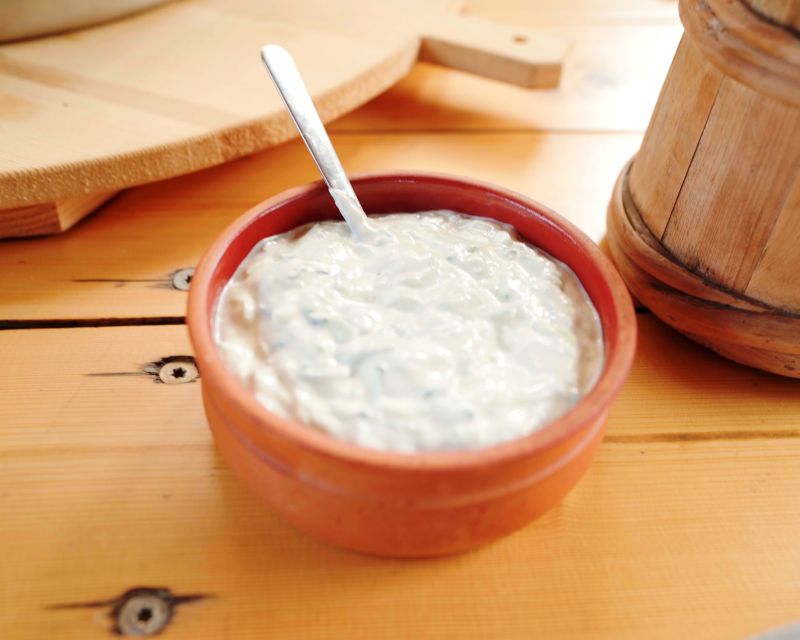
The tzatziki combines farm vegetables with sheep’s yogurt. That yogurt gives the dish a different character from versions made with cow’s milk yogurt, while the fresh vegetables keep it cool and sharp.
This is the sort of preparation where the quality of the basic ingredients does most of the work. You learn how a familiar Greek dish can remain simple while still tasting distinctive.
Greek salad with goat cheese
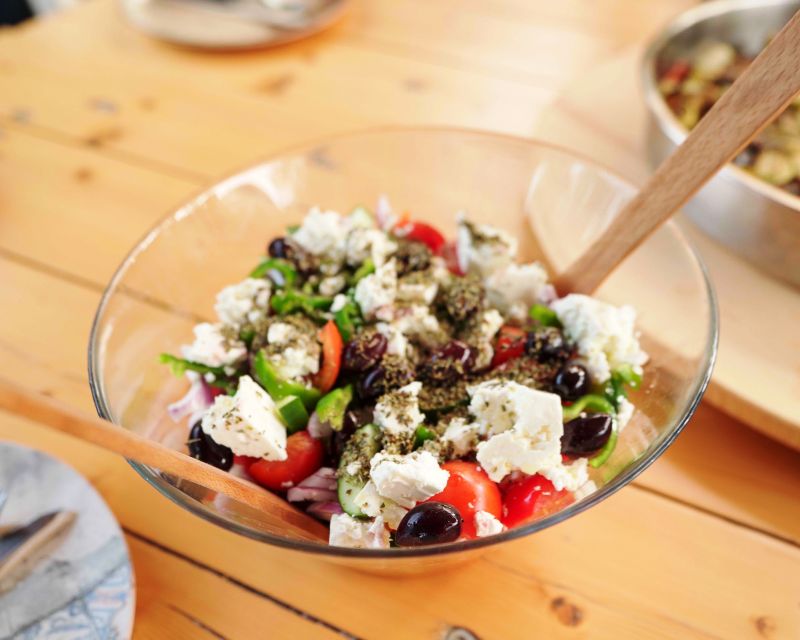
The Greek salad uses farm vegetables, goat cheese, oregano from the farm, and the farm’s original extra virgin olive oil. This is probably the clearest expression of the class philosophy: fresh vegetables, a few strong ingredients, and no need to bury everything under seasoning.
The goat cheese also gives the salad a more local, rustic feel than a standard version made with a familiar block of feta. You should expect the ingredients to vary with the farm’s seasonal supply, since the class is built around what is growing.
Briam in the wood-burning oven
Briam is a mixed vegetable dish roasted in the wood-burning oven. It is a fitting main course for a farm class because it lets the vegetables take center stage.
The dish also shows the value of slow cooking. Rather than relying on meat or a complicated sauce, briam turns a collection of vegetables into a warm, satisfying main course through seasoning, oil, and time.
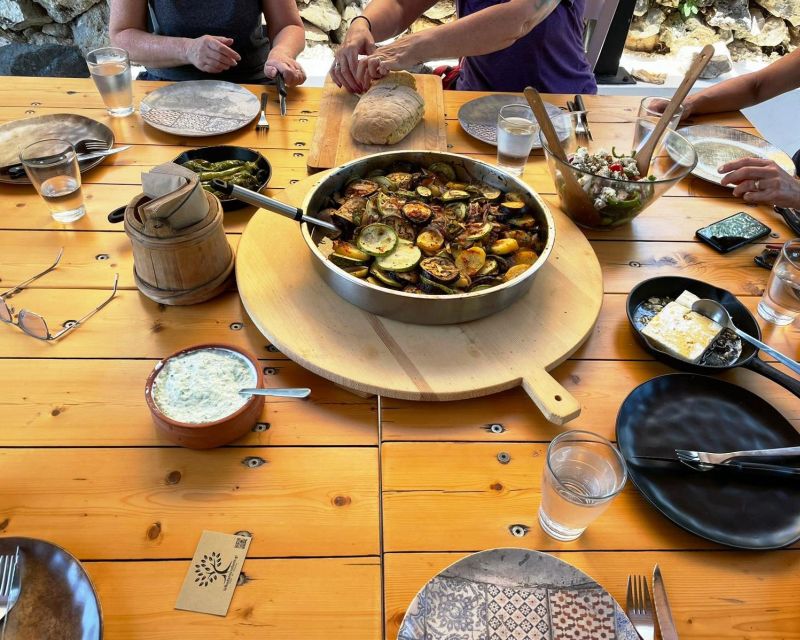
Together, these four dishes form a sensible progression: bread, cool yogurt dip, fresh salad, and roasted vegetables. You get contrasting textures and temperatures without straying from the core ingredients.
A relaxed meal at the Farmer’s Table
When the cooking is finished, everyone sits down to eat together. This shared meal is not an extra tacked onto the end of the class. It is the point where the farm, cooking, and conversation come together.
The Farmer’s Table idea gives the experience a family-style feeling. You eat the food you helped prepare, rather than receiving a separate restaurant meal made by someone else. That makes the four-hour schedule feel more complete.
The pace is intentionally unhurried. The farm describes this as a slow-living experience, and that means you should not book it expecting to rush back to a beach or fit in several other activities immediately afterward.
That slow pace will be a pleasure for some people and a drawback for others. I would choose this class on a day when you want to give the morning or afternoon to one experience. It is less suitable for a tightly packed sightseeing schedule.
Andreas, the host, and the human side of the class
Andreas is an important part of the experience. He introduces the farm and explains its place in the natural system around it. His passion for the environment and the farm’s purpose comes through strongly.
The cooking also involves his mother and their chef. That family connection helps explain why the class feels personal rather than commercial. You are not simply moving through stations with a guide reading instructions. You are spending time with people who grow, cook, and serve the food.
For early arrivals, Andreas may offer coffee, fruit, and cakes before the farm visit begins. He may also invite you to feed the animals. These details are subject to the situation on the day, but they are useful clues about the welcome you can expect.
I would book this for people who enjoy conversation and a human connection with the host. If you prefer to work independently or avoid group interaction, the communal format may feel less comfortable.
Is $152.58 a fair price?
At $152.58 per person, this is not a bargain cooking lesson. The price needs to be judged against the whole experience, not just the number of recipes.
You are getting roughly four hours, a guided look at regenerative farming, seasonal ingredient harvesting, hands-on cooking, a meal, and a small group capped at 10 people. The wood-burning oven and farm setting add character that a basic indoor class may not provide.
The strongest value comes if you care about how food is grown. You are paying for the connection between soil, harvest, kitchen, and table. The class also offers a chance to learn dishes that are straightforward enough to repeat at home, which gives the experience value after your holiday ends.
Still, the cost may be hard to justify if you mainly want to eat Greek food. Lefkada has many cheaper ways to enjoy a salad, bread, or vegetable dish. Book this when the farming and shared cooking matter as much as the meal itself.
Who should book this experience?
I think this class suits couples, small groups, and solo visitors who enjoy food with a story behind it. It should also work well for people who want a calmer break from sightseeing and those interested in organic growing or responsible farming.
It is a good fit for cooks at beginner or intermediate level because the menu focuses on familiar dishes and direct methods. You do not need to be an expert to take part.
Families may also appreciate the farm setting, especially the chance to see animals and learn where ingredients come from. However, the provided details do not specify a minimum age, so check before booking if you are traveling with children.
The class is less suited to anyone with a strict timetable, a desire for advanced culinary training, or little interest in vegetables. The main dish is briam, and the menu is strongly centered on produce.
Please tell the farm about allergies or dietary restrictions before attending. Service animals are allowed. The activity requires good weather, and poor conditions may lead to a different date or a full refund.
Location, timing, and booking advice
The meeting point is Lefkada Micro Farm on E.O. Nydriou Vavkeris Rachi, Nidri 311 00, Greece. The activity ends back at the same meeting point, so you should plan your own way there and back unless separate transport has been arranged privately.
The experience lasts approximately four hours. I would avoid placing another important activity directly afterward, since the farm’s slow pace and shared meal are central to the experience.
It is commonly booked about 15 days ahead. That is a useful planning guide, particularly because the group is limited to 10 people. Booking early also gives you time to mention food restrictions and confirm the details of your visit.
Confirmation is normally sent at booking. If you book within 10 hours of the start time, confirmation may take longer and depends on availability.
Free cancellation is available if you cancel at least 24 hours before the start time. Cancellations or changes made less than 24 hours ahead are not refunded or accepted. Since good weather is required, a cancellation by the farm for weather brings the choice of another date or a full refund.
Should you book Lefkada Micro Farm?
Book it if you want a personal, food-centered afternoon that connects Greek cooking to farming. The strongest reasons are the seasonal ingredients, the wood-burning oven, the small group, and the chance to share a meal with Andreas, his mother, and their chef.
Skip it if you want a low-cost recipe demonstration, a fast activity, or a menu built around meat and seafood. At $152.58, the class asks you to value time, setting, and the farm’s philosophy as much as the food.
For the right visitor, this is a thoughtful way to spend four hours in Lefkada. You leave with recipes, but the bigger lesson is simpler: good Greek food begins long before the plate.
FAQ
Where does the cooking class take place?
The class takes place at Lefkada Micro Farm, located at E.O. Nydriou Vavkeris Rachi, Nidri 311 00, Greece.
How long does the experience last?
The cooking class lasts approximately four hours.
What language is the class offered in?
The experience is offered in English.
How many people can join the class?
The activity has a maximum of 10 participants.
What food will I prepare?
The menu includes bread baked in a wood-burning oven, tzatziki with farm vegetables and sheep’s yogurt, Greek salad with goat cheese, farm oregano and extra virgin olive oil, and briam made with mixed vegetables.
Does the class include a farm visit?
Yes. The experience includes learning about the farm’s regenerative practices and harvesting seasonal organic ingredients before cooking.
Where does the activity end?
The activity ends back at Lefkada Micro Farm, the same place where it begins.
Can I mention allergies or dietary restrictions?
Yes. You should let the farm know about allergies or dietary restrictions.
What happens if bad weather cancels the class?
If poor weather causes the activity to be canceled, you will be offered another date or a full refund.
Just added around Greece
- Volos: Cook Like a Local at a Greek Farm★ 5.0 · 7 reviews
- Traditional Greek Cooking Class @ Lefkada Micro Farm★ 4.7 · 32 reviews
- Visit a Farm and Horseback Riding in Nature★ 5.0 · 10 reviews
- Insightful Pistachio Orchard and Factory Tour★ 4.5 · 27 reviews
- Flavors of Santorini: Farm-to-Table Meal Wine & Authentic Village★ 5.0 · 12 reviews
- Private Olive Oil tasting & Liqueur experience★ 5.0 · 17 reviews
- Santorini 5 Hour Private Oia Tour & Lunch/Dinner at a Local Farm★ 5.0 · 40 reviews
- Cooking Class Sunset Dinner and Tour in Paros Farm★ 5.0 · 5 reviews
Cooking Classes, farm by farm.
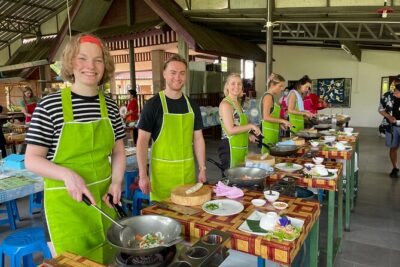
Half-Day Thai Cooking Class at Organic Farm in Chiang Mai
Read our review →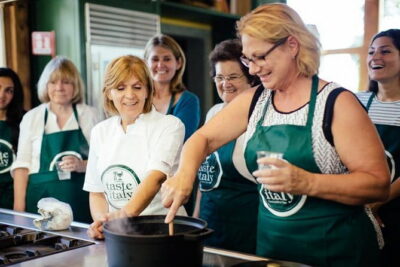
Cooking Class and Lunch at a Tuscan Farmhouse with Local Market Tour from Florence
Read our review →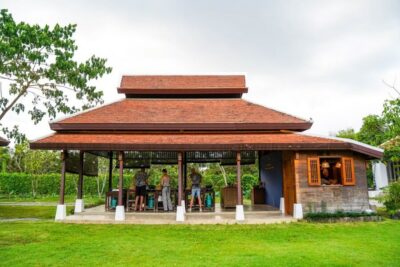
Authentic Cooking Class with Market & Farm Visit
Read our review →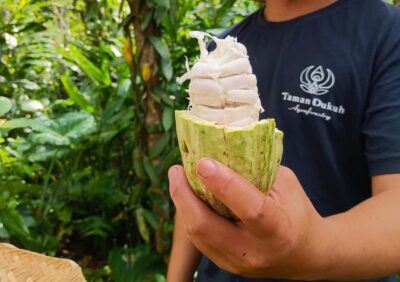

Hands-On Cooking Class & Farmhouse Tour on the Amalfi Coast
Read our review →
Other lists this farm sits on