
REVIEW · GREECE
WIne & Olive Oil Tasting in an Organic Farm in Laconia, Greece!
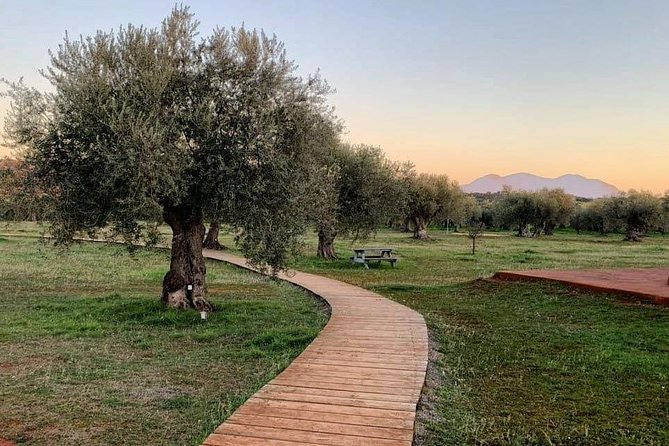
Ancient olive trees make this tour special. From Kalamata, you head toward a small village in Laconia for a private farm visit built around organic olive oil, Greek wine, and local food. I like the chance to walk among trees more than 500 years old, and I like that the farm makes both the oil and wine using sustainable methods. The main drawback is distance: the farm sits about two hours from Kalamata toward Sparta, and transport costs extra if you do not have your own vehicle.
The tasting itself is carefully handled by a certified olive oil taster and a wine sommelier. I also like the personal touch from Maria, whose storytelling during the wider experience helped bring Greece’s olive-growing past to life. Just remember that this is not a quick port-side outing. The advertised tasting lasts about three hours, but the drive adds a major part of your day.
Key points to know before you book
- Olive trees more than 500 years old: The farm walk gives you a direct look at the age and scale of local olive cultivation.
- Four olive oils and four to five wines: You taste several oil varieties plus Greek labels made from grapes such as Agiorgitiko, Avgoustiatis, Athyri, Kydonitsa, and Moschofilero.
- Private from start to finish: Once your group books the date, no other group is added to the experience.
- Two-hour journey from Kalamata: You need your own vehicle or an arranged transfer at an extra charge.
- Local lunch included: Expect olives, cheeses, grilled vegetables, Greek pita or similar regional treats alongside the wine.
- A seasonal outdoor visit: The experience operates from March through November, and comfortable shoes and a hat are sensible choices.
Why this farm visit is worth the long ride
Kalamata is famous for olives, but this experience takes you beyond the usual city stop. You travel toward Sparta and into Laconia, where olive oil is not simply a product on a shop shelf. It is part of the land, the food, and the family economy.
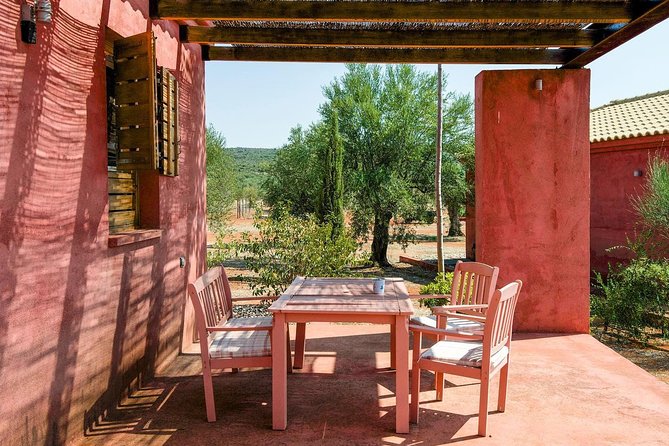
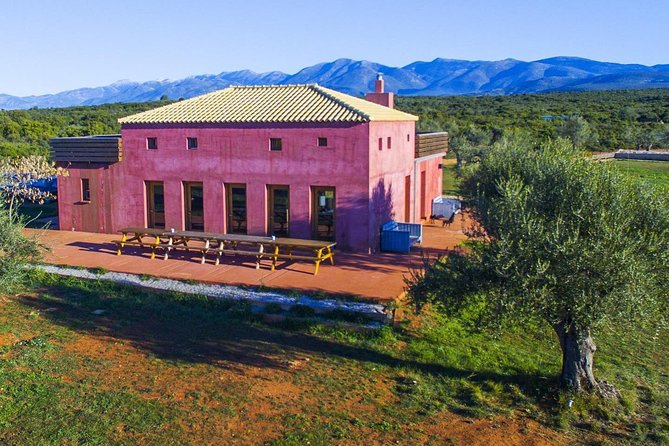
The farm operates as an organic producer and a retreat. That matters because you are not only sitting at a tasting table. You also get a guided look at how the owners work the land and how sustainable farming shapes the farm’s daily life.
I like the scale of this experience. It is private, so your group can ask questions without waiting for a large bus tour to move along. A family can set its own pace, and a couple can focus on the details of the oil and wine without a room full of strangers.
The setting also gives the tasting more meaning. You first see the olive trees and vineyards, then taste what comes from them. That simple order helps you understand the connection between soil, farming choices, and the final bottle.
Still, you should look closely at the timing. The tasting is listed at about three hours, beginning at 8:30 am from the Kalamata Port Authority. Since the organic farm is about two hours away, the total outing will be much longer once transport is counted. The three-hour figure refers to the guided farm experience, not the full time from Kalamata and back.
More Organic Farm Visits around Greece:
- Aegina: Organic Pistachio Orchard Tour with Factory Visit
★ 4.6 · 22 reviews - Chania Area: Cooking Class at a Farm in Stylos Village (organic)
★ 5.0 · 19 reviews - Corfu: Organic Olive Oil Farm Tour with Transfer and Tasting
★ 5.0 · 8 reviews
Walking through vineyards and centuries-old olive groves
The farm visit begins with a guided tour of the facilities. You learn about the owners, their idea for the farm, and the methods used to grow the produce organically.
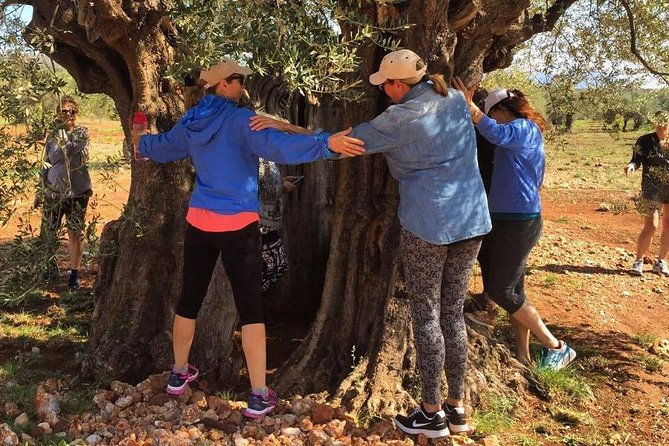
The most memorable part may be the walk outside. You stroll through vineyards and olive groves, including trees that have been on the land for more than 500 years. That age gives the visit a sense of continuity that a standard tasting room cannot provide.
I would plan for outdoor conditions rather than treat this as a formal indoor tasting. Wear shoes that can handle uneven ground, and bring a hat. The advice to prepare for sun is practical, especially because the walk forms a meaningful part of the visit.
The farm’s sustainable approach is also worth your attention. You are introduced to the techniques used by the local owners rather than receiving only a polished sales talk. Ask questions about how the farm works, what organic production means there, and how the vineyards and olive groves are managed.
The information does not promise a technical farming course, so you should not expect a long lecture on certification rules. Instead, the value comes from seeing the place itself and hearing the story from people connected to it.
Learning how to taste Greek olive oil
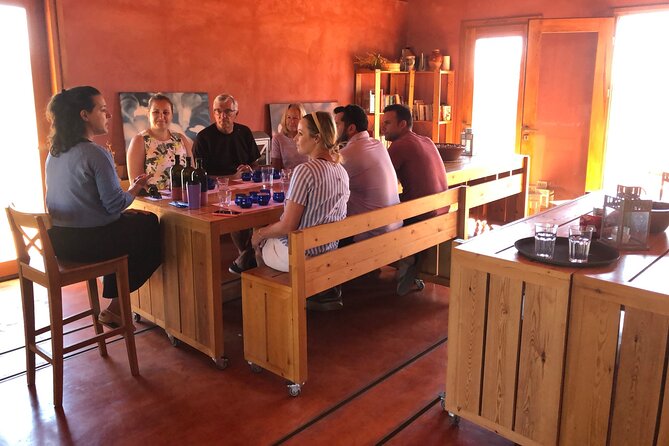
The olive oil portion is more useful than a simple pour and sip. You taste four different oil varieties and receive guidance on how to notice differences in flavor and texture.
A certified olive oil taster leads this part of the visit. You learn how to compare oils and how to choose one for cooking or for serving at the table. That distinction is useful. A delicate oil may suit one purpose, while a stronger style may work better with bread, vegetables, or a finished dish.
You also receive advice on storage. This is the sort of small practical lesson that can save you from wasting a good bottle at home. Olive oil is sensitive to how it is kept, so the tips are not just for the tasting room.
The four oils should give you a better sense of Greek variety than trying one bottle at a market. I like that the tasting is structured around comparison. Once you sample several oils side by side, you can pay attention to texture, aroma, and finish instead of relying on a label or price tag.
The experience also helps explain why Greek olive oil tastes different from bottle to bottle. Variety, harvest, and production methods can all affect the result. The tour does not promise that you will become an expert in one morning, but you should leave with a clearer idea of what you like.
If you have allergies, especially to bees, tell the operator before the visit. You should also share any food allergies or dietary needs in advance.
Meeting Greek grapes beyond the usual names

The wine tasting covers four to five biodynamic Greek wines, including white, rosé, and red styles. The named varieties are Agiorgitiko, Avgoustiatis, Athyri, Kydonitsa, and Moschofilero.
Some of these grapes are not familiar outside Greece, which is part of the appeal. You are not simply comparing another set of international Chardonnay or Cabernet labels. The tasting introduces you to grapes tied to Greek growing regions and local winemaking traditions.
A wine sommelier guides the session. That guidance helps you make sense of unfamiliar names and styles. You can ask about the grape, the color, and the character of each wine as you taste.
I like the balance between education and pleasure here. The sommelier gives the tasting some structure, but the point is still to enjoy the wines. You do not need prior wine knowledge, and the family-friendly nature of the experience means a mixed-age group can take part in the farm visit and food portions, even though the alcohol tasting is intended for adults.
The wines are paired with a light lunch of local treats. Depending on the day, that may include olives, cheeses, grilled vegetables, Greek pita or a similar selection of regional food. The meal is not presented as a large feast, so arrive expecting a light spread rather than a full restaurant lunch.
That pairing is important. Wine and olive oil make more sense with food than in isolation. A piece of pita, a salty olive, or grilled vegetables can change how you notice a wine and show you how the oil works at the table.
More Wine Tours around Greece:
- Wine Tasting Tour at a traditional farm in Mykonos
★ 4.5 · 114 reviews - Santorini Family Farm Food & Wine Tour with Cooking Class
★ 5.0 · 107 reviews - Rhodes: 1952 Farmhouse Cooking & Lunch with Unlimited Wine
★ 4.9 · 99 reviews - Mykonos: Wine Tasting at a Mykonian Farm
★ 4.6 · 79 reviews
Why the private format changes the experience
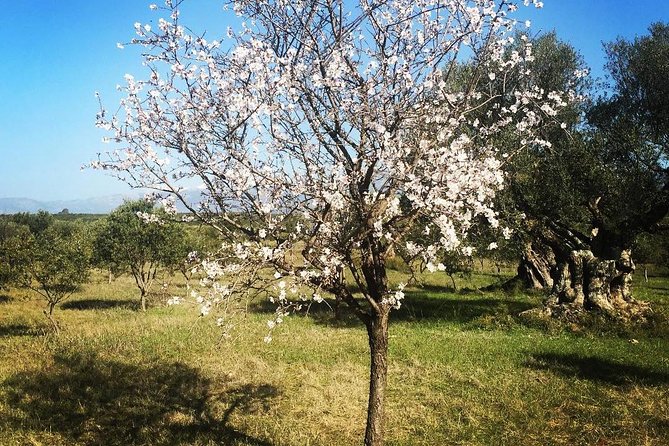
This is a private activity. Only your group participates, and no additional groups are added after your booking for that day.
That setup works especially well for families. One group included two adults, their daughters and partners, and children aged five, two, and one and a half. The farm itself gave the family something to enjoy beyond the tasting, with open outdoor space and old trees to see.
You should still consider the needs of very young children. The visit involves a long ride, outdoor walking, and an adult tasting. The operator identifies the experience as family-friendly, but parents will need to manage the practical side of the day.
For couples, the private format offers a quieter way to enjoy the food and wine. For a small group of friends, it lets you ask direct questions and spend more time on the bottles or oils that interest you most.
The private setup also explains part of the high price. At $590.38 per person, this is not a budget tasting. The fee includes the guided farm experience, lunch, local wine and other drinks, four to five wine labels, four olive oils, bottled water, taxes, and a local host-certified tour leader. It also includes specialist guidance from the olive oil taster and sommelier.
Transport is not included unless separately arranged. If you do not have your own vehicle, the operator can arrange transportation with partners for an extra charge. That additional cost can change the final value considerably, especially for a small party.
At this price, I would book it for the privacy, the specialist-led tasting, and the farm setting, not simply for the amount of food or alcohol. If you only want a short tasting near Kalamata, this is the wrong choice.
Adding Sparta and the Olive Oil Museum
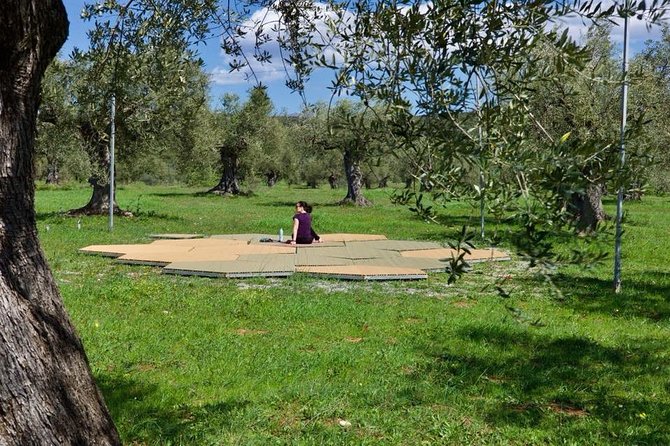
The core farm experience does not automatically include entrance to the Museum of Olive and Olive Oil in Sparta. A museum visit can be requested and carries an additional entrance fee.
The museum can make a good companion to the farm, especially if you want a broader picture of olive production in Greece. One version of the day combined the museum with the olive oil tasting, and the result connected historical displays with the flavors being sampled at the farm.
Maria, the tour leader, is praised for using personal stories and narration to bring the subject to life. That human element matters. Olive cultivation can sound dry when reduced to dates and equipment, but stories about people and daily work make the subject easier to follow.
Ask about the museum when arranging the tour rather than assuming it is part of the standard schedule. The added stop may affect timing, transport, and the final cost.
Getting there from Kalamata
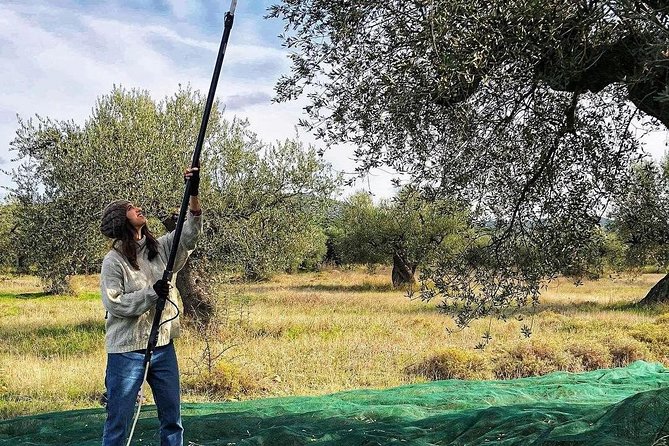
The meeting point is the Kalamata Port Authority at Mpoumpoulinas 4. The stated start time is 8:30 am, and the activity ends back at that meeting point.
The farm is in a small village in Laconia, about two hours from Kalamata in the direction of Sparta. You therefore need to settle transport before the day begins. You can inform the operator if you have your own vehicle, or ask them to arrange a transfer through their partners for an extra fee.
This distance is the tour’s biggest practical issue. It allows you to reach a rural setting, but it also makes the experience less convenient for a short port call. If you are arriving by cruise ship, check your ship schedule carefully. The early departure and long road journey leave less room for delays.
The operator confirms bookings within 48 hours, subject to availability. The tasting depends on the availability of the farm, sommelier, and olive oil specialist, so your preferred date may need coordination. It runs from March through November, Monday through Sunday except Thursdays, Greek official holidays, and the period from Holy Friday through Easter Tuesday.
Good weather is required. If poor conditions cancel the activity, you are offered another date or a full refund. The normal cancellation rule is strict: the booking is non-refundable and cannot be changed for any reason, so I would avoid reserving it until your plans are firm.
Who should book this private tasting?
I would recommend this experience to you if you care about food, farming, and regional wine more than ticking off a fast sightseeing stop. It suits couples, families, and private groups that want a personal day outside Kalamata.
It is also a strong choice if you have already seen the main sights and want contact with rural Greece. The old olive trees, the organic methods, and the unfamiliar grape varieties give the day a clear local identity.
I would be more cautious if you dislike long drives, have limited time, or want a low-cost activity. The high per-person price and extra transport charge make this a special outing rather than an easy add-on.
Book early enough to confirm the farm and tasting availability. Tell the operator about dietary needs, allergies, and whether you need transport. Bring comfortable shoes, a hat, water-friendly outdoor clothing, and enough time to enjoy the road as part of the day.
Should you book it?
Book this tour if you want a private, food-focused visit where the setting matters as much as the tasting. The combination of 500-year-old olive trees, four oils, Greek wines, local food, and specialist guidance gives the day real substance.
Skip it if you want to stay close to Kalamata or keep the budget low. For the right group, the long ride is the price of reaching a working organic farm and tasting products where they are made.
FAQ
Where does the tour begin and end?
It begins and ends at the Kalamata Port Authority, Mpoumpoulinas 4, Kalamata 241 00, Greece.
What time does the tour start?
The stated start time is 8:30 am.
How long is the guided experience?
The guided farm, olive oil, and wine experience lasts about three hours. The journey from Kalamata to the farm takes about two hours each way, so the total outing is longer.
Is transportation included?
Transportation is not included in the listed inclusions. You may use your own vehicle, or the operator can arrange transportation with partners for an extra charge.
What wines and oils will be tasted?
You taste four different olive oil varieties and four to five biodynamic Greek wines. Wine examples include Agiorgitiko, Avgoustiatis, Athyri, Kydonitsa, and Moschofilero.
Is lunch included?
Yes. A light lunch with local treats is included. It may include olives, cheeses, grilled vegetables, Greek pita, or similar local delicacies.
Is the tour private and family-friendly?
Yes. Only your group participates, and the experience is described as family-friendly. You should notify the operator about dietary needs and allergies before the visit.
More Food and Drink Tours around Greece
- Heraklion: Olive Farm Tour with Tasting of Local Delicacies
★ 4.9 · 411 reviews - Cretan Cooking Class and Olive Oil Tasting
★ 5.0 · 178 reviews - Crete: Farm Visit with Cheese Tasting and Milking Experience
★ 4.9 · 109 reviews - Moires: Cooking Class and Olive Oil Tasting at a Family Farm
★ 5.0 · 93 reviews
Just added around Greece
- Volos: Cook Like a Local at a Greek Farm★ 5.0 · 7 reviews
- Traditional Greek Cooking Class @ Lefkada Micro Farm★ 4.7 · 32 reviews
- Visit a Farm and Horseback Riding in Nature★ 5.0 · 10 reviews
- Insightful Pistachio Orchard and Factory Tour★ 4.5 · 27 reviews
- Flavors of Santorini: Farm-to-Table Meal Wine & Authentic Village★ 5.0 · 12 reviews
- Private Olive Oil tasting & Liqueur experience★ 5.0 · 17 reviews
- Santorini 5 Hour Private Oia Tour & Lunch/Dinner at a Local Farm★ 5.0 · 40 reviews
- Cooking Class Sunset Dinner and Tour in Paros Farm★ 5.0 · 5 reviews
Organic Farm Visits, farm by farm.
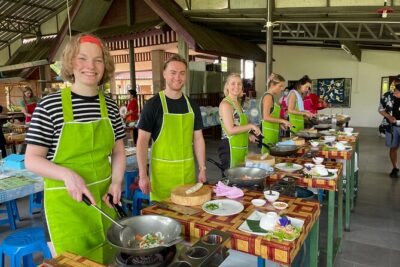
Half-Day Thai Cooking Class at Organic Farm in Chiang Mai
Read our review →

Evening Cooking Class in Organic Farm with Local Market Tour
Read our review →
ATV to Macao Beach and Water Cave with Organic Farm
Read our review →
Buggy Tour with Organic Farm, Macao Beach Visit from Punta Cana
Read our review →
Authentic Bali Farm Cooking School & Organic Farm
Read our review →
Farm To table Experience on an organic hilltop estate in Tuscany
Read our review →Other lists this farm sits on