
REVIEW · PORTUGAL
Évora: Cork Factory and Cork Farm Lunch included
Cork country is more fascinating than it sounds. This full-day Évora outing links a working cork factory with Alentejo’s montado, a traditional lunch, farm life, and ancient stone sites. I like the close look at cork production and the warm family-run meal, while the main tradeoff is that the afternoon’s Neolithic displays may feel more suited to school groups than adults.
The tour costs $117 per person and lasts eight hours, with transport from your accommodation included. I also like that guides such as Telma and Pedro bring local knowledge and can adjust the plan when weather causes trouble. Just know that lunch drinks cost extra, walking takes place outdoors, and the van may be harder to hear from the back row.
Key points to know before you book
- Cork becomes the day’s main lesson: You see how bark from cork oak trees turns into useful products at a working factory.
- Lunch is a local family affair: The traditional Alentejo meal takes place at a typical restaurant linked to the guide’s family.
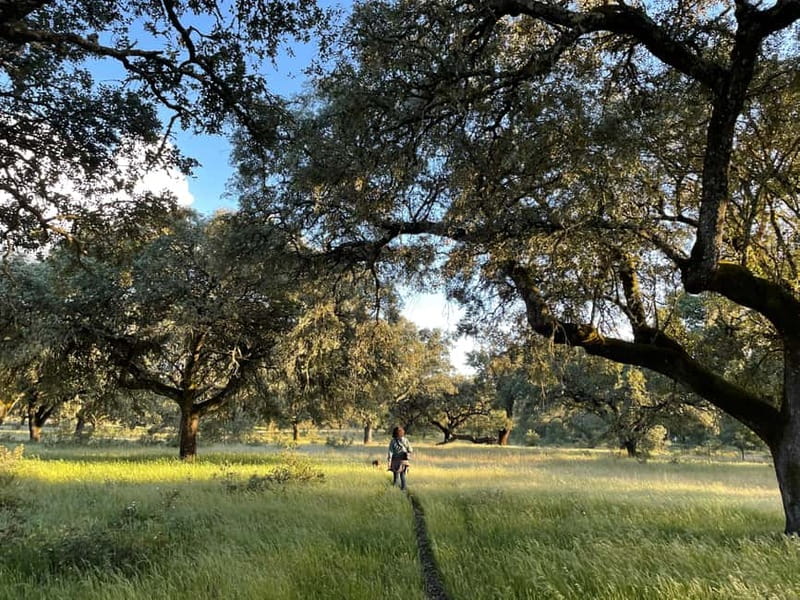
- The montado explains rural Alentejo: You learn how cork oaks, holm oaks, animals, farming, and nature fit together.
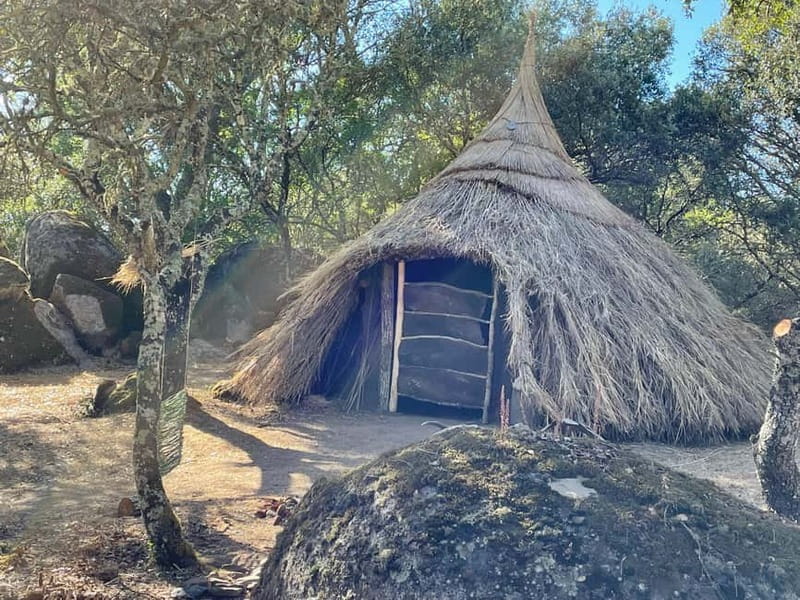
- Ancient sites add a surprising second theme: A cromlech and reconstructed Neolithic village connect the farm to prehistoric life.
- The tour is easiest with practical footwear: Bring walking shoes, water, a hat, and clothing for sun and outdoor paths.
- The afternoon may divide opinion: The farm and ancient village are valuable for curious visitors, but some adults may prefer a shorter day ending after lunch.
Why cork is the right introduction to Alentejo
Cork is not just a souvenir material in Portugal. In Alentejo, it is part of the local economy, countryside, and way of life. This tour gives you a chance to see that connection rather than simply buying a cork wallet in a shop.
At the factory, you learn how cork is handled and transformed into different products. The visit is practical, not just decorative. You can expect to see the production side of an industry that often remains invisible to visitors. One participant described the factory as unusual and informative, while another noted that hundreds of products were available there.
That combination matters. You get the story of the raw material, then see how it becomes something made for sale. It gives context to the cork items you will encounter elsewhere in Portugal.
Your guide should also explain why the material has such a strong place in the region. The tour’s focus is not only on factory work, but also on the trees and the rural system that supports them. The morning therefore works well for anyone who wants more than a standard historic walk around Évora.
The factory is also a good reason to ask questions. Since the guides speak English and Portuguese, you can expect the main information to be available in English, though the quality of the experience will depend partly on where you are seated and how clearly the guide can speak during transport and demonstrations.
More Lunch Experiences around Portugal:
- From Porto: 2 Wine Regions, Farm-to-Table Lunch & Boat
★ 4.9 · 5,724 reviews - From Porto: 2 Wine Regions, Farm Lunch, and Boat Ride
★ 4.8 · 233 reviews - Traditional Cooking Class, Farm Tour & Lunch in the Douro Valley
★ 5.0 · 46 reviews
The cork factory, where a tree becomes a product
The factory visit is one of the strongest parts of the day. You are introduced to the process of turning cork into a range of finished goods, which makes the stop more useful than a simple retail visit.
Cork comes from the bark of cork and holm oak trees, so the material begins in the countryside you will see later. The factory helps you connect the two. First you learn about production, then you see the living trees and the conditions that support them.
You should expect an industrial setting rather than a polished museum. That is part of the appeal. This is a working business, and the visit gives you a look at local production and commerce. The emphasis is on how things are made and sold, not on a staged attraction.
The timing of the factory visit is also sensible. It gives you something concrete to understand before heading into the countryside. When you later see cork oaks in the montado, you already know why those trees matter.
If you enjoy buying local goods, the factory may tempt you to spend extra time browsing. Keep your expectations in check, though. The key value is the explanation of the process, not a guarantee that every product will suit your taste or budget.
A family restaurant and the flavors of Alentejo
Lunch is included, but drinks are not. That small detail matters, so budget for anything you want to drink with the meal.
The restaurant is described as a typical Alentejo establishment and is connected to the guide’s family. That personal link changes the tone of the stop. Instead of eating at an anonymous roadside venue, you may be welcomed by people with a direct connection to the area. The guide’s father was praised as a particularly warm host, and the family setting is one of the most repeated strengths of the day.
I like this part because food can explain a place faster than a lecture. A traditional meal gives you a taste of everyday Alentejo, while the family connection adds a human layer. You are not only hearing about rural life. You are sharing a meal in a place where local relationships still matter.
The meal is leisurely, so you should not expect a rushed lunch between attractions. That is good news if you enjoy sitting down and talking. It may be less appealing if you want to pack as many sights as possible into the day.
Several people considered the lunch the highlight, and one felt the tour could have ended after this stop. That is useful guidance. If your main interests are cork, food, and local contacts, the morning and lunch may already justify much of the price. If you prefer archaeology and countryside walks, stay for the afternoon.
Entering the montado and meeting the oak trees
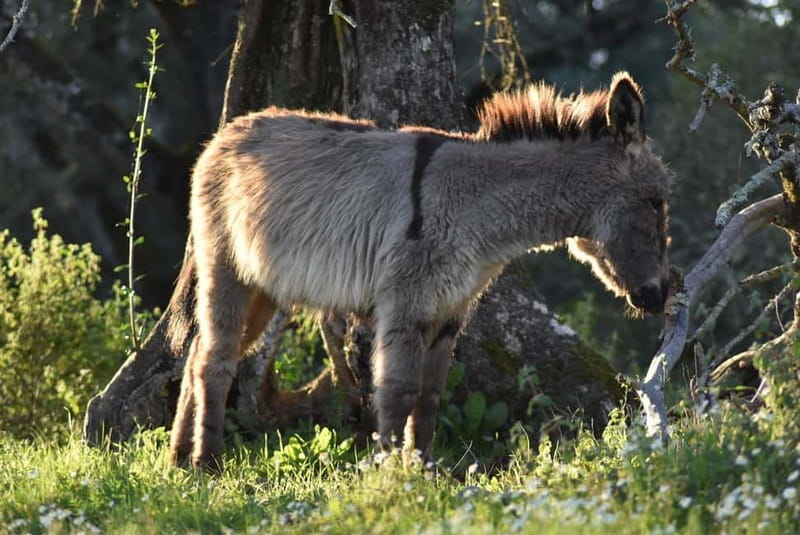
After lunch, the tour moves to an Alentejo estate. Here, the subject shifts from manufacturing to the living system behind it.
The montado is the open countryside associated with cork and holm oaks. The visit lets you see the trees in their setting and learn about cork harvesting. You also hear about the relationship between the trees, animals, farming, and the wider rural economy.
This is where the day becomes more than a factory tour. You begin to understand that cork production is tied to land management. The trees are not merely raw-material suppliers. They are part of a working property where agriculture and nature have to coexist.
The guides Pedro and Telma received strong praise for explaining local traditions, farming, cork production, and community life. Pedro was especially noted for connecting the subject to his own experience of growing up in the region. That personal background can make a technical topic easier to follow.
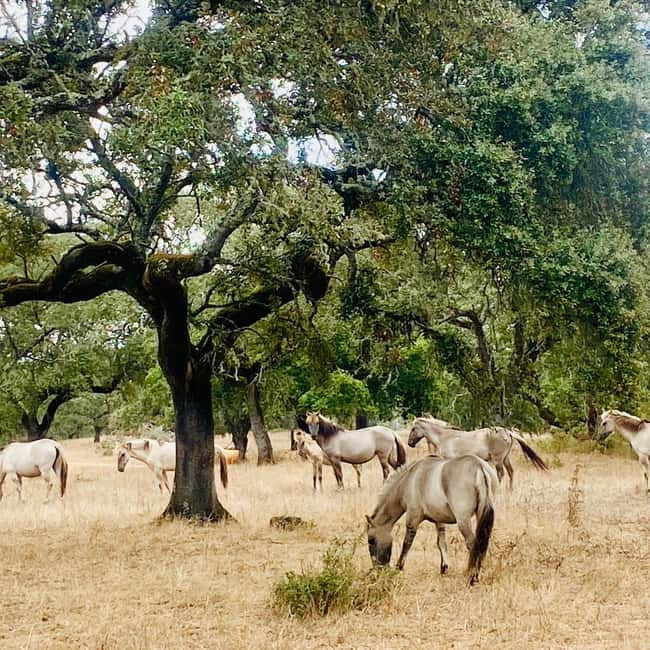
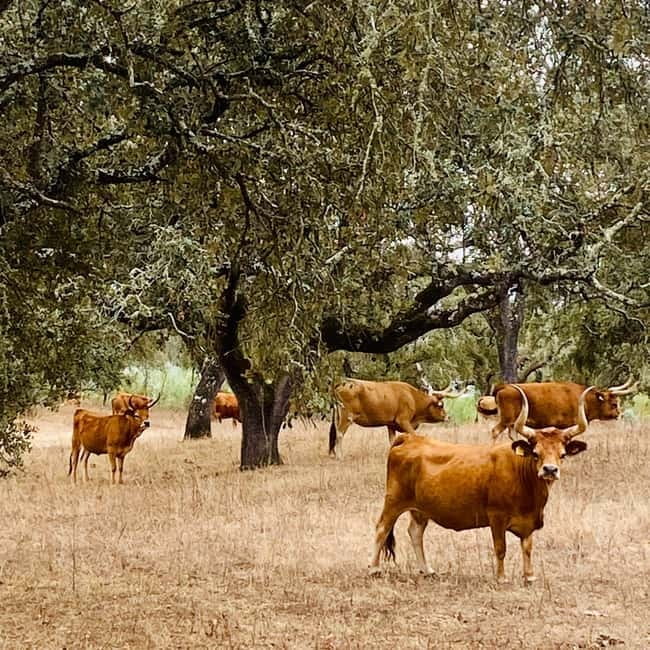
You may also see animals on the estate. The available information does not specify which animals or how close you will get, so think of this as part of the working farm setting rather than a dedicated animal encounter. If you have animal allergies, the experience is not suitable for you.
Bring water and a sun hat. Outdoor walking in Alentejo can feel exposed, and comfortable shoes are important. The advice is simple, but it can make the difference between enjoying the estate and counting the minutes until the next stop.
More Farm Tours around Portugal:
- “Re-Canto” Farm-to-Table with Stunning Views at Madeira
★ 5.0 · 87 reviews - Join In On Our Farmers Table
★ 4.5 · 65 reviews - Alpaca Farm MamaAdama Meet & Feed
★ 5.0 · 39 reviews - Douro Valley: Traditional Cooking Class, Farm Tour and Lunch
★ 5.0 · 28 reviews
Cromlech stones and a reconstructed Neolithic village
The estate includes a recreation of a prehistoric cromlech and a reconstruction of a Neolithic village. These stops add an archaeological theme to a day that began with modern production.
A cromlech is a prehistoric stone arrangement, so the visit gives you a physical way to think about people who lived in the region long before today’s farms and factories. You also gain a connection to the long human history of Alentejo without leaving the property.
The reconstructed village is designed to show how Neolithic people may have lived. It is an educational display rather than an untouched archaeological site. That distinction is worth keeping clear. You are seeing a reconstruction, and the cromlech is described as a recreation located on the estate.
For some adults, this will be a pleasant surprise. One person particularly enjoyed the standing stones, the education center, and learning about acorn processing. Another felt the village seemed aimed at a younger school audience. Both reactions make sense.
Your enjoyment will depend on how much you like interpretive exhibits. If you enjoy seeing how ancient communities used local resources, the village gives the farm visit extra meaning. If you prefer a tightly focused cork tour, the afternoon can feel long after the factory and lunch.
The acorn-processing information is another interesting link between past and present. It shows that the property is not only presenting stones and old buildings as isolated curiosities. It is using them to explain food, farming, and daily life in earlier periods.
Guides Telma and Pedro shape the day
The people leading the experience are a major part of its value. Telma was praised for being energetic, friendly, and easy to understand. Pedro was described as sincere, patient, and deeply connected to the region.
That matters on a rural tour because the places themselves do not always explain everything. A factory floor, an oak tree, or a stone circle can be interesting, but the guide supplies the links between them. Good guiding helps you see why these things belong in the same day.
The tour is offered in English and Portuguese. If you need clear explanations, mention that when booking if there is a way to do so. One person seated in the third row of the van had trouble hearing because of road noise and the distance from the guide. This is a practical issue, not a flaw in the subject matter, but it is worth noting.
If you are placed toward the back, ask the guide to repeat important points. The experience includes several technical and historical subjects, so missing a few explanations could reduce the value of the drive between stops.
Weather can also shape the schedule. When heavy rain was forecast, the provider contacted the group and suggested ways to adapt the day. The afternoon plan was adjusted and still worked well. That flexibility is reassuring in a region where much of the experience takes place outside.
Transport, timing, and what eight hours feels like
Transport from your accommodation is included, which makes the day easy to arrange. You do not need to find the factory or estate on your own, and pickup and drop-off can be especially useful if you are staying in Évora without a car.
The full duration is eight hours. That is a substantial part of your day, so think of this as a main Évora excursion, not a quick add-on between city sights.
The long format has clear benefits. You have time for the factory, lunch, the estate, the trees, the animals, and the prehistoric displays. The day can feel varied rather than repetitive.
The drawback is pace. With several stops and transport between them, you may feel ready to return to town after lunch. This is particularly true if the reconstructed village does not appeal to you. The itinerary works best when you enjoy a relaxed rural day and do not mind spending most of it away from Évora’s center.
No group size is specified, so I would not assume a small private outing. The van experience can also affect how much you hear. That said, the personal involvement of Telma and Pedro appears to be a key part of the tour’s character.
Is $117 a fair price?
At $117 per person, this is not the cheapest way to see the Alentejo countryside. But the price includes transportation, a factory visit, a traditional lunch, an estate visit, and the prehistoric displays. You are paying for access, guiding, and a full day of connected experiences rather than a single attraction.
The lunch is important to the value calculation. Since the meal is included, you mainly need to pay extra for drinks. A family-run restaurant also gives the day a local touch that is hard to reproduce with a self-guided drive.
The transport adds value too. Hiring a car, finding the factory, locating the estate, and arranging stops would take time and planning. You would also lose the guide’s explanations and local connections.
I would call the price reasonable for a visitor who wants a guided rural day with food and transportation. It is less compelling if your only interest is buying cork products or taking a short walk among oak trees. In that case, the eight-hour commitment may feel excessive.
The flexible booking terms help reduce the risk. You can reserve and pay later, and cancellation is available up to 24 hours in advance for a full refund. Check the exact starting time when you book, since availability determines the departure schedule.
Who will enjoy this experience most?
I would recommend it to you if you want to understand how Alentejo works beyond its city monuments. It suits people interested in farming, local business, food, sustainability, rural traditions, and archaeology.
It is also a good match for curious first-time visitors who want a guide to connect several subjects. Cork, oak trees, animals, lunch, ancient stones, and a reconstructed village may sound unrelated at first. The tour’s strength is showing how they all belong to the same place.
Families with older children may appreciate the education center and Neolithic village, though the activity is not described as wheelchair accessible. Comfortable walking is required, and the outdoor portions may be tiring in strong sun.
You should think twice if you dislike long days, educational displays, or rural drives. The afternoon does not have the same appeal for everyone, and the tour cannot be shortened simply because the factory and lunch were your favorite parts.
People with animal allergies should not book. Wheelchair users should also look for another activity because this experience is not suitable for them.
What to bring for a smoother day
Pack light, practical items rather than dressing for a formal meal. You will want:
- Comfortable walking shoes
- A sun hat
- Water
- A camera
- Clothing suitable for outdoor walking
- Extra money for lunch drinks
The camera is worthwhile because the day combines factory details, oak trees, farm scenes, stone monuments, and open countryside. Water is especially important because the estate portion takes place outdoors.
I would also keep your schedule flexible after returning. The eight-hour duration and possible weather changes mean you should not plan a tight appointment immediately afterward.
Should you book the cork and farm tour?
Book it if you want a full day of local food, rural culture, cork production, and archaeology, with someone else handling the transport. The best parts are the factory, the family restaurant, and the chance to see the montado as a working place rather than a pretty backdrop.
I would be more cautious if you want a short, adult-focused sightseeing tour. The reconstructed Neolithic village may feel basic, and some people will find the day ends after its strongest moments. Still, the flexibility of guides such as Telma and Pedro, the included lunch, and the unusual subject make this a strong choice for curious visitors.
For me, the deciding question is simple: do you want to see how Alentejo lives, or only what Évora looks like? If you want the first answer, this $117 experience earns serious consideration.
FAQ
How long does the cork factory and farm experience last?
The experience lasts eight hours. Check availability for the specific starting time.
Is transportation included?
Yes. Transportation from your accommodation is included, with pickup and drop-off arrangements available in Évora.
Is lunch included?
Yes. A traditional Alentejo lunch at a typical restaurant is included. Drinks at lunch are not included.
What languages are available?
The host or greeter languages are English and Portuguese.
What should I bring?
Bring comfortable shoes, clothing suitable for walking, a sun hat, water, and a camera.
Is the experience suitable for wheelchair users or people with animal allergies?
No. The activity is not suitable for wheelchair users or people with animal allergies.
Just added around Portugal
- Half-Day Farm Visit and Cow Milking Experience★ 5.0 · 16 reviews
- Alpaca Farm MamaAdama Meet & Feed★ 5.0 · 39 reviews
- Ecotourism: Organic Farm & Animal Tour near Serra da Estrela★ 5.0 · 8 reviews
- Braga/Guimarães: 1 Day with Lunch + farm and wine tasting★ 5.0 · 3 reviews
- Douro Valley Private Tour: 2 Farms, Lunch & Boat Trip★ 4.5 · 13 reviews
- Meditation Experience at a Lovely Farm in Porto★ 5.0 · 19 reviews
- Algarve wine tour and farmer’s lunch at wine estate★ 5.0 · 14 reviews
- Wine Class Portugal wines in a small farm with a visit to the winery★ 5.0 · 2 reviews
Lunch Experiences, farm by farm.
Cooking Class and Lunch at a Tuscan Farmhouse with Local Market Tour from Florence
Read our review →
Reindeer Camp and Sami Cultural Tour with Lunch
Read our review →
Montserrat Lunch & Wine at Farmhouse Small Group from Barcelona
Read our review →
Montserrat Visit & Lunch at Farmhouse Small Group
Read our review →
Montserrat Full Day Tour with Farmhouse Lunch and Winery Visit
Read our review →
Montserrat & Winery Visit Tour with Traditional Farmhouse Lunch
Read our review →
Hidden Gems: Boutique Full-Day Wine, Farm & Lunch Tour
Read our review →Other lists this farm sits on