
REVIEW · MEDELLIN
Comuna 13 & Coffee Farm Private Tour in Medellin | The Best Combo
Two Medellín worlds meet in one day. This private tour pairs Comuna 13’s powerful street art and electric escalators with a family coffee farm in Sabaneta, giving you both urban culture and countryside work in about eight hours. I like the way the day moves from murals, music, and neighborhood stories to coffee plants, roasting, and a proper Colombian lunch. I also like that private transport, admission to the coffee farm, and hotel pickup in El Poblado or Laureles are included.
The main drawback is the pace. You cover two very different areas in one long day, and both stops require walking, standing, and some uphill effort. At $150 per person, this is not a budget outing, but the private vehicle, guide, lunch, and hands-on farm activities make it a sensible choice if your Medellín schedule is tight.
Key things to know before booking
- Comuna 13 includes the famous outdoor escalators, which replaced more than 350 steep stairs and cost about $3.5 million to build.
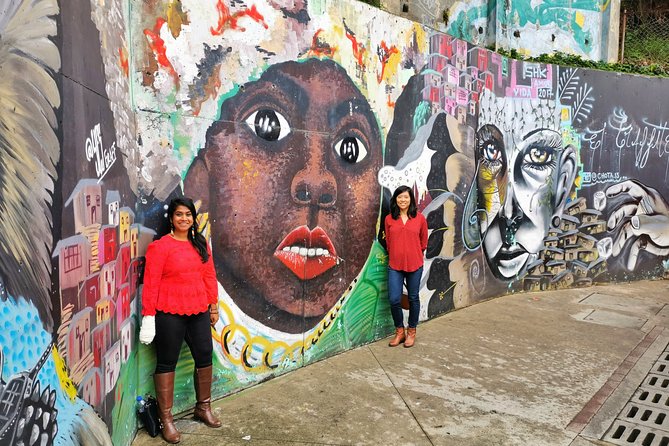
- The graffiti has meaning, with murals tied to the neighborhood’s past, present, and hopes for the future.
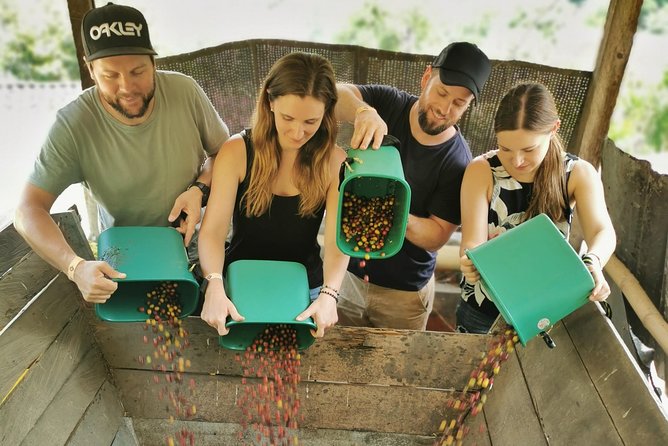
- The coffee visit is hands-on, from planting a seed and tasting the coffee fruit to picking, processing, roasting, and grinding beans.
- Lunch is served at the family farm, with a traditional bandeja paisa and some farm-grown ingredients.
- You brew coffee in four different ways, making this more useful for coffee fans than a simple plantation walk.
- The tour is private, so only your own group participates, with pickup and drop-off available in El Poblado or Laureles.
Why this combination works so well in Medellín
Medellín can be hard to understand through a single sightseeing stop. Comuna 13 shows how a neighborhood can use public art, tourism, and community energy to tell its story. The coffee farm then takes you out of the city and shows the patient labor behind one of Colombia’s best-known products.
I like this pairing because the contrast is useful. In Comuna 13, you learn how people have reshaped a steep urban hillside. At the farm, you see how a small family operation works with the land, season, and coffee plant. The two stops are not connected by theme, but they give you a broader sense of Antioquia than either one could provide alone.
The day lasts about eight hours. That is a full outing, but it saves you from arranging separate transport and trying to fit both places into a short Medellín stay. Since the tour is private, your group can ask questions and move at a more comfortable pace than on a large bus trip.
More Coffee Farm Tours around Colombia:
- Medellín Coffee Farm Tour with Trolley and Cable Car Ride
★ 4.9 · 277 reviews - Salento: Private Cocora Valley, Salento & Coffee Farm Tour
★ 4.9 · 202 reviews - Medellin: Horseback Riding Coffee Farm Tour with Coffee Spa
★ 4.8 · 151 reviews
Comuna 13 and the 350 stairs replaced by escalators
The first stop is the Escaleras Electricas de la Comuna 13, the outdoor escalator system that has become one of Medellín’s best-known attractions. The escalators were built on a steep hillside to replace more than 350 stairs. Their reported cost was $3.5 million, a striking investment in access for a neighborhood where simply getting up and down the hill was once a daily chore.
The escalators are practical, but they are not the whole point. They take you through a district where public spaces, small shops, performances, and murals sit close together. You will see how a piece of transport infrastructure can also become part of a neighborhood’s public identity.
Set aside about two hours here. You will walk through the area, stop to study murals, and hear the stories connected to them. The art is not just decoration. Many pieces refer to violence, loss, community strength, and the hopes of younger residents.
I especially like that the guide explains the meaning behind the images rather than treating Comuna 13 as a quick photo stop. The neighborhood’s past was violent, but the tour also gives attention to its present and future. That balance matters. You get a more useful visit when the district is presented as a living community rather than a dramatic backdrop.
Street art covers a large part of the area, with roughly half of the neighborhood displaying meaningful graffiti. You might see bright colors and large figures first, but the guide helps you notice the smaller details and local references. Ask questions as you go. A private group gives you a better chance to pause when a particular mural catches your eye.
Meeting local artists and catching the neighborhood’s rhythm
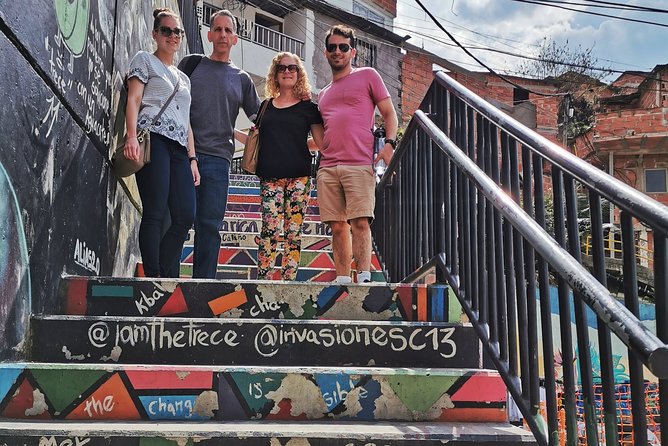
A strong guide can make a major difference in Comuna 13. Daniel, one of the guides connected with this tour, speaks English and has friendly local connections. On one outing, he introduced the group to one of the neighborhood’s most prolific graffiti artists, an encounter that added a personal voice to the mural tour.
That sort of meeting cannot be promised every time, so you should not book solely for it. Still, it shows the value of a guide who knows the area beyond the main route. You may also catch a breakdancing performance, another reminder that Comuna 13 is a place where art is performed as well as painted.
There are small food and drink stops along the way. One memorable local treat is a popsicle made with green mango and passionfruit, served with lime juice and salt for dipping. It is a modest detail, but it gives the visit a taste of everyday neighborhood life instead of leaving you with only photographs.
For the best viewing conditions, an early start can help. Daniel began one visit before the area became crowded and before many vendors had set up. That made it easier to see the murals without constant interruptions. Your exact timing depends on the day and schedule, but an earlier Comuna 13 visit is worth requesting if you have a choice.
The Sabaneta coffee farm, from seed to cup
After Comuna 13, the tour heads toward Sabaneta for four hours at a small family-run coffee farm. The farm has about 14,000 coffee plants and produces around two tons of coffee each year. That scale is important. You are not touring a giant industrial operation. You are seeing how a family farm manages planting, harvesting, processing, and serving coffee.
The visit begins with lunch, which is a practical choice after a morning of walking. You can expect a traditional bandeja paisa, with some ingredients coming directly from the farm, including avocado and eggs. The leaves used to wrap part of the meal also come from the property.
Lunch is more than a box eaten in the vehicle. It breaks up the day and gives you time to settle in before the outdoor work begins. If you enjoy trying regional food, this is one of the more appealing parts of the package. Breakfast is not included, so plan to eat before pickup.
A coffee expert first explains the coffee industry and the life cycle of the plant. This introduction gives you a framework for the rest of the visit. Without it, picking a red coffee fruit can feel like a novelty. With it, you can connect the plant, the fruit, the bean, the processing stages, and the final drink.
More Farm Tours around Colombia:
- From Bogotá: Coffee Farm and Tequendama Falls Tour
★ 4.5 · 130 reviews - Coffee Tour Salento-Ocaso Farm- English Tour
★ 4.6 · 88 reviews - Coffee Farm Experience Private Day Tour
★ 5.0 · 81 reviews - VIP Bogota City Tour: Farmers Market, Monserrate, Candelaria, 9hr
★ 5.0 · 66 reviews
Picking coffee berries in traditional farm gear
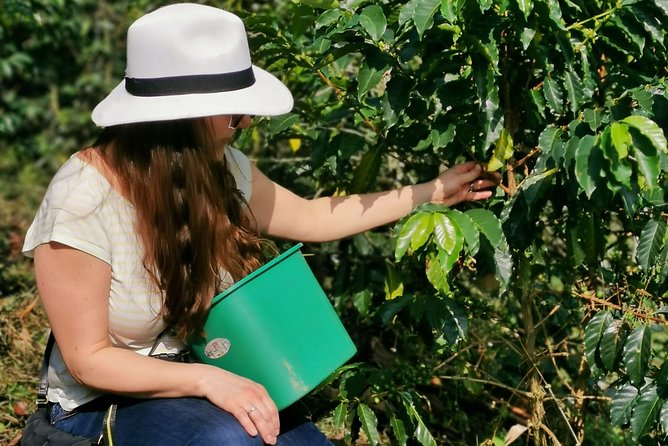
The hands-on portion begins with planting a coffee seed and tasting a coffee bean as fruit. The fruit is not the finished roasted bean you know from a café. Tasting it at this early stage helps you understand that coffee begins as an agricultural product, not a dark powder in a bag.
You then head into the plantation to pick coffee beans from the trees. Traditional harvesting gear and rubber boots are provided for this part of the visit. The boots matter because the farm sits on the side of a mountain, and the ground can be uneven.
This is where the moderate fitness requirement becomes relevant. You do not need to be an athlete, but you should be comfortable walking around a hillside, standing for long stretches, and taking part in the harvesting process. Anyone with limited mobility may find this portion difficult, since the tour information does not promise a fully accessible route.
After picking, you follow the coffee through each stage of production. The beans are processed, roasted, and ground, giving you a clear view of how much work comes before brewing. The sequence is hands-on rather than purely observational, which makes the farm visit stick in your memory.
Four brewing methods and a better way to taste coffee
The final coffee lesson compares four brewing methods. You learn how different devices affect the drink and how to notice flavor notes in different parts of your mouth. I like this detail because it turns the tasting into a practical lesson you can use later in Medellín, at home, or in another coffee region.
The point is not to declare one method best. It is to compare how the same coffee changes from one preparation to another. If you already enjoy specialty coffee, you will probably appreciate this part most. If you usually take coffee with milk and sugar, it still gives you a clear look at the work behind the cup.
The farm experience lasts about four hours, including lunch, the introduction, planting, harvesting, processing, and tasting. That is enough time to get beyond the standard plantation photo and understand the full cycle. It also means the tour is not ideal if you want a quick coffee stop squeezed between other plans.
What the $150 price includes
The price is $150 per person. That is a substantial amount for a day in Medellín, but this is a private outing rather than a basic group transfer. The fee includes private transportation in an air-conditioned vehicle, pickup and drop-off in El Poblado or Laureles, lunch, admission to the coffee farm, and the coffee activities.
You are paying for convenience as much as for the stops. Getting from central Medellín to Comuna 13 and then onward to a farm in Sabaneta would take planning, local transport, and time. A private vehicle also gives you a place to leave your belongings and a cooler break between walking sections.
The value is strongest for couples, families, or small groups with only one free day. If you are traveling alone or watching every peso, the price may feel high. If your group can share the private experience and you want both major stops without transport puzzles, the cost becomes easier to justify.
The included lunch adds real value, especially since it is served at the farm and uses some local ingredients. Breakfast is not included, so factor that into your morning budget. The confirmation arrives at booking, and the tour has free cancellation up to 24 hours before the start time. Poor weather can lead to a new date or a full refund, since the farm portion depends on suitable conditions.
Who will enjoy this full-day outing most
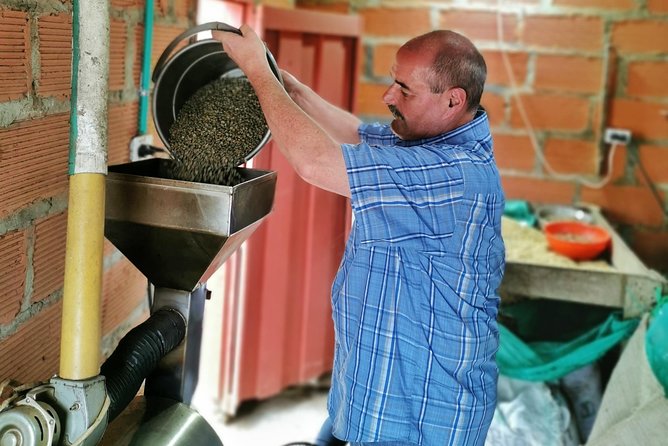
I would choose this tour if you have limited time in Medellín and want more than city sightseeing. It suits people who like local stories, food, photography, and practical cultural experiences. The private format is also useful if your group prefers asking questions without holding up a larger crowd.
Coffee lovers will get the most from the Sabaneta visit, but you do not need prior coffee knowledge. The guide starts with the basics and takes you through each step. Comuna 13 also works well for first-time visitors because the guide provides context instead of leaving you to interpret the murals alone.
Families and older participants should think about the physical side before booking. The day includes steep urban terrain, walking, and a mountainside farm. The tour requires a moderate fitness level, and the schedule is long enough that you should wear practical clothing and shoes.
You should also consider the emotional weight of Comuna 13. The neighborhood’s violent past is part of the story, and the art reflects that. The tour focuses on progress and hope, but it does not erase the difficult history.
My verdict: book it if your Medellín time is short
I recommend this private combination tour if you want an efficient day that still feels personal. The strongest parts are the guide-led interpretation in Comuna 13, the chance of meeting local artists through connections such as Daniel’s, the farm-to-cup coffee process, and the excellent lunch break.
Book it when you can spare a full eight hours and are comfortable with hills, stairs, and farm walking. Skip it if you want a slow city day, a short excursion, or the lowest possible price. For most couples and small groups trying to see two very different sides of Antioquia in one day, the $150 cost is reasonable for the amount of transport, instruction, food, and private attention included.
FAQ
How long does the Comuna 13 and coffee farm tour last?
The experience lasts approximately eight hours, including the Comuna 13 visit and the coffee farm experience in Sabaneta.
Is the tour private?
Yes. Only your own group participates in the activity.
Where is pickup available?
Pickup and drop-off are included at places in Medellín’s El Poblado or Laureles districts.
Is lunch included?
Yes. Lunch is included and is served at the family coffee farm. A traditional bandeja paisa is provided, with some ingredients sourced from the farm.
Is breakfast included?
No. Breakfast is not included, so you should arrange your own morning meal.
What happens at Comuna 13?
You visit the outdoor electric escalators, see the neighborhood’s graffiti, and learn about the meaning of the artwork and the district’s past, present, and future.
What happens at the coffee farm?
You receive an introduction to the coffee industry, plant a coffee seed, taste the coffee fruit, pick coffee from the trees, and follow the beans through processing, roasting, and grinding.
How many coffee brewing methods are included?
You try coffee prepared in four different brewing methods and learn how to compare their flavor notes.
Can I cancel for a full refund?
You can cancel at least 24 hours before the experience starts for a full refund. Cancellations or changes made less than 24 hours before the start time are not accepted, and poor weather may result in a new date or full refund.
Just added around Colombia
- Cocora Valley Tour and Coffee Farms★ 4.5 · 40 reviews
- Salento and Cócora Tour plus Coffee Farm from Pereira or Armenia★ 5.0 · 40 reviews
- Medellín: Flower Farm & Silletero History Tour★ 4.3 · 23 reviews
- Salento and Cócora Tour + Coffee Farm from Pereira/Armenia★ 5.0 · 33 reviews
- Private Tour to Coffee Farm (farm of your choice)★ 5.0 · 2 reviews
- Medellin: Coffee Farm Tour & Spa with Overnight Glamping★ 4.5 · 3 reviews
- Most complete COFFEE TOUR at local family farm★ 5.0 · 2 reviews
- Medellin: Guatape, El Peñol Coffee Farm Private Tour & Fruit★ 5.0 · 49 reviews
Coffee Farm Tours, farm by farm.
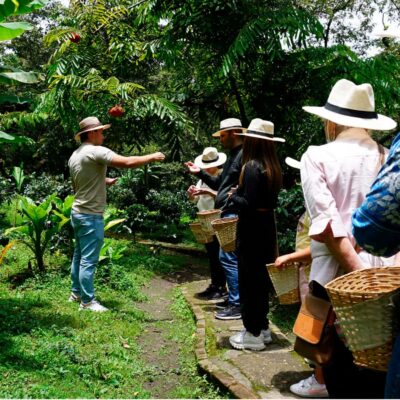
Award Winning Farm Tour: Coffee, Chocolate and Unique Gifts
Read our review →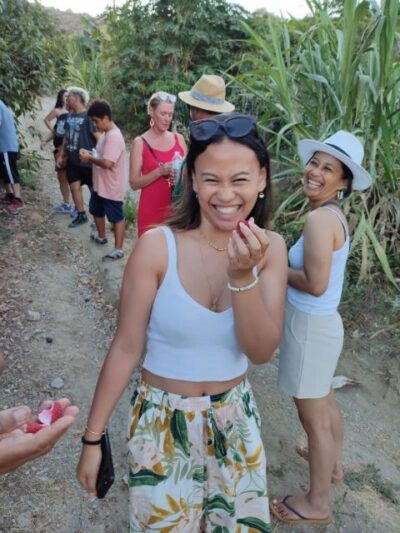
La Herradura Coffee Farm: tour in Europe’s only plantation
Read our review →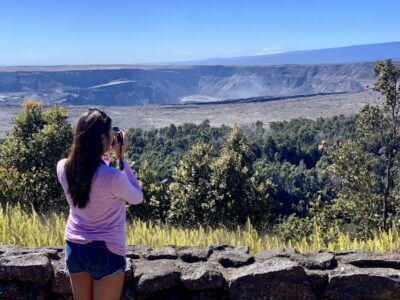

Small-Group Big Island Tour: Hawaii Volcanoes National Park and Kona Coffee Farm
Read our review →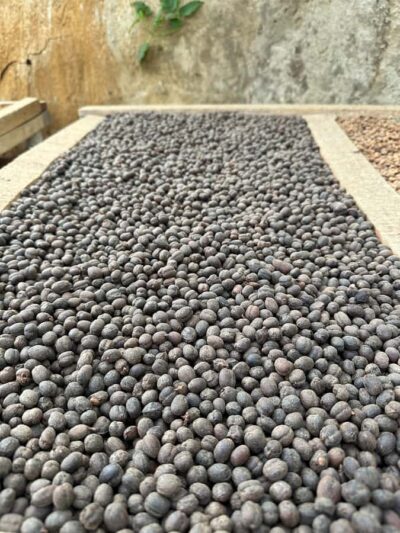
Medellín Coffee Farm Tour with Trolley and Cable Car Ride
Read our review →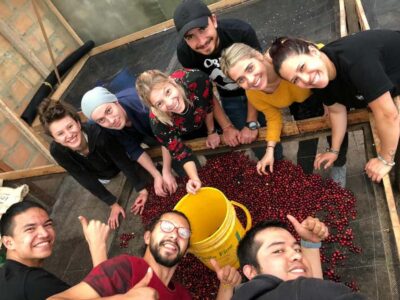
Private Cocora Valley, Salento & Coffee Farm Tour
Read our review →
Liamuiga Natural Farm Tour – St.Kitts’ Coffee Farm
Read our review →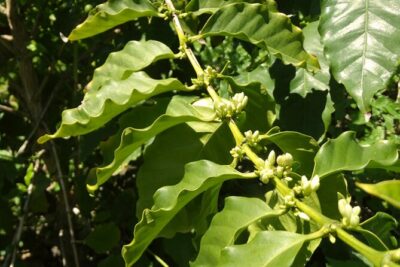
Other lists this farm sits on