
REVIEW · THAILAND
Old Phuket Farm Ticket – Countryside Local Life Culture
Trade the beach clubs for a working farm. Old Phuket Farm gives you a close look at Phuket’s countryside traditions, with hands-on activities such as tin panning, coconut grating, curry paste-making, and rice farming. I especially like the chance to see rubber being tapped and to meet the buffaloes once central to farm work.
I also like the English and Thai guiding, which turns each stop into a short lesson rather than a simple photo stop. The main consideration is time: two hours passes quickly, and the $36 price does not include a meal or transportation to the farm.
Key things to know about Old Phuket Farm
- Rubber tapping in real time: Watch sap flow from the tree and learn how it becomes a rubber sheet.
- Phuket’s tin mining past: Try tin panning, a practical link to the island’s former mining industry.
- Hands-on Thai food traditions: Grate coconut and help prepare curry paste with fresh farm ingredients.
- Traditional farm animals: Meet buffaloes and learn how they supported rice cultivation.
- Scenic country setting: Walk among rice fields, rubber trees, and pineapple plants away from the busiest tourist areas.
- A short, guided visit: The experience lasts two hours and includes admission, a live guide, and insurance.
A quieter side of Phuket
Phuket is often presented through beaches, boat trips, nightlife, and resort life. Old Phuket Farm offers a different picture. Here, the focus is on the work that shaped daily life in southern Thailand: growing rice, collecting rubber, processing coconuts, planting pineapples, and making food by hand.
That change of pace is the main reason I would recommend this experience. You are not simply looking at a decorative village set. You get to try several traditional tasks yourself, even if only for a few minutes. That physical contact helps the information stick.
The farm is also useful for families. Children can pan for tin, handle farming tools, see buffaloes, and take part in food preparation. Adults get a clearer sense of how much labor sits behind everyday ingredients such as rice, coconut, pineapple, and curry paste.
You should keep your expectations in proportion. This is a compact two-hour visit, not a full day of rural life. You will get an introduction to several traditions, not a long work session in the fields. Still, the variety makes good use of the time.
More Tickets around Thailand:
- Old Phuket Farm Ticket – Countryside Local Life Culture
★ 5.0 · 13 reviews - Pattaya sheep Farm Entrance Tickets
★ 4.5 · 2 reviews - Skip the Line: Highgate Ostrich Farm Tour Ticket
★ 4.5 · 110 reviews
Meeting buffaloes and learning how farms worked
The visit begins with the buffaloes. These animals were once central to Thai agriculture, especially in rice farming, where they helped prepare fields and move through heavy soil.
This part matters because it gives context to everything that follows. Rice cultivation was not just a matter of scattering seeds and waiting for rain. It depended on animals, water, tools, seasonal timing, and plenty of human effort.
You can expect a short introduction to the buffaloes and their role in traditional farming. For children, this may be one of the most memorable stops. For adults, it is a useful reminder that farm technology in Thailand developed around local conditions and available resources.
The buffalo encounter is primarily educational rather than a long animal activity. If you are hoping for an extended farm-animal visit, you may find this section brief. Its value comes from setting the scene for the rice work.
Rice fields and the work behind a staple food
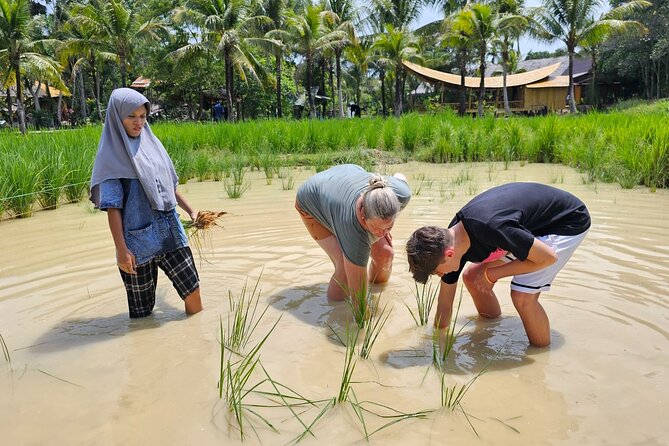
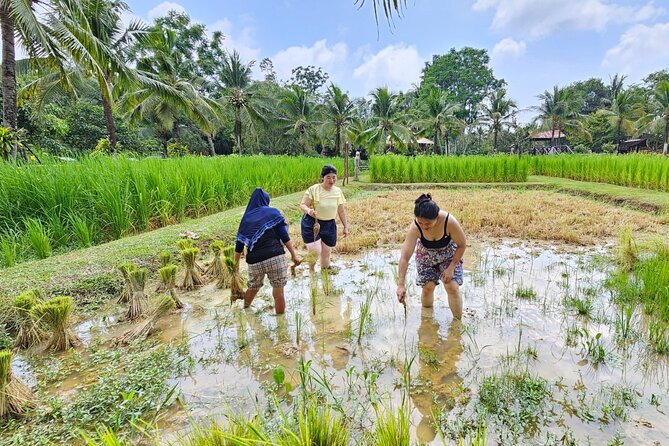
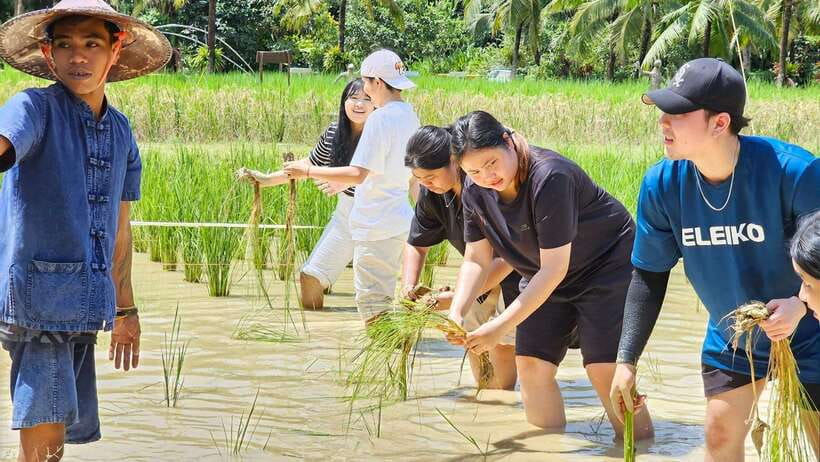
Rice is one of the clearest windows into Thai daily life. At Old Phuket Farm, you can see traditional methods of planting and harvesting and try some of the work yourself.
That practical element is important. Rice appears on nearly every Thai table, but it is easy to forget that each serving begins with careful cultivation. The farm helps connect the finished food with the planting, tending, and harvesting that came before it.
The rice fields also provide some of the most pleasant views during the visit. You move through open farm areas rather than enclosed displays, with rice plots, trees, and planted crops around you. This is a good place to slow down, take photographs, and notice how different Phuket looks away from its hotel strips.
The rice section is not designed as a technical agriculture course. Your guide will give you an accessible explanation and let you take part in selected tasks. That approach works well for a short cultural outing, especially if you want useful context without a long lecture.
Rubber trees and Phuket’s working past

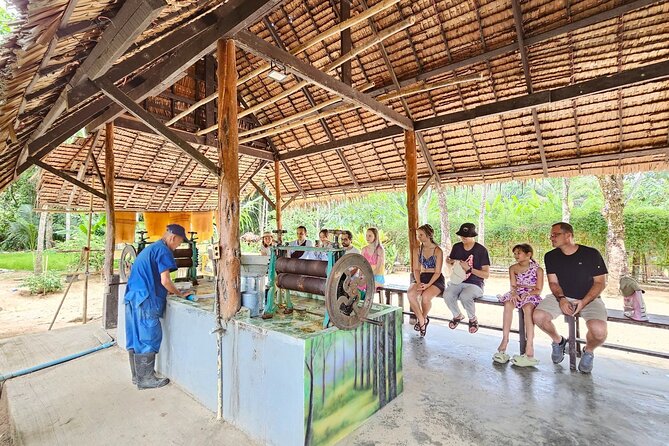
Rubber is another important part of the farm visit. You can watch the process of tapping a rubber tree, where a cut in the bark allows latex sap to run into a collection container.
The next step is seeing how the sap becomes a rubber sheet. This is a simple demonstration, but it explains a product you may otherwise take for granted. The process turns a living tree into a source of income through repeated, careful collection.
I like this stop because it shows the connection between the natural setting and local work. The trees are not only scenic. They are part of a production system that requires patience and regular care.
You will not leave knowing every detail of the rubber trade, and the demonstration is fairly short. But you will understand the basic process, which is exactly the right amount for a two-hour farm tour.
More Farm Tours around Thailand:
- Half-Day Thai Cooking Class at Organic Farm in Chiang Mai
★ 5.0 · 19,087 reviews - Chiang Mai: Authentic Cooking Class with Market & Farm Visit
★ 4.9 · 4,546 reviews - Chiang Mai: Cooking Class with Organic Farm at Mama Noi
★ 4.9 · 1,151 reviews - Full Day Thai Cooking at Farm (Chiang Mai)
★ 5.0 · 1,127 reviews
Tin panning and Phuket’s mining connection
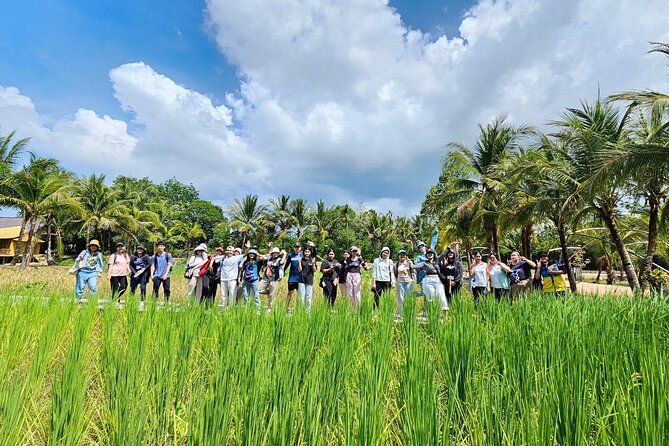
Tin panning adds a different layer to the visit. Phuket has a long connection with tin mining, and this activity brings that past into something you can try with your own hands.
Instead of hearing only a historical explanation, you get a simple demonstration of how panning works. You can swirl material in a pan and look for tin, learning through the movement rather than through a display panel.
This is likely to be one of the most playful parts of the experience. Children can take to it quickly, and adults often enjoy the novelty. It also helps explain that Phuket’s story is not limited to beaches and tourism. Mining once played an important role in the island’s economy.
The activity should be treated as an introduction, not a serious mining exercise. You are not visiting an operating mine, and the panning section does not replace a full museum visit. Its strength is that it makes a piece of local history easy to remember.
Pineapples, coconut, and the flavors of the farm
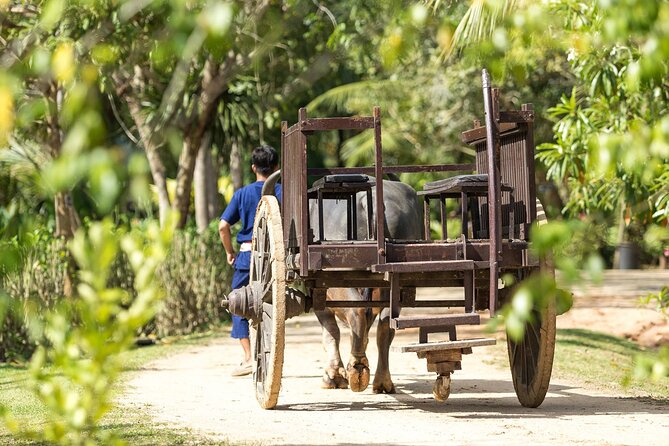
Pineapple plants are part of the farm setting, and you can learn how the fruit is grown before tasting fresh pineapple. This is a small detail, but it gives the visit a pleasant rhythm: see the crop, understand the process, then taste the result.
Phuket is known for its sweet pineapples, and fresh fruit is a fitting way to connect the farm to the table. The produce tasting is also a welcome pause after the more active demonstrations.
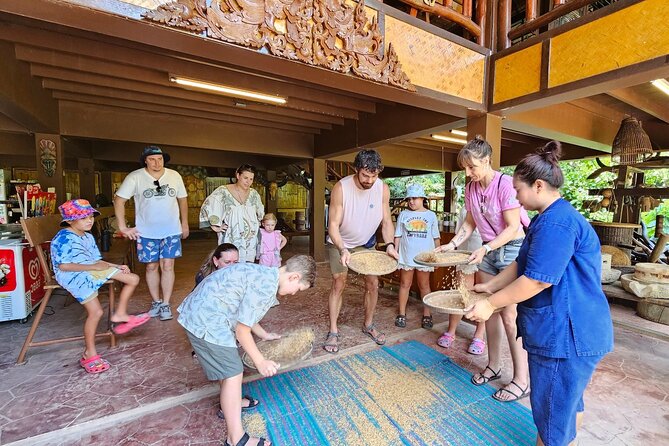
Inside the traditional Thai house, the focus shifts to food preparation. You can watch or try coconut grating and curry paste-making, using fresh ingredients from the farm. These are ordinary household skills in one sense, but they are also a direct look at how texture and flavor are built in Thai cooking.
Coconut grating takes more effort than many visitors expect. It is not simply a decorative step. Coconut can be used in curries and other dishes, and the traditional tools show how food preparation once depended on hand work from start to finish.
Curry paste-making is equally useful for understanding Thai food. Instead of treating curry as a ready-made sauce, you see how ingredients are combined and ground into a base. If you enjoy cooking, this may be the most satisfying part of the tour.
A restaurant is available on site, but meals are not included in the $36 ticket. If you want to eat there, plan for that as an additional expense. The farm’s food component is part of the cultural visit, not a full lunch or dinner package.
What the guide adds to the experience
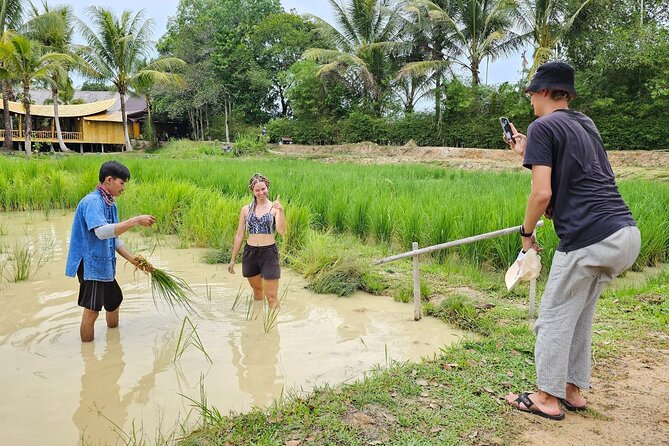
A good guide matters here because the farm contains several short demonstrations. Without explanation, rubber tapping could look like a tree with a small cup attached, and tin panning could feel like a random game.
The guide connects each activity to local work and household life. English and Thai are available, and the English guiding has been praised for being clear and easy to follow. If Bernie is leading your visit, you may find his lively approach especially helpful. He has been singled out for speaking fluent English, answering questions, and making the activities understandable for people who do not speak perfect English.
That kind of guiding is important for mixed-age groups. Children can focus on trying the activity, while adults can ask about farming methods, ingredients, or Phuket’s past. The best version of this visit is not a quiet walk through fields. It is a conversation with demonstrations along the way.
Group size can vary. One recent visit had only ten people, which is a comfortable size for hands-on activities. A smaller group also makes it easier to ask questions and get a turn at each station, though you should not assume every departure will have exactly that number.
Scenery away from the main tourist areas
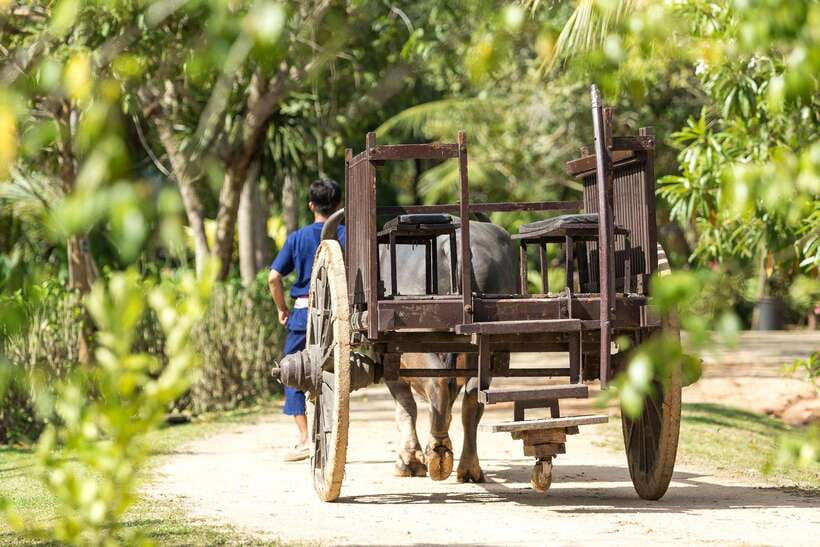
Old Phuket Farm is designed to show you a rural side of the island. You will see rice fields, rubber trees, pineapple plantations, and the traditional Thai house used for the food demonstrations.
The setting is not a grand natural attraction, but it offers a welcome break from Phuket’s developed resort zones. The appeal is in the everyday details: planted fields, working trees, farm tools, crops, and views across open ground.
Bring a practical attitude. This is an outdoor farm visit, so conditions can change with the weather. The supplied details do not specify shade, footwear requirements, or transport arrangements, so you should confirm any personal needs before booking.
You also need to make your own way to the meeting point at Old Phuket Farm. There is no included hotel pickup listed. That makes the experience easier for visitors who already have transport, but less convenient if you are relying on a resort shuttle or public transportation.
Is $36 a fair price for two hours?
At $36 per person, this is not the cheapest short activity in Phuket. The price includes admission, an English or Thai guide, and full insurance, but not meals or transportation.
I think the value depends on how much you enjoy participation. If you only want to look at fields and take photographs, two hours may feel expensive. If you want a guided introduction to several parts of local life, the price is easier to justify because it covers many different activities in one compact visit.
You are paying for variety more than duration. In two hours, you can see buffaloes, rice farming, rubber tapping, tin panning, pineapple growing, coconut grating, and curry paste-making. A longer farm visit might offer more depth, but it would also require more time from your day.
The experience also works well as a family activity. One ticket gives you access to several tasks that children can try rather than one passive attraction. Just remember to budget separately for food if you plan to use the on-site restaurant.
Who should book this farm visit?
I would choose Old Phuket Farm if you want cultural context without committing to a full-day excursion. It suits families, first-time visitors to Phuket, food lovers, and anyone who wants a break from beach activities.
It is also a good fit if you prefer small-scale experiences. You get direct contact with farm work and household skills rather than a large stage show or a long bus itinerary.
You may want to skip it if your Phuket schedule is very tight or if you are mainly looking for dramatic scenery. The farm is attractive and peaceful, but its purpose is learning through ordinary rural activities. It is not a major temple, viewpoint, or wildlife park.
The two-hour length makes it easy to combine with other plans, though you must arrange your own way there and back. The visit ends at the farm, leaving you free to continue exploring or return to your hotel at your own pace.
Practical booking advice
The ticket allows free cancellation up to 24 hours before the activity for a full refund. You can also reserve now and pay later, which helps if your Phuket plans are still shifting.
Child tickets apply to ages 4 through 11. The listed languages are English and Thai, and the experience includes a live guide rather than only printed signs or self-guided exhibits.
Wear clothes that you do not mind using around farm activities. The information does not state a formal dress code, but hands-on work can be more enjoyable when you are not worried about keeping an outfit spotless.
Allow extra time around the two-hour visit if you want to eat at the restaurant or take photographs. Since the formal activity ends on site, you can decide afterward what to do next instead of being tied to a group transfer.
Should you book Old Phuket Farm?
Book it if you want to understand Phuket through its crops, tools, animals, and food. The strongest parts are the hands-on tasks, the clear guiding, and the range of subjects covered in a short visit.
I would give it particular weight if you are traveling with children or if your itinerary has been dominated by beaches and shopping. The farm offers a useful change of pace and shows how much local work lies behind familiar Thai ingredients.
Skip it if you want a long, slow agricultural workshop or a major sightseeing landmark. At two hours, it is an introduction. But for $36, with admission, a guide, and insurance included, it is a practical way to add countryside culture to a Phuket trip.
FAQ
Where does the Old Phuket Farm experience begin?
It begins at Old Phuket Farm. You can come by yourself to the meeting point.
How long does the experience last?
The visit lasts two hours.
What does the $36 ticket include?
The ticket includes admission, an English or Thai guide, and full insurance.
Are meals included?
No. Meals are not included, although a restaurant is available on site.
What languages are available?
The live tour guide is available in English and Thai.
What age qualifies for a child ticket?
Child tickets are for children from 4 through 11 years old.
Can I cancel the booking for a refund?
Yes. You can cancel up to 24 hours in advance for a full refund.
Just added around Thailand
- Old Phuket Farm Ticket – Countryside Local Life Culture★ 5.0 · 13 reviews
- Phuket Lookouts Tour with Lunch at Organic Farm★ 5.0 · 17 reviews
- Pattaya sheep Farm Entrance Tickets★ 4.5 · 2 reviews
- Chiangmai Coffee Farm Tour★ 5.0 · 34 reviews
- Plough to Plate: Be A Rice Farmer in Phetchaburi from Hua Hin★ 5.0 · 4 reviews
- Aroidee’s Farm-Fresh Thai Cooking Experience★ 5.0 · 8 reviews
- Authentic Thai Cooking Class and Farm Visit in Chiang Mai★ 5.0 · 66 reviews
- Full-Day Thai Cooking Class with Grandma – Market and Farm Tour★ 5.0 · 48 reviews
Tickets, farm by farm.
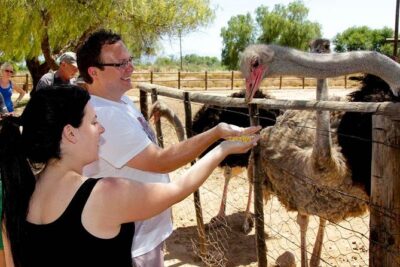
Skip the Line: Highgate Ostrich Farm Tour Ticket
Read our review →
Lion Habitat Ranch Admission Ticket in Las Vegas
Read our review →
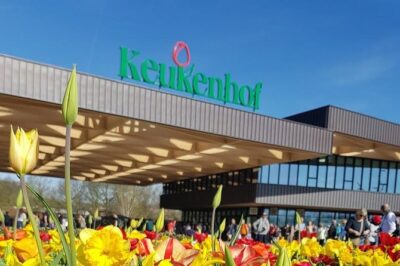
Keukenhof Skip-the-line Tickets: Countryside & Farm Private Tour
Read our review →
Mallorca: Artestruz – Ostrich Farm Ticket Entrance
Read our review →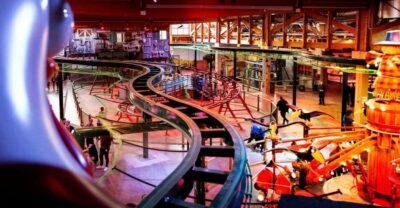
Bologna: Luna Farm Amusement Park Family Entry Ticket
Read our review →

Appenzell: Appenzeller Demonstration Dairy Ticket & Tastings
Read our review →Other lists this farm sits on