
REVIEW · USA
Maui: Alpaca Farm Visit with Hands-On Activities
Animals make the lesson. This one-hour visit to an eight-acre farm on the slopes of Haleakalā offers two things I especially like: close contact with alpacas and a clear look at how their fiber becomes yarn. The Angora Bunny Village adds another gentle animal stop, and the small group size keeps the visit personal.
The main consideration is the price. At $79 per person, this is not a cheap way to fill an hour, especially since transportation and food are not included. Still, the fee covers more than a quick photo stop: you get feeding time, fiber education, a spinning wheel demonstration, and a guide-led visit capped at 10 people.
Key points to know before you go
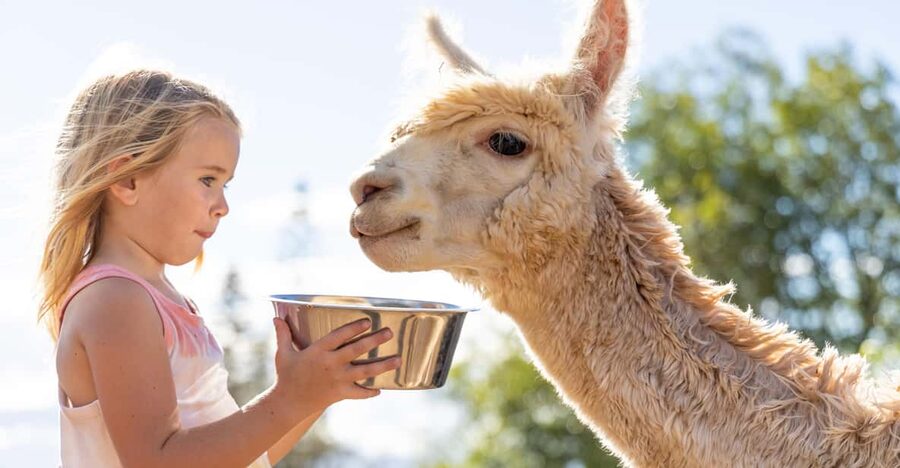
- Feed alpacas on an eight-acre Upcountry farm: You meet the animals in their pasture and have time to take photos with them.
- See how fleece becomes yarn: The fiber lesson explains different alpaca fibers and their uses, followed by a traditional spinning wheel demonstration.
- Visit the Angora Bunny Village: Soft Angora rabbits add a second animal encounter, with an introduction to their care and special fiber.
- Expect a family-friendly hour: Children can feed, pet, and, according to the experience provided, hold some of the animals under the guide’s direction.
- Plan your own way there: Transportation is not included, so you need to reach the farm independently.
- Book for a small-group feel: Groups are limited to 10, and the tour is conducted in English.
Arriving on Maui’s Upcountry slopes
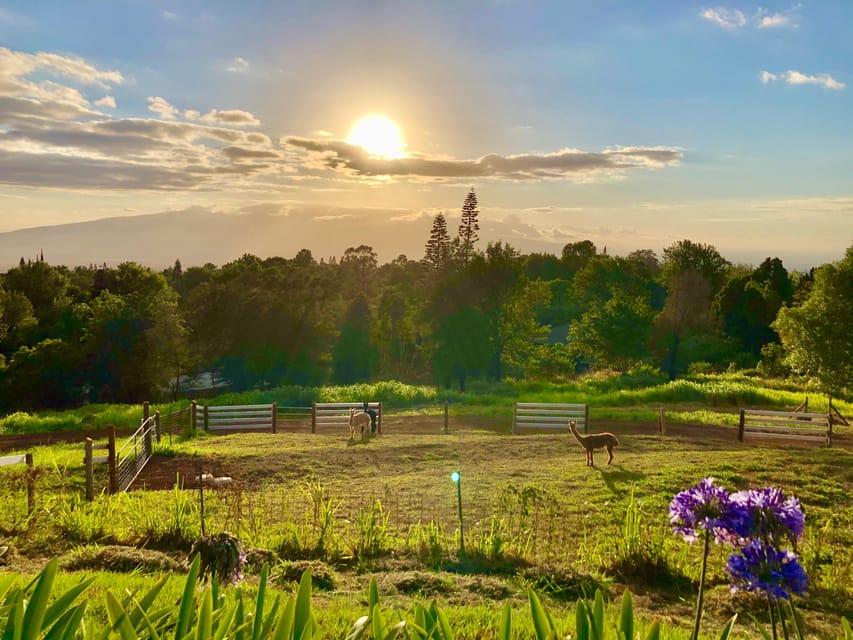
This farm visit takes place on an eight-acre estate on the slopes of Haleakalā National Park. That setting gives the experience a different feel from a standard beach activity. You are visiting working animal grounds in Maui’s Upcountry, where the focus is on land, animals, and fiber rather than sightseeing from a bus window.
You need to arrange your own transportation. Food and drinks are also not included, so think of this as a focused stop to add to a day in Upcountry Maui, not a full-day outing by itself.
The directions have been easy for at least some families to follow, but you should still allow enough time to find the property. The booking information does not provide a hotel pickup service or transportation option. Check your route before setting out, especially if you are fitting the farm into a wider Haleakalā-area plan.
The visit lasts one hour. That short length is useful if you are traveling with young children or have a full day planned. It also means the schedule is likely active, with little room for lingering once the group moves from the alpacas to the fiber demonstration and then to the rabbits.
More Alpaca and Llama Farms around the USA:
- Alpaca and Llama Farm Tour
★ 5.0 · 446 reviews - Llama/Alpaca Hike and Farm Tour
★ 5.0 · 111 reviews - Guided Lilymoore Alpaca Farm Tour
★ 5.0 · 38 reviews
Meeting and feeding the alpacas
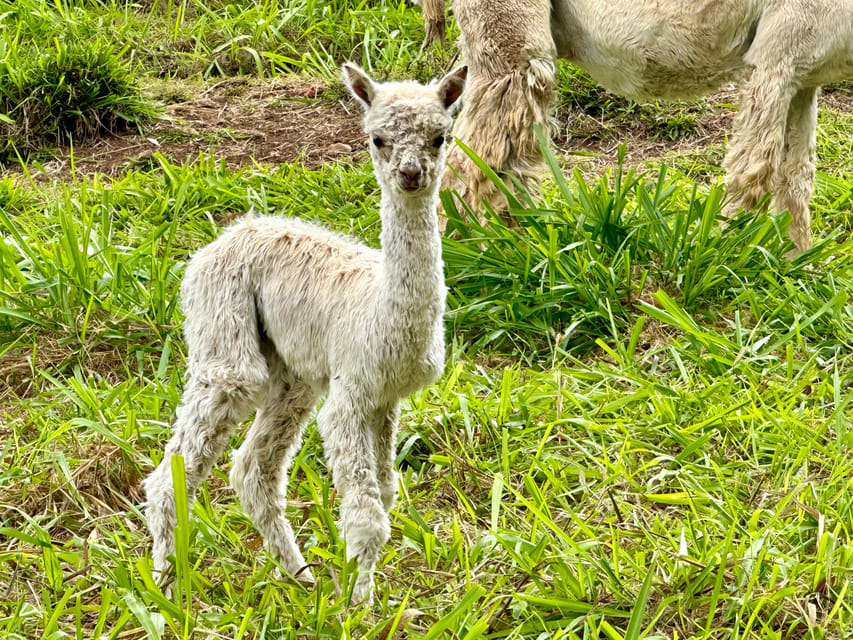
The visit begins in the alpaca pasture. This is the part most children will be waiting for, and it gives you immediate contact with the animals rather than a talk from behind a fence.
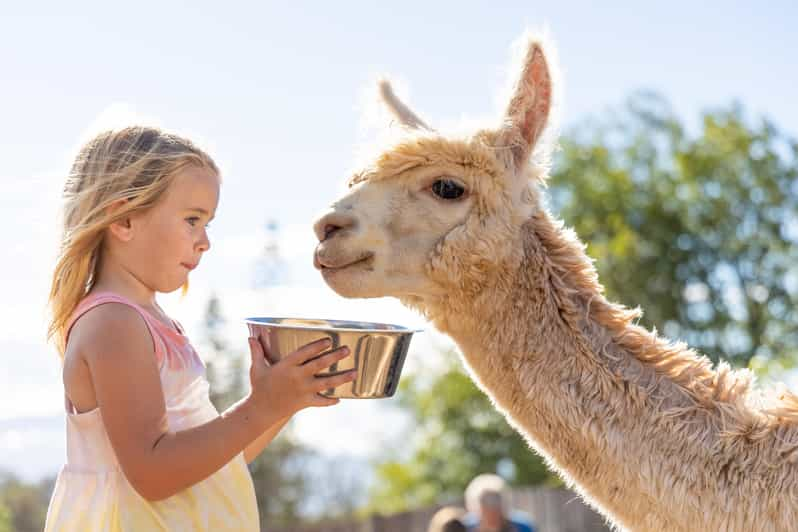
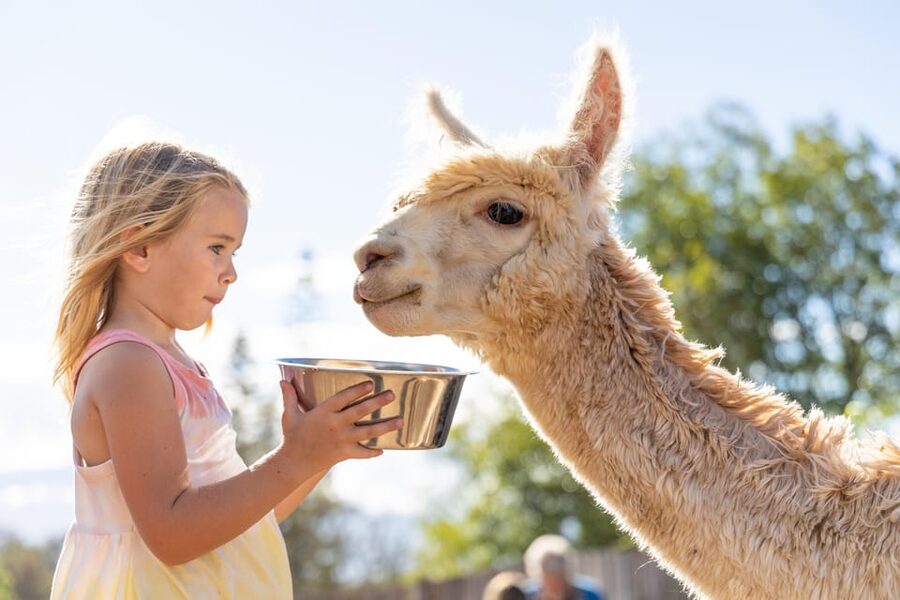
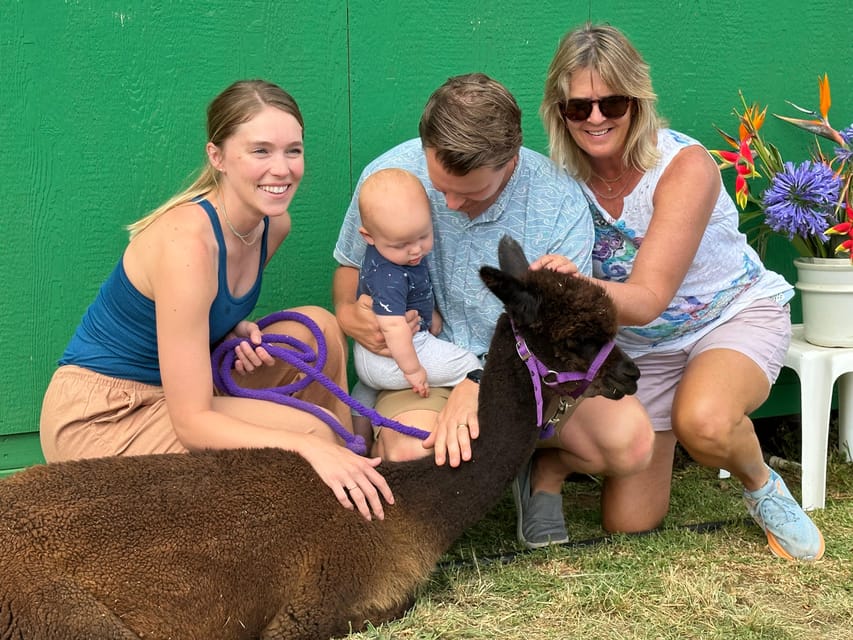
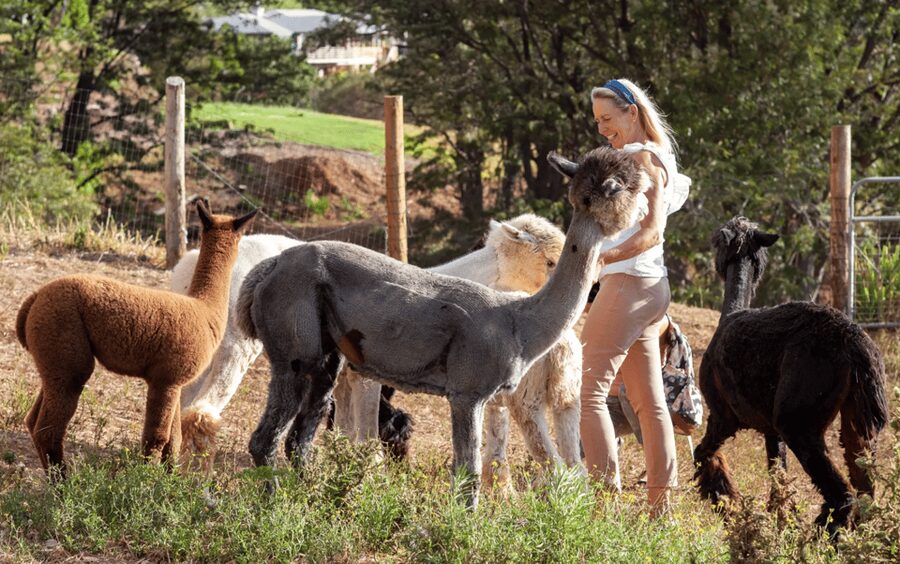
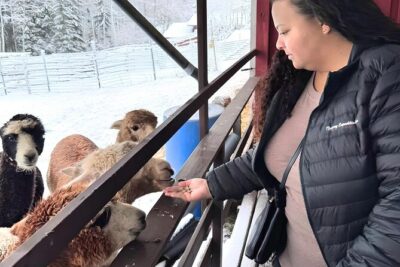
You can feed the alpacas and take self-photos with them. The chance to make your own pictures matters here. You are not simply watching someone else pose an animal; you get a personal souvenir of the encounter. Alpacas are calm-looking, soft, and naturally photogenic, which explains much of the activity’s appeal.
The feeding session also gives the guide a natural way to explain the animals. The experience is designed around getting close, but it is still a farm visit, so you should follow the guide’s instructions about approaching, feeding, and touching the alpacas.
A family who visited with younger children found the animal contact especially successful. Their children were able to feed, pet, and hold animals during the visit. Holding may depend on the animal and the guide’s judgment, so I would treat it as a possible bonus rather than the main promise of the activity.
For adults, the value is partly in the setting. The alpacas are not just a backdrop for a quick photograph. They are part of a larger lesson about fiber production and the relationship between animals, land, and useful craft.
From alpaca fiber to finished yarn
After the pasture visit, the focus shifts from live animals to the material they provide. You learn about different types of alpaca fiber and how each can be used.
This section gives the activity more substance than a simple petting-farm stop. Alpaca fiber is the reason these animals are part of the farm, and the lesson connects the animal in front of you with a finished product you can touch, wear, or use.
The farm also presents fiber production as a sustainable practice. That does not turn the visit into a technical class, but it helps explain how animal care, farming, and traditional craft fit together.
The spinning wheel demonstration is the clearest hands-on craft moment. You watch the traditional process of turning loose fiber into yarn. For children, it is a visual trick with a practical result. For adults, it offers a little context for the work behind handmade textiles.
I like this part because it slows the visit down. Feeding an alpaca is immediate and amusing. Watching fiber become yarn asks you to pay attention to a process that is easy to overlook when you see only the finished sweater or scarf in a shop.
Do not expect a long workshop in spinning or a full textile-making class. The listed activity is a demonstration and education session. The benefit is a compact introduction, not mastery of the craft.
A second animal stop at Angora Bunny Village
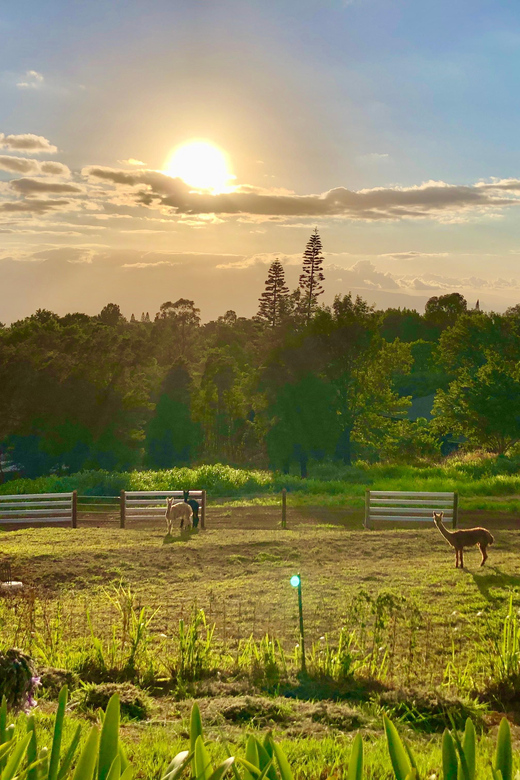
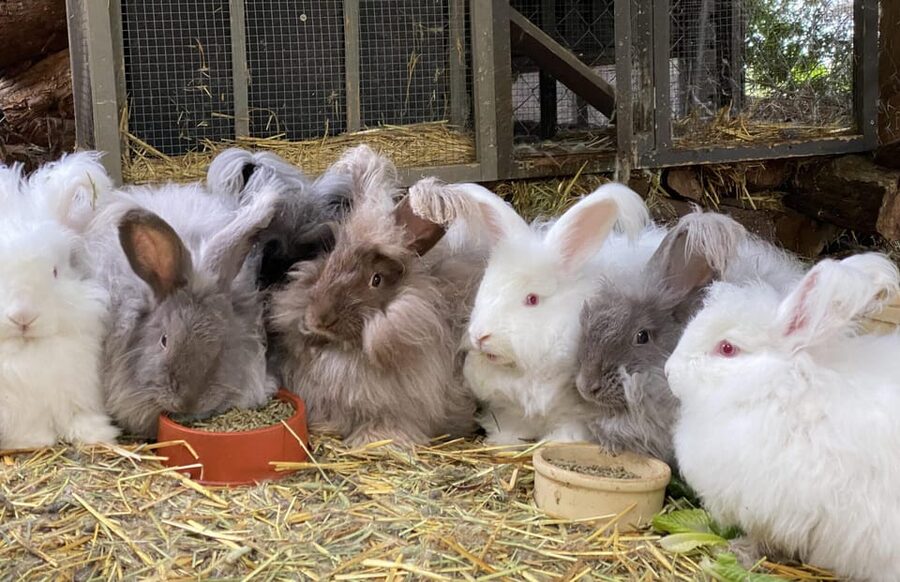
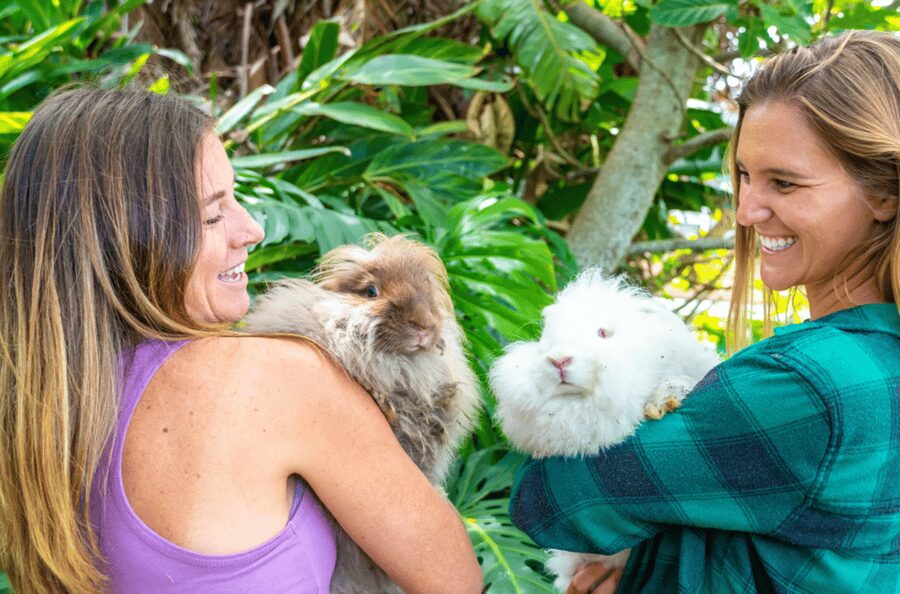
The Angora Bunny Village brings a softer, smaller scale to the visit. You meet the Angora rabbits, learn about their care, and hear about the special qualities of their fiber.
This stop should work especially well for children who are more comfortable with rabbits than with larger farm animals. It also gives the tour a change of pace after the alpaca pasture. The rabbits are not an extra photo prop added at the end. Their fiber provides a useful comparison with alpaca fiber and shows that different animals produce different materials.
The description emphasizes their soft, fluffy coats, but the important point is responsible care. You are introduced to how the rabbits are looked after and why their fiber is distinctive.
The bunny portion is likely to appeal to animal lovers of all ages, though you should keep expectations sensible. The visit lasts only an hour in total, so this is a short encounter rather than an extended rabbit-handling session.
For families, the combination of alpacas and rabbits helps keep the hour varied. If one child is fascinated by the spinning wheel and another prefers cuddly animals, the schedule offers both.
More Workshops around the USA:
- Farm to Taco: A Farm to Table Cooking Class
★ 5.0 · 41 reviews - Farm to Table Cooking Class at Kulaniapia Falls
★ 4.5 · 36 reviews - Private Farm Workshop in Napa Valley
★ 5.0 · 6 reviews - Half-Day Thai Cooking Class at Organic Farm in Chiang Mai
★ 5.0 · 19,087 reviews
Why the small group matters
The group limit is 10 people. That is a useful number for an animal visit because you are less likely to feel lost in a crowd, and the guide has a better chance to answer questions.
A small group also matters for photos. You can get your turn with the alpacas without the activity feeling like a line at a busy attraction. At the spinning wheel and bunny village, it should be easier to see what is happening.
The guide leads the visit in English. Erin has been praised for being fun and warm with younger children, while other visitors described the guides as friendly and passionate about the subject. That combination is important here. A farm activity depends heavily on the person explaining the animals and keeping the group moving.
The positive comments about the staff focus on friendliness, enthusiasm, and clear information. You are not signing up for a silent animal encounter. The educational side is a central part of the hour.
What $79 buys you
At $79 per person, the cost works best if you value a guided, small-group activity rather than simply wanting to see an alpaca. The price includes alpaca feeding, fiber education, a spinning wheel demonstration, and the Angora Bunny Village.
That is a good amount for a one-hour visit, but the cost per minute is high. You are paying for access to a private farm setting, animal care, a guide, and a structured educational experience. If you only want a quick photograph, the price may feel steep.
For a family, the calculation depends on how much your children enjoy animals and demonstrations. The activity has received particularly strong praise as a choice for younger children. Kids can take part rather than sit through a long talk, and the hour is short enough to hold their attention.
The small group improves the value. You are not paying for a large commercial show with a distant view of the animals. You get direct contact and time to ask questions, though the exact amount of personal attention depends on the group.
A small gift shop adds another practical touch. It offers gifts for children and adults, so you can browse for a farm-related souvenir after the visit. Purchases are not included in the price, and the available items are not specified, so I would treat the shop as an optional extra.
Who will enjoy this most
I would put this high on the list for families with younger children. Feeding alpacas, petting animals, meeting rabbits, and seeing a spinning wheel in action give children several ways to stay involved.
Couples may also enjoy it if they want a quiet, unusual Upcountry activity with good photo opportunities. The setting and animal contact make it more distinctive than a generic craft demonstration.
Animal lovers and anyone curious about natural fibers will get the most from the educational side. If you already know a lot about alpacas, spinning, or Angora rabbits, the information may feel introductory.
This is less suitable if you want a long outdoor adventure, a meal, or transportation from your hotel. It is also not the right pick if you dislike structured group activities or prefer to explore independently. The experience has a clear sequence and a fixed one-hour duration.
Practical timing and booking advice
Check the available starting times before booking, since the activity runs at set times. The booking system allows you to reserve now and pay later, which helps if you are still arranging your Maui schedule.
You can cancel for a full refund up to 24 hours in advance. That policy is useful on an island trip, where weather and changing plans can affect a day’s schedule.
Since the tour is in English, make sure that works for everyone in your group. No other tour language is listed.
Plan to arrive ready for an animal-focused visit. The supplied information does not specify clothing rules, weather procedures, or farm facilities, so avoid assuming that the farm provides anything beyond the listed activity. Most important, build in your own transportation time and do not count on food or drinks being available as part of the visit.
The feel of the experience
The appeal here is the link between animal contact and traditional work. You begin with the living alpaca, follow the fiber through a spinning wheel, and then meet rabbits that provide another kind of useful fleece.
That simple sequence gives the hour a satisfying shape. It is not only feed, photograph, and leave. You get a basic explanation of how the farm’s animals connect to a craft tradition, with the Upcountry setting adding a calm sense of place.
The experience also presents the farm as a place where animals and nature support a feeling of peace. That is a gentle promise rather than a formal wellness program. You should expect a serene farm visit, not a guided meditation or nature therapy session.
The high rating, based on nine reviews, fits the activity’s strengths: sweet animals, enthusiastic staff, clear information, and strong family appeal. The praise is most useful when it points to actual details, especially Erin’s friendly approach with children and the chance to feed, pet, and possibly hold the animals.
Should you book the Maui Alpaca Farm Visit?
Book it if you want a short, personal animal experience with an educational side. Families with young children are the clearest match, but couples, animal lovers, and anyone curious about alpaca and Angora fiber can enjoy it too.
At $79, I would choose it for the farm access, small group, guide, and four-part experience, not for the length alone. Arrange your own transportation, keep your expectations focused on a one-hour visit, and consider adding it to a day already spent exploring Maui’s Upcountry.
Skip it if your priority is a full-day excursion, included transport, food, or a low-cost photo stop. For the right audience, though, this is a warm and memorable way to meet Maui’s animals and see the practical craft behind their fiber.
FAQ
Where does the alpaca farm visit take place?
It takes place on an eight-acre farm estate on the slopes of Haleakalā National Park in Maui’s Upcountry.
How long does the experience last?
The activity lasts one hour.
What is included in the visit?
The visit includes alpaca feeding, fiber education, a spinning wheel demonstration, and a visit to the Angora Bunny Village.
Can I take photos with the alpacas?
Yes. The experience includes time to feed the alpacas and take self-photos with them.
Will I get to touch or hold the animals?
You can feed and interact with the animals. A family reported that their children were able to feed, pet, and hold them, but the provided details do not guarantee that every participant will hold an animal.
Is transportation included?
No. You must arrange your own transportation to the farm.
Is food or drink included?
No. Food and drinks are not included.
What language is the tour conducted in?
The tour is conducted in English with a live English-speaking guide.
How large is the group?
The group is limited to 10 participants.
What is the cancellation policy?
You can cancel up to 24 hours in advance for a full refund. You can also reserve now and pay later.
Just added around the USA
- Yolo: Vineyards, Farms & Cultural Gems – Audio Driving Tour★ 4.3 · 5 reviews
- Ventura: Rail Bike Guided Tour with Farm Stand Stop★ 4.1 · 18 reviews
- Alpaca Ranch and Fiber Processing Mill Tour★ 5.0 · 24 reviews
- Small-Group Vineyard and Orchard Tour with Wine Tasting in Muscoda★ 5.0 · 2 reviews
- Farm Tour at Clover Brooke Llama/Alpaca/Goat Farm★ 4.5 · 6 reviews
- Connect with Rescue Animals on a Private Farm Tour in Catskills★ 5.0 · 27 reviews
- Gourmet Mushroom Farm Tour in Tennessee★ 5.0 · 5 reviews
- Cozy Farm Experience with Wagon Wheels and Acoustic Meal★ 5.0 · 2 reviews
Alpaca and Llama Farms, farm by farm.
Cusco: Alpaca and Llama Farm Tour w/ Transfer & Weaving Demo
Read our review →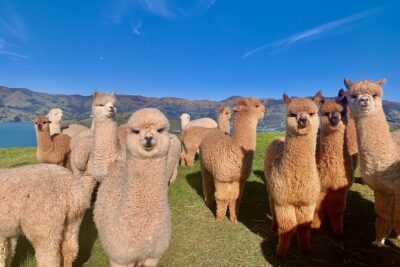
PRIVATE Alpaca Guided Forest Walk + Feeding Helsinki
Read our review →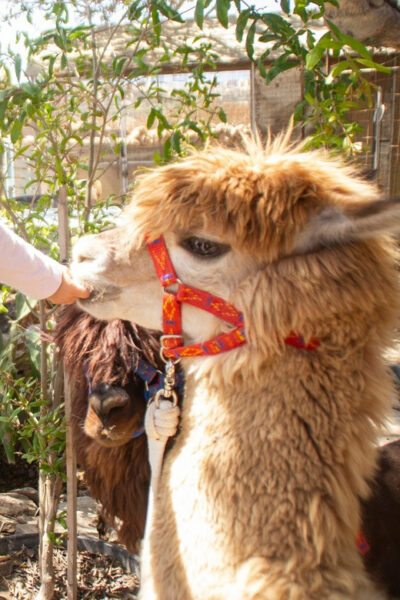
Other lists this farm sits on