
REVIEW · ITALY
Martina Franca: Mozzarella and Pasta Workshop with Farm Tour
Cheese tastes better when you make it. This 2.5-hour Martina Franca farm visit combines mozzarella and pasta lessons with animals, a vegetable garden, an old church, and a look inside the farm’s cheese factory and bakery. I like the hands-on format and the small group, capped at nine people. The main drawback is simple: getting to the farm is your responsibility, and the activity is not suitable for wheelchair users or people with mobility impairments.
I also like the choice between booking the workshop alone or adding a tasting of what you make. That flexibility matters at $124.61 per person, since the tasting option gives you a fuller food experience, while the basic option may suit you if you mainly want the instruction. Valentina is described as kind and interesting, and one family found the activity enjoyable for both a child and an adult.
Key points at a glance
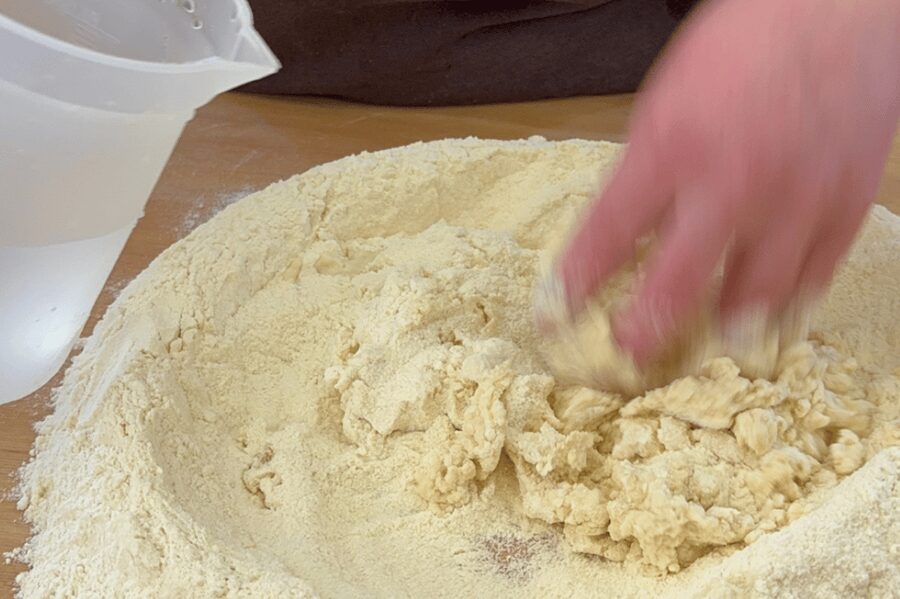
- Mozzarella and pasta are made by hand: You take part in both workshops instead of simply watching a demonstration.
- A working farm is part of the lesson: The breeding area and vegetable garden show where the food begins.
- The cheese factory and bakery add useful context: You see how local ingredients move from farm production toward the table.
- An ancient church adds a cultural stop: Your guide provides narration beyond the food side of the visit.
- The tasting is optional: Check your selected booking carefully, since tasting is not included with every option.
- Small groups keep it personal: The group limit is nine, with instruction available in Italian and English.
A farm visit with more than a cooking class
This is not just a mozzarella lesson with a quick recipe attached. The visit gives you a short tour of the farmstead before you work with food, so you can connect the finished product with animals, vegetables, buildings, and local traditions.
That wider setting is the main reason I would choose this activity over a standard cooking class. You see the farm’s breeding area, walk through its vegetable garden, visit the cheese factory and bakery, and hear about the farmstead’s past. The food does not appear from nowhere. You get a practical look at the chain from production to plate.
The visit lasts 2.5 hours. That is long enough to cover several stops without taking up an entire day in Apulia. It also means the pace is likely active, with limited time for lingering at each location. You should arrive ready to move between areas and participate rather than expect a slow, sit-down food tour.
More Pasta Experiences around Italy:
- Florence Pizza or Pasta Class with Gelato Making at a Tuscan Farm
★ 5.0 · 6,801 reviews - Florence: Pizza or Pasta Class with Gelato at a Tuscan Farm
★ 4.9 · 1,181 reviews - Alghero Home Cooking Pasta Class at a Farmhouse with Wine
★ 5.0 · 130 reviews
Starting with animals and sustainable farming
The first part takes you to the breeding farm. Your guide introduces the animals and explains the farm’s sustainable practices. The supplied information does not identify the animal breeds or give a detailed farming program, so I would treat this as an introduction rather than a specialist agricultural tour.
Still, this stop gives the workshop a useful foundation. You begin by seeing the working side of the farm before handling ingredients in the cheese and pasta sessions. For families, this may be the part that keeps younger participants interested before the more focused food work begins.
The farm visit also helps explain the meaning of farm to table in a direct way. Instead of using the phrase as decoration, the itinerary links the animals, garden, cheese factory, bakery, and tasting. You can see how the different parts fit together, even within a compact visit.
Wear comfortable shoes and clothes. This is not a polished city-center food demonstration where you can remain seated and spotless. The activity includes a farm, garden, and production spaces, so practical clothing is the sensible choice.
Walking through the vegetable garden
The vegetable garden is another useful stop because it adds fresh produce to a tour otherwise focused on dairy and pasta. You get a chance to see where some farm ingredients begin and hear about the route from garden to kitchen.
The information does not specify which vegetables are growing or how large the garden is. That lack of detail is worth noting if you are looking for a serious gardening tour. Here, the garden works as part of a broader farm visit, not as the only attraction.
I like this part because it gives the workshop a more complete food story. Mozzarella can easily be presented as an isolated local specialty. By including the garden, the experience shows how a meal can bring together several kinds of farm production.
The stop should also help you understand why the tasting option may be worthwhile. If you have just seen the farm and garden, tasting products made during the workshops feels like the natural finish. Without the tasting, you still receive the tour and instruction, but you lose the chance to sit with the results of your work.
An ancient church and the farmstead’s past
The itinerary includes a visit to an ancient church, with commentary from your guide. This is a welcome change of pace from the animals, garden, and food production areas.
No precise date, architectural description, or religious details are provided, so you should not book this expecting a full church tour led by a specialist historian. Think of it as a short cultural stop that helps explain the age and character of the farmstead.
This detail matters because it gives the visit a sense of place. You are not moving through a generic cooking venue. The church adds a connection to the property’s past, while the guide’s narration ties the buildings and food traditions together.
The quality of this section will depend heavily on the guide. The available feedback specifically praises Valentina as interesting and kind. That is useful information: the guide is not just there to point out the next stop, but to make the story accessible. If you enjoy hearing local context as you go, this is likely one of the stronger parts of the visit.
More Workshops around Italy:
- Cooking Class and Lunch at a Tuscan Farmhouse with Local Market Tour from Florence
★ 5.0 · 4,831 reviews - Sorrento: Pizza Lesson, Wine, and Limoncello at a Local Farm
★ 5.0 · 1,513 reviews - Hands-On Cooking Class & Farmhouse Tour on the Amalfi Coast
★ 5.0 · 956 reviews - Sorrento Farm by Tuk Tuk: Cheese, Limoncello & Hands-On Pizza
★ 5.0 · 628 reviews
Inside the cheese factory and bakery
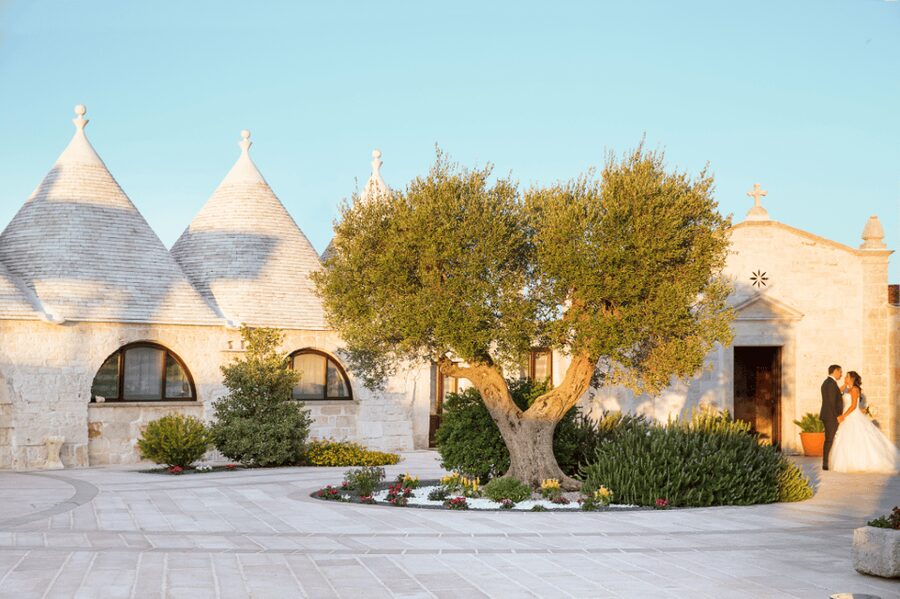
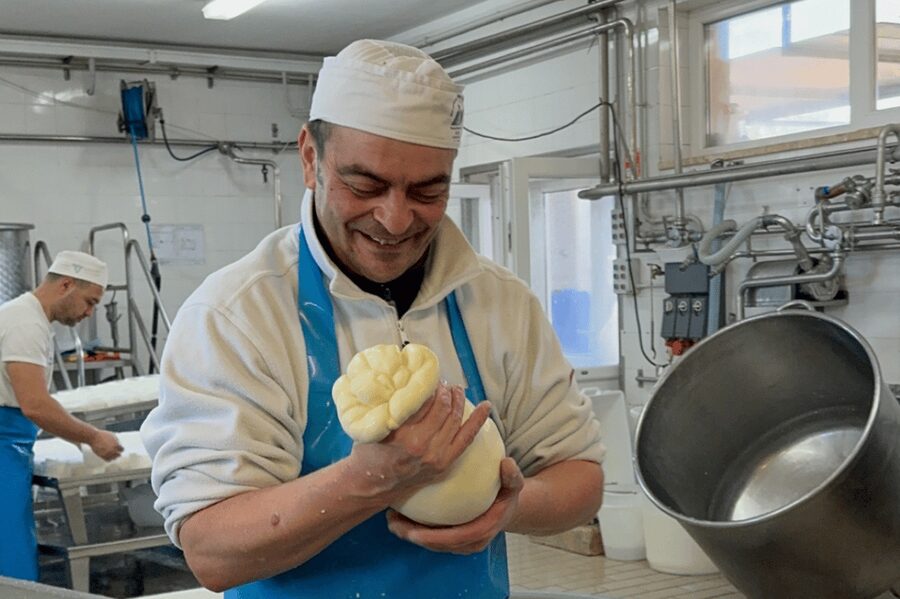
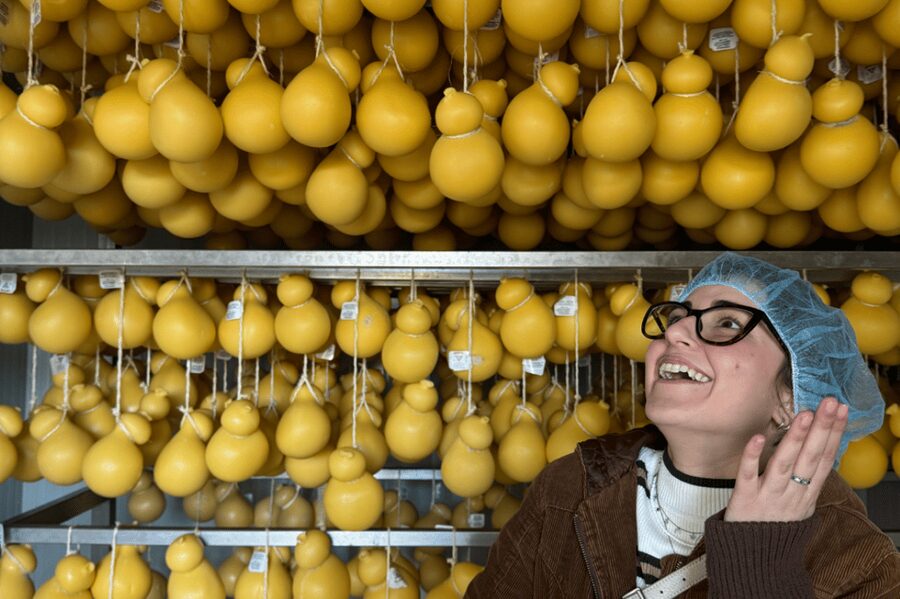
The cheese factory and bakery are where the farm’s production becomes most visible. You learn from local artisans and get a look at the spaces where food is prepared. The exact equipment, recipes, and production methods are not listed, so I would avoid expecting a technical factory tour.
What you can expect is a practical introduction to traditional techniques before trying them yourself. The cheese factory gives meaning to the mozzarella workshop, while the bakery helps place the pasta lesson within a wider food-making tradition.
I especially like the combination because mozzarella and pasta require different kinds of attention. Cheese-making introduces you to texture and handling. Pasta-making asks for a different rhythm and technique. In a small group, the instructor should have a better chance to guide each person than on a large commercial class.
The group limit is nine participants. That is small enough to make questions easier and should reduce the chance that you spend the whole lesson watching from the back. It does not guarantee that everyone receives equal hands-on time, but the cap is a positive sign for an activity built around participation.
Making mozzarella with local instruction
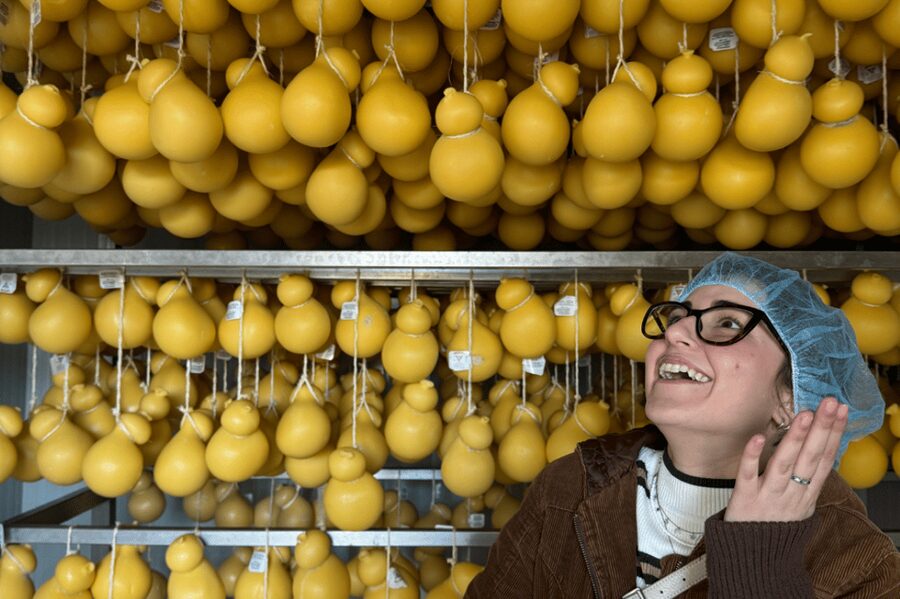
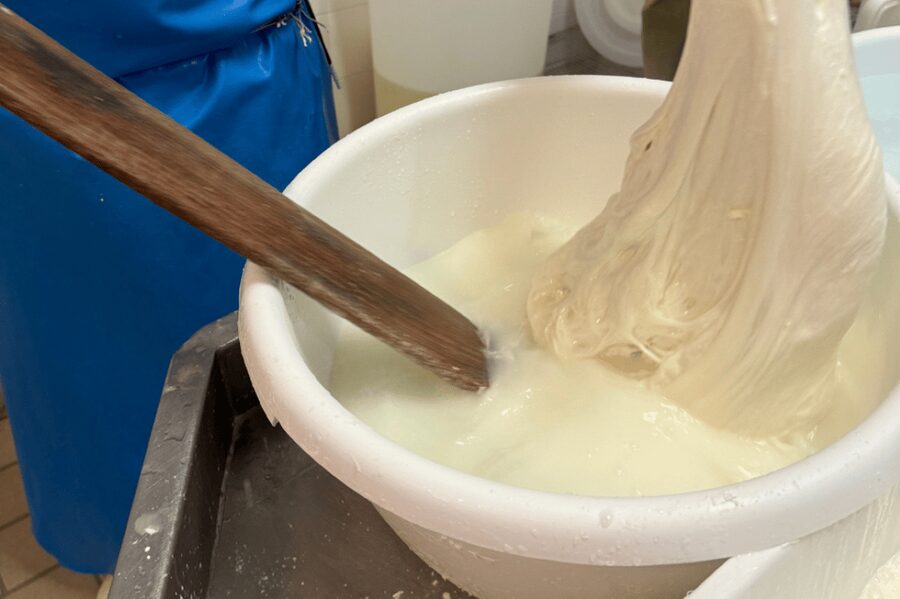
The cheese workshop is the heart of the experience. You work under the direction of an instructor and learn traditional mozzarella-making techniques. The description does not promise a particular cheese style beyond mozzarella, nor does it provide a recipe or a list of take-home items.
That means you should judge the class by the process, not by expecting a large edible souvenir. The value lies in learning how the cheese is formed and handled, then understanding it better when you taste it later.
A hands-on cheese class can be especially useful if you already enjoy Apulian food but have never considered how mozzarella is made. You are not merely eating a regional specialty. You are given a clearer sense of the work behind it.
The activity is offered in Italian and English. If you need detailed instructions, confirm at booking that your preferred language is available for your selected time. The stated languages are a good fit for international visitors, but the actual amount of English guidance may vary with the group.
Making pasta, not just eating it
The pasta workshop adds variety and makes the experience more than a cheese-focused visit. You work with instructors and learn traditional pasta techniques after seeing the farm and production spaces.
The supplied details do not name the pasta shape or explain the dough recipe. That is an important limit. If you are searching for a class built around one exact regional pasta, you should ask for specifics before booking.
Even without that detail, the format has clear appeal. You get to take part in the process and then, with the tasting option, eat the products made during the workshop. This creates a satisfying arc: see the farm, learn the method, make the food, and taste the result.
For families, the pasta portion may be particularly approachable. The only direct family feedback describes a son enjoying the experience alongside an adult, and the activity was considered suitable for young and old. I would still confirm the child’s comfort with farm settings and hands-on work before reserving.
Choosing the tasting option
Tasting is not automatically included. You must choose the option that specifically includes food tasting if you want to sample the products made during the workshops.
At $124.61 per person, the tasting version is likely the better value for many visitors, provided the price shown at booking applies to that option. You are paying for a guided farm visit, two workshops, several farm-related stops, and the chance to eat what you have helped prepare. The price is not bargain-level, but the small group and broad itinerary make it more defensible than a short demonstration with no participation.
If you have a tight budget or mainly want to learn the techniques, the workshop without tasting may be enough. But skipping the tasting creates an odd ending to a food class. I would compare the two options carefully rather than assume the lower price includes everything.
The tasting is also where the farm-to-table idea becomes most concrete. You have seen the setting and production areas, then get to judge the finished food for yourself. That final step gives the visit more purpose.
Who will enjoy this Martina Franca experience
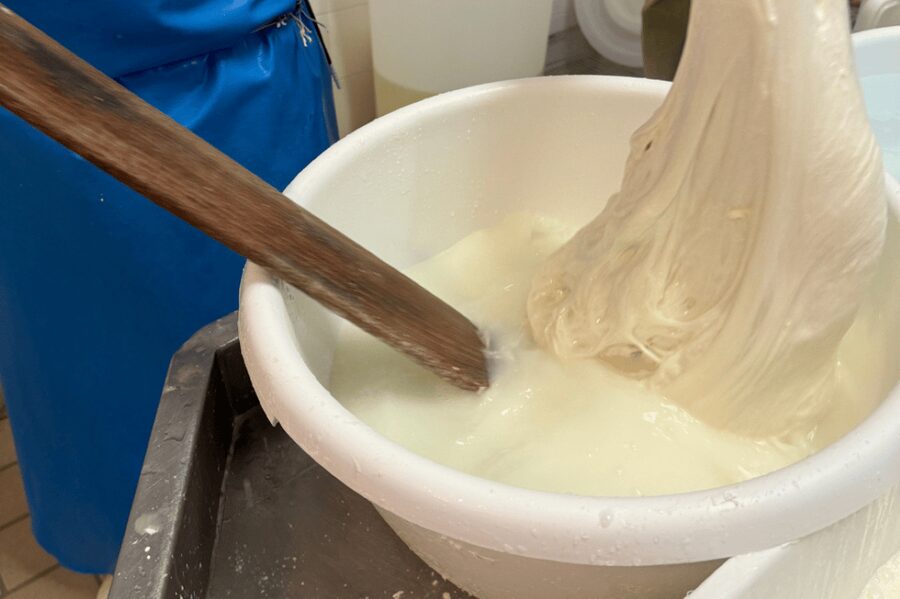
I would recommend this activity to you if you want local food connected to a real farm setting. It suits curious eaters, families, couples, and anyone who prefers a small practical class to a passive sightseeing stop.
It is also a good choice if you want variety in a short outing. In 2.5 hours, you cover animals, sustainable practices, a garden, an ancient church, a cheese factory, a bakery, mozzarella, and pasta. That is a full schedule without committing a whole day.
You may want to choose something else if you want an advanced cooking course, a detailed agricultural study, or a long church visit. The information points to an accessible introduction, not a professional-level workshop.
Mobility is the biggest practical concern. The activity is described as unsuitable for people with mobility impairments and wheelchair users, despite the operator stating that it will try to help with special needs. Contact the provided phone number before booking if you have any access concerns. Do not rely on a general promise of assistance without confirming what the farm route allows.
The farm is not reached by included transfer. You need to arrange your own way to the meeting point, so check the location carefully before committing. That extra planning matters in rural areas, where a simple address may not tell you how easy the final approach will be.
Timing, group size, and what to wear
The duration is fixed at 2.5 hours, but starting times depend on availability. Check the schedule before building this activity into a busy day.
The group is limited to nine people, which is one of the better features for a workshop. A small group makes it easier to hear the instructor, ask questions, and get a turn with the ingredients. It also keeps the farm visit from feeling like a large bus excursion.
Bring comfortable shoes and comfortable clothes. Those instructions are basic, but they fit the setting. You should also remember that alcohol and drugs are not allowed.
Cancellation is flexible up to 24 hours before the activity for a full refund, and you can reserve now and pay later. Those policies are useful if your Apulia plans are still shifting, but the most important booking detail remains the tasting option and the route to the farm.
My verdict on the value
The strongest part of this activity is its range. You are not paying only for a mozzarella lesson. You receive a guided visit to a farmstead, a garden walk, an animal introduction, an ancient church visit, access to the cheese factory and bakery, and two food workshops.
The price of $124.61 per person asks you to value participation and setting. If you want a cheap meal or a quick sample of local cheese, this is too much. If you want a short, guided food experience that connects production with cooking, the price is easier to justify.
The optional tasting affects that calculation. I would choose it unless you have a strong reason not to eat during the activity. The tasting lets you enjoy the products you helped make and completes the farm-to-table idea.
Should you book this farm workshop?
Book it if you want hands-on mozzarella and pasta making, a small group, and a farm visit that includes more than food. Valentina’s warm, engaging approach is a useful sign for anyone who values a good guide as much as the activity itself.
Choose the tasting option, wear practical clothes, and arrange your own transport in advance. Skip it if you need wheelchair access, have limited mobility, or want a highly technical cooking course. For families and curious food lovers spending time around Martina Franca, this is a well-rounded half-day-style outing packed into 2.5 hours.
FAQ
Where does the mozzarella and pasta workshop take place?
The experience takes place at a farmstead in Martina Franca, in Apulia, Italy.
How long does the experience last?
The activity lasts 2.5 hours. Available starting times depend on the date you choose.
What languages are available?
Instruction and guiding are available in Italian and English.
How many people are in the group?
The activity is limited to nine participants.
Is a guide included?
Yes. An expert guide is included, along with instruction during the cheese-making and pasta-making workshops.
Is the food tasting included?
Only the booking option that specifically includes the tasting provides it. Tasting is not included with every option.
What places are visited during the experience?
The itinerary includes the breeding farm, vegetable garden, ancient church, cheese factory, and bakery.
Is transportation to the farm included?
No. You must arrange your own transfer to reach the tour location.
What should I wear?
Comfortable shoes and comfortable clothes are recommended.
Is the activity suitable for wheelchair users?
No. The activity is listed as unsuitable for wheelchair users and people with mobility impairments. If you have special access needs, contact the provided phone number before booking.
Just added around Italy
- Volterra: Fresh Pasta Cooking Class at a Tuscan Farmhouse★ 5.0 · 33 reviews
- Volterra: Pizza Cooking Class in a tuscan farmhouse★ 4.6 · 11 reviews
- Visit Siena and San Gimignano with lunch at a family farm★ 5.0 · 8 reviews
- Vico Equense: Tour in the dairy “Mozzarella Experience”★ 5.0 · 19 reviews
- Turin: Meet the Monviso Alpacas at the Educational Farm with a Guide★ 5.0 · 5 reviews
- Bardolino: Garda Lake Pasta Cooking Class at the Agritourism★ 5.0 · 32 reviews
- Rialto Farmers & Fish Market Food Tour in Venice with Wine Tasting & Sightseeing★ 5.0 · 3 reviews
- Rialto Market Food Tour: Wine Tasting and Sightseeing in Venice★ 5.0 · 57 reviews
Workshops, farm by farm.
Half-Day Thai Cooking Class at Organic Farm in Chiang Mai
Read our review →
Florence Pizza or Pasta Class with Gelato Making at a Tuscan Farm
Read our review →
Cooking Class and Lunch at a Tuscan Farmhouse with Local Market Tour from Florence
Read our review →
Authentic Cooking Class with Market & Farm Visit
Read our review →
Pizza Lesson, Wine, and Limoncello at a Local Farm
Read our review →
Hands-On Cooking Class & Farmhouse Tour on the Amalfi Coast
Read our review →Other lists this farm sits on