
REVIEW · USA
1.5 Hour Immersive Farm Experience in Adirondacks
Mud makes memories. This small-group farm visit gives you a hands-on look at how food moves from soil to kitchen, with time to harvest vegetables, meet livestock, and ask plenty of questions. I like the personal scale, with no more than six people, and I like that the experience covers practical topics such as organic growing and community composting. The main thing to consider is that this is a working farm, not a polished petting zoo, so outdoor conditions and animal activity can vary.
I also like the chance to feed treats to pigs, collect eggs, and spend time with the ambassador goats, Chuck and Larry. Laura, Ivan, and Brandon share different parts of the farm’s daily work, making the visit feel more like a conversation with a farm family than a scripted attraction. Wear sturdy, high boots if you have them. Boot covers are offered, but farm paths and animal areas can still be messy.
Key points to know before you go
- Small groups of six or fewer: You get more room to ask questions and more direct time with the animals.
- A real working farm: You may see goats, pigs, chickens, turkeys, ducks, piglets, baby goats, and farm guard dogs.
- Hands-on food lessons: You harvest fresh vegetables, collect eggs, and learn how produce reaches the refrigerator.
- Compost you can measure: You take the temperature of an active compost pile and learn how the farm manages it.
- Animal care is part of the visit: Depending on farm activity, you may help feed pigs or baby goats and see how goats are milked.
- Simple afternoon timing: The tour starts at 1:00 p.m., lasts about 90 minutes, and ends where it begins.
A personal farm visit on Ragged Lake Road
The Cook Farm sits at 189 Ragged Lk Rd in Owls Head, New York, in the Upper Adirondacks. You meet the farm team there at 1:00 p.m. and return to the same place when the visit ends.
The first few minutes are used well. Laura welcomes you, explains the farm’s background, and helps you get ready for the property. You may use boot covers, though high work or garden boots are the better choice if you have them. This is practical advice, not fashion advice. Animal areas are not the place for your best walking shoes.
The farm has plans for new structures and improvements, and Laura explains how the operation has developed and where it is going. That gives the visit a useful sense of time. You are not just looking at animals for a few minutes. You are seeing a family farm in progress, with its current systems and future plans both part of the conversation.
Because the group is capped at six people, you can ask questions without holding up a large crowd. That matters here. Farming topics can quickly move from animal breeds to compost temperature to the difference between two kinds of chickens. A small group makes it easier to follow those threads.
More Farm Tours around the USA:
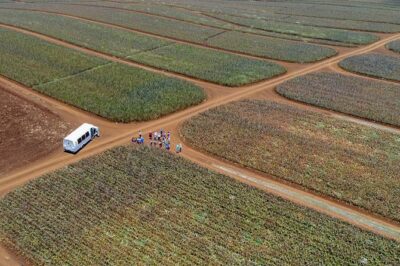
- Maui Pineapple Farm Tour in Haliimaile
★ 5.0 · 2,855 reviews - Half-Day Thoroughbred Horse Farm Tour in Kentucky
★ 5.0 · 1,924 reviews - Premium Amish Country Tour including Amish Farm and House
★ 4.5 · 1,306 reviews
Harvesting vegetables in the market garden
The produce stop brings the farm’s food system into focus. You learn how organic vegetables are grown in the market garden, then harvest fresh vegetables to take home.
This is a short part of the visit, about 15 minutes, but it gives you a useful connection between farming and eating. Instead of seeing vegetables only as tidy items in a shop, you get a direct look at how they are grown and picked. The farm also explains how food moves from the field to the fridge, which helps tie the garden to everyday life.
The exact produce available can change with the season. That is part of the point. A working market garden follows weather, timing, and growing conditions rather than a fixed display schedule. You should expect the harvest to reflect what is ready at the time of your visit.
For families, this is one of the easiest activities to understand. Children can see that vegetables are not produced by a supermarket shelf. Adults may appreciate the chance to ask about organic methods and local food systems without sitting through a formal lecture.
Chickens, ducks, pigs, and goats
The animal visit takes about 30 minutes, making it the longest part of the experience. You may see poultry, pigs, goats, and other farm animals as you move through the property.
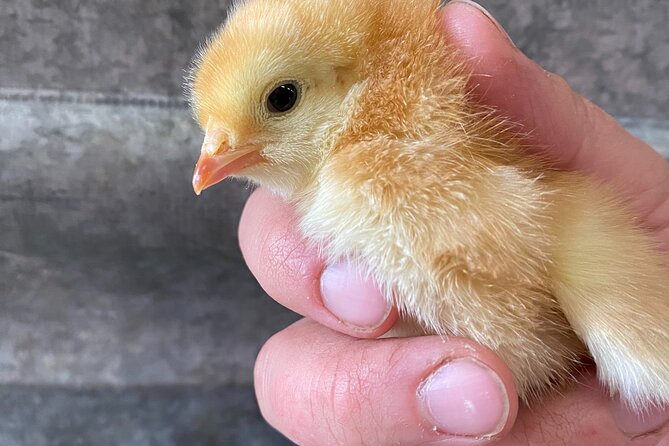
The chicken and duck areas offer a look at different kinds of farm birds. You may also see turkeys. The farm distinguishes between broiler chickens, raised for meat, and laying chickens, which produce eggs. That small detail is useful because many casual farm visits blur those roles together.
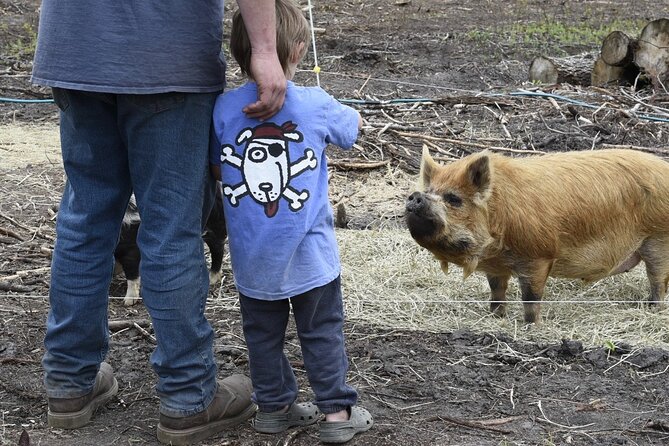
You can collect eggs and feed treats to the pigs. The pig area may include young piglets, and one visitor was even allowed to hold a baby piglet. Animal contact depends on the farm’s needs and the animals’ condition, so you should treat those moments as possible extras rather than guaranteed parts of the schedule.
The pigs are not simply there for photographs. You are seeing how they are raised on pasture and learning how their care fits into the farm’s broader food system. That makes the stop more meaningful than a quick petting session.
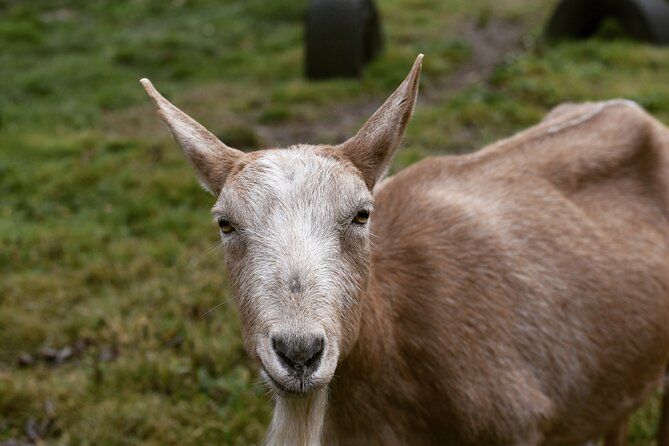
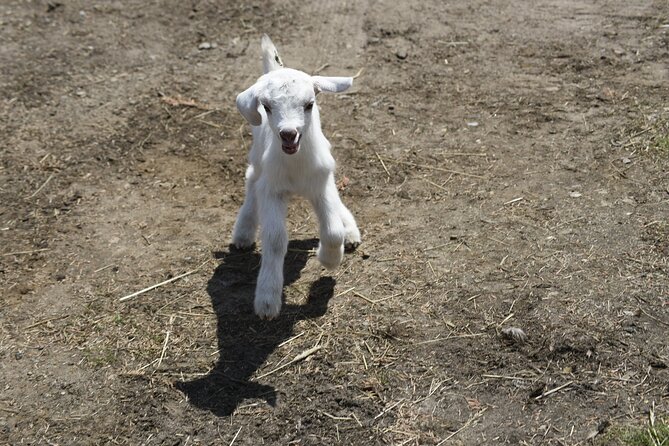
You may also meet goats raised on pasture. The farm keeps male and female goats, and some have horns. The staff can explain the milking process step by step, giving you a look at the work behind a product that many people only encounter in a shop.
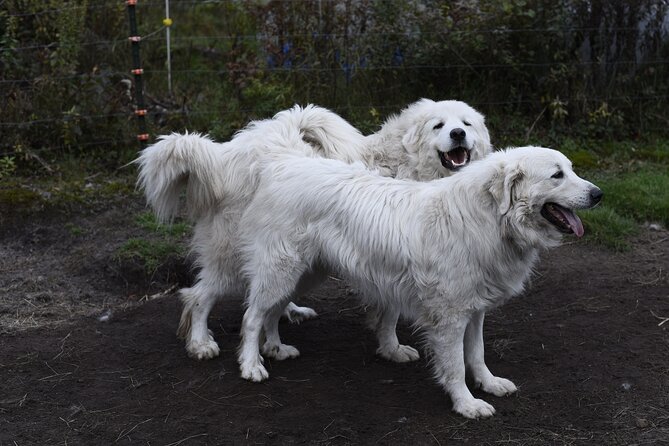
Two farm guard dogs also help protect the livestock and family. Their presence is a reminder that farm life includes practical animal care and protection, not only the cute encounters that attract visitors.
Chuck and Larry, the goat ambassadors
The final animal stop focuses on Chuck and Larry, the farm’s ambassador goats. You can brush them and take photographs during about 15 minutes with the pair.
This is likely to be the most relaxed part of the visit. Grooming gives you something useful to do with your hands, and it lets you observe the goats at close range without turning the encounter into a rushed photo stop. If you enjoy animals but prefer a calm interaction, this portion should appeal to you.
The farm also has young goats, and a visitor was allowed to hold one and help feed baby goats with warmed goat milk. The feeding setup included a bucket with nipples around the outside for several babies, plus a bottle for the youngest goat. That kind of care shows how much work goes into raising animals, but it may not be available every day.
The names Chuck and Larry make the experience feel personal, and they are easier to remember than a general herd. Still, keep expectations flexible. The farm’s animals have schedules and needs of their own, and the staff must put animal welfare before a visitor activity.
Same fields, a different sort of morning:
- Unique Horse Farm Tours with Insider Access to Private Farms
★ 5.0 · 1,192 reviews - Lahaina: Maui Ku’ia Estate Guided Cacao Farm Tour and Tasting
★ 5.0 · 1,103 reviews - Maui: Road to Hana Adventure with Farm to Table Lunch
★ 5.0 · 877 reviews - Hawaiian Salt Farm Tour in Kona
★ 5.0 · 767 reviews
What compost temperature tells you
The composting stop lasts about 15 minutes and is one of the most distinctive parts of the visit. You take a temperature reading from the compost pile and learn how the community composting system works.
That simple measurement turns compost from an abstract green idea into a working process. You learn what goes into the piles, how they are mixed each day, and how the finished material returns to the farm for use. The temperature gives you a practical sign of what is happening inside the pile as organic material breaks down.
I like this part because it connects the garden and the community. Scraps and other compostable materials are not treated as useless waste. They become part of a cycle that supports future crops. It is a clear lesson in local food systems without requiring technical background.
The stop may be especially useful for gardeners, families, and anyone curious about reducing household waste. It is also a good reminder that a farm depends on many systems working together. Growing food is only one part of the job.
Why the 90-minute format works
The visit is divided into short sections of roughly 15 to 30 minutes. That gives the afternoon a clear rhythm without making it feel like a classroom lesson.
You begin with farm background and preparation, then move to vegetables, animals, compost, and goat grooming. Each portion offers a different kind of activity: listening, harvesting, observing, measuring, feeding, or brushing.
Ninety minutes is long enough to cover the farm’s main areas, yet short enough for visitors who are fitting the experience into a day of Adirondack sightseeing. You will not leave with a full day of farm labor, and that is not the aim. This is a focused introduction to the work and choices behind a small farm.
The small group size improves the format. With six people or fewer, the staff can answer questions and adjust the conversation to your interests. A larger group might make the visit less personal, especially around animals or in the garden.
Getting ready for an outdoor farm
Dress for a real farm. High work or garden boots are the safest choice, particularly if you want to avoid worrying about mud or animal areas. Boot covers are available, but they do not replace sturdy footwear when conditions are wet or uneven.
The tour requires good weather. If poor weather causes cancellation, you can choose another date or receive a full refund. Since the experience includes outdoor gardens, animal areas, and compost, weather can affect both comfort and what the farm can reasonably offer.
The activity is offered in English. Confirmation arrives when you book, and most people can participate. The experience accepts mobile tickets, which keeps arrival simple at the farm meeting point.
Plan around the 1:00 p.m. start. The activity ends back at 189 Ragged Lk Rd, so you do not need to arrange a separate pickup at the end. Since the farm is in Owls Head, check your driving time before committing to the start.
Is the $20 price a good value?
At $20 per person, this is a strong value if you want direct contact with a working farm rather than a quick photo stop. Your admission covers about 90 minutes of guided activity, a produce harvest, animal visits, compost instruction, and time with the goats.
The value comes from access and attention. You are not paying only to look over a fence. You may collect eggs, feed pigs, take a compost temperature, brush goats, and ask about farming methods. Some activities, such as holding a piglet or feeding baby goats, depend on what is happening on the farm that day, but the basic visit still has several hands-on parts.
A large attraction might offer more animals or more elaborate facilities. The Cook Farm offers something different: a small setting where Laura, Ivan, and Brandon can explain the work in detail. For people interested in local food, animal care, gardening, or rural life, that personal contact makes the price sensible.
The value is less clear if you want a highly polished attraction with guaranteed animal encounters and weather-proof facilities. This is a farm first. Its appeal comes from that fact, but it also means conditions and activities can change.
Who will enjoy this farm experience?
I would recommend this visit to families, couples, gardeners, food-conscious visitors, and anyone who prefers a personal tour over a large group outing. Children can harvest vegetables, see young animals, and take part in simple farm tasks, while adults can ask more detailed questions about composting, poultry, goats, and local food.
It also suits people who want a quieter activity during an Adirondack trip. The farm gives you a different view of the region, away from the usual outdoor recreation. You spend time learning how a household farm operates and how its animals, garden, and compost system connect.
You may want to choose another activity if you dislike mud, animal smells, outdoor conditions, or changing plans. The tour is not a theatrical show, and the farm cannot promise that every animal will be available for handling. Its strength is the honest look at daily farm work.
Booking and cancellation details
The experience is often reserved about 17 days ahead, so booking early is sensible if your Adirondack schedule is fixed. The maximum group size is six, which helps explain why popular dates may fill.
You can cancel for a full refund if you do so at least 24 hours before the 1:00 p.m. start time. Cancellations or changes made less than 24 hours before the start are not refunded. The cut-off follows local time.
Should you book The Cook Farm?
Book it if you want a small, direct look at farming, with real tasks and plenty of room for questions. The best reasons are the personal scale, the farm family’s willingness to explain their work, and the chance to connect garden produce, livestock, and compost in one visit.
I would especially choose it if your trip includes children or anyone curious about where food comes from. Bring high boots, allow for changing outdoor conditions, and treat baby animals or special feeding opportunities as possible surprises rather than promises. If that sounds appealing, $20 buys a useful and memorable 90 minutes in the Upper Adirondacks.
FAQ
Where does the farm experience begin?
It begins at The Cook Farm, 189 Ragged Lk Rd, Owls Head, New York 12969.
What time does the tour start?
The tour starts at 1:00 p.m.
How long does the experience last?
It lasts approximately 1 hour and 30 minutes.
Where does the experience end?
It ends back at the same meeting point at The Cook Farm.
How many people can join?
The activity has a maximum of six participants.
Is the experience offered in English?
Yes, the experience is offered in English.
What animals might I see?
You may encounter goats, pigs, chickens, turkeys, and ducks. The farm also has farm guard dogs, and animal availability can depend on the day.
Can I feed or handle the animals?
The experience includes feeding treats to pigs, and you may collect eggs and groom the ambassador goats, Chuck and Larry. Other contact, such as holding a piglet or feeding baby goats, may depend on the farm’s activities and animal care needs.
What happens if the weather is poor?
The experience requires good weather. If it is canceled because of poor weather, you can select another date or receive a full refund.
What is the cancellation policy?
You can cancel at least 24 hours before the start time for a full refund. Cancellations or changes made less than 24 hours before the start are not refunded.
Just added around the USA
- Yolo: Vineyards, Farms & Cultural Gems – Audio Driving Tour★ 4.3 · 5 reviews
- Ventura: Rail Bike Guided Tour with Farm Stand Stop★ 4.1 · 18 reviews
- Alpaca Ranch and Fiber Processing Mill Tour★ 5.0 · 24 reviews
- Small-Group Vineyard and Orchard Tour with Wine Tasting in Muscoda★ 5.0 · 2 reviews
- Farm Tour at Clover Brooke Llama/Alpaca/Goat Farm★ 4.5 · 6 reviews
- Connect with Rescue Animals on a Private Farm Tour in Catskills★ 5.0 · 27 reviews
- Gourmet Mushroom Farm Tour in Tennessee★ 5.0 · 5 reviews
- Cozy Farm Experience with Wagon Wheels and Acoustic Meal★ 5.0 · 2 reviews
USA Farm Tours, farm by farm.
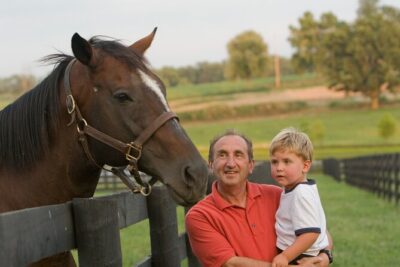
Half-Day Thoroughbred Horse Farm Tour in Kentucky
Read our review →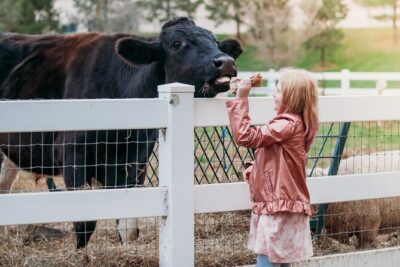
Premium Amish Country Tour including Amish Farm and House
Read our review →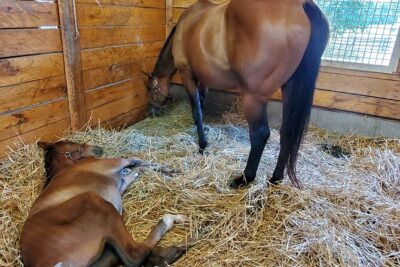
Unique Horse Farm Tours with Insider Access to Private Farms
Read our review →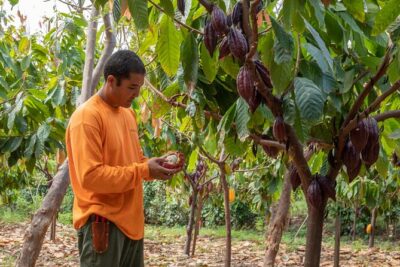
Maui Ku’ia Estate Guided Cacao Farm Tour and Tasting
Read our review →
Road to Hana Adventure with Farm to Table Lunch
Read our review →

Maui Horseback Adventure at Circle M Ranch With Real Cowboys
Read our review →Other lists this farm sits on