
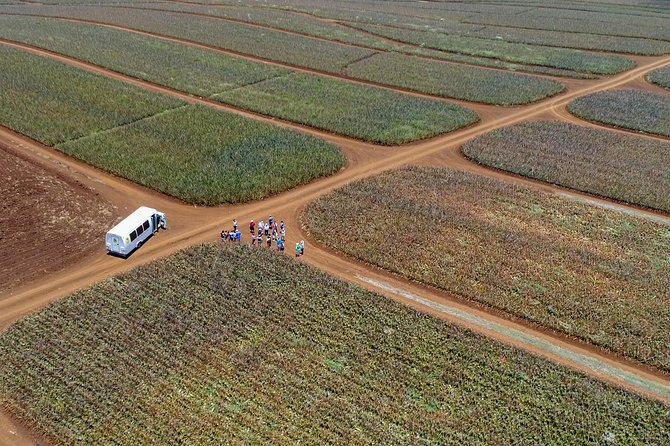
REVIEW · MAUI
Maui Pineapple Farm Tour in Haliimaile
Pineapples have a surprisingly long story. This 90-minute Haliimaile tour makes that story easy to grasp, taking you from the packing facility into a working field where you see the crop at different stages. I like the fresh Maui Gold tasting and the free whole pineapple packed for your flight home. The main drawback is value: at $99.48 per person, it is not a cheap outing.
I also like the small group size, with no more than 24 people, and the guides who bring local knowledge and humor to the farm. Colton, Shilo, Rudy, Brian, and Frank are praised for making the information lively rather than dry. You should know that the ride can be bumpy, you must climb three steps onto the mini coach, and you may stand for about 20 minutes at a time.
Key points to know before you book

- You walk through a working pineapple operation: The tour combines farm fields with the packing facility, so you see both cultivation and preparation for shipment.
- Maui Gold is the star of the tasting: You sample pineapple at different growth stages and learn how flavor changes.
- Every person receives a whole pineapple: It is packed as airport-ready fruit, a useful and tasty parting gift.
- Haliimaile is the setting: The farm sits in Upcountry Maui, in the historic plantation town of Haliimaile.
- The tour suits families and food lovers: Children must be at least 3 years old, and most people who can manage the short walk and steps can participate.
- Book ahead for popular dates: The tour is often reserved about 35 days in advance, so last-minute availability is not guaranteed.
Why this Haliimaile farm tour is worth your time
Maui offers plenty of grand scenery, but this experience gives you something different: a close look at working agriculture. You are not simply handed a slice of fruit at a shop. You see where pineapples grow, how long they take to mature, and how much care goes into producing something that can look so simple on your breakfast plate.
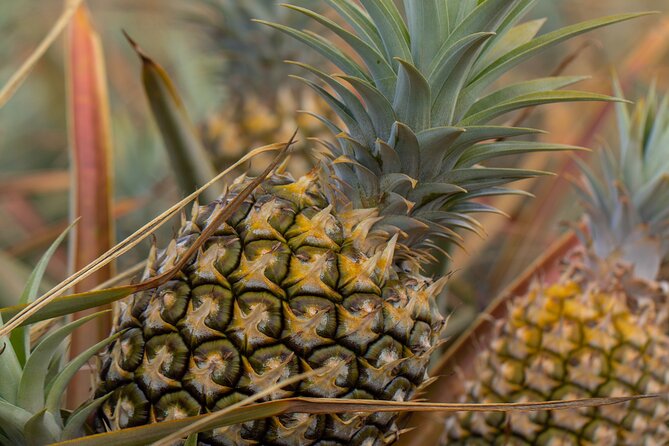
That change in perspective is the best reason to come. A pineapple plant is not a tree, and the fruit does not appear quickly. The guide explains the growing cycle and cultivation methods while you stand among the plants. The samples help make the lesson practical. You taste the fruit as the guide discusses its stages, rather than trying to remember a list of farming terms.
The tour also connects pineapple production with Hawaiian culture and Maui’s plantation past. The setting in Haliimaile gives the visit a sense of place. You are upcountry, away from the main resort areas, looking at an active farm operation rather than a polished attraction built only for photographs.
The farm is also one of the few remaining pineapple operations in the United States, which gives the visit added weight. It is a chance to see a local industry that requires careful planting, tending, harvesting, packing, and shipping. By the end, the free pineapple feels less like a promotional giveaway and more like a small reward for understanding the work behind it.
More Farm Tours around Maui:
- Lahaina: Maui Ku’ia Estate Guided Cacao Farm Tour and Tasting
★ 5.0 · 1,103 reviews - Maui: Road to Hana Adventure with Farm to Table Lunch
★ 5.0 · 877 reviews - Maui Horseback Adventure at Circle M Ranch With Real Cowboys
★ 5.0 · 761 reviews
Arriving at the Maui Pineapple Store
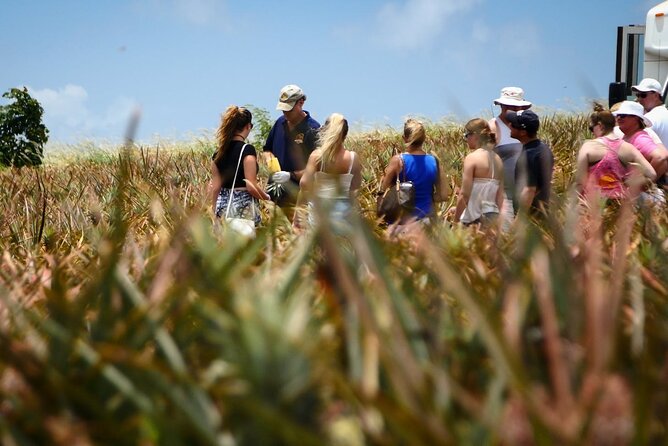
You make your own way to the Maui Pineapple Store at 870 Haliimaile Road in Makawao. The tour begins and ends at this same location, so you do not need to arrange a separate drop-off point.
The store is part of the experience, not just a check-in desk. It has a pleasant atmosphere and offers pineapple-related items for purchase. Give yourself enough time to arrive, especially if you are coordinating this with another Upcountry stop. The exact meeting instructions are simple, but the tour operates on a schedule, and missing the start can create stress.
A mobile ticket is accepted, and the tour is offered in English. Confirmation is sent within 48 hours of booking, subject to availability. Since the activity is often booked well ahead, I would not wait until the last day if the timing matters to you.
One useful practical note: arrive early and make sure your check-in is clearly recorded. A mix-up at the desk once led to a participant being called shortly before departure, moved between vehicles, and brought to a tour already in progress. That sounds unusual, but it is a good reason to confirm where you should wait and which guide or vehicle you have been assigned.
From the packing facility to the pineapple rows
The visit includes both the packing facility and the farm fields. This combination gives the tour more substance than a simple orchard walk.
Inside the operation, you get a look at the machinery and process used to prepare pineapples for sale and shipment. The packing side helps explain why the fruit you see in stores may look uniform, how produce is handled, and why a farm needs more than planting and picking.
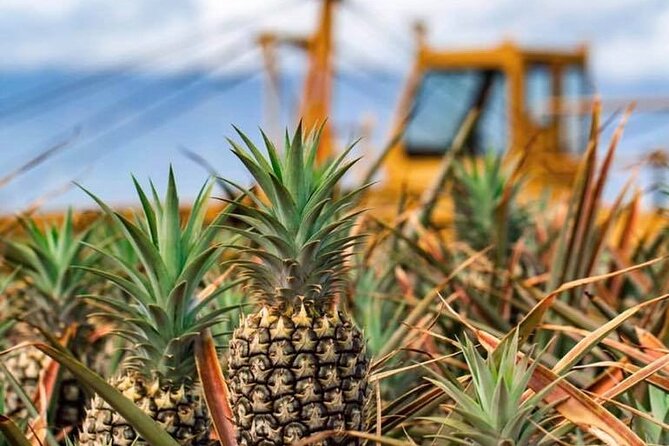
Then the mini coach takes you out toward the growing fields. Expect a farm road rather than a smooth city route. The ride may be bumpy, and that is part of the setting. You are traveling through an active agricultural area, not riding through a theme park.
Once in the fields, the guide explains the pineapple’s growth cycle and cultivation. You learn how plants are started, how they develop, and how the farm manages the crop. The guide also points out photo opportunities, so keep your camera ready, but listen closely too. The strongest part of the tour is the explanation of what you are looking at.
You will stand for about 20 minutes at a time. Most people can manage the physical demands, but this is not the best choice if you need continuous seating or have difficulty climbing three steps on and off the mini coach.
The Maui Gold tasting is the highlight
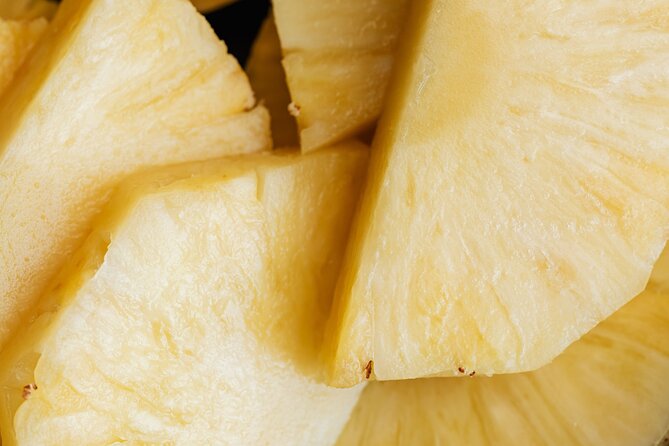
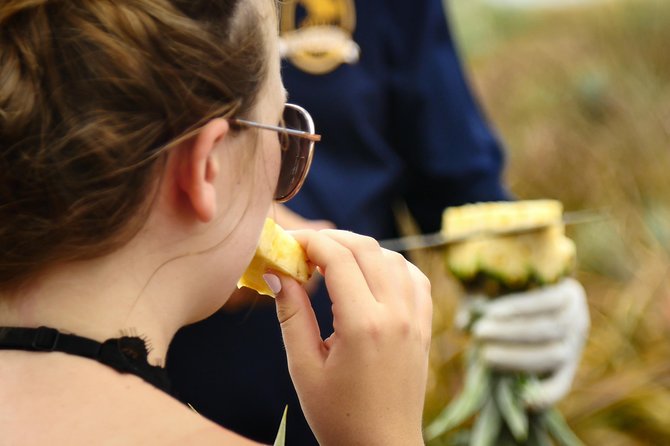
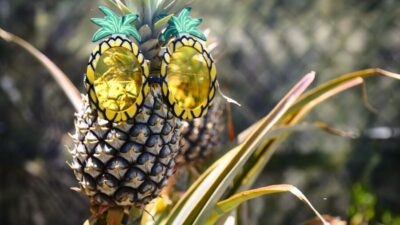
The tasting gives the tour its immediate pleasure. You sample fresh pineapple at different stages while the guide explains how the fruit develops. This makes the farming lesson easy to remember because you can connect the information with flavor, texture, and sweetness.
Maui Gold pineapple is known on this tour for its extra-sweet taste, and the samples receive some of the strongest praise. One especially useful detail is that even a person who normally does not like pineapple may find the fresh fruit appealing. That is a good reminder that freshly cut farm fruit can taste very different from fruit that has spent time in storage.
The tasting is not presented as a full meal. Think of it as several samples during the farm explanation. If you are visiting with children, this hands-on element helps hold their attention. Young children can see the plants, ride the coach, and taste the crop instead of standing through a long talk.
The fruit is also a good way to understand the point of the farm. You are not just learning an agricultural fact sheet. You are learning why this particular crop matters to the people who grow it and why the final product is worth seeking out.
Same fields, a different sort of morning:
- The Maui Butterfly Farm Tour
★ 5.0 · 446 reviews - Taste of Hawaii: A Maui Farm Tour
★ 5.0 · 152 reviews - Lahaina: Maui Ku’ia Estate Guided Cacao Farm Tour & Tasting
★ 4.8 · 137 reviews - Hali’imaile: Pineapple Farm Tour
★ 4.9 · 126 reviews
The pineapple you take to the airport
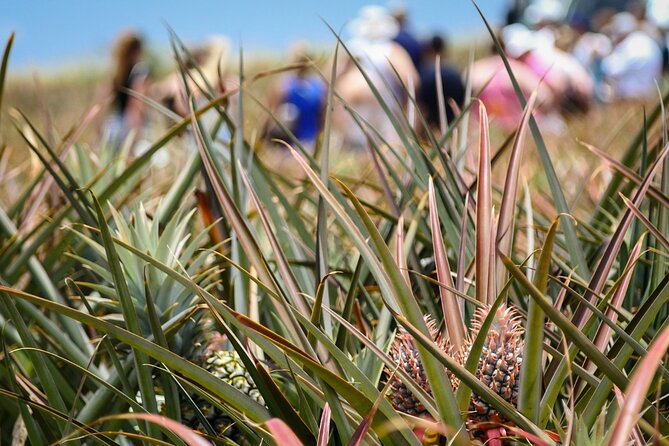
Every person receives a whole pineapple at the end. It is prepared as airport-ready fruit, so you can take it home on your flight rather than worrying about how to pack a loose, spiky pineapple in your luggage.
This is one of the tour’s most practical touches. If you are visiting with a family of four, you leave with four pineapples. The fruit can become a snack for the trip home or a reminder of Maui after you return. Several people also note that you may have the option of trying to grow the crown at home, though the tour’s clear promise is the fresh pineapple itself.
Plan your luggage accordingly. A whole pineapple for each person can take up more room than you expect, particularly if you have already filled your bags with souvenirs. The airport-ready packaging helps, but it does not make the fruit weightless.
Guides make or break the 90 minutes
The information is useful, but the guide determines how enjoyable it feels. The strongest guide comments center on clear explanations, humor, local stories, and practical advice.
Colton receives especially high praise for explaining both pineapple production and parts of Maui life. Shilo is described as friendly and engaging, with a strong presentation about growing pineapples. Rudy is praised for making the experience fun, while Brian is noted for giving a simple, entertaining introduction to production. Frank is also mentioned for making the tour informative.
The guide may point out local sights, offer restaurant suggestions, or share details about the surrounding area. One guide’s recommendations for a nearby restaurant, winery, and pizza place were considered useful enough to shape later meals and outings.
Guide quality can vary from one departure to another, as it does with any scheduled tour. Still, the format gives the guide plenty to work with. The fields, machinery, samples, and local setting create natural talking points, so the presentation does not rely on a lecture alone.
Is $99.48 a fair price?
At $99.48 per person, this is an expensive short activity. The tour lasts about 1 hour and 30 minutes, includes samples, and gives each person a whole pineapple. You are also paying for access to an active farm operation, a guide-led explanation, the mini coach ride, and the chance to see the packing facility.
I would judge the value by your interests. If you love local food, agriculture, or unusual family outings, the cost is easier to justify. The pineapple itself is excellent, but I would not book the tour solely to receive free fruit. You can buy pineapple elsewhere for much less.
The real value is the context. You learn why the crop takes work, see how it is handled, and taste the result during the explanation. If you want a quick, entertaining activity that adds meaning to a familiar food, the price may feel reasonable.
If your priority is dramatic scenery or a full-day adventure, this is probably not the best use of your budget. The tour is brief and focused. Some people consider it slightly overpriced for the length, even while enjoying the content and fruit.
Who will enjoy this Upcountry experience
I would recommend it most strongly to families with children aged 3 and older, food-focused visitors, and anyone curious about how Hawaiian agriculture works. It also suits three-generation groups because the pace is manageable and the subject is easy to follow.
The small maximum group size of 24 helps keep the experience personal. You are not joining a huge bus tour, and the guide can point out details in the fields. The group is still large enough that the tour feels social rather than private.
The tour may not suit children under 3, since the minimum age is firm and no refund is given if a party arrives with a child below that age. It is also a poor fit if you cannot climb three steps or stand for 20 minutes at a time.
The farm roads can be bumpy. That is not a flaw in itself, but you should know what you are signing up for. Wear something comfortable for walking and standing, and do not expect a smooth ride from start to finish.
Pairing the farm with nearby stops
The pineapple farm can work well as part of an Upcountry day, though the tour itself does not provide transportation between attractions. You arrange your own arrival and leave from the same Maui Pineapple Store location.
A distillery directly across the street offers tours using alcohol made from the same pineapples. That makes a natural pairing if you want to continue exploring how one crop can become different local products. The farm tour is the better choice for seeing the plants and cultivation, while the distillery adds another angle on processing.
Keep your schedule sensible. The pineapple visit takes about 90 minutes, and the start time matters. Allow room before and after it rather than booking another activity so tightly that a late arrival ruins the morning.
The store itself is worth a little browsing time. You may find Maui-themed items and pineapple products, and it gives you a chance to collect your packed fruit before continuing on.
Booking, weather, and cancellation details
Free cancellation is available until 24 hours before the scheduled start time. Cancel at least 24 hours in advance for a full refund. Cancellations or changes made within 24 hours are not accepted for a refund.
The activity depends on good weather. If poor weather causes cancellation, you are offered another date or a full refund. That policy matters on Maui, where weather can change between coastal and Upcountry areas.
The tour is capped at 24 people and is conducted in English. Most people can participate, provided they can manage the steps, walking, and standing requirements. Children must be at least 3 years old.
The current score is 4.8 from 2,855 ratings, with 96 percent recommending the experience. That matches the main strengths: excellent fruit, engaging guides, a clear look at farming, and a memorable take-home gift.
Should you book the Maui Pineapple Farm Tour?
Book it if you want a short, hands-on look at Maui agriculture and you appreciate food more after seeing how it is grown. The farm fields, packing facility, tastings, and airport-ready pineapple work well together. I especially like the way the samples turn a farming lesson into something you can taste immediately.
Skip it if you are watching every dollar, dislike bumpy farm rides, or want a longer, more active excursion. The price is high for 90 minutes, and the experience stays tightly focused on pineapples.
For families, food lovers, and visitors looking for something beyond beaches, I think it earns a place on your Maui schedule. Book ahead, arrive early for check-in, leave room in your luggage, and treat the pineapple as the bonus. The real payoff is learning to see an ordinary piece of fruit as the result of serious work.
FAQ
How long does the Maui Pineapple Farm Tour last?
The tour lasts approximately 1 hour and 30 minutes.
Where does the tour begin and end?
It begins and ends at the Maui Pineapple Store, 870 Haliimaile Road, Makawao, Hawaii 96768.
Is a pineapple included for each person?
Yes. Each person receives one fresh pineapple prepared as airport-ready fruit.
Are children under 3 allowed?
No. The minimum age is 3, and no refund is given to parties that arrive with a child under 3.
What physical requirements should I know about?
You need to climb three steps on and off the mini coach and stand for about 20 minutes at a time. Most people can participate.
What happens if bad weather cancels the tour?
You will be offered another date or a full refund if the activity is canceled because of poor weather.
Just added around Maui
- Alpaca Farm Experience on the Road to Hana★ 4.0 · 12 reviews
- Maui Farm Distillery and local craft experience Full-Day Tour★ 5.0 · 22 reviews
- Farm to Taco: A Farm to Table Cooking Class★ 5.0 · 41 reviews
- Pueo Farm Tour (1.5 hr) Upcountry Kula Maui Hawaii★ 5.0 · 21 reviews
- Maui Pineapple Tour: Farm and Feast Experience★ 5.0 · 32 reviews
- Maui: Interactive Butterfly Farm Entrance Ticket★ 4.9 · 62 reviews
- Hali’imaile: Pineapple Farm Tour★ 4.9 · 126 reviews
- Lahaina: Maui Ku’ia Estate Guided Cacao Farm Tour & Tasting★ 4.8 · 137 reviews
Maui Farm Tours, farm by farm.
Maui Ku’ia Estate Guided Cacao Farm Tour and Tasting
Read our review →
Road to Hana Adventure with Farm to Table Lunch
Read our review →
Maui Horseback Adventure at Circle M Ranch With Real Cowboys
Read our review →

Other lists this farm sits on