
REVIEW · JAPAN
7hr Private Wazuka True Hidden Kyoto Matcha Farm Experience
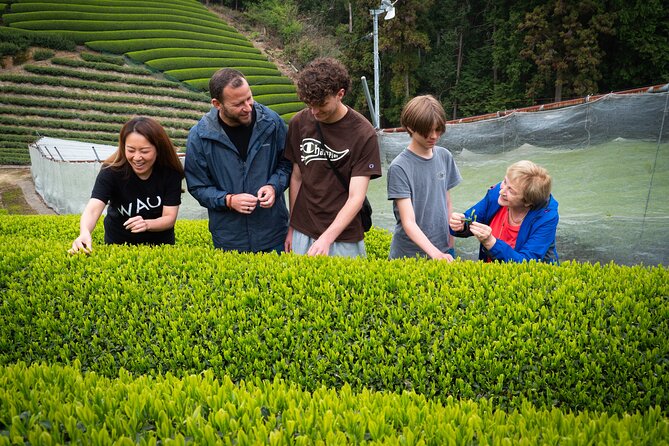
Tea country is Kyoto’s quieter side. This private Wazuka experience takes you beyond the teahouse and into the fields, where a fifth-generation matcha farmer explains how tea is grown, processed, tasted, and served. I like the chance to visit two local farms, and I like that the day includes a traditional Japanese-style lunch rather than a quick snack between stops. The main drawback is the price: at $520 per person, this is a serious splurge.
I also appreciate the hands-on range of the day. You may walk through tea fields, taste matcha and other teas, join a matcha workshop, and take home premium matcha from a farm once owned by the Imperial Family. The farm paths can be muddy and bumpy, and the tour’s title says seven hours while the schedule describes about six, so I would confirm the exact timing before booking.
Key points at a glance
- Meet a fifth-generation tea farmer: Your local host comes from a family that has passed matcha farming down through five generations.
- Visit two working tea farms: You get a closer look at tea growing and production than a standard city tea ceremony allows.
- Taste matcha through several steps: The day includes matcha tasting, tea tasting, and a workshop focused on how the finished drink comes together.
- Share a traditional Japanese lunch: A delicately prepared matcha set meal is served in a traditional Japanese-style home.
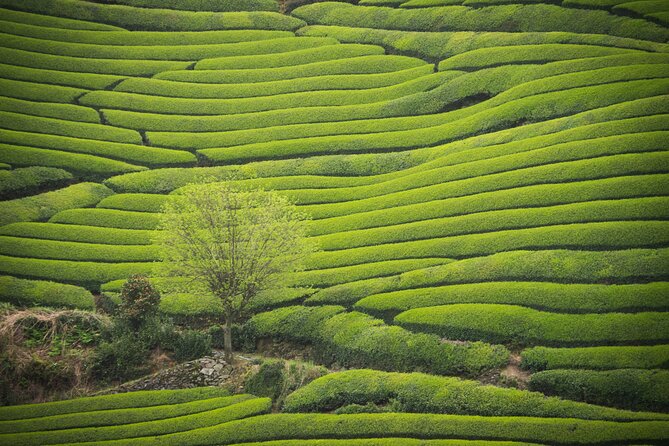
- See Wazuka’s rolling tea fields: The rural setting is a major part of the experience, with broad views and a slower pace than central Kyoto.
- Enjoy a private outing: Only your group participates, which makes it easier to ask questions and shape the pace around your interests.
Why Wazuka is worth the trip from Kyoto
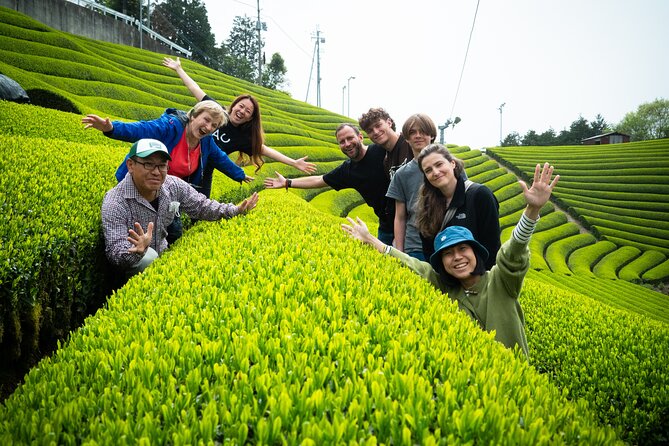
Wazuka is in Kyoto Prefecture’s Soraku District, well away from the city’s packed temples and narrow lanes. Its identity is tied closely to tea, and the town is known for its rolling fields of matcha-producing plants. Here, tea is not simply something poured into a cup for visitors. It is work, family tradition, farming, processing, and hospitality.
That setting gives the day its value. In central Kyoto, you can learn the rules of a tea ceremony. In Wazuka, you can connect that finished cup to the fields where the story begins. You also get a better sense of rural Japan, a part of the country that many Kyoto itineraries skip.
The experience begins at Wazuka-cha Cafe, also listed as Green Tea Wazuka, at Shirasu, Ōhazama 35 in Wazuka. The meeting point is near public transportation, and pickup is offered, so check the booking details for the exact pickup arrangement available to you. The scheduled start is 10:00 a.m.
Because the activity returns to this same meeting point, you do not need to manage a second end location. That is handy after a day on farm paths, especially if you are carrying tea home.
More Farm Tours around Japan:
- Hokkaido Lavender farm & Furano Flower Tour from Sapporo
★ 4.5 · 28 reviews - Mt. Fuji Private Chartered Tour with Nature and Wasabi Farm
★ 5.0 · 24 reviews - Uji and Wazuka Matcha Farm Half Day Private Guided Tour
★ 5.0 · 21 reviews
A fifth-generation farmer puts the day in context
Your host is a local matcha farmer whose family has worked with tea for five generations. That detail matters. You are not only receiving a general explanation of Japanese tea culture. You are hearing from someone tied directly to the land and to the continuing work of making matcha.
The host introduces the long story of tea production in the area, including about 800 years of tea-making history. That does not mean every century receives a classroom lecture. Instead, the history gives meaning to the practical parts of the day: the way tea is grown, the care needed in processing, and why matcha is treated as more than an ordinary beverage.
I would use this time to ask direct questions. Ask how the host’s family became tea farmers, what makes matcha different from other teas, and how taste changes from one tea to another. Since the outing is private, you should have more room for conversation than you would in a large group.
The private format is one of the strongest features here. If you are fascinated by farming, you can spend more time on production. If your main interest is food and ceremony, you can focus on the tasting and lunch. The experience is not designed as a rushed procession of photo stops.
Walking through two local matcha farms
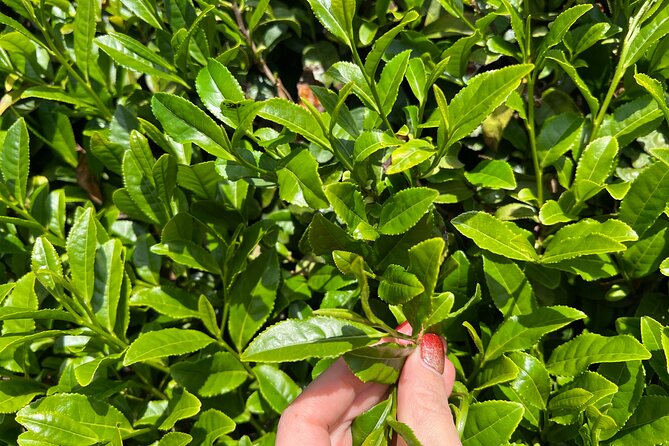
The farm visits are the heart of the day. You will visit two local matcha farms and walk through tea-growing areas while learning about the matcha-making process. The stated experience covers the full path from tea picking and processing to the finished ceremony.
The exact seasonal details of the fields are not specified, so you should not expect a particular stage of growth or a guaranteed picking activity on every date. The program presents tea picking as part of the wider end-to-end story. What you can count on is a walk through a working tea farm and explanations of how the crop becomes matcha.
Visiting two farms adds useful comparison. You can see that tea production is not an abstract tradition frozen in the past. It remains part of local life and family business. One farm may also help you understand the setting, while the other may put more attention on processing, tasting, or the family connection to the land.
The paths may be muddy and bumpy. Wear shoes with a firm sole and clothing you do not mind taking through a little country muck. This is not a polished garden walk, and that is part of the point. If you need completely even paths, ask about conditions before reserving.
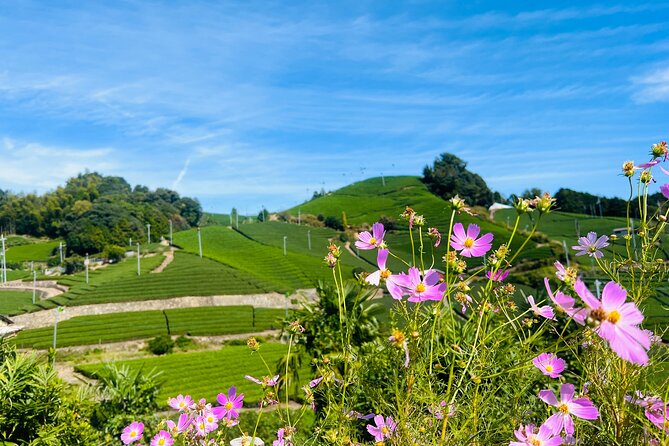
The rural views are a major reward. Wazuka is known for rolling tea fields, and the setting offers a sharp contrast to Kyoto’s urban sights. Bring a phone or camera, but leave room to watch the fields without turning the visit into a nonstop photo session.
Matcha tasting, tea tasting, and the work behind the cup
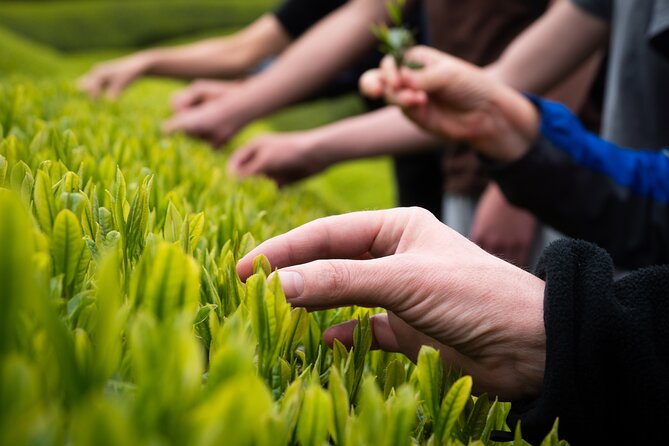
The tasting portion helps you notice details that can disappear when matcha is treated as a sweet café flavor. You will try matcha and other teas, with the host explaining what you are tasting and how the teas differ.
The experience emphasizes all five senses. You may notice the smell of the tea before tasting it, the texture of whisked matcha, the color in the bowl, and the flavor as it changes in your mouth. That approach is especially useful if you are new to matcha and usually encounter it only in desserts or drinks.
The workshop adds a practical layer. Rather than hearing about tea production only in theory, you get a chance to take part in a matcha-focused activity. The available information does not specify each workshop step, so I would not assume a particular recipe or craft project. The important point is that the day includes participation, not just explanation.
You will also have the chance to take home premium matcha from a farm previously owned by the Imperial Family. That gives the purchase a clear connection to the place you visited. It is a useful souvenir because you can drink it later and recall the farm setting rather than buying a generic tin in a city shop.
Same fields, a different sort of morning:
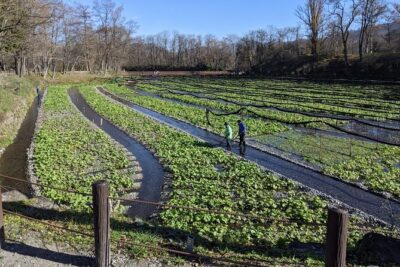
- Wasabi Farm Walking Tour & Lunch
★ 4.5 · 20 reviews - Miyajima Guided Tour and Fresh Oyster Farm Tour
★ 5.0 · 20 reviews - Hands-on Pearl Harvesting Workshop!
★ 3.3 · 11 reviews - From Tokyo Mt.Fuji, Lake Kawaguchi, Makaino Farm day tour
★ 5.0 · 8 reviews
Lunch in a traditional Japanese-style home
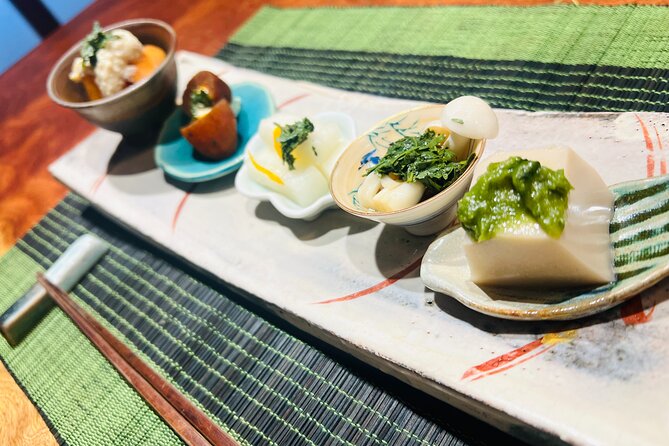
The matcha lunch set is another reason this outing feels different from a basic tasting appointment. You are invited into a traditional Japanese-style home for a delicately prepared meal connected to the tea theme.
The meal is not described dish by dish, so I would not arrive expecting a particular menu. Seasonal ingredients and preparation may shape what is served. Think of it as a carefully presented set meal and a chance to experience hospitality in a local home setting, not as a restaurant lunch with a fixed menu you can study in advance.
This stop also gives your feet a break. Farm walking, tasting, and conversation can make a long day feel pleasantly full, and a seated meal helps set the pace. The home setting provides a more personal view of local life than a formal dining room.
If food allergies or dietary needs matter to you, ask before booking. The supplied details do not state that special diets can be handled, so you should not rely on an accommodation that has not been confirmed.
What the $520 price really covers
At $520 per person, this is expensive when compared with a short Kyoto tea ceremony or a casual tea tasting. The price makes more sense if you value a private host, rural access, two farm visits, a prepared lunch, tastings, a workshop, and the chance to learn from a family with five generations in tea farming.
You are paying for access and time, not just a cup of matcha. A standard ceremony can show you how tea is served. This outing connects the drink to farming, processing, family tradition, local food, and the countryside. For someone with a strong interest in Japanese food culture, that wider view may justify the cost.
Still, I would not recommend it to every Kyoto visitor. If you only want to sample matcha once, the price is hard to defend. If you are traveling alone on a tight budget, a private full-day farm experience may take too much of your trip funds.
The value improves for a small private group that can share the experience and receive a more personal visit. Group discounts are offered, though the available information does not state the discount amount. Check the final price for your party before committing.
Timing, pickup, and the practical side of the day
The scheduled start is 10:00 a.m., with the meeting point at Wazuka-cha Cafe in Wazuka. Pickup is offered, but the exact pickup terms are not provided here, so confirm where and when you will be collected if you do not plan to meet at the cafe.
The tour is described as lasting about six hours, while its product title refers to seven hours. That may reflect rounding or time spent with pickup. I would allow most of the day and verify the expected finish time before planning an evening reservation in Kyoto.
The activity ends back at the starting point. That simple return arrangement is useful because rural transportation can require more planning than getting around central Kyoto. You can finish the day where you began rather than figuring out a new departure point.
Mobile tickets make access simple, and confirmation is provided at booking. Service animals are allowed. Farm access can be muddy and uneven, so practical footwear matters more than stylish footwear here.
Who will enjoy this Wazuka experience most
I would recommend this outing to you if you care about the source of your food and drink. It suits people who enjoy meeting local producers, asking questions, and seeing how a regional specialty is made from beginning to end.
It is also a good choice for matcha fans who want more than a ceremonial bowl. The tastings, workshop, farm walks, and take-home tea create a fuller picture of matcha than you usually get in a city class.
The private format works well for families, couples, and small groups with shared interests. You can ask questions freely and spend more time on the parts that interest you most. Group discounts may also help soften the per-person cost.
I would think twice if you dislike uneven ground, muddy paths, or rural settings. I would also skip it if your Kyoto schedule is packed tightly with city sights. Wazuka requires a slower day, and the experience is strongest when you allow yourself to enjoy that change of pace.
Should you book the Wazuka matcha farm experience?
Book it if you want to connect Kyoto’s tea culture to real farms, local family tradition, and a Japanese-style home meal. The two farm visits, fifth-generation host, tastings, and workshop give the day more substance than a simple tea demonstration.
Skip it if $520 per person feels uncomfortable or if you only want a short matcha tasting. Before booking, confirm the pickup details, the expected duration, and any food or mobility concerns. For the right person, this is a special way to see rural Kyoto and leave with both a better understanding of matcha and some premium tea to enjoy at home.
FAQ
Where does the experience begin?
It begins at Wazuka-cha Cafe, also listed as Green Tea Wazuka, at 35 Ōhazama, Shirasu, Wazuka, Soraku District, Kyoto 619-1222.
What time does the tour start?
The scheduled start time is 10:00 a.m.
Where does the experience end?
The activity ends back at the meeting point.
How long does the experience last?
The schedule describes the activity as approximately six hours, while the product title refers to seven hours. Confirm the exact timing before booking.
Is this a private tour?
Yes. Only your group participates in the activity.
Are pickup and mobile tickets available?
Pickup is offered, and mobile tickets are available. Confirm the pickup details for your booking.
Are service animals allowed?
Yes, service animals are allowed. Farm access can be bumpy and muddy.
Just added around Japan
- Wasabi Farm Walking Tour with Lunch★ 4.4 · 2 reviews
- 7 Hours Private Guided Tour Uji and Wazuka Matcha Farm★ 5.0 · 2 reviews
- From Tokyo Mt.Fuji, Lake Kawaguchi, Makaino Farm day tour★ 5.0 · 8 reviews
- Hida Private E-Bike Tour with Premium Lunch and Farm Experience★ 5.0 · 7 reviews
- Guided Bike Tour to a Green Tea Farm in Shizuoka (not e-bikes)★ 5.0 · 5 reviews
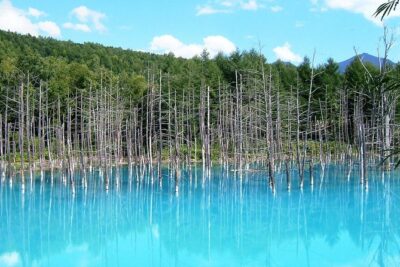
- Hokkaido Farm Tomita Shikisai Hill Waterfall& Blue Pond Day Tour★ 3.5 · 6 reviews
- Autumn Leaves in AutumnSkiing in winterLet’s go to Hoheikyo Onsen by private car (from Sapporo)★ 4.5 · 8 reviews
- Wasabi Farm Walking Tour & Lunch★ 4.5 · 20 reviews
Japan Farm Tours, farm by farm.
Hokkaido Lavender farm & Furano Flower Tour from Sapporo
Read our review →
Mt. Fuji Private Chartered Tour with Nature and Wasabi Farm
Read our review →
Uji and Wazuka Matcha Farm Half Day Private Guided Tour
Read our review →

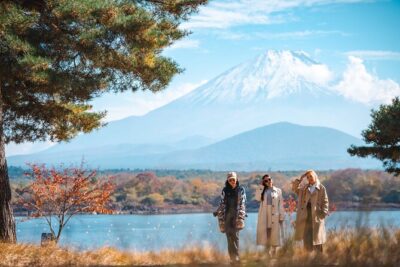
From Tokyo Mt.Fuji, Lake Kawaguchi, Makaino Farm day tour
Read our review →Other lists this farm sits on