
REVIEW · JAPAN
Miyajima Guided Tour and Fresh Oyster Farm Tour
Miyajima tastes better from the water. This four-and-a-half-hour outing combines Itsukushima Shrine, free time on Omotesando Shopping Street, a close view of the Great Torii, and lunch at a working oyster farm. I especially like the mix of cultural guidance and local food, plus the small maximum group of eight, which should make questions and conversation easier.
I also like that the cruise is more than a photo trip. You hear about Hiroshima’s oyster farming from local producers and then grill oysters yourself at Shimada Suisan. The main thing to consider is timing: one hour at the shrine and one hour for shopping leave less free time than you would have on a full-day Miyajima visit.
Key points to know before booking
- The tour begins at 9:00 a.m. in Miyajimaguchi, then includes the ferry to Miyajima and onward transport to Shimada Suisan.
- Itsukushima Shrine admission, ferry fare, charter boat, lunch, water, and Miyajima tourism tax are included, making the price easier to judge.
- The Great Torii is viewed from the sea, a useful change from the usual shoreline viewpoint.
- Hiroshima oyster rafts are part of the route, with commentary from people connected to oyster production.
- Lunch includes hands-on oyster grilling, not simply a plated seafood meal.
- Solo participants are welcome, and the group is capped at eight people.
Why this Miyajima tour feels different
Miyajima is one of Japan’s best-known day trips, and the standard visit is easy enough to arrange on your own. You can take the ferry, walk to Itsukushima Shrine, photograph the Great Torii, browse the shops, and eat oysters without joining a tour.
This experience earns its price by joining those familiar sights to a part of the island’s food culture that is harder to arrange independently. The oyster farm visit takes you beyond the main sightseeing route, and the boat ride gives you a useful view of the shrine from the water.
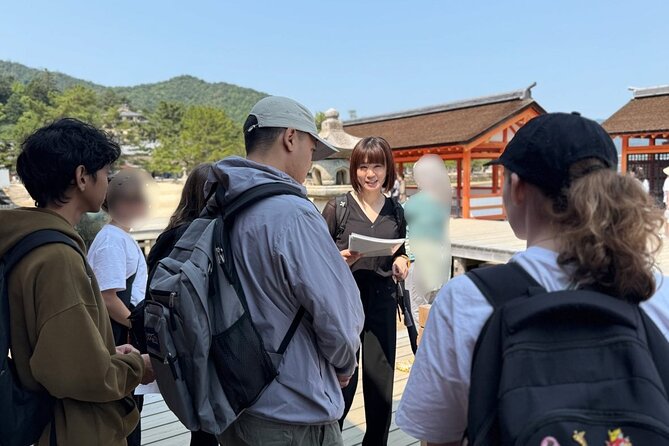
The cultural side also has value. Guide Takeshi-san is praised for explaining the meaning of the shrine, torii gate, and worship customs in clear English. That matters at Itsukushima, where a quick photo can easily replace a real understanding of what you are seeing.
The group limit of eight keeps the outing personal without making it a private tour. Solo participants are welcome, so you do not need a companion to make the booking work. At the same time, remember that a small-group tour still follows a set schedule, so it will not offer the same freedom as exploring Miyajima entirely on your own.
More Oyster Farm Tours around Japan:
- Experience Coffin Bay Oyster Farm and Bay Tour
★ 5.0 · 161 reviews - Broken Bay Pearl & Oyster Farm Tours
★ 5.0 · 150 reviews - Coffin Bay Oyster Farm Wading Tour & Tasting Experience
★ 5.0 · 142 reviews
Starting at Miyajimaguchi at 9:00 a.m.
The listed meeting point is at Miyajimaguchi, near the ferry connection for Miyajima. The tour starts at 9:00 a.m., and the ferry fare is included. The activity later returns to the original meeting point.
Some booking information refers to meeting near the Miyajima information center, so I would check the exact instructions before setting out. This is a simple precaution, especially if you are coming by train or are unfamiliar with the ferry terminal area.
The early start works in your favor. Miyajima can become very busy during the middle of the day, and beginning in the morning gives you a better chance to walk through the shrine before the busiest period. It also leaves the afternoon open after the tour ends.
The transport arrangement is useful because you do not have to piece together a ferry, a boat excursion, and a transfer to the oyster farm. The tour includes the Miyajimaguchi to Miyajima ferry and a charter boat from Miyajima to Shimada Suisan. Bottled mineral water is also provided.
Itsukushima Shrine and the meaning behind the torii
The first major stop is Itsukushima Shrine, a UNESCO World Heritage Site. You have about one hour here, with admission included.
The shrine is famous for its Great Torii, but the buildings and the customs connected to them deserve attention too. A guide can explain how Japanese worship traditions shape the way people approach and use a shrine. That context helps you notice details that may otherwise look like decoration.
This is the part of the tour best suited to visitors who want more than a checklist of famous sights. Instead of simply walking through the shrine, you can ask why certain practices matter and how the site fits into Japanese religious life.
The one-hour limit is both useful and restrictive. It keeps the morning moving and leaves room for the oyster farm, but it may feel brief if you want to linger over every building or take many photographs. If Itsukushima Shrine is your main reason for visiting Miyajima, an independent return visit could be worthwhile.
The tour is described as safe and comfortable, with an English-speaking guide. Most people can take part, and service animals are allowed. Specific accessibility details beyond that are not provided, so anyone with mobility concerns should confirm the walking and boarding arrangements before booking.
An hour on Omotesando Shopping Street
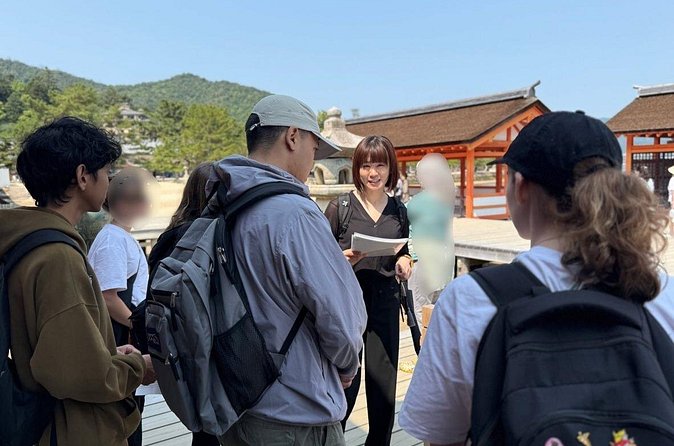
After the shrine, you get about one hour of free time on Miyajima Omotesando Shopping Street. This is your chance to sample food, browse souvenirs, and explore at your own pace.
The free period is a welcome change from guided sightseeing. You can choose what interests you instead of following a commentary at every step. It is also a good moment to pick up snacks or gifts before lunch.
Keep an eye on the clock. One hour can disappear quickly if you stop at several shops or want to eat along the way. Since lunch is included later, you do not need to make this your main meal, but food sampling is part of the appeal.
The shopping street is also the most conventional part of the experience. You could visit it without a guide, and visitors who prefer quiet lanes or longer independent walks may find the schedule too tight. Still, as a middle section between the shrine and the boat, it gives you a little breathing room.
More Guided Tours around Japan:
- Uji and Wazuka Matcha Farm Half Day Private Guided Tour
★ 5.0 · 21 reviews - Guided Bike Tour to a Green Tea Farm in Shizuoka (not e-bikes)
★ 5.0 · 5 reviews - 7 Hours Private Guided Tour Uji and Wazuka Matcha Farm
★ 5.0 · 2 reviews - Mykonos: Farm, Ano Mera Village, and Beaches Guided Tour
★ 4.4 · 1,283 reviews
Seeing the Great Torii from the sea
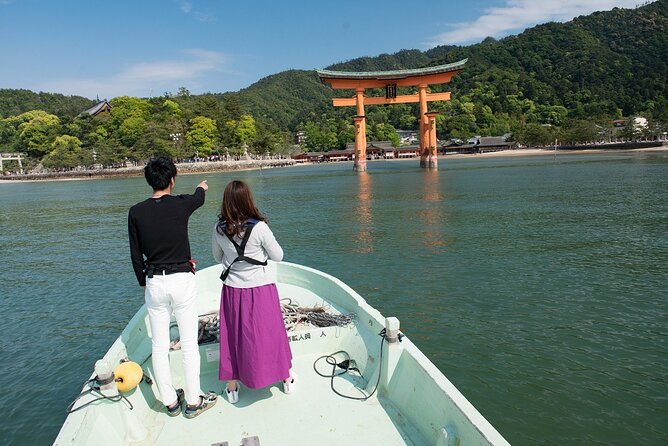
The boat ride is a strong part of this experience. It offers a close view of the Great Torii from the water, changing the angle you get from the shrine side or the usual shoreline.
The sea view helps explain the gate’s visual power. From the boat, you can see how the torii relates to the shrine and the water around it. The setting feels different from standing on land with a camera pointed outward.
The tour description calls this a spectacular cruise, but the practical appeal is simpler: you get a viewpoint that is not included in a standard walk through Miyajima. The boat is chartered for the group, and the fare is included.
The cruise also leads into the oyster-farming portion of the day. You are not being taken on a completely separate sightseeing ride. The water journey connects Miyajima’s famous religious site with Hiroshima’s working seafood industry.
Weather matters here. The experience requires good weather, and poor conditions can lead to a different date or a full refund. That policy is sensible for a boat-based activity, but it means you should keep your schedule flexible if the forecast looks uncertain.
Hiroshima oyster rafts and a working farm
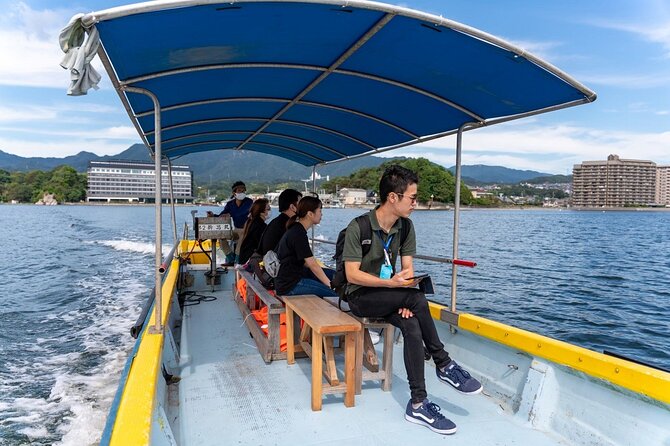
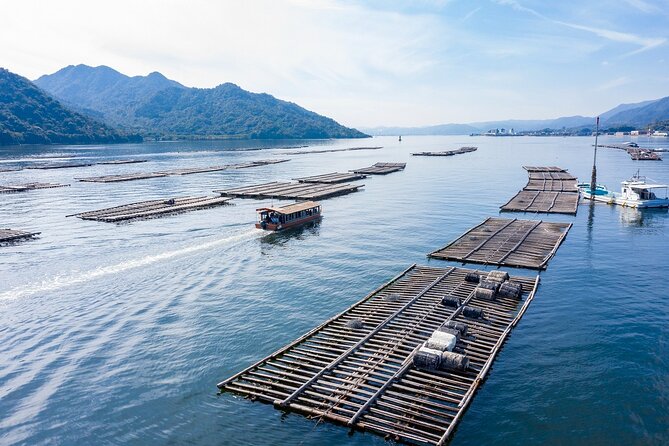
Hiroshima is Japan’s top oyster-producing region, and this tour gives you a view of the rafts used in oyster cultivation. That is a useful local detail because it turns a familiar restaurant dish into a product with a place, method, and working community behind it.
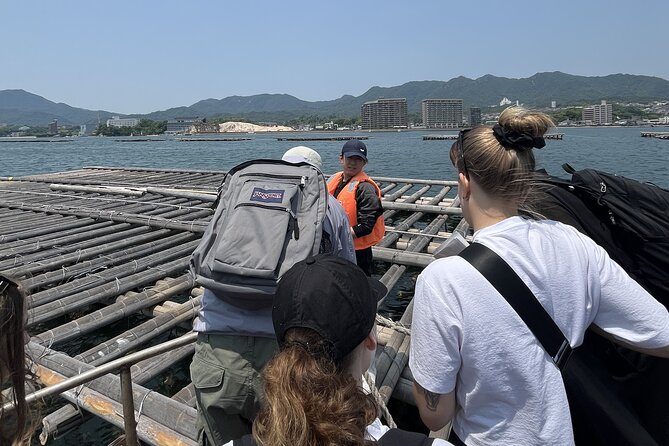
The commentary comes from local oyster producers. You can learn about the cultivation process while seeing the rafts from the boat, then continue to Shimada Suisan for the meal.
This is where the outing feels most distinctive. Many Miyajima visitors eat oysters, but far fewer connect the food to the production area and hear directly about how it is cultivated. You do not just order seafood and move on. You see the setting and then taste the result.
The farm stop takes about two hours, including the cruise and meal experience. That is a large portion of the tour, so seafood needs to be a genuine interest. If you dislike oysters or want a shrine-focused day, the food emphasis may not suit you.
Grilling oysters at Shimada Suisan
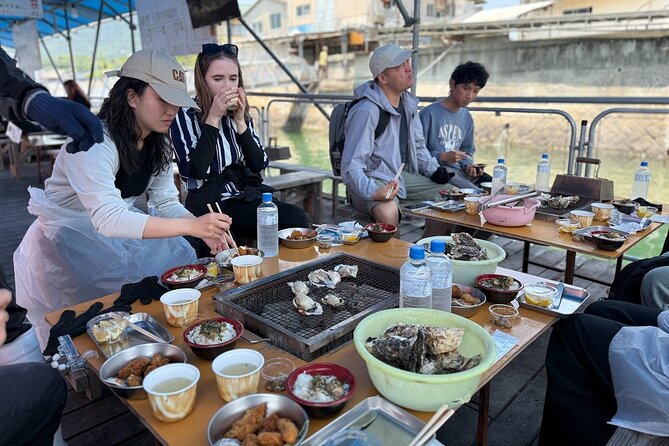
Lunch at Shimada Suisan is included, and the meal centers on an oyster feast with your own grilling experience. This hands-on element gives the lunch a social, practical feel. You are not simply seated with a prepared dish and sent on your way.
The food is the reward for the morning’s explanations. After seeing the oyster rafts, you get to eat oysters connected to the area you have just visited. That link between place and plate is one of the strongest reasons to choose this tour.
Mineral water is included, but other drinks cost extra. You can add Hiroshima Miyoshi Winery white wine for 8,000 yen. The wine was served to world leaders at the G7 Hiroshima Summit, so it is an interesting regional option, though the price makes it a special add-on rather than a casual lunch drink.
Personal expenses and alcoholic drinks are not included. Ask about any optional additions before ordering so the final cost does not surprise you.
The lunch setting may also be less polished than a formal restaurant because the focus is on the oyster farm and the activity. That is part of the appeal for many people, but it is worth knowing if you expect a refined dining room.
Is the $97.55 price fair?
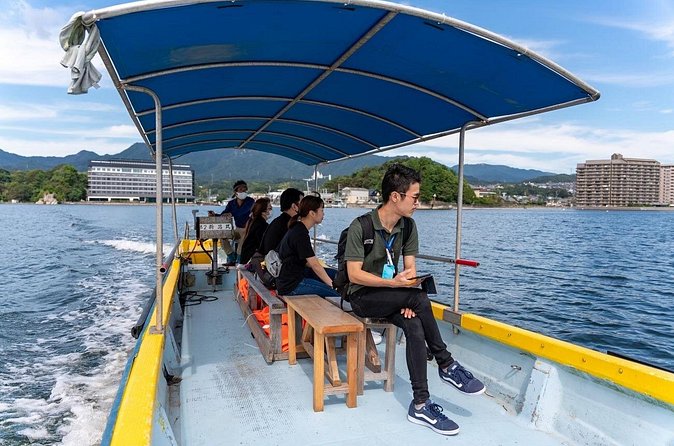
At $97.55 per person, this is not the cheapest way to see Miyajima. The value depends on how much you would otherwise spend arranging the separate parts.
The price includes Itsukushima Shrine admission, the Miyajimaguchi to Miyajima ferry, the charter boat, transport connected with the farm visit, lunch, Miyajima’s tourism tax, and a bottle of water. It also pays for an English-speaking guide and a small group capped at eight.
If you only want to walk around the shrine and shopping street, you can spend less by going independently. The tour becomes a better deal if you want the boat view, oyster-rafter commentary, farm lunch, and guided cultural explanation in one morning.
I would also count the saved planning time. You do not need to compare boat operators, work out how to reach Shimada Suisan, or arrange an oyster meal. That convenience has real value on a short Hiroshima visit.
The price is easiest to justify for solo visitors and first-time visitors. A solo participant gets a guide, organized transport, and a built-in small group without paying for a private guide. Repeat visitors may also find enough new material in the farm and boat portions, even if they have already seen the shrine.
Who should book this experience?
I would recommend it if you want three things in one outing: cultural explanation, water views, and a serious oyster meal. It suits first-time Miyajima visitors who want a clear plan and people who have already seen the main shrine but want a different side of the island.
Food-focused visitors should pay special attention to this tour. The oyster farm is not a token stop. It takes up about two hours and includes production information, a cruise, and hands-on grilling.
Solo visitors are a good fit too. The tour accepts solo bookings, and the small group size should make it easier to meet other people. Families and friends may also like the simple structure, though anyone who dislikes seafood will get less from the day.
I would hesitate if you want a long, unhurried exploration of Miyajima. The shrine and shopping portions are each about an hour, so you will need another visit if you want to see more of the island at a relaxed pace.
Book only if the weather forecast is reasonably favorable. The cruise is central to the experience, and poor weather can result in a rescheduled date or refund. Free cancellation is available up to 24 hours before the 9:00 a.m. start, but changes or cancellations inside that window are not accepted.
Final verdict: a strong choice for food and culture
I would book this tour for a first Miyajima morning if I wanted more than the standard shrine visit. Its best features are the clear English guidance, the Great Torii viewed from the sea, and the direct connection between Hiroshima’s oyster farms and your lunch.
The main compromise is limited free time. You get a focused introduction rather than a full day on the island. For many people, that is exactly the point: the tour covers the major cultural sight, leaves room for shopping, and adds an oyster experience you would be unlikely to arrange as easily on your own.
If you are comfortable with a fixed schedule and enjoy oysters, the $97.55 price is reasonable for the amount of transport, food, admission, and local instruction included. If you want to wander without a clock, visit independently and save the farm experience for another plan.
FAQ
Where does the tour start?
It starts at Miyajimaguchi 1 Chome-11, Miyajimaguchi, Hatsukaichi, Hiroshima 739-0411, Japan, at 9:00 a.m.
Where does the tour finish?
The activity ends back at the original meeting point.
How long does the experience last?
It lasts approximately four hours and 30 minutes.
Is Itsukushima Shrine admission included?
Yes. The admission fee for Itsukushima Shrine is included.
Is the Miyajima ferry included?
Yes. The ferry fare from Miyajimaguchi to Miyajima is included.
Is lunch included?
Yes. Lunch at Shimada Suisan is included and features an oyster feast with a grilling experience.
Are drinks included with lunch?
One bottle of mineral water is included. Other beverages are not included. Hiroshima Miyoshi Winery white wine can be added for 8,000 yen.
How many people can join the tour?
The maximum group size is eight people.
What happens if bad weather cancels the tour?
If poor weather causes cancellation, you will be offered a different date or a full refund.
Just added around Japan
- Wasabi Farm Walking Tour with Lunch★ 4.4 · 2 reviews
- 7 Hours Private Guided Tour Uji and Wazuka Matcha Farm★ 5.0 · 2 reviews
- From Tokyo Mt.Fuji, Lake Kawaguchi, Makaino Farm day tour★ 5.0 · 8 reviews
- Hida Private E-Bike Tour with Premium Lunch and Farm Experience★ 5.0 · 7 reviews
- Guided Bike Tour to a Green Tea Farm in Shizuoka (not e-bikes)★ 5.0 · 5 reviews
- Hokkaido Farm Tomita Shikisai Hill Waterfall& Blue Pond Day Tour★ 3.5 · 6 reviews
- Autumn Leaves in AutumnSkiing in winterLet’s go to Hoheikyo Onsen by private car (from Sapporo)★ 4.5 · 8 reviews
- Wasabi Farm Walking Tour & Lunch★ 4.5 · 20 reviews
Oyster Farm Tours, farm by farm.
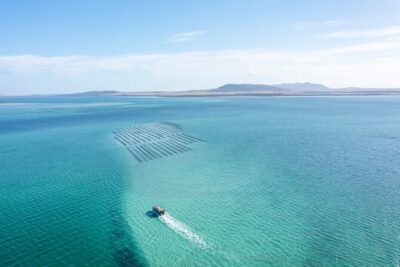
Experience Coffin Bay Oyster Farm and Bay Tour
Read our review →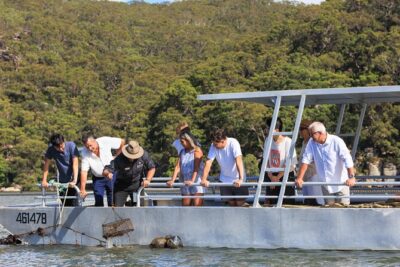
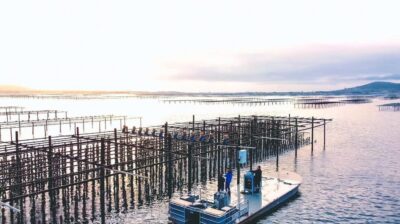
Loupian: Tour guide of our oyster farm and tasting
Read our review →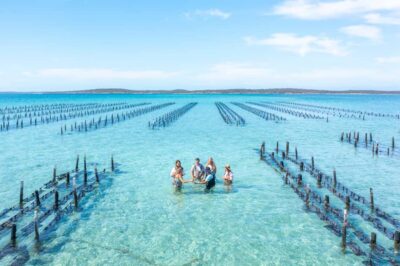
Coffin Bay: Oyster Farm Boat Tour with Wading & 12 Oysters
Read our review →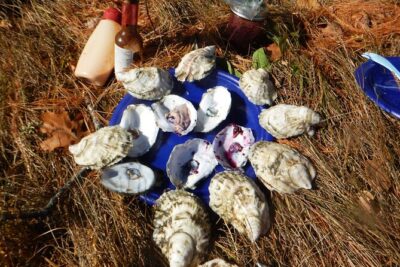
Oyster Farm & Complimentary Tasting Sea Kayak Tour in Casco Bay
Read our review →
Oyster farm experience / Private day trip from Dubrovnik
Read our review →
Other lists this farm sits on