
REVIEW · USA
Explore Chicago’s Indoor Mushroom Farm Experience
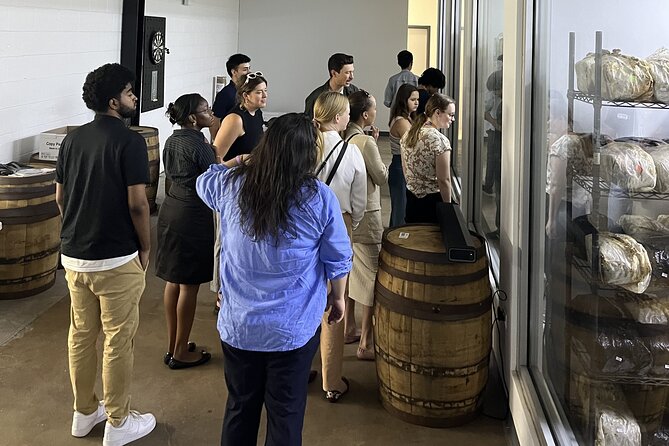
Mushrooms grow well in the city. Four Star Mushrooms gives you a behind-the-scenes look at Chicago’s high-tech indoor farm, from raw substrate to packaged gourmet produce. I like the clear production story and the direct link to Chicago’s restaurant scene. I also like the focus on regenerative agriculture, which gives the tour meaning beyond its novelty.
The main consideration is its adult focus. A review praised the information but noted that young children may find the hour-long farm visit less engaging, even though children aged five and three were welcomed. At $20 per person, this is a good value for anyone curious about food systems, but less so if you expect tastings or a broad sightseeing tour of Chicago.
Four Star Mushrooms at a glance
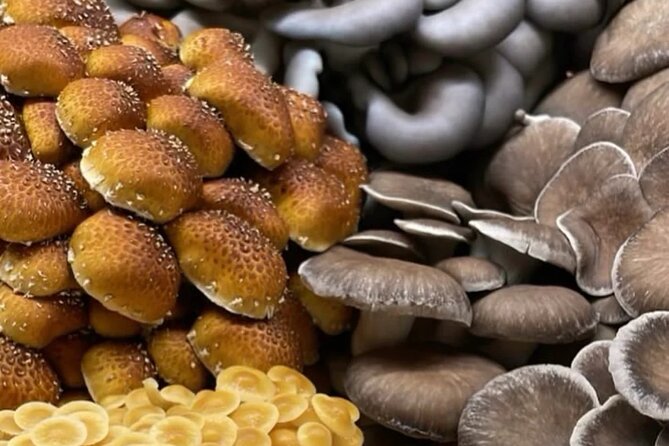
- See the full growing cycle: Follow mushrooms from bagged and sterilized substrate through inoculation, incubation, fruiting, and final packaging.
- Visit a real urban farm: This is a working indoor production facility, not a museum display built only for tours.
- Learn about Chicago’s food network: The farm supplies retail and wholesale customers throughout Chicagoland, including restaurants.
- Connect mushrooms with regenerative agriculture: The tour explains why mushroom cultivation matters in a wider food system.
- Plan for a small group: The maximum group size is 25 people, which should make the working spaces easier to follow than a large coach tour.
- Allow about 90 minutes: The farm tour itself is described as about 60 minutes, while the booked experience lasts approximately an hour and a half.
Why this Chicago farm tour is different
Chicago has plenty of food tours, but this one takes you behind a less familiar part of the local food economy. Instead of sampling famous dishes or walking between restaurants, you see how specialty mushrooms are produced in a controlled indoor setting.
That change of angle is the point. You are not simply hearing that local food can be grown in a city. You are looking at the rooms, equipment, and production steps that make it possible.
I like the way the experience connects a small farm operation with a much larger dining scene. Four Star Mushrooms supplies retail and wholesale customers throughout Chicagoland, so the farm has a practical role in the city’s food chain. The mushrooms are not grown as a science project or a decorative oddity. They are prepared for sale.
The operation also gives you a useful lesson in controlled environment agriculture. The idea is simple: conditions are managed indoors so specialty crops can be grown with a high degree of control. The tour shows how that principle applies to mushrooms, from the material they grow in to the rooms where they produce their fruiting bodies.
You should come with curiosity rather than expectations of a grand attraction. This is a focused working-farm visit. Its pleasure comes from seeing a process most people normally encounter only at the grocery store or on a restaurant plate.
More Farm Tours around the USA:
- Maui Pineapple Farm Tour in Haliimaile
★ 5.0 · 2,855 reviews - Half-Day Thoroughbred Horse Farm Tour in Kentucky
★ 5.0 · 1,924 reviews - Premium Amish Country Tour including Amish Farm and House
★ 4.5 · 1,306 reviews
Starting at 320 North Oakley Boulevard
The meeting point is 320 N Oakley Blvd, Chicago, Illinois 60612. The scheduled start time is noon, and the activity returns to this same meeting point at the end.
That simple start and finish matters. You are not being dropped at a second location or asked to arrange a separate ride after the visit. Still, I would build the farm into a larger Chicago plan rather than treating it as a full-day outing. The listed experience lasts about one hour and 30 minutes, making it a compact stop for a food-focused afternoon.
The mobile ticket is useful for a city day when you may already be carrying transit passes, restaurant reservations, and other booking details. The tour is offered in English, so you should be comfortable following an English explanation of the growing process.
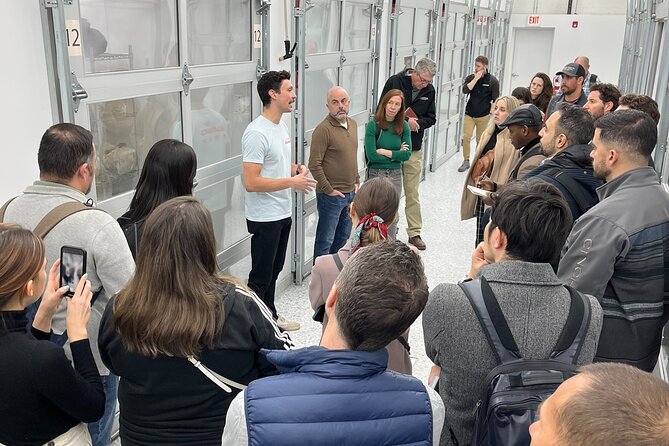
The group limit is 25 people. That is not a private tour, but it is small enough to keep the presentation reasonably personal. In a working facility, group size has real value. A very large crowd would make it harder to see the stages clearly and harder to hear explanations near equipment.
From raw substrate to a mushroom crop
The most satisfying part of this experience is the order of the production story. You begin with the material that supports mushroom growth, then see how it is prepared and moved through the farm.
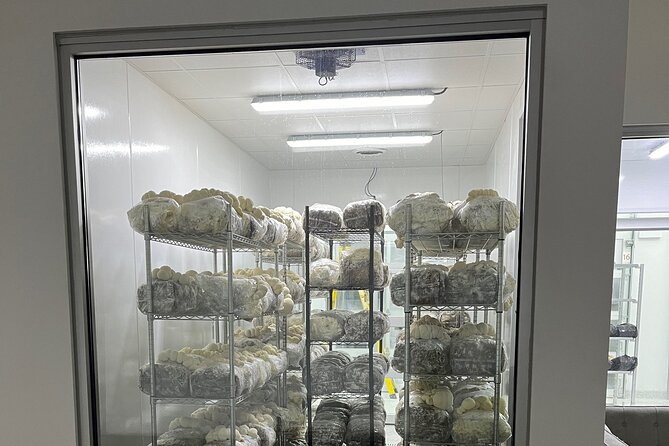
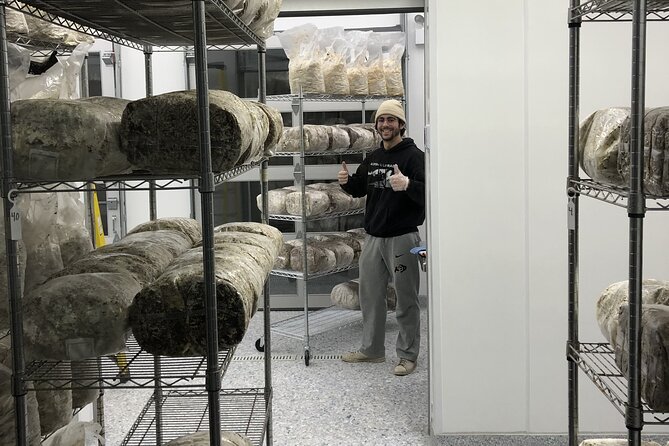
The first steps involve bagging and sterilizing raw substrate. You will learn how the growing material is packaged and treated before mushrooms are introduced. This stage helps explain why mushroom farming requires more than simply placing spores in a dark room and waiting.
After sterilization, the substrate is inoculated. In plain terms, the mushroom culture is added to the prepared material. The bags are then staged for incubation, giving the crop time to develop before fruiting begins.
I find this part especially useful because it makes the waiting period visible. A mushroom farm is not just a room full of ready-to-pick products. It is a sequence of carefully timed stages, each with its own purpose.
The tour then moves into the grow rooms, where fruiting happens. This is likely the most visually memorable section, since it shows the point at which the crop becomes recognizable as the gourmet mushroom you might buy or eat.
The information provided does not name specific mushroom varieties, and you should not assume that the visit is built around one particular type. The useful point is the production method itself: specialty mushrooms are grown indoors, under controlled conditions, and moved through several steps before they reach a customer.
The grow rooms and the working farm feel
The grow rooms are where the process shifts from preparation to production. You get to see how the farm manages the stage that produces the mushrooms sold to customers.
I would expect this portion to appeal most to people who enjoy seeing how ordinary products are made. The tour is not only about the finished crop. It shows the setting where fruiting takes place and helps you understand why the facility is designed as a series of controlled areas.
The working-farm setting also brings a practical edge to the visit. One review mentioned children wanting to touch a forklift, though they did not do so. That small detail tells you something important: this is an operating facility with real equipment, not a play space. You should pay attention to instructions and keep young children close.
The same review said the children were welcomed and that nobody objected to their presence. Still, the overall feel is more suited to adults. A five-year-old or three-year-old may enjoy the unusual setting for a while, but the technical explanation and production sequence are aimed more at people who can follow a food or agriculture lesson.
If you are bringing children, I would treat the tour as an adult-led educational stop rather than a children’s attraction. Older children with an interest in science, food, farming, or machines may get more from it than very young ones.
Same fields, a different sort of morning:
- Unique Horse Farm Tours with Insider Access to Private Farms
★ 5.0 · 1,192 reviews - Lahaina: Maui Ku’ia Estate Guided Cacao Farm Tour and Tasting
★ 5.0 · 1,103 reviews - Maui: Road to Hana Adventure with Farm to Table Lunch
★ 5.0 · 877 reviews - Hawaiian Salt Farm Tour in Kona
★ 5.0 · 767 reviews
Packaging mushrooms for Chicagoland
The final production stage covered is packaging. After the mushrooms have been grown, they are prepared for retail and wholesale customers throughout the Chicago area.
This is where the farm’s local role becomes easiest to understand. You can connect the grow room to the mushroom package that might appear in a shop or the ingredient used by a restaurant. The operation is not isolated from the city. It serves the city.
I like this part because it gives the visit a clear ending. The mushrooms do not simply grow and disappear into an abstract supply chain. They are packaged for buyers, then sent into local commerce.
The farm’s relationship with the restaurant scene is also one of the most appealing details. Chicago is known for serious dining, and specialty produce helps restaurants create dishes that are different from what standard supermarket stock can offer. This tour lets you see one piece of that system from the production side.
You should not expect a restaurant meal to be part of the experience. The information provided describes production and packaging, not a tasting, cooking class, or included food. If you want to make a full food outing from the visit, plan your meal separately.
Regenerative agriculture and the bigger lesson
The tour also addresses regenerative agriculture and the role mushroom cultivation can play in it. That gives the visit a wider frame.
You will not only see how a crop is produced. You will consider how mushroom growing fits into questions about agriculture, resource use, and food production. The supplied information does not promise a detailed lecture on every environmental issue, so I would keep expectations sensible. The value is in learning the connection, not in expecting a complete course in sustainable farming.
This topic is especially helpful if you are trying to understand why indoor agriculture attracts attention in cities. Mushroom cultivation offers a clear example of a specialty crop grown in a controlled environment, close to the market it serves.
The farm also makes a useful contrast with a traditional outdoor field. You are seeing food grown inside a city facility, with production organized around specific stages and customers located nearby. That does not make indoor farming the answer to every food problem, but it gives you something concrete to examine.
I appreciate that the tour includes this context without losing sight of the actual work. The best part is the balance between seeing the bags, rooms, and packaging process and learning why this kind of farm matters.
Is $20 a fair price?
The price is $20 per person. I consider that reasonable if you are genuinely interested in mushrooms, food production, urban agriculture, or Chicago’s restaurant supply network.
You receive about 90 minutes of scheduled activity, with the farm tour itself described as approximately 60 minutes. That is a modest price for access to a working specialty producer and an explanation of the complete production cycle.
The value depends on what you want from a tour. If you want a polished attraction with many displays, entertainment, or food included, this may feel too narrow. If you enjoy seeing a real operation and asking how a product gets from raw material to market, the price works well.
A small group maximum of 25 also helps the calculation. You are paying for a focused visit rather than a huge crowd moving through a facility. The tour is offered in English, and a mobile ticket is included, which keeps the basic booking process simple.
The experience is typically booked 23 days in advance on average. That suggests you should not leave it until the last minute if the noon time is important to your plans. Availability can change, and this is a specialized visit with a limited group size.
Who will enjoy the farm most?
I would recommend this experience to:
- People interested in mushrooms, food science, and farming
- Visitors who like behind-the-scenes production tours
- Diners curious about how Chicago restaurants source specialty ingredients
- Students and adults studying agriculture or controlled environment farming
- Anyone looking for a quieter, less conventional Chicago activity
- Older children and teenagers who enjoy science, food, or machinery
I would be more cautious about booking it for very young children. The visit is suitable for most participants, and young children were welcomed during one tour, but the subject is technical and the setting is a working facility.
You should also choose this if you are comfortable with a tour that focuses on one subject. It is not a general Chicago tour, and it will not give you city landmarks, architecture, or broad cultural sightseeing.
Practical planning for the 90-minute visit
The experience begins at noon and ends back at 320 N Oakley Blvd. I would arrive ready to follow instructions in an active production area, especially if you are traveling with children.
The tour itself is listed at about 60 minutes, while the overall activity lasts approximately 90 minutes. Keep that difference in mind when planning lunch or another timed booking afterward. I would leave a little breathing room rather than scheduling a restaurant reservation immediately at the end.
The group can include up to 25 people. That is manageable, but you may still want to stay near the guide so you can hear the explanations and see each stage.
Confirmation arrives at booking, and the ticket is mobile. Most people can participate. The activity is conducted in English, so plan accordingly if you need language support.
Free cancellation is available up to 24 hours before the start time for a full refund. If you cancel less than 24 hours ahead, the payment is not refunded, and changes made within that period are not accepted. The cut-off follows Chicago local time.
My verdict: book it if you like process
I would book Four Star Mushrooms if I wanted a practical look at how a Chicago food producer operates. The strongest feature is the full chain, from substrate preparation and sterilization to inoculation, incubation, fruiting, and packaging.
I also like the connection to local restaurants and the added discussion of regenerative agriculture. Those details turn a simple mushroom visit into a lesson about how a city feeds itself.
Skip it if you need a family attraction built around play, tasting, or constant visual excitement. For adults and older children with a real interest in food production, $20 buys an unusual and useful Chicago experience. Just arrive at 320 N Oakley Boulevard for the noon start, keep the afternoon flexible, and expect a working farm lesson rather than a sightseeing show.
FAQ
Where does the Chicago mushroom farm tour start?
The tour starts at 320 N Oakley Blvd, Chicago, IL 60612, USA.
What time does the experience begin?
The scheduled start time is 12:00 pm.
How long does the tour last?
The full experience lasts approximately 1 hour and 30 minutes. The farm tour itself is described as about 60 minutes.
Where does the experience end?
The activity ends back at the meeting point at 320 N Oakley Blvd.
How many people can join the tour?
The maximum group size is 25 people.
Is cancellation free?
Yes. You can cancel at least 24 hours before the start time for a full refund. Cancellations or changes made less than 24 hours before the start time are not accepted for a refund.
Just added around the USA
- Yolo: Vineyards, Farms & Cultural Gems – Audio Driving Tour★ 4.3 · 5 reviews
- Ventura: Rail Bike Guided Tour with Farm Stand Stop★ 4.1 · 18 reviews
- Alpaca Ranch and Fiber Processing Mill Tour★ 5.0 · 24 reviews
- Small-Group Vineyard and Orchard Tour with Wine Tasting in Muscoda★ 5.0 · 2 reviews
- Farm Tour at Clover Brooke Llama/Alpaca/Goat Farm★ 4.5 · 6 reviews
- Connect with Rescue Animals on a Private Farm Tour in Catskills★ 5.0 · 27 reviews
- Gourmet Mushroom Farm Tour in Tennessee★ 5.0 · 5 reviews
- Cozy Farm Experience with Wagon Wheels and Acoustic Meal★ 5.0 · 2 reviews
USA Farm Tours, farm by farm.

Half-Day Thoroughbred Horse Farm Tour in Kentucky
Read our review →
Premium Amish Country Tour including Amish Farm and House
Read our review →
Unique Horse Farm Tours with Insider Access to Private Farms
Read our review →
Maui Ku’ia Estate Guided Cacao Farm Tour and Tasting
Read our review →
Road to Hana Adventure with Farm to Table Lunch
Read our review →

Maui Horseback Adventure at Circle M Ranch With Real Cowboys
Read our review →Other lists this farm sits on