
REVIEW · USA
Kauai Private Baby Farm Animal Experience & Micro Dairy Immersion
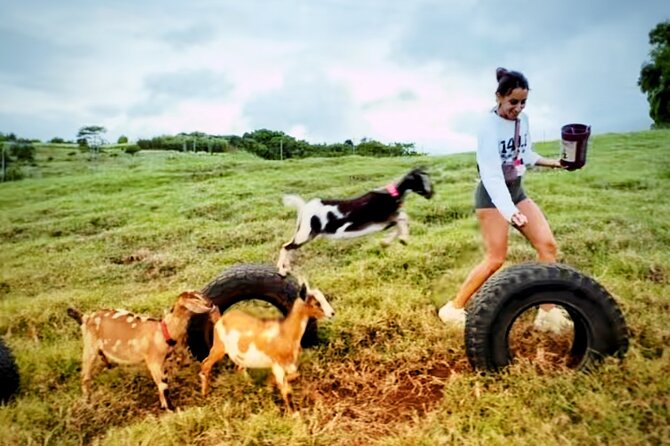
Baby goats make excellent tour guides. This private Kauai farm visit is interesting because it combines close animal contact with a real look at a young micro dairy and its conservation plans. I like the guaranteed feeding and play time, and I like that the visit can be shaped around your interests, from baby animals to milking or mini cow haltering. The main consideration is that this is a working farm still being built, not a polished petting zoo.
You can cuddle goats, sheep, and lambs, meet mini cows, and possibly try milking a goat or sheep. I also like the honest focus on fruit forests, water catchment, riparian buffers, and regenerative grazing. Allow for mud, uneven farm conditions, and animals that sometimes decide they have other plans.
Key points about this Kauai farm visit
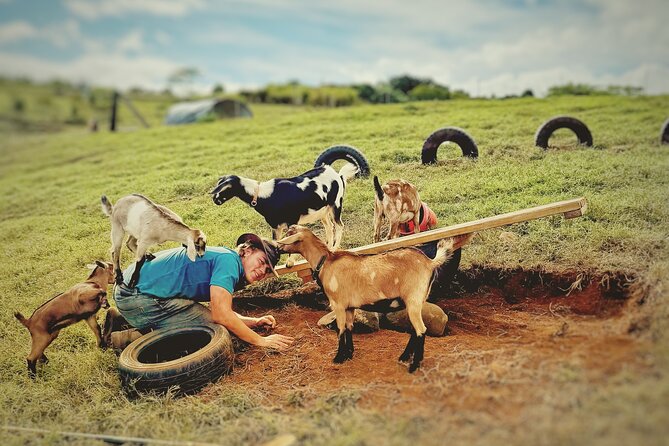
- Baby animal contact is guaranteed: Feeding and play time with young farm animals are part of every session.
- Private and flexible: Only your group takes part, and the farm can adjust the visit to your interests.
- 8 AM and 9 AM offer different possibilities: The earlier time is more likely to overlap with milking, while 9 AM is more likely to include mini cow haltering.
- This is a developing working farm: You see real farm tasks and unfinished projects, not a staged attraction.
- Sustainability is part of the visit: Learn about native planting, fruit forests, water collection, riparian buffers, and regenerative grazing.
- Wear clothes that can get dirty: Mud is a real possibility, and closed-toe shoes are strongly advised.
Meeting Baby Goats on Kauai’s East Side
The farm sits at 5431 Hauaala Road in Kapaʻa, in the countryside near Kauai’s east side. The setting gives this short visit a useful sense of place. You are not simply entering an animal enclosure for a timed photo. You are visiting a small farm operation that is still taking shape.
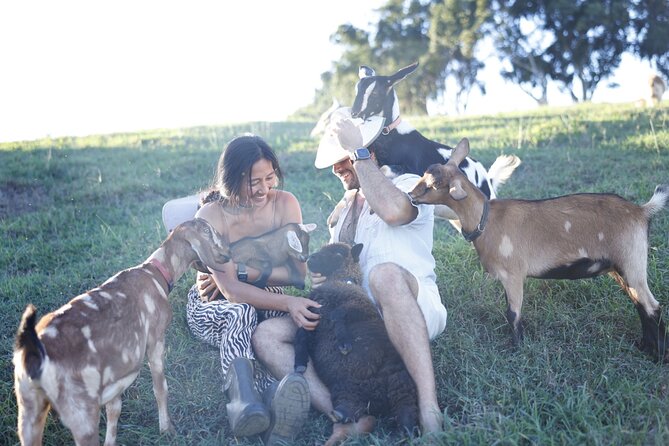
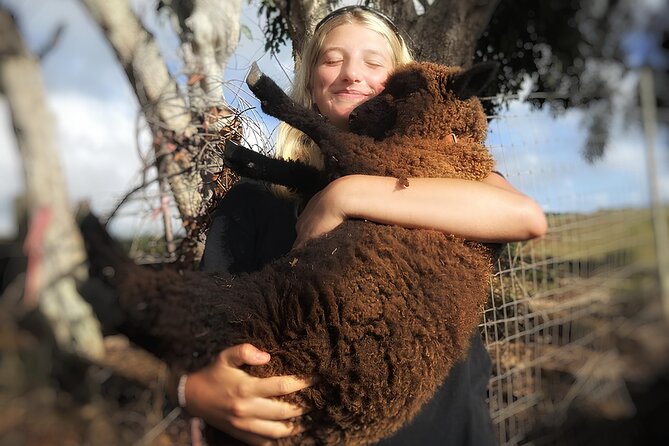
The first priority is the young animals. You are guaranteed time to feed and play with baby goats, lambs, and other farm animals. Bottle-feeding may be available if an animal is willing, but the farm wisely lets the animals set the pace. A hungry kid may rush over. Another may prefer to nap, nibble, or ignore your carefully prepared greeting.
That unpredictability is part of the charm. It also means you should not expect every animal to perform on command. The experience works best when you enjoy watching animal behavior rather than demanding constant cuddles.
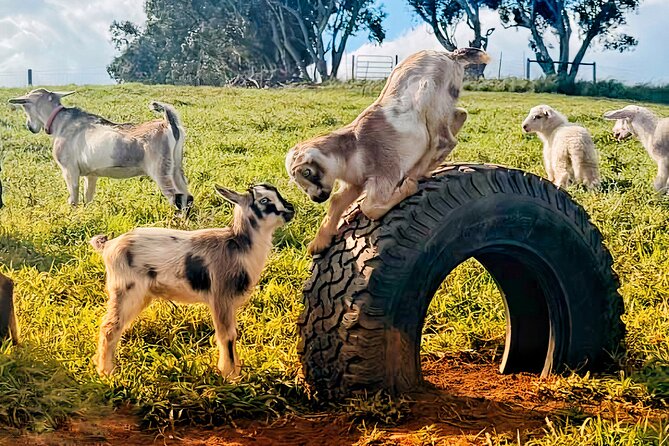
Mini Nubian goats are a major attraction. They are small, lively, and often eager for attention. Several families appreciated how much hands-on time children received, especially with goats, sheep, calves, rabbits, and chickens. The animals are approachable, but you still need to follow the guide’s instructions and keep young children under close watch.
The farm also has turkeys, rabbits, silkies, ducks, chickens, and other animals. You may not handle every creature. Some animals are better left to their own routines, which is a good lesson for children who are used to petting zoos where everything is arranged for contact.
More Dairy Farm Tours around the USA:
- Private Tour at Historic Alaska Dairy Farm
★ 5.0 · 3 reviews - Tour Parmigiano Reggiano dairy and Parma ham
★ 5.0 · 601 reviews - Experience Chianti & Cheese w/ 3 wineries & dairy visit—max 8 pp
★ 5.0 · 128 reviews
From Petting Animals to Milking a Goat
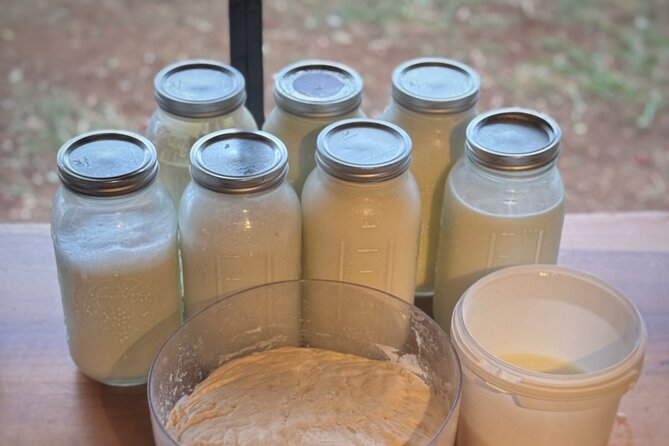
The farm visit goes beyond petting. Depending on the timing and the animals’ schedule, you may observe or try milking a goat or sheep. You may also taste raw milk.
The milk tasting adds real substance to the visit. You are not just hearing that a micro dairy produces milk. You get a small, direct connection to the work involved, from caring for the animal to handling the product. Some sessions have included cow, goat, and sheep milk, along with discussion of A1 and A2 milk.
That said, the exact milking activity depends on the time and the farm’s needs. The 8 AM session is more likely to overlap with milking. If this is your main interest, choose the early start rather than assuming every time slot will offer the same activity.
Raw milk tasting may not suit everyone. If you have dietary concerns, ask the farm before booking or before sampling. The supplied details specifically describe tasting fresh milk, but they do not promise a particular type or quantity at every visit.
You may also see routine work such as shearing, hoof trimming, compost turning, or planting. These jobs are not guaranteed stops. They are examples of the farm’s normal activity, and your visit may overlap with one of them.
This is one of the experience’s strongest features. You get a brief look at the less glamorous side of farm life. Animals need grooming, hoof care, waste management, and regular maintenance. Those jobs make the cuddly moments possible.
Haltering Mini Cows at the 9 AM Start
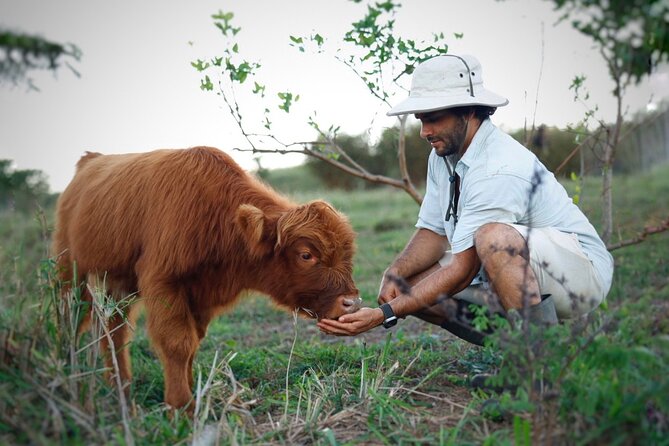
Mini cows bring a different kind of animal encounter. Instead of simply stroking a calf for a photo, you may brush, halter, and spend time getting used to the animals.
The 9 AM session is more likely to include mini cow haltering. That makes it the better choice if cows are high on your list. You may also meet calves during the earlier session, but the farm does not promise an identical sequence each morning.
Brushing and haltering require a calmer approach than bottle-feeding goats. The guide can show you how to stand near the animal and handle the equipment. For children, this can be a useful introduction to safe animal care. For adults, it gives the visit a bit more depth than a standard petting session.
Keep your expectations flexible. This is not a cow-handling class with a fixed lesson plan. The visit is private and semicustomized, but it follows the rhythm of a small farm and its animals. If a cow is unsettled or busy, the guide may adjust the activity.
The private format helps here. Your group does not have to compete with a large crowd for a turn. You can ask questions, slow down, or shift attention to another animal without waiting for a busload of people to move along.
A Working Farm Still Under Construction
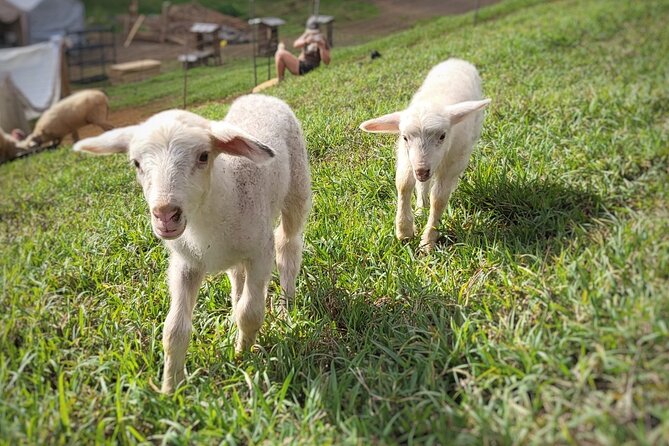
Wai & Aina describes this as a volunteer-run startup farm. That point matters when deciding if the $125 price is right for you.
The farm is not presented as a finished commercial attraction. It is a developing place with young animals, new systems, and major plans for the land. You may see unfinished areas or basic working conditions. One honest assessment called the farm not yet ready for prime time, while the farm itself explains that the developing stage is the point of the visit.
I would treat this as a farm conversation with animal access, not a highly produced show. You see how a small operation is being built from the ground up. You hear about the practical challenges of caring for animals and creating a sustainable farm community. The setting may feel rough around the edges, but that is also what gives it authenticity.
The farm’s vision includes fruit forests, riparian buffers, water catchment, and regenerative grazing. These terms are not just decoration. They describe different ways of managing soil, water, plants, and animals together.
You may hear how former pastureland is being returned to native plants and a more varied ecosystem. You may also see fruit trees or receive seasonal fruit samples if available. Several visitors left with papaya, bananas, or other fruit, but you should not treat take-home produce as guaranteed.
For me, this environmental side adds value, especially if you are curious about how agriculture can fit into Kauai’s natural systems. If you only want a quick animal encounter, the sustainability discussion may feel like extra information. If you like understanding how a place works, it gives the cute animals a larger purpose.
More Farm Tours around the USA:
- Maui Pineapple Farm Tour in Haliimaile
★ 5.0 · 2,855 reviews - Half-Day Thoroughbred Horse Farm Tour in Kentucky
★ 5.0 · 1,924 reviews - Premium Amish Country Tour including Amish Farm and House
★ 4.5 · 1,306 reviews - Unique Horse Farm Tours with Insider Access to Private Farms
★ 5.0 · 1,192 reviews
What the 50-Minute Visit Feels Like
The advertised visit lasts about 50 minutes, with the guided experience described as roughly 45 minutes to an hour. That is enough time for a focused introduction to the animals and farm without taking up half your day.
You can expect the visit to move between animal interaction, farm explanation, and whatever activity is happening that morning. A likely flow includes:
- Meeting the guide and getting an overview of the farm’s goals
- Feeding and playing with baby goats, lambs, sheep, or calves
- Petting or brushing animals
- Trying or observing milking if the timing is right
- Meeting smaller animals such as rabbits, chickens, turkeys, or silkies
- Learning about conservation and future farm plans
- Tasting seasonal milk or fruit when available
This is not a strict sequence. The farm can tailor the session to your group. Families may spend more time with goats and calves. Adults interested in agriculture may ask more about the micro dairy or land restoration. The private setup makes those adjustments possible.
Fifty minutes passes quickly, especially if children want a turn with every animal. If you have a long list of activities, you may need to choose priorities. The farm does not promise that you will milk, halter cows, bottle-feed, and complete every listed task in one short session.
Choosing 8 AM or 9 AM
The start time affects the kind of visit you may receive.
Choose 8 AM if you are most interested in seeing or trying milking. Morning farm work may make this the best opportunity to catch dairy activity in progress.
Choose 9 AM if mini cow haltering interests you most. That time is more likely to overlap with the cow activity, while still including guaranteed baby animal feeding and play.
Neither time guarantees a completely fixed itinerary. Animals and farm work do not operate like a theater schedule. The guide can tailor the visit, but the farm’s needs and the animals’ behavior still matter.
Arrive ready to listen and adjust. The more clearly you explain your interests, the easier it is for the farm to shape the session.
Getting There and Dressing for Farm Conditions
The meeting point is 5431 Hauaala Road, Kapaʻa, and the visit ends at the same location. The farm is near public transportation, but it is not especially convenient on foot.
From the Kealia Stop, public transportation requires a walk of about 25 to 30 minutes. That may be manageable for some people, but it is worth planning for Kauai’s weather and roadside conditions. If you drive, follow the farm’s directions or a reliable traditional map. One family reported that vehicle GPS sent them far off the intended route.
Wear closed-toe shoes. You should also choose clothing that can handle mud, animal contact, and farm work. A clean white outfit and delicate footwear are poor choices here.
Most people can participate, and the farm has made accommodations for some cognitive or mobility needs. Service animals require prior discussion because of the farm animals and setting. Contact the farm before booking if this affects your plans.
Is $125 a Fair Price?
At $125 per person, this is not a bargain animal stop. A short visit at a small farm costs more because you are paying for a private guide, a limited group experience, and direct access to animals rather than a general admission ticket.
The value improves if you care about one or more of these elements:
- Private time with your own group
- Hands-on feeding and animal care
- A small farm rather than a large commercial attraction
- Learning about a new micro dairy
- Conversation about conservation and regenerative farming
- A flexible visit shaped around your interests
The price may feel high if you mainly want a few quick photos with goats. The total visit is under an hour, and some activities depend on timing, weather, animal behavior, and seasonal availability.
I see the best value for families who want a meaningful animal activity, couples who enjoy small local projects, and anyone interested in how a farm is built from scratch. The private format also matters if your group needs a slower pace or wants to ask many questions.
The experience is recommended by 97 percent of participants and has a 4.9 rating from 31 reviews. Those numbers support the idea that the visit works very well for its intended audience, while the lower rating offers a useful warning: the farm is still in its startup phase.
Who Will Enjoy This Most?
Families with animal-loving children are the clearest match. Young children can feed, pet, and watch the animals, while older children and adults can learn about dairy work, conservation, and animal care.
Couples may enjoy the visit if they want something quieter and more personal than a standard sightseeing stop. The farm setting, fruit samples, and conversations with the people building the project give it a local feel.
It also suits visitors who care about sustainable agriculture. You will not receive a full academic course in farming during 50 minutes, but you can ask direct questions and see some of the work in progress.
This is less suitable if you want polished facilities, a large number of guaranteed activities, or a dry and spotless setting. It is also not ideal for anyone who dislikes mud, animal smells, or a little unpredictability.
Free cancellation is available if you cancel at least 24 hours before the start time. Changes made within 24 hours are not accepted, and there is no refund for a late cancellation. The farm may cancel in poor weather, in which case you are offered another date or a full refund.
Should You Book This Kauai Farm Experience?
Book it if you want real farm contact, not a polished petting zoo. You will get baby animal time, a private guide, and a candid look at a new Kauai farm trying to connect food production, animal care, and conservation.
Choose 8 AM for the best chance of milking. Choose 9 AM for the better chance of mini cow haltering. Follow the driving directions, wear shoes that can get muddy, and arrive with flexible expectations.
Skip it if $125 feels too high for less than an hour or if you need every activity to run on a fixed schedule. For families, animal lovers, and curious visitors who like seeing how local projects grow, this is a memorable and unusually personal stop.
FAQ
Where does the Kauai farm experience begin?
It begins at 5431 Hauaala Road, Kapaʻa, Hawaii 96746. The experience ends at the same meeting point.
How long does the visit last?
The visit lasts approximately 50 minutes. The guided experience is described as about 45 minutes to one hour.
Is the tour private?
Yes. Only your group participates in the private activity.
What animals can I meet?
You may meet mini goats, baby goats, sheep, lambs, mini cows, calves, turkeys, rabbits, silkies, chickens, ducks, and other farm animals.
Can I bottle-feed a baby animal?
Baby animal feeding and play time are guaranteed. Bottle-feeding may be available if the animals are willing, but it is not presented as a guaranteed bottle-feeding activity.
Can I milk an animal?
You may observe or try milking a goat or sheep. The 8 AM session is more likely to overlap with milking.
Which start time is better for mini cow haltering?
The 9 AM session is more likely to include mini cow haltering.
Is the farm accessible by public transportation?
It is near public transportation, but reaching it from the Kealia Stop requires a 25 to 30 minute walk.
What happens if the weather is poor?
The farm may cancel for poor weather. You will then be offered a different date or a full refund.
Just added around the USA
- Yolo: Vineyards, Farms & Cultural Gems – Audio Driving Tour★ 4.3 · 5 reviews
- Ventura: Rail Bike Guided Tour with Farm Stand Stop★ 4.1 · 18 reviews
- Alpaca Ranch and Fiber Processing Mill Tour★ 5.0 · 24 reviews
- Small-Group Vineyard and Orchard Tour with Wine Tasting in Muscoda★ 5.0 · 2 reviews
- Farm Tour at Clover Brooke Llama/Alpaca/Goat Farm★ 4.5 · 6 reviews
- Connect with Rescue Animals on a Private Farm Tour in Catskills★ 5.0 · 27 reviews
- Gourmet Mushroom Farm Tour in Tennessee★ 5.0 · 5 reviews
- Cozy Farm Experience with Wagon Wheels and Acoustic Meal★ 5.0 · 2 reviews
Dairy Farm Tours, farm by farm.
Experience Chianti & Cheese w/ 3 wineries & dairy visit—max 8 pp
Read our review →
Farm Visit with Cheese Tasting and Milking Experience
Read our review →
Pienza: Dairy Farm Tour with Pecorino Cheese Tasting
Read our review →
Windmill, Dairy Farms & Countryside Electric Bike Tour
Read our review →
Kota Kinabalu ATV Riding and Dairy Farm at Mountain Kinabalu
Read our review →
Vico Equense: Tour in the dairy “Mozzarella Experience”
Read our review →
Dairy farm Visit and Cow Milking Experience in Azores
Read our review →Other lists this farm sits on