
REVIEW · KENYA
Coffee Farm Tour (Fairview)
Coffee begins in the garden. This three-hour trip from Nairobi takes you to Fairview Coffee Estate in Kiambu, where nearly 100 acres of coffee grow at 1,750 meters. I like the full farm-to-cup story, from flowers and ripe cherries to grading, roasting, and tasting. I also like the private hotel pickup and the warm, informative guides, especially Alex on the drive and farm guides such as Elvis and James.
The main catch is the extra cost: the advertised tour price is $39 per person, but the $30 farm entrance fee is not included. That makes the real cost about $69 before any coffee you buy, so you should compare it with arranging your own transport to Fairview.
Key points to know before you go
- Fairview sits at 1,750 meters: The cool Central Highlands setting helps explain why coffee farming works so well here.
- You follow the whole coffee chain: See the plants, pick ripe cherries, learn about cleaning and grading, and watch how beans become roasted coffee.
- Four coffees make the tasting lively: The blind tasting can surprise you, even if you already drink coffee every day.
- Alex adds value before the farm visit: His Nairobi and Kenya commentary turns the drive into part of the tour.
- The farm visit lasts about two hours: The full outing takes roughly three hours with transport from Nairobi.
- Buy freshly roasted coffee on site: Medium and dark roasts cost Ksh 1,200 for 500 grams, while Kaldi roast costs Ksh 1,800.
Leaving Nairobi for Kenya’s coffee country
The trip starts with pickup from your Nairobi hotel. You wait in the lobby about 10 minutes before the agreed time and look for a silver Honda Airwave. The drive to Fairview Coffee Estate in Kiambu takes about 20 minutes according to the activity information, though Nairobi traffic can affect the exact timing.
This is a private transport experience, and that matters. You do not have to find your way to a farm outside the city or negotiate a taxi after landing. You also have a driver who can make the trip feel more like an introduction to Kenya than a simple transfer.
Alex receives the strongest praise for this part of the experience. He is described as punctual, cheerful, and generous with information about Nairobi, Kenyan culture, and the country’s past. He also gave practical suggestions for other things to do in the city, and in one case added a stop at the CBD and KICC Tower after the coffee outing.
That extra commentary is useful if you have just arrived in Nairobi. You see some of the city from the car window while getting basic context about where you are. It also makes the private ride feel less like dead time.
The short drive is one of the tour’s practical strengths, but do not treat the 20-minute estimate as a promise. Nairobi traffic is part of the deal. A morning or afternoon departure gives you a clear time frame, with tours offered from 10:00 a.m. to 12:00 p.m. and from 2:00 p.m. to 4:00 p.m. The advertised total duration is three hours.
More Coffee Farm Tours around Kenya:
- Nairobi Coffee Farm and Factory Tour
★ 5.0 · 87 reviews - Nairobi: Coffee Factory and Farm Tour with Transfer
★ 4.5 · 60 reviews - Coffee Farm Village & Factory Half Day Tour with Pick-Up
★ 5.0 · 33 reviews
Fairview Estate and its highland setting
Fairview Coffee Estate sits in Kiambu, in Central Kenya’s highlands. The estate has nearly 100 acres under coffee at an elevation of about 1,750 meters. You are not just visiting a tasting room. The setting lets you see coffee as an agricultural product, growing outdoors in the same place where much of the farm’s work happens.
The estate visit takes about two hours. That gives you enough time to walk through the farm, ask questions, see the plants, and finish with coffee tasting. The route is still a farm walk, not a paved museum circuit, so sensible footwear matters.
Wear closed shoes. One family found the ground dusty and muddy, and farm conditions can change with rain. Bring a light layer as well, since the highland setting may feel cooler than central Nairobi. One visitor arrived during a rainy morning and needed help finding raincoats for children, so checking the weather before pickup is a smart move.
The farm is also suitable for families. A five-year-old stayed engaged because the guide explained both coffee and other plants in an accessible way. You do not need to be a serious coffee expert to enjoy the visit. Curiosity is enough.
From coffee flowers to ripe cherries
The first useful lesson is that coffee is a fruit crop. Your guide explains the plant’s growth cycle, beginning with budding flowers and continuing through the development and ripening of coffee cherries.
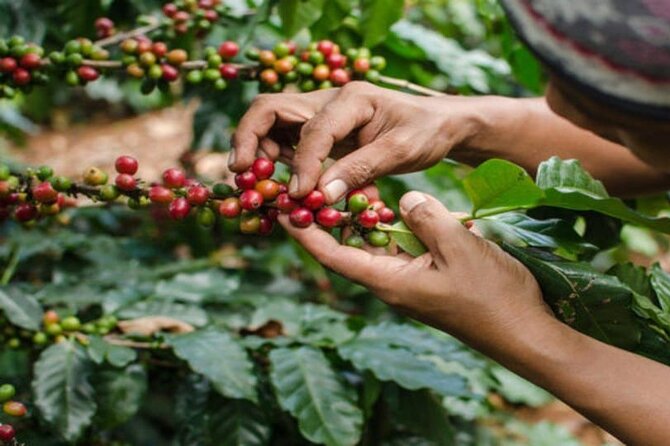
You may have seen roasted beans in a shop many times without thinking about the fruit around them. At Fairview, you get a chance to connect the finished drink to the plant itself. You can pick ripe coffee cherries by hand, which gives the farm visit a small, hands-on element without turning it into a staged performance.
The guide explains how to identify suitable cherries and what happens after picking. That simple act helps you understand why harvesting is not just a matter of stripping every berry from a branch. Ripeness affects the final cup, and the farm walk gives that idea a physical form.
The pace is leisurely. You should have time for questions rather than being hurried from one display to the next. Farm guides including Elvis and James have been singled out for clear explanations, patience, and enthusiasm. Their role is important because coffee production can become technical quickly, but a good guide keeps the subject connected to what you can see and touch.
Processing, grading, cleaning, and roasting
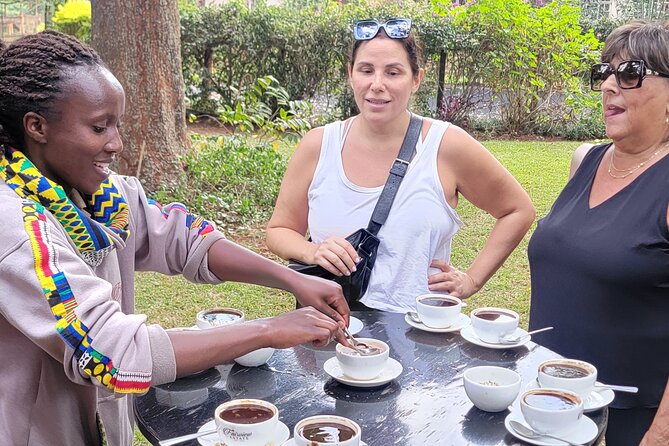
After cultivation comes processing, the part many coffee drinkers know least about. At Fairview, you learn how coffee cherries are transformed into the beans used for roasting.
The tour covers cleaning and grading, along with the handling of waste from production. You see that the final cup depends on many stages, not only on roasting skill. The guide explains how raw beans are prepared and sorted before they become familiar brown coffee.
Roasting makes the process especially easy to understand. The farm shop can roast coffee in front of you, although equipment problems have occasionally meant that the shop was closed. That is worth keeping in mind if buying freshly roasted beans is a major reason for booking.
The activity information lists three 500-gram options:
- Medium roast: Ksh 1,200
- Dark roast: Ksh 1,200
- Kaldi roast: Ksh 1,800
Prices and availability can change, but these figures give you a useful budget. The Kaldi roast costs more, so ask about the differences before buying if you are not familiar with the style.
The production explanation also gives you a better basis for shopping. Instead of choosing a bag only because it has attractive packaging, you can ask about roast level and taste profile. That makes the farm shop more than a souvenir counter.
More Farm Tours around Kenya:
- Nairobi to Kiambethu Tea Farm Tour
★ 5.0 · 51 reviews - Private Day Trip to Kiambethu Tea Farm in Limuru from Nairobi
★ 5.0 · 31 reviews - Nairobi: Guided Coffee Farm Tour with Tastings
★ 5.0 · 24 reviews - Day Tour To Kiambethu Tea Farm in Limuru
★ 5.0 · 22 reviews
Four coffees and a surprisingly tricky blind test
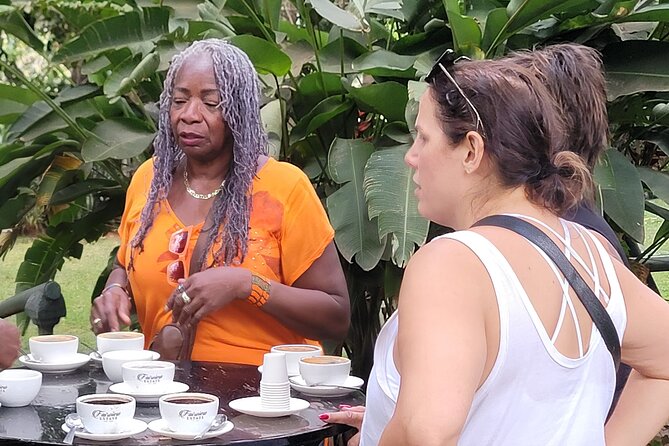
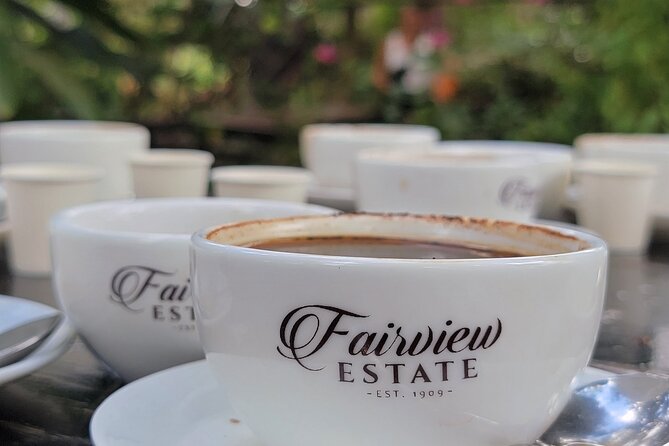
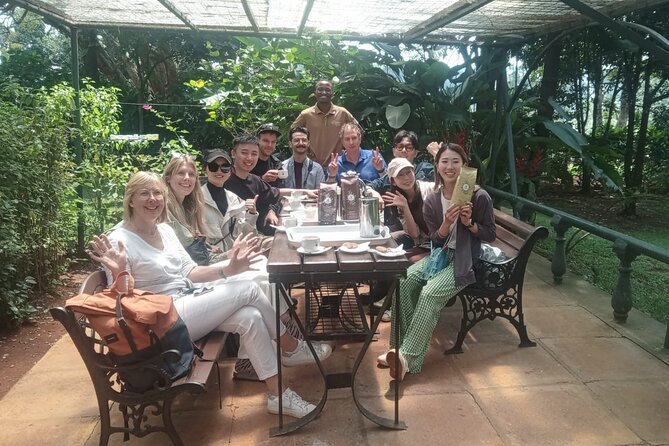
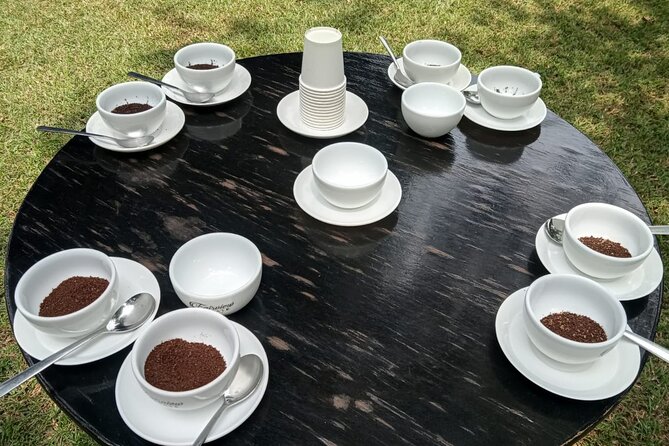
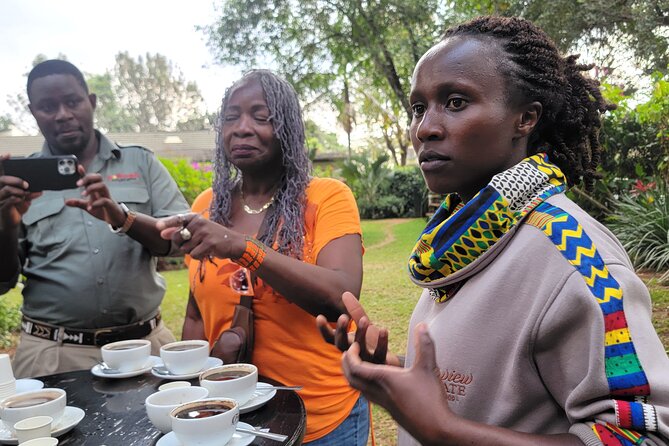
The tasting is the social center of the visit. You sample four different grades or variations of coffee, including Fairview brands from the estate. The exact tasting selection may vary, but the purpose is to compare flavor profiles rather than simply drink one hot cup.
A blind tasting makes the exercise more playful. You try to identify or rank the coffees without relying on labels, and the results can be humbling. In one tasting, only two of six people chose the same result, and neither had the correct answer. Coffee confidence can disappear quickly when the labels are removed.
That is a good feature, not a flaw. You do not need a trained palate. The guide encourages you to notice your own preferences, such as the difference between a medium and dark roast or the way one coffee feels stronger, lighter, smoother, or more aromatic.
At the end, you receive hot coffee and biscuits. It is a small touch, but it gives the visit a comfortable finish after walking around the estate. You can also buy packaged coffee from the farm shop, assuming it is open and operating normally.
If you love coffee, the tasting alone may justify the visit. If you are only an occasional drinker, the comparison still gives you a better idea of why roast and grade matter. Just do not expect a formal barista class. The focus is the farm’s production and a friendly introduction to tasting.
The guides make the difference
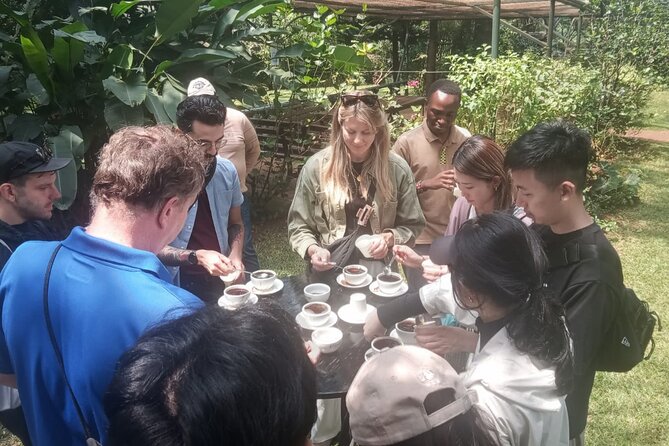
The transport and farm guiding are handled by different people. Alex is frequently praised for arriving on time, communicating clearly, and keeping the drive interesting. He also appears willing to answer questions about Nairobi and Kenya rather than treating the vehicle as a silent shuttle.
At the estate, guides such as Elvis and James handle the coffee content. Their explanations cover cultivation, processing, grading, roasting, and the history of coffee. One guide was especially effective with children, while another was praised for answering questions patiently and taking time with the group.
Your experience can depend on the individual assigned that day, but the setup has a clear advantage: the driver can focus on Nairobi and transport, while the farm guide can focus on coffee. That division gives you more useful information than one person trying to cover both subjects at once.
The group is private according to the activity details, although the farm portion may involve interaction with other participants depending on how the visit is arranged. The activity has a 4.8 rating from 71 reviews, with particularly strong praise for punctual pickup, friendly transport, and the farm guides’ command of the subject.
Is the $39 price good value?
The listed price is $39 per person, but you need to add the $30 farm entrance fee. If you book the experience as described, plan on roughly $69 per person before buying coffee, unless the final checkout price presents the charges differently.
That is not the cheapest way to reach Fairview. One visitor noted that taking an Uber to the farm and paying the entrance fee directly could save money. You should consider that option if you are comfortable arranging your own transport and do not need hotel pickup.
The tour earns its extra cost through convenience and interpretation. You get private transportation, hotel pickup and drop-off, bottled mineral water, an English-speaking guide, and help navigating the visit. Alex’s commentary on Nairobi adds value before you reach the estate, while the farm guide explains what you would probably miss on a self-guided visit.
For a coffee enthusiast, the added context may make the price reasonable. For a budget-conscious visitor already staying near Kiambu, independent transport could be the better buy. Check the full booking total carefully, because the entrance fee is a significant part of the cost.
Who should book this coffee tour?
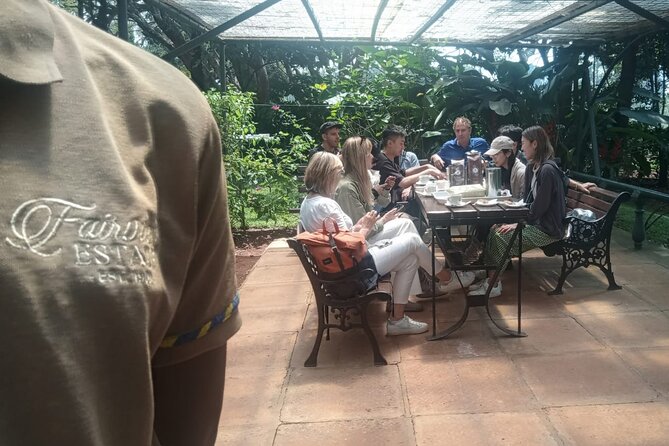
I would recommend it most strongly to coffee drinkers who want to understand production rather than simply sit in a café. You get plants, cherries, processing, roasting, and tasting in one half-day outing.
It also suits first-time visitors to Nairobi who want an easy activity outside the city. The private pickup removes much of the planning, and the drive becomes more useful when your driver shares local information.
Families can enjoy it too, especially if children like plants and hands-on activities. The walking is manageable for a leisurely two-hour farm visit, but closed shoes are important and muddy conditions are possible.
You may want to skip it if you dislike coffee, dislike walking on farm paths, or are mainly looking for a bargain. The additional $30 entrance fee changes the value calculation, and the farm shop may not always be open if the roasting machine is out of service.
Booking is flexible: you can cancel up to 24 hours before the activity for a full refund, reserve now and pay later, and request pickup from a Nairobi hotel. The tour is wheelchair accessible, and the live guiding is in English.
FAQ
How long does the Coffee Farm Tour take?
The advertised duration is three hours. The visit at Fairview Coffee Estate takes about two hours, with transportation to and from Nairobi making up the rest.
Where does the tour begin?
Pickup is available from any hotel in Nairobi. You should wait in the hotel lobby from 10 minutes before your scheduled pickup time and look for a silver Honda Airwave.
What time do the tours operate?
Tours are offered in the morning from 10:00 a.m. to 12:00 p.m. and in the afternoon from 2:00 p.m. to 4:00 p.m. Availability should be checked for your chosen date.
Is the farm entrance fee included in the $39 price?
No. The farm entrance fee is listed separately at $30 per person. Coffee purchased from the farm shop is also extra.
What coffee can I buy at Fairview?
The listed prices are Ksh 1,200 for 500 grams of medium roast, Ksh 1,200 for 500 grams of dark roast, and Ksh 1,800 for 500 grams of Kaldi roast.
Can I taste more than one coffee?
Yes. The experience includes tasting four different coffee grades or variations, including Fairview coffee brands from the estate.
Is transportation included?
Yes. The activity includes private transportation, hotel pickup and drop-off, pickup from the farm, and a bottle of mineral water.
What language is the tour in?
The live tour guide speaks English. The activity is offered as a private group experience and is wheelchair accessible.
Should you book it?
Book this tour if you want the easy version of a Nairobi coffee outing, with hotel pickup, a private driver, a farm walk, clear explanations, and a proper tasting. Alex’s friendly city commentary and the farm guides’ practical lessons add real value.
Skip it or arrange your own transport if keeping costs low matters most. Either way, Fairview is a worthwhile stop for coffee drinkers who want to see how a Kenyan cup begins, long before it reaches the mug.
Just added around Kenya
- Purple Tea Farm Tour from Nairobi City – Specialty Tea Tasting★ 4.5 · 12 reviews
- Riara tea farm tour with lunch and tea tasting from Nairobi★ 5.0 · 3 reviews
- Kiambethu Tea Farm Tour & Lunch From Nairobi★ 5.0 · 7 reviews
- Fairview Estate Coffee Farm Tour With Pick up★ 5.0 · 2 reviews
- Tea Farm Experience at Riara Tea Farm And Factory Tour★ 5.0 · 11 reviews
- Private Half-Day Tour in Fairview Coffee Farm from Nairobi★ 5.0 · 13 reviews
- Private Tour to Fairview Coffee Farm in Nairobi with Pickup★ 5.0 · 2 reviews
- Day tour to Kiambethu tea farm in Limuru from Nairobi★ 4.5 · 2 reviews
Coffee Farm Tours, farm by farm.
Award Winning Farm Tour: Coffee, Chocolate and Unique Gifts
Read our review →
La Herradura Coffee Farm: tour in Europe’s only plantation
Read our review →

Small-Group Big Island Tour: Hawaii Volcanoes National Park and Kona Coffee Farm
Read our review →
Medellín Coffee Farm Tour with Trolley and Cable Car Ride
Read our review →
Private Cocora Valley, Salento & Coffee Farm Tour
Read our review →
Liamuiga Natural Farm Tour – St.Kitts’ Coffee Farm
Read our review →
Other lists this farm sits on