
REVIEW · ITALY
Cagliari Olive Oil Farm & Tasting (Since 1600, 20 Min Away)
Olive oil gets a 400-year family welcome here. Just 20 minutes from Cagliari, this Dolianova experience combines a working mill, Sardinia’s only olive oil museum, and a generous tasting of local food. I especially like the old stone mill and underground cistern, which give the visit a real sense of place, and the clear lesson on how to judge extra virgin olive oil. The main consideration is timing: the detailed program takes 90 minutes, even though some booking information lists the activity as one hour.
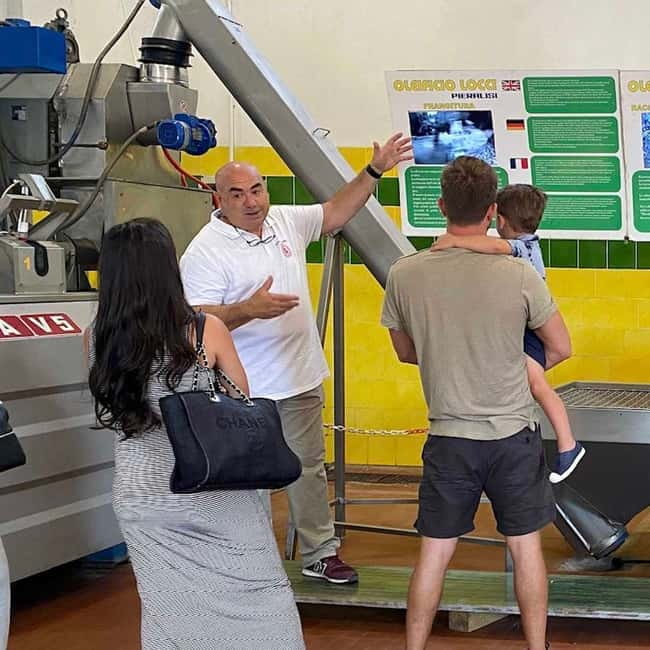
The family welcome is a major part of the appeal. Francesco Locci brings humor and real enthusiasm to the presentation, and the tasting includes three very different oils rather than three near-identical samples. If you are hoping for a long countryside excursion among the trees, this is not that. It is a compact, indoor-focused food experience with shopping at the end.
Key points to know before you go
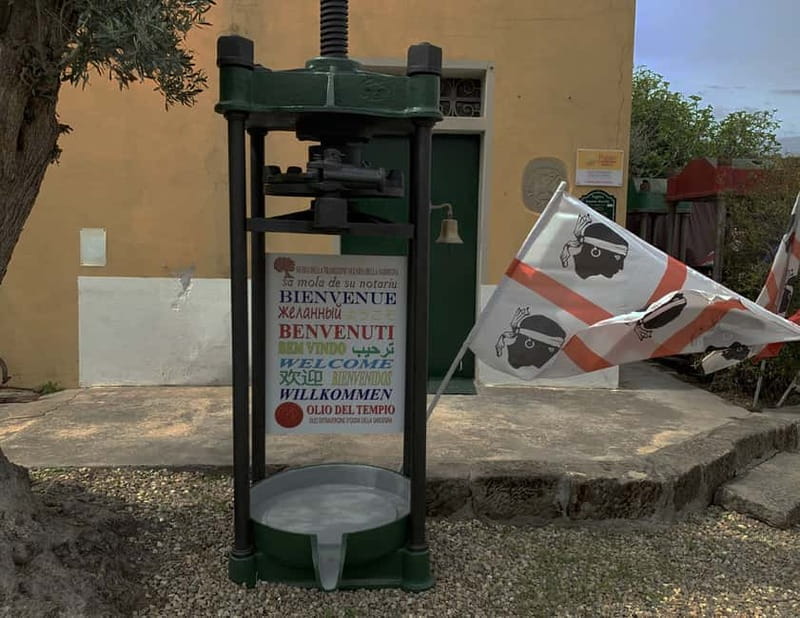
- 400 years of family olive oil making: The Sa Mola de Su Notariu museum traces the mill’s story through a 17th-century stone mill, old presses, tools, and oil lamps.
- Three useful tastings: Try the classic Olio del Tempio EVO, lemon-infused Limolio, and spicy Rogo del Tempio with Sardinian herbs.
- A proper food pairing: Salsiccia sarda, olives, carasau bread, sparkling wine, and additional local bites help show how the oils work at the table.
- Easy from Cagliari: The mill is about 20 minutes by car, with free parking in Dolianova. Bus line 108 takes about 54 minutes from central Cagliari.
- A practical 90-minute visit: The tour, tasting, food, and shopping fit neatly into a half-day plan without taking over your day.
- Buy direct at a discount: Products bought at the mill are offered at 20 percent less than online prices.
Why this small farm visit works so well
Sardinia is often sold through beaches and ancient ruins, but food can tell you just as much about the island. Olive oil is part of daily life here, and this visit gives you a useful way to understand it without requiring a full day in the countryside.
The setting is a working family business with 6,000 olive trees spread across 20 hectares. You are not simply led through a shop and handed a plate of samples. The visit connects the modern mill with older methods, showing how pressing, storing, and serving oil changed over time.
I like that the experience is compact. At $64 per person, you are paying more than you would for a casual tasting at a market, but the price covers a guided production tour, museum access, a lesson, three products, food, wine, and time to shop. If you are interested in Sardinian cooking, that is a reasonable package, especially because the lesson can change how you use olive oil after you return home.
The tone also seems personal rather than formal. Francesco Locci is repeatedly praised for making the subject friendly and easy to follow. That matters with olive oil, which can quickly become a technical subject full of acidity levels, aromas, and production terms. Here, the information is tied to bread, fish, meat, cheese, and everyday cooking.
More Food and Drink Tours around Italy:
- Sorrento Farm and Food Experience including Olive Oil, Limoncello, Wine tasting
★ 5.0 · 2,524 reviews - Pizza School with Wine and Limoncello Tasting in a Local Farm
★ 5.0 · 845 reviews - Authentic Farm Tour with Pizza, Cheese, Wine & Limoncello Tasting
★ 5.0 · 698 reviews
Starting in Dolianova, 20 minutes from Cagliari
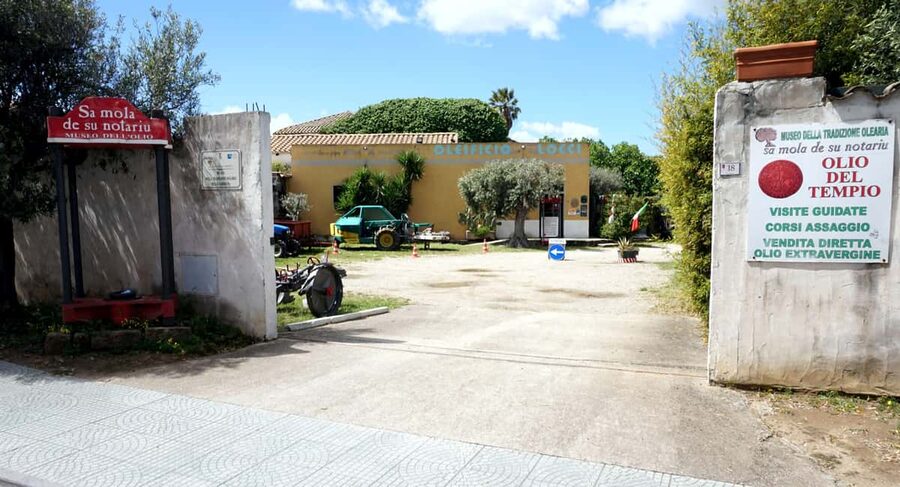
The meeting point is Museo dell’olio Sa Mola de Su Notariu, also connected with Olio del Tempio. By car, you can reach it from Cagliari in about 20 minutes, and free parking is available in the museum lot in Dolianova town center.
That simple arrival is useful if you are renting a car or planning a short outing from the city. You do not need to deal with a remote farm road or a complicated transfer. Paid private transfers from Cagliari and southern Sardinia are also available, but they are not included in the $64 price.
Without a car, bus line 108 connects the center of Cagliari with the area in about 54 minutes. That makes the visit possible by public transport, though you should allow more time around the 90-minute program for the journey and any wait between buses.
The experience is offered in English, French, and Italian. It is also wheelchair accessible, which is important for a museum and tasting visit built around historic spaces.
The modern mill and how extra virgin olive oil is made
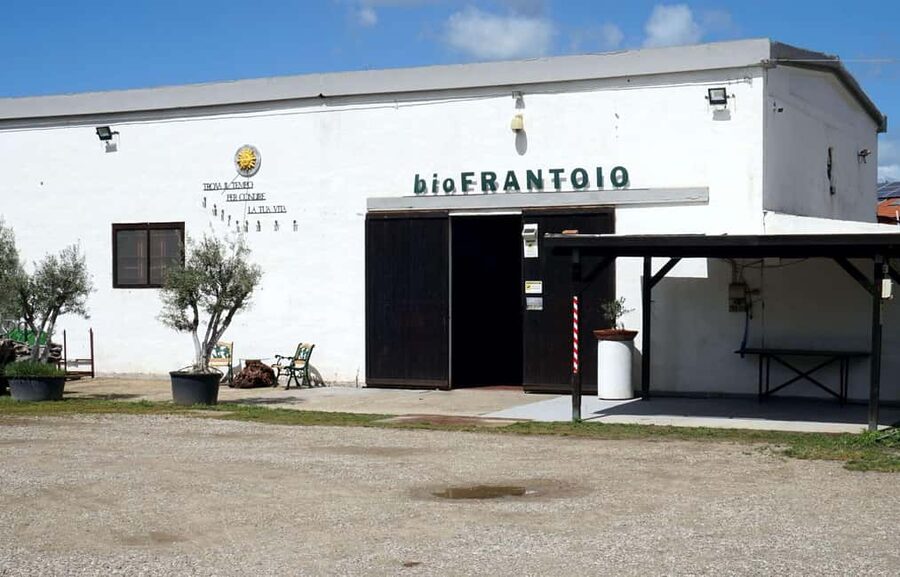
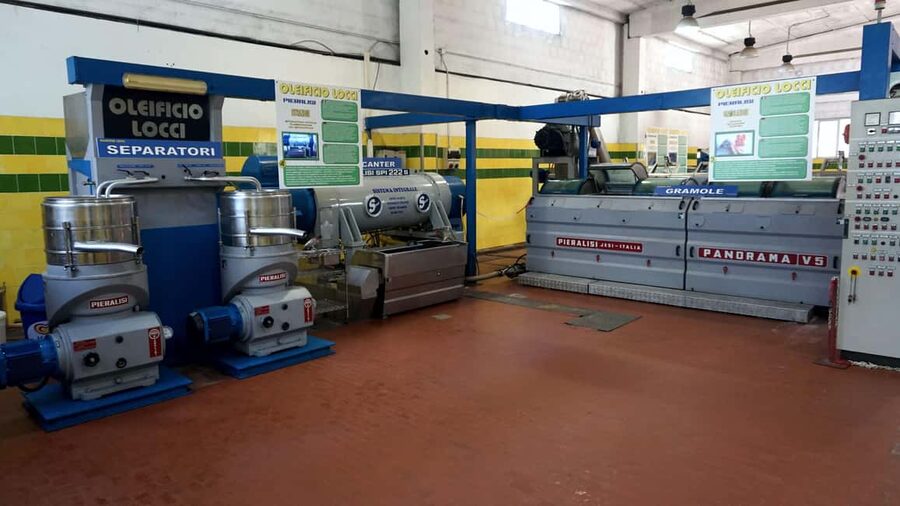
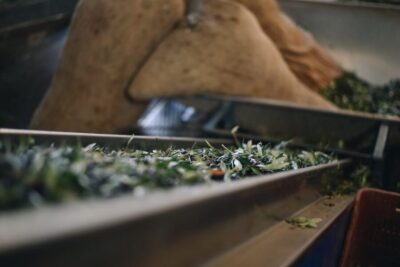
The first proper stop is a guided look at the production operation. A state-of-the-art mill processes olives from the family’s estate, and video presentations help explain the journey from harvest to bottling.
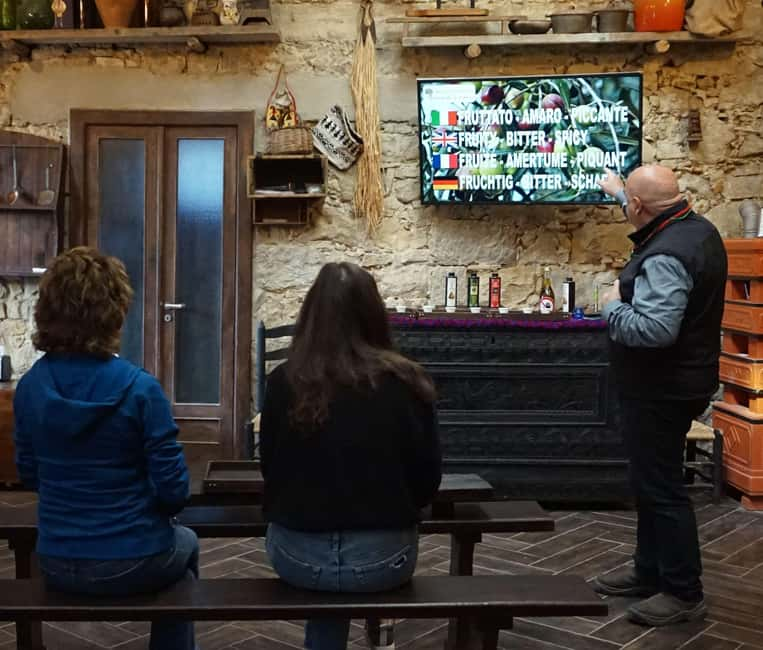
This part gives the tasting a purpose. Instead of judging oil only by whether it tastes pleasant, you learn what production choices affect the final result. The session also includes slides on how to identify quality extra virgin olive oil, a skill you can use in a supermarket, at a restaurant, or when choosing a bottle to take home.
The estate’s size gives the operation weight. Six thousand olive trees across 20 hectares are not a token garden behind a shop. At the same time, the visit does not promise a long walk through those groves, so you should think of it as a mill and food lesson rather than an agricultural hike.
One useful point is that the experience links the modern machinery with the older museum pieces. You can see how the basic goal remains the same, extracting and preserving olive oil, while the equipment and control of the process have changed.
Sa Mola de Su Notariu and its 17th-century mill
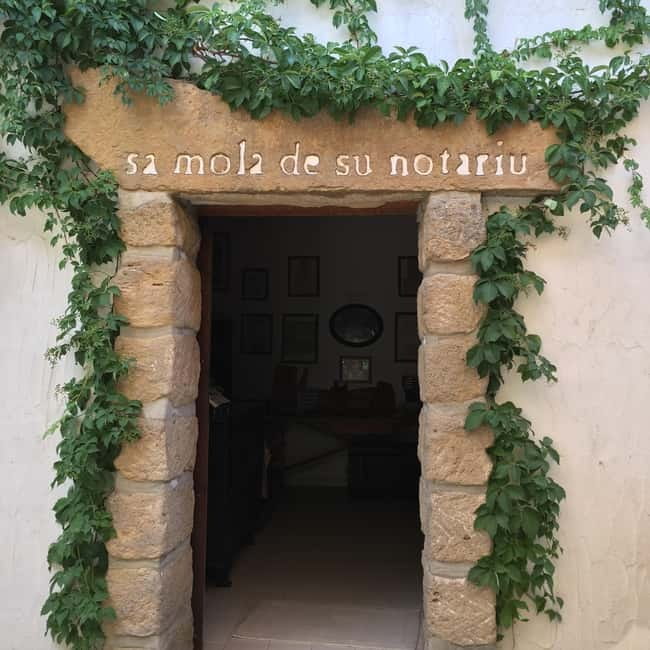
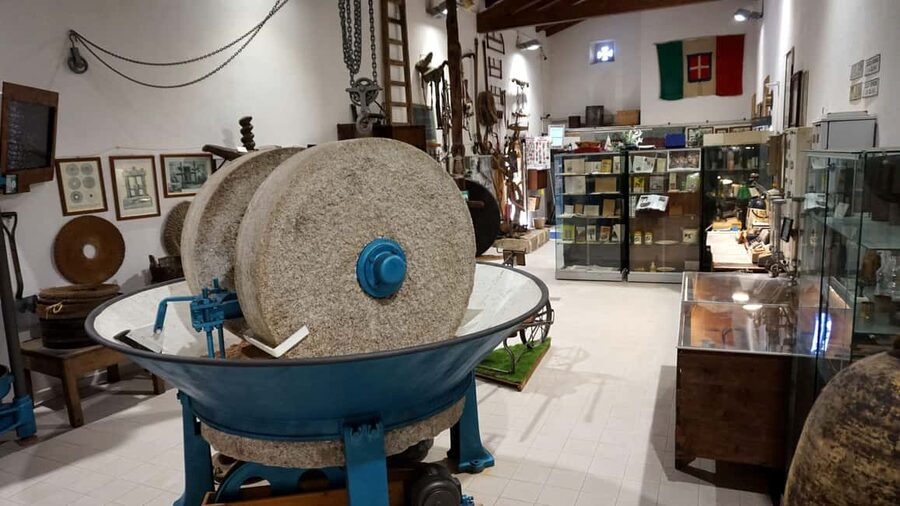
The museum is the historical heart of the visit. It presents itself as Sardinia’s only olive oil museum and includes an original 17th-century stone mill, old presses, and tools used in earlier generations.
The collection helps explain why olive oil was such a valuable product. Old equipment can look like a pile of timber and stone when viewed without context. With a guide explaining how each part was used, the mill becomes a record of work, storage, and family trade.
The museum also gives the experience a stronger local character than a standard tasting room. You are not tasting anonymous oil in a modern showroom. You are doing it in a place connected to 400 years of family production.
I would allow yourself to slow down here. The visit is short, and the tasting naturally gets most of the attention, but the old presses and tools are what make this more than a food sampling stop. If historic working objects interest you, this may be the most memorable part.
More Farm Tours around Italy:
- Florence Pizza or Pasta Class with Gelato Making at a Tuscan Farm
★ 5.0 · 6,801 reviews - Cooking Class and Lunch at a Tuscan Farmhouse with Local Market Tour from Florence
★ 5.0 · 4,831 reviews - Sorrento: Pizza Lesson, Wine, and Limoncello at a Local Farm
★ 5.0 · 1,513 reviews - Florence: Pizza or Pasta Class with Gelato at a Tuscan Farm
★ 4.9 · 1,181 reviews
The underground cistern and old oil lamps
One of the more unusual elements is the underground cistern. You descend into an ancient storage vault containing oil lamps, amphorae, and other objects connected with the preservation of oil.
This is a small but effective piece of storytelling. It shows that olive oil was not simply produced and sold immediately. It had to be stored carefully, and the vault reflects the practical side of older Sardinian food culture.
The oil lamps are especially fitting. They connect the product to everyday life, since oil was valuable not only in cooking but also as a source of light. The cistern is described as an exclusive part of the experience, so it adds something you would not get from a tasting held in an ordinary shop.
The space may not suit everyone, particularly if you dislike underground rooms or have difficulty with stairs. The activity is listed as wheelchair accessible, but the supplied information does not explain the exact access arrangements for every part of the historic vault. If that detail matters to you, confirm it before booking.
The three oils: classic, citrus, and spicy
The tasting is built around three products with distinct uses. That is a smart approach because it lets you compare not only flavors but also cooking roles.
Olio del Tempio EVO is the classic extra virgin olive oil. It is described as balanced between fruitiness, bitterness, and spiciness. You can use it for dipping, drizzling, and cooking, making it the everyday bottle of the three.
The lesson should help you notice that bitterness and a peppery finish are not automatically faults. They can be signs of character in a fresh extra virgin oil. The point is not to memorize tasting vocabulary. It is to learn what you enjoy and what works with different foods.
Limolio combines olives with lemon zest. Its bright citrus character is recommended for seafood carpaccio, raw fish, salads, caprese, and grilled vegetables. This is the bottle I would pay close attention to if you cook fish at home. Several people have found it especially useful as a change from plain oil and lemon squeezed separately.
Rogo del Tempio is the boldest sample, made with nine Sardinian herbs and controlled heat. It is suggested for grilled meat, pizza, pecorino, and roasted potatoes. The spicy element makes it less universal than the EVO, but it could be a fun bottle for finishing simple dishes.
The three samples are different enough to make the lesson practical. You can taste how citrus changes an oil, then compare that with herbs and heat. This is more useful than sampling three versions of the same mild oil.
Sardinian food, wine, and the generous tasting table
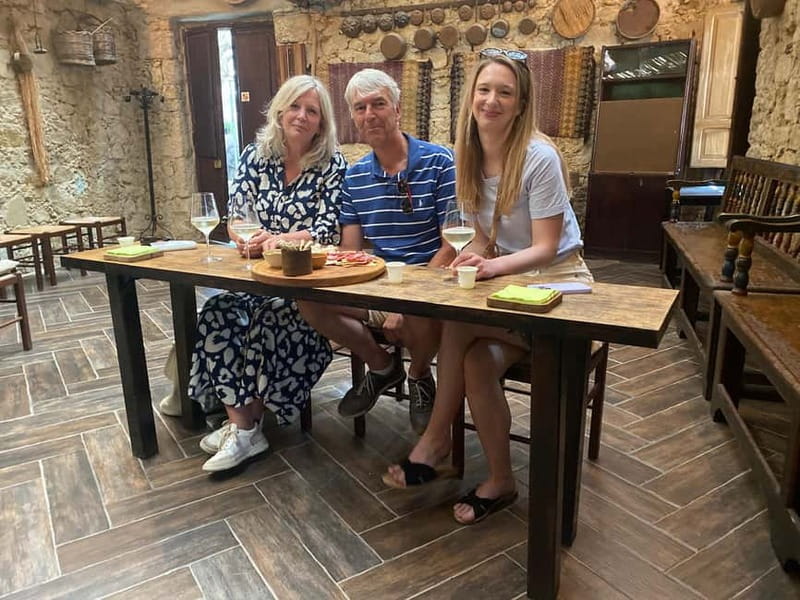
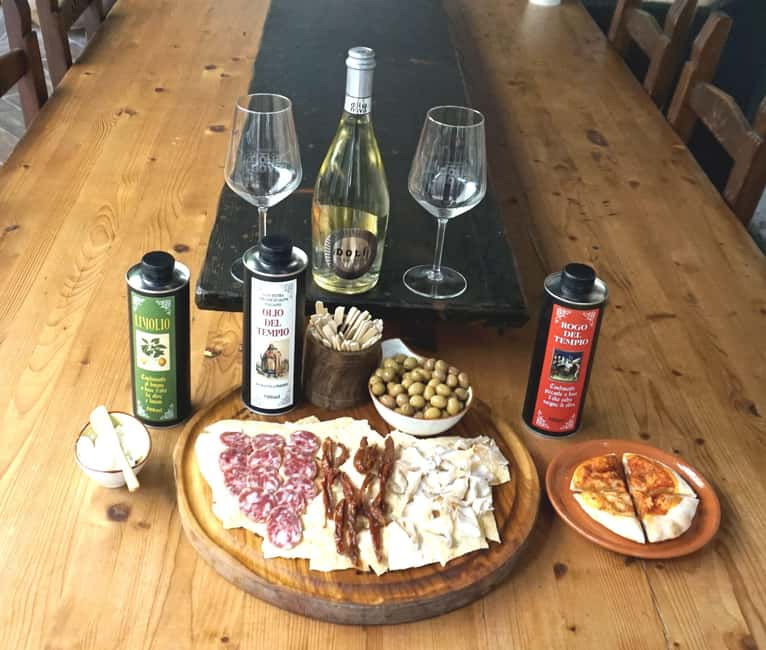
The food pairing is served family-style and includes local ingredients. Expect cured salsiccia sarda, natural olives, carasau bread, and chilled local sparkling wine.
Carasau is an especially good partner for an oil lesson. The thin, crisp Sardinian bread lets you taste the oil without a strong flavor getting in the way. It also gives you a simple way to compare the three products side by side.
The salsiccia sarda brings salt and savory flavor, while olives reinforce the link between the fruit and the finished oil. The sparkling wine cleans your palate between samples and makes the tasting feel like a social Sardinian meal rather than a classroom exercise.
Additional food may include small pizza and cheese, as one tasting account describes. The supplied details confirm local snacks, regional food, tapas, wine, and the main platter, but not a fixed menu for every date. You should treat the listed items as the core offering and any extra bites as subject to the day’s presentation.
This is not a full lunch. It is a substantial snack and tasting, so plan a proper meal later if you are hungry. For a 90-minute activity, though, the amount of food sounds generous and helps justify the price.
The shopping stop and value at $64
The final part allows about 20 minutes for shopping. That is not just a sales pitch tacked onto the end. You have already tasted the products, learned their uses, and can decide which bottle fits your kitchen.
Buying directly at the mill also has a clear financial benefit. The experience offers a 20 percent discount compared with online prices. If you already know you want to take home oil, that saving improves the value of the visit.
Think about luggage and transport before buying large quantities. The provided information does not specify bottle sizes, packing materials, or airline handling advice, so ask the staff what is practical for your trip. You can also use the shopping time to buy a single bottle rather than committing to several products.
The direct sale is most useful when you have a favorite. The classic EVO suits broad everyday use, Limolio is aimed at fish and vegetables, and Rogo del Tempio gives simple foods a hotter, herbal finish.
Who should book this experience?
I would recommend it most strongly to food-focused visitors staying in Cagliari, couples looking for a short local outing, families interested in traditional production, and cruise passengers with two or three hours available away from the port.
It also suits anyone who wants an activity that works in less-than-perfect weather. Much of the visit takes place around the mill, museum, tasting area, and underground collection rather than depending on a long outdoor walk.
Dogs are welcome, with fresh water bowls provided. Free Wi-Fi is available, and the venue is wheelchair accessible. The minimum booking is two people, so solo visitors cannot book this as a one-person experience under the stated conditions.
I would be less enthusiastic if your main goal is a wide-ranging vineyard or farm day. You will not get a long rural excursion, a full cooking class, or a full meal. The strength here is focus: olive oil, family history, old equipment, and a guided table tasting in a convenient location.
The experience has a 5.0 rating from 43 listed reviews, with repeated praise for the friendly welcome, clear explanations, useful tasting lesson, food, wine, and fair product prices. The one useful suggestion is that some people would like more information about the olive tree itself. If you want detailed botany or orchard management, ask about it during the visit.
Booking, timing, and practical details
The detailed schedule adds up to 90 minutes:
- About 10 minutes for the guided mill tour
- About 20 minutes for the olive oil class and tasting
- About 20 minutes for wine and local food
- About 20 minutes for shopping
- The remaining time covers movement between areas and the full presentation
Some activity information displays the duration as one hour, while the detailed description calls it an exact 90-minute masterclass. I would plan on 90 minutes and leave extra time for arrival, transport, and shopping.
You can cancel up to 24 hours ahead for a full refund, and reserve now while paying later. Starting times vary, so check availability before arranging your bus or cruise schedule.
Should you book the Cagliari olive oil farm visit?
Book it if you want an easy, food-centered trip from Cagliari with real family history, a distinctive museum, and enough tasting food to make the $64 price feel reasonable. Francesco Locci’s personal style, the underground cistern, and the comparison of three very different oils give the visit more substance than a basic shop tasting.
Skip it if you want a long outdoor farm tour, a full meal, or a broad Sardinian cooking class. For everyone else, especially anyone planning to bring home oil, this is a smart 90-minute addition to a Cagliari itinerary.
FAQ
How long does the olive oil experience last?
The detailed program lasts 90 minutes. Some activity information lists the duration as one hour, so you should plan for the longer 90-minute schedule.
How much does the experience cost?
The stated price is $64 per person.
Where does the tour begin?
It begins at Museo dell’olio Sa Mola de Su Notariu, connected with Olio del Tempio, in Dolianova.
How far is the mill from Cagliari?
The mill is about 20 minutes from Cagliari by car.
Is parking available?
Yes. Free parking is available in the museum’s parking lot in Dolianova town center.
Can I reach the mill by bus?
Yes. Bus line 108 from central Cagliari takes about 54 minutes.
Which languages are offered?
The live guide is available in English, French, and Italian.
What food and drinks are included?
The tasting includes three olive oil products, cured salsiccia sarda, Sardinian olives, carasau bread, local sparkling wine, and regional snacks. Additional bites may include pizza and cheese.
Is the activity wheelchair accessible and pet-friendly?
Yes. The activity is listed as wheelchair accessible, and dogs are welcome. Fresh water bowls are provided for pets.
Just added around Italy
- Volterra: Fresh Pasta Cooking Class at a Tuscan Farmhouse★ 5.0 · 33 reviews
- Volterra: Pizza Cooking Class in a tuscan farmhouse★ 4.6 · 11 reviews
- Visit Siena and San Gimignano with lunch at a family farm★ 5.0 · 8 reviews
- Vico Equense: Tour in the dairy “Mozzarella Experience”★ 5.0 · 19 reviews
- Turin: Meet the Monviso Alpacas at the Educational Farm with a Guide★ 5.0 · 5 reviews
- Bardolino: Garda Lake Pasta Cooking Class at the Agritourism★ 5.0 · 32 reviews
- Rialto Market Food Tour: Wine Tasting & Sightseeing in Venice★ 5.0 · 18 reviews
- Rialto Farmers & Fish Market Food Tour in Venice with Wine Tasting & Sightseeing★ 5.0 · 3 reviews
Food & Drink, farm by farm.
Sorrento Farm and Food Experience including Olive Oil, Limoncello, Wine tasting
Read our review →
Maui Ku’ia Estate Guided Cacao Farm Tour and Tasting
Read our review →
Ría de Arousa: Boat Ride to Mussel Farm with Tasting
Read our review →
Pizza School with Wine and Limoncello Tasting in a Local Farm
Read our review →
Authentic Farm Tour with Pizza, Cheese, Wine & Limoncello Tasting
Read our review →
Olive Farm Tour with Tasting of Local Delicacies
Read our review →Other lists this farm sits on