
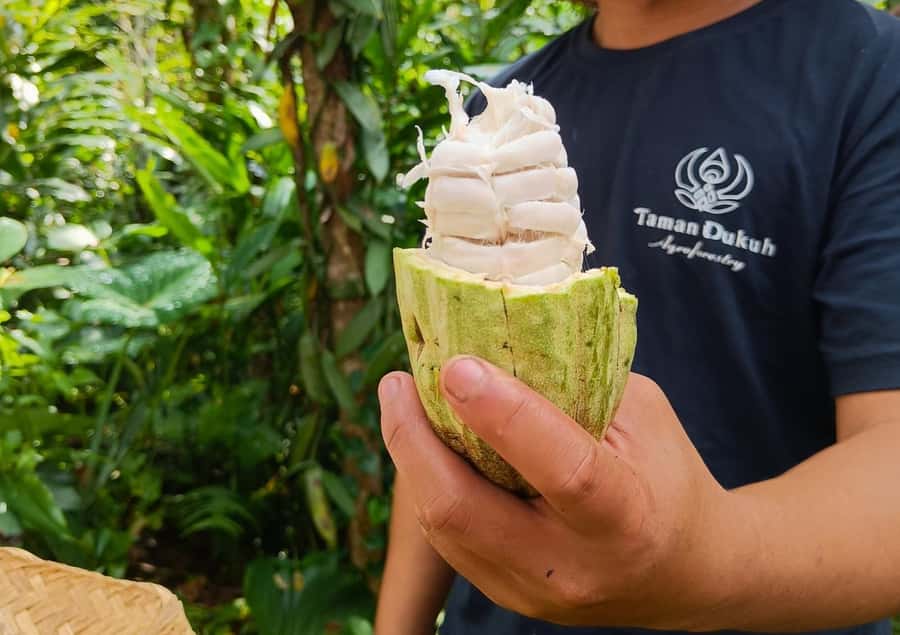
REVIEW · INDONESIA
Ubud: Balinese Cooking Class at an Organic Farm
Food is the best way to meet Bali. This hands-on cooking class takes you beyond Ubud’s cafés and into a morning market, an organic farm, and an open-air kitchen where you prepare six Balinese dishes. I especially like the chance to pick vegetables before cooking and the recipe book you take home. The main consideration is time: transfers and traffic can make this a long half-day or nearly full-day outing.
The morning option offers the fullest program, with a local market visit before the farm. I also like the strong value at $32 per person, since that includes transport from an Ubud meeting point, breakfast, the farm tour, ingredients, the class, and the meal you prepare. The farm is about an hour from some Ubud pickup areas, so allow extra time on the road.
Key points at a glance
- Start at a real morning market: The early session includes a guided look at local fruit, vegetables, spices, and daily shopping habits.
- Pick ingredients from the farm: You gather some of the produce used in your own meal rather than simply watching a demonstration.
- Cook six substantial dishes: Regular and vegetarian menus include spice paste, several savory dishes, and dessert.
- Learn in a relaxed open-air setting: The farm provides shade, plants, and a quieter break from central Ubud.
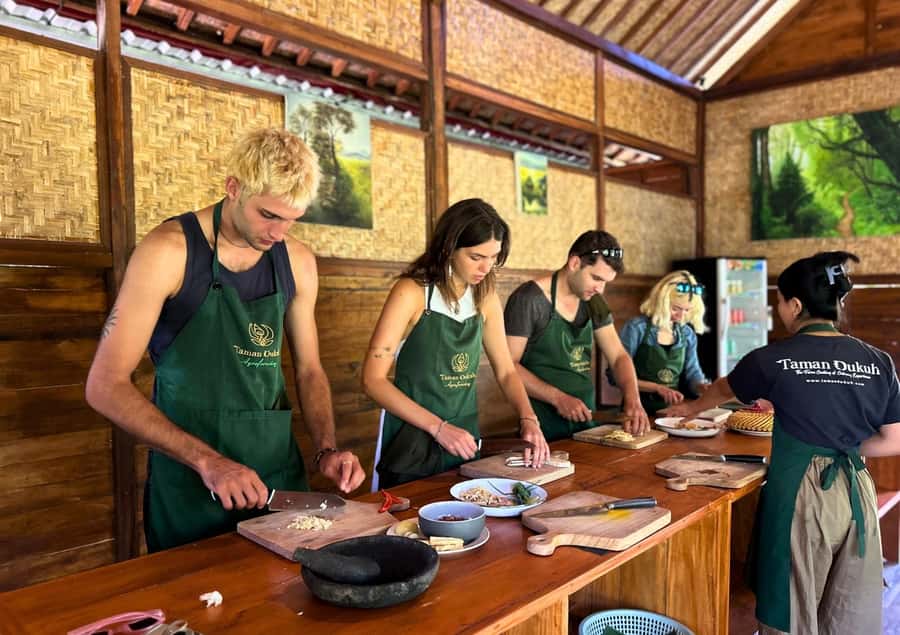
- Small-group format: Groups are capped at 14, with cooking stations shared by two people.
- Take the lesson home: You receive a printed recipe book and a downloadable PDF with the latest recipes.
Why this Ubud cooking class works so well
Many Bali cooking classes take place in a polished studio. This one puts the food in context first. You see where ingredients are bought, how plants grow, and how a Balinese family uses what is available around the home and farm.
That matters because Balinese cooking is built around fresh ingredients and a prepared spice paste called Base Gede. You do not simply stir a sauce from a packet. You work with the flavors that give the food its character, then use them in several different dishes.
I like the way the class links food with ordinary life. You might taste local fruit at the market, hear how ingredients are used, then spot some of the same plants growing at the farm. It gives the meal a clear sense of place without turning the day into a lecture.
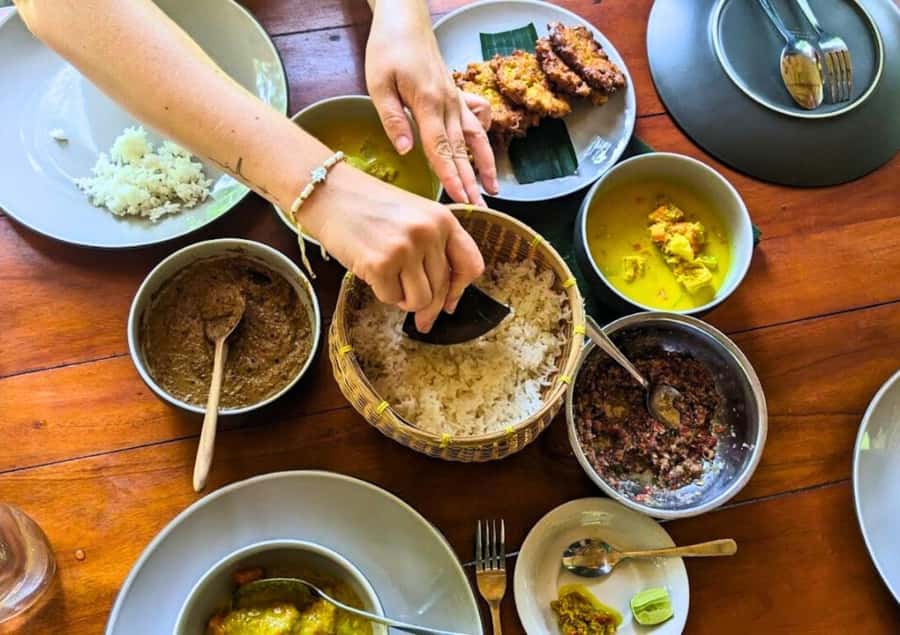
The food is also the payoff. Six dishes make this more than a quick sample class, and several people found the portions so generous that they left very full. The experience is friendly and light, but it still gives you useful cooking methods to repeat at home.
More Organic Farm Visits around Indonesia:
- From Ubud: Authentic Bali Farm Cooking School & Organic Farm
★ 5.0 · 122 reviews - Balinese Cooking Class at Organic Farm
★ 5.0 · 51 reviews - Ubud: Organic Farm Harvest, Bali Cooking Class by Pemulan
★ 4.8 · 12 reviews
The morning market adds real local flavor
Choose the morning class if you can. It starts early, with a meeting point in Ubud and transport to a local market. The exact meeting point can vary by booking option, so check your confirmation carefully.
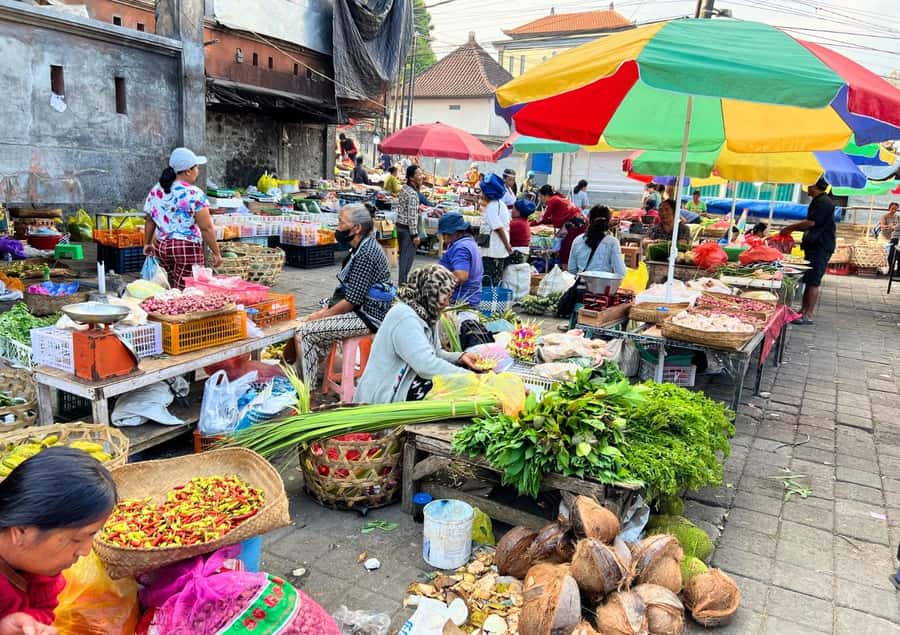
At the market, your guide explains local fruits, vegetables, spices, and other daily ingredients. You may also taste fruit along the way. This is not a separate sightseeing stop with major landmarks. Its value is in seeing how people buy food at the start of the day and in learning what unfamiliar ingredients actually look and taste like.
The market visit also helps you understand the menu later. Instead of meeting ingredients only after they have been chopped and placed in bowls, you see them in their everyday setting. That simple connection makes the cooking lesson easier to follow.
The early start is worth considering. You gain the market tour and more local context, but you also give up a leisurely holiday morning. If you are happy to wake early, this is the version I would pick. The market was repeatedly singled out as one of the best parts of the outing.
The ride from Ubud is part of the day
Shuttle service from an Ubud meeting point is included. Some pickup arrangements may bring you to a central meeting spot first, and the return route is also handled after the class.
The drive can be longer than expected. One account places the farm about an hour from the meeting point, with heavy traffic possible on the way back. Other descriptions highlight the route through small villages, rice terraces, and jungle scenery. Do not schedule a tight afternoon appointment after this class.
That extra road time is both a drawback and part of the appeal. You leave the busy center and reach a quieter rural setting. If you are staying outside Ubud, ask about the meeting point before booking, since transport details vary by option.
The driver may add cultural information along the way. Rudi, one driver mentioned by name, was praised for explaining Balinese culture during the journey. Still, the included shuttle is based around the stated Ubud meeting arrangements, so do not assume every hotel outside the area receives direct pickup.
The organic farm gives the class its sense of place
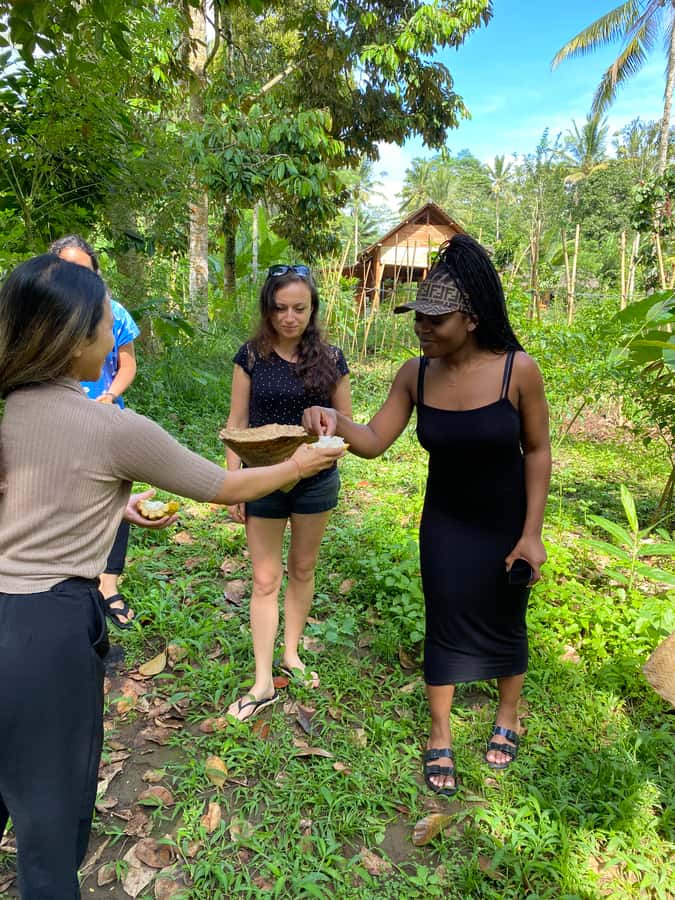
On arrival, you receive coffee or tea and a light breakfast. The food can include fresh fruit and cake, giving you something easy to eat before the cooking begins.
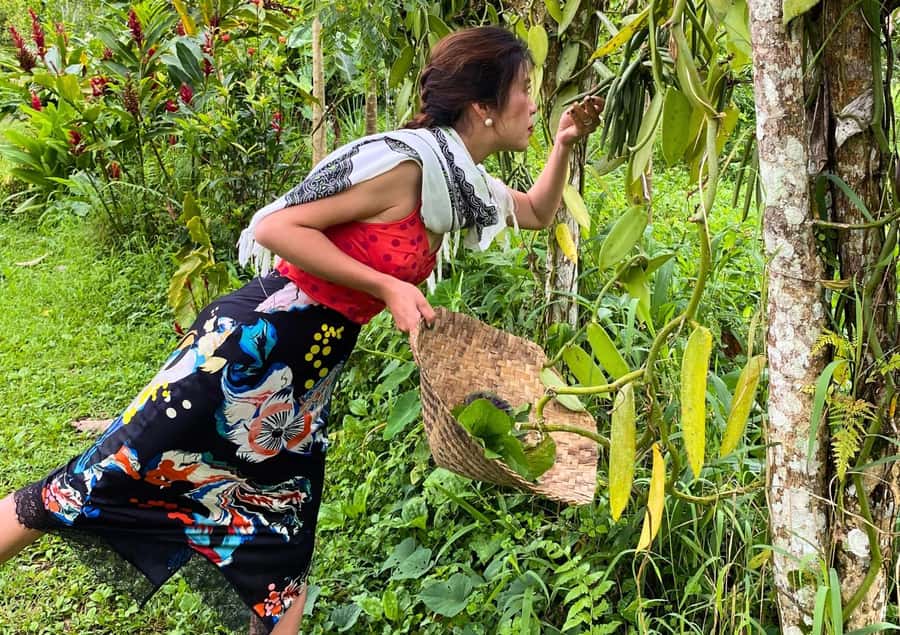
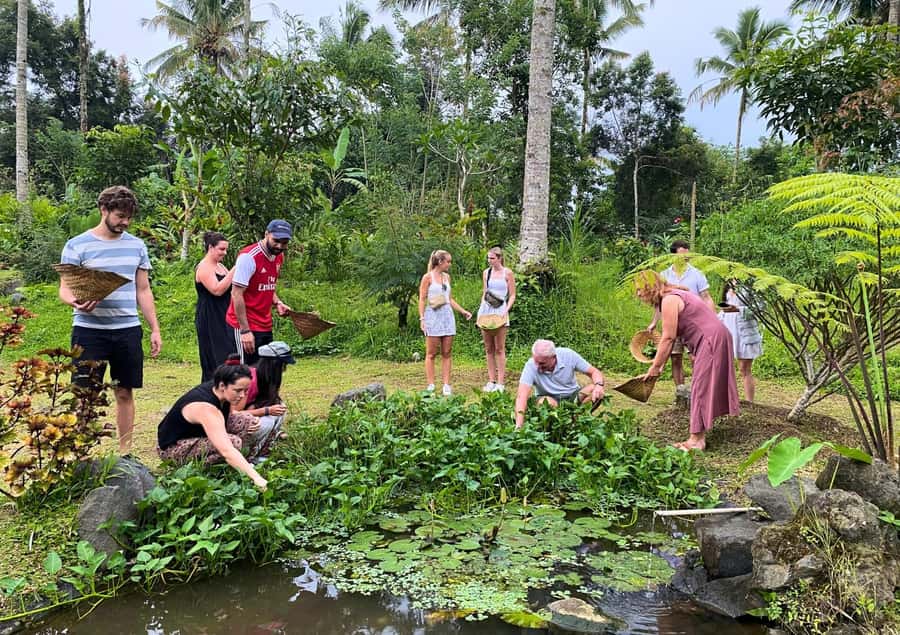
You then tour the farm and see how local plants are grown and used. The staff explain the produce and invite you to collect vegetables for the class. Some ingredients come from the farm, while others are obtained from the local market when needed.
This is my favorite idea in the whole program. Picking vegetables gives you a small job with a clear purpose. You are not just walking through a garden for decoration. You are gathering food that will appear on your plate later.
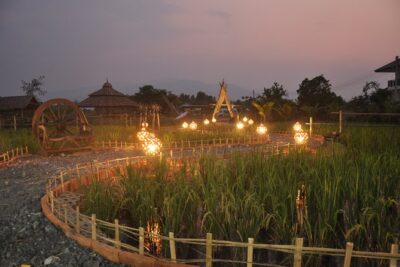
The setting is open-air and peaceful, with trees, spices, and growing plants around the cooking area. Several people found the farm more memorable than the cooking itself. That tells you something useful: this is not only for serious cooks. If you enjoy gardens, rural Bali, or learning about plants, you may value the farm tour as much as the recipes.
Rain does not necessarily stop the activity. One account describes umbrellas being provided during a wet session. Even so, you should expect an outdoor setting and dress for Bali’s changeable weather.
More Cooking Classes around Indonesia:
- Balinese Farm Cooking Class by Pemulan Bali
★ 5.0 · 410 reviews - Balinese Vegan Cooking Class with Fresh Harvesting & Garden Tour
★ 5.0 · 86 reviews - Small-Group Farm Tour & Balinese Cooking Class in Ubud with Kadek
★ 5.0 · 16 reviews - Farm-to-Table Balinese Cooking Experience
★ 4.0 · 3 reviews
What you cook on the regular menu
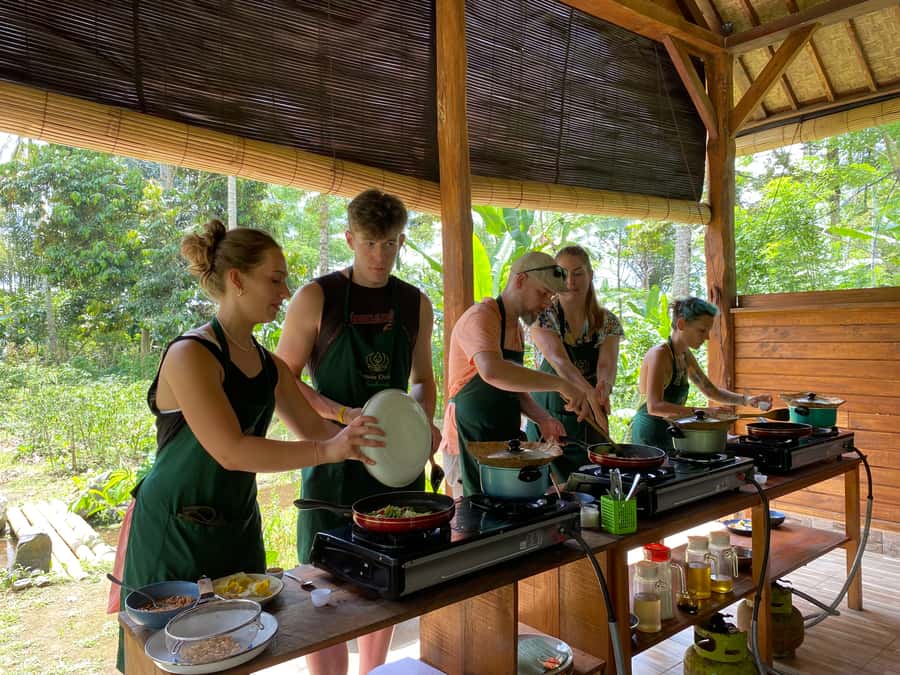
The regular menu begins with Base Gede, a traditional Balinese spice paste. This is a key building block, so learning it first helps you see how one mixture can support several dishes.
You then prepare Sayur Urab, a mixed green salad with coconut and spices. The menu continues with Opor Ayam, a Balinese chicken curry, and sate lilit, a local kebab made with meat, coconut, and spice paste.
The remaining savory dish is pindang base tomat, fish served with tomato sauce. Dessert is either pisang goreng, banana fritters with coconut and palm sugar syrup, or bubur injin, a black rice pudding.
The menu is well chosen for variety. You work with a spice paste, vegetables, curry, fish, grilled-style seasoned meat, and a sweet finish. You also get to taste how coconut, palm sugar, chili, herbs, and aromatics play different roles across the meal.
Do not expect to cook every part completely alone. The station is shared by two people, and the instructors handle some of the fiddly tasks while giving you enough work to feel involved. That arrangement keeps the class moving, especially with six dishes on the schedule.
The vegetarian menu is more than an afterthought
The vegetarian menu follows the same basic structure but gives you a full set of dishes of its own. You prepare Base Gede, then make gado gado, blanched vegetables with traditional peanut sauce.
Next comes opor tempe, a Balinese tempe curry, and bergedel, fried corn seasoned with Balinese spices. You also prepare sweet and sour tempe and a vegan sate lilit made with jackfruit and spices.
Dessert remains pisang goreng or bubur injin. This gives vegetarian diners a complete meal rather than a plate of substitutions.
The class can also separate non-vegan food from vegan preparation, which is helpful for people concerned about cross-contact. You should still state your menu needs clearly when booking, but the vegetarian option is planned as a proper cooking course.
The vegetarian menu is especially good for anyone who wants to learn about tempe beyond the familiar fried blocks found on many restaurant menus. Here, tempe appears in curry and sweet and sour preparations, giving you several ideas to use at home.
The instructors keep beginners comfortable
The class is taught in English and Indonesian. Names mentioned by people who attended include Buda, Depi, Wayan, and other local instructors. Buda was praised for being funny and clear, while Depi was noted for patient explanations and strong English.
You do not need advanced cooking skills. Instructions are given step by step, and the staff explain ingredients and methods as you work. The tone appears more practical than formal, which suits a shared farm kitchen.
The class maximum is 14 people, and each cooking station is shared by two. That is small enough for personal guidance, though it is not a private lesson. Your experience may depend partly on the group and on how tasks are divided between partners.
Some staff also take photos and videos during the day, with files sometimes sent afterward. Treat that as a welcome extra rather than a guaranteed part of the core booking, since it is not listed among the formal inclusions.
Eating the food makes the lesson worthwhile
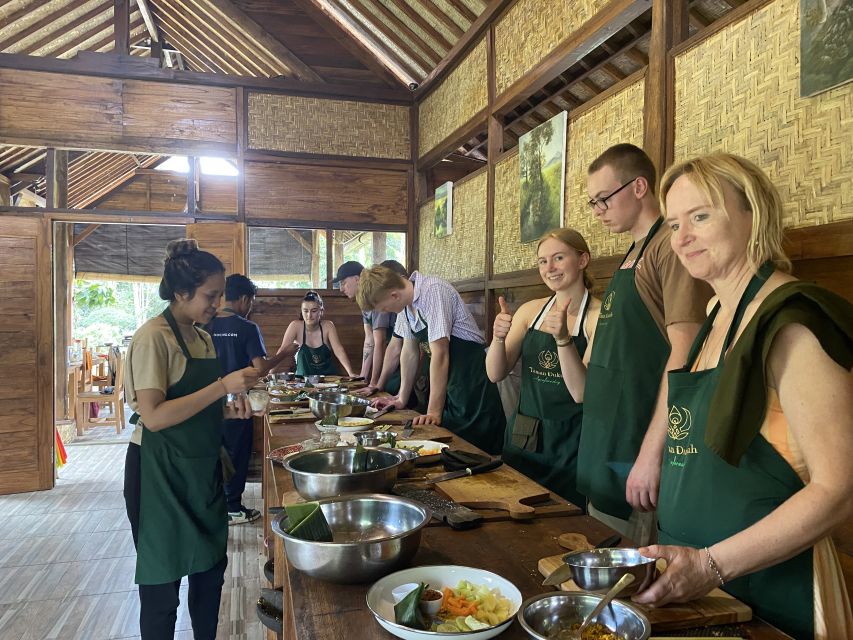
You eat the dishes you prepare, sometimes as individual courses during the session and sometimes as a larger meal at the end. Either way, the tasting is not an afterthought.
The menu is large for the price. You may prepare two starters, three main dishes, and one dessert, depending on how the menu is organized that day. That makes the class filling, so do not plan a large lunch immediately afterward.
I like that the cooking has a clear reward. You can compare the flavors as each dish is finished, ask questions while the food is still fresh, and notice how the same spice base works in different recipes.
Mineral water, coffee, and tea are included. Soft drinks and beer cost extra. The meal you cook is included, so the $32 price covers far more than instruction alone.
Is $32 good value?
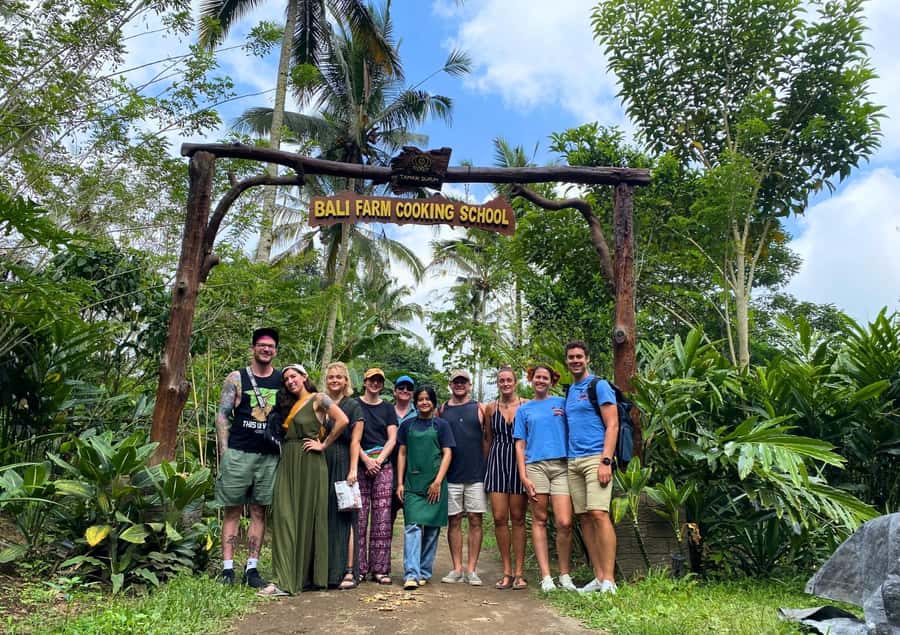
Yes, provided you want a long food-focused outing rather than a short lesson. For $32, you receive the shuttle from the Ubud meeting point, the morning market tour when applicable, breakfast, the farm tour, harvested ingredients, instruction, drinks listed in the inclusions, and a six-dish meal.
The recipe book improves the value. You also receive a downloadable PDF with the latest recipes, so you have a practical way to recreate the dishes at home. That is more useful than leaving with only a few photos.
The only caution is that the low price does not make the day short. The listed duration ranges from 330 minutes to eight hours, depending on the selected option and transport. Think of it as a major activity for the day, not something to squeeze between two quick Ubud stops.
Who should book this experience?
I would recommend it to first-time visitors who want food, culture, and a rural setting in one outing. It also suits families, couples, solo diners, and people who usually prefer learning by doing.
Vegetarians and vegans have a clearly described menu, which makes this a stronger choice than classes that offer only one meat dish with vegetables on the side. The small group and shared stations are also a good fit for people who enjoy meeting others.
You may want another type of class if you need a private instructor, cannot stand for or move around an outdoor farm setting, or have limited time in Ubud. Wheelchair users should note that the activity is not suitable for them.
The morning course suits early risers and anyone interested in daily local life. The evening class may work better if you want to avoid an early start, and it can still include the farm tour and six-dish cooking session. Check the chosen option carefully because the market visit is specifically part of the morning class.
Practical tips for getting the most from the day
- Choose the morning class if the market is important to you.
- Keep your afternoon open because the class can last up to eight hours and traffic may slow the return.
- Tell the operator your menu choice so the regular or vegetarian preparation is ready.
- Wear practical clothing for an outdoor farm and cooking area.
- Bring appetite because six dishes can make a very filling meal.
- Save the recipes and use the PDF later, since the class is designed to continue in your own kitchen.
- Expect to share your cooking station with one other person.
- Check the meeting point because it can differ by booking option.
Free cancellation is available up to 24 hours before the activity, and you can reserve now and pay later. Those terms help if your Bali plans are still shifting, but the transport and timing still deserve attention before you commit.
Should you book this Ubud farm cooking class?
Book it if you want more than a recipe lesson. The market, farm, ingredient picking, open-air kitchen, and generous meal create a full picture of how Balinese food connects to daily life.
The strongest reasons to go are the farm setting, the friendly instruction, the well-planned vegetarian menu, and the amount included for $32. The main drawbacks are the early start for the market option, shared workstations, outdoor conditions, and potentially slow traffic after a long day.
For most people staying in Ubud, I would choose the morning session and treat it as one of the day’s main activities. It offers useful recipes, a peaceful rural break, and a meal you helped create, all without the high price often attached to organized food experiences.
FAQ
How much does the Ubud Balinese cooking class cost?
The listed price is $32 per person.
How long does the cooking class last?
The activity lasts from 330 minutes to eight hours, depending on the option selected and its starting time.
Does the morning class include a market visit?
Yes. The local market tour is included with the morning class.
What food is included?
You receive a light breakfast on arrival and eat the dishes prepared during the cooking class. Mineral water, coffee, or tea are also included.
Is a vegetarian menu available?
Yes. The vegetarian menu includes Base Gede, gado gado, opor tempe, bergedel, sweet and sour tempe, vegan sate lilit, and a choice of dessert.
How many people are in each group?
The experience has a maximum of 14 people per group. There may be two or three groups at the farm during a session, and each cooking station is shared by two people.
What languages are spoken?
The live guides speak English and Indonesian.
Is transport included?
Yes. Shuttle service from an Ubud meeting point is included. The exact meeting point may vary by the option booked.
Can I cancel the booking?
You can cancel up to 24 hours in advance for a full refund. Reserve now and pay later is also available.
More Workshops around Indonesia
- Half-Day Thai Cooking Class at Organic Farm in Chiang Mai
★ 5.0 · 19,087 reviews - Florence Pizza or Pasta Class with Gelato Making at a Tuscan Farm
★ 5.0 · 6,801 reviews - Cooking Class and Lunch at a Tuscan Farmhouse with Local Market Tour from Florence
★ 5.0 · 4,831 reviews - Chiang Mai: Authentic Cooking Class with Market & Farm Visit
★ 4.9 · 4,546 reviews
Just added around Indonesia
- Ubud Eco-Adventure: Farm, Rice Terraces, River & Dance Show!★ 5.0 · 2 reviews
- Yogyakarta Cycling Tour Around the Villages and Fish Farm★ 5.0 · 16 reviews
- Farm-to-Table Balinese Cooking Experience★ 4.0 · 3 reviews
- Small-Group Farm Tour & Balinese Cooking Class in Ubud with Kadek★ 5.0 · 16 reviews
- Farmer market, waterfalls, holy spring – All Inclusive★ 5.0 · 4 reviews
- Seaweed Farming Activity and Sightseeing at Diamond Beach★ 4.5 · 3 reviews
- Safari Lagoi & Eco Farm Bintan★ 3.0 · 7 reviews
- Ubud: Organic Farm Harvest, Bali Cooking Class by Pemulan★ 4.8 · 12 reviews
Organic Farm Visits, farm by farm.
Half-Day Thai Cooking Class at Organic Farm in Chiang Mai
Read our review →
Evening Cooking Class in Organic Farm with Local Market Tour
Read our review →
ATV to Macao Beach and Water Cave with Organic Farm
Read our review →
Buggy Tour with Organic Farm, Macao Beach Visit from Punta Cana
Read our review →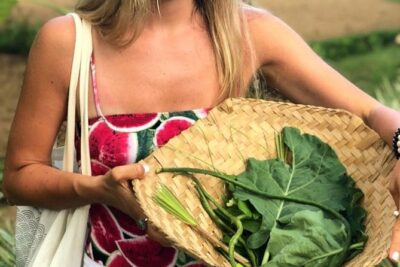
Authentic Bali Farm Cooking School & Organic Farm
Read our review →
Farm To table Experience on an organic hilltop estate in Tuscany
Read our review →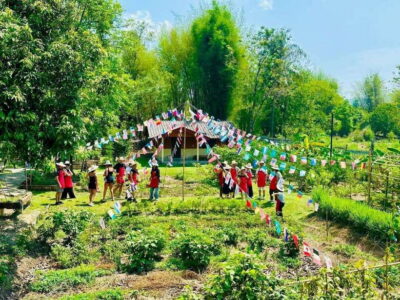
Other lists this farm sits on