
REVIEW · UBUD
Balinese Cooking Class at Organic Farm
Pick your lunch from the soil. This five-hour class at Mai Organic Farm near Ubud combines a farm walk, Balinese cooking, and a shared meal around a wood-fired stove. I especially like the farm-to-table format and the chance to learn about Bali’s UNESCO-recognized subak irrigation system, not just a handful of recipes. The one drawback is that the class sits outside central Ubud, and pickup is limited to central Ubud hotels and rentals.
The cooking is communal, friendly, and practical. You can help with every dish or take a lighter role, which works well for families and mixed-ability groups. At $40 per person, the price is fair for a five-hour outing with transfers, drinks, a farm visit, six dishes, and lunch, though exact pickup coverage and group size are worth confirming before you book.
Key points to know before booking
- Six Balinese dishes from garden ingredients: You help harvest produce before turning it into dishes such as tuna sate lilit and corn fritters.
- Traditional wood-fired cooking: This is not a polished demonstration kitchen. You cook with fire, outdoor equipment, and a communal rhythm.
- Small-group attention: The experience is advertised for as few as eight people, while the additional details list a maximum of 10, so confirm the final group size.
- More than a cooking lesson: The farm visit introduces organic growing and Bali’s subak water-management system.
- Drinks are part of the day: Expect welcome refreshments, fresh juice, infused water, herbal drinks, Balinese coffee, and lemongrass tea.
- Central Ubud pickup is offered: You can arrange round-trip transport from eligible hotels and rentals, but the farm itself is in Pejeng.
Why this cooking class feels different
Many cooking lessons begin with bowls of pre-measured ingredients. Here, the day starts earlier in the chain of events. You arrive at Mai Organic Farm in Pejeng, outside Ubud, and begin with a welcome drink in a shaded area.
That first pause matters. It gives you time to meet the instructors and learn about the farm’s community work before the practical part begins. The farm supports local growers and villagers in Pejeng, with the wider goal of helping farmers earn income and improve their resources.
I like this approach because it gives the meal a sense of place. You are not simply learning that a certain herb belongs in a Balinese sauce. You are seeing where some of the ingredients grow, handling them in the garden, and later tasting them in your lunch.
The class also introduces organic farming and Bali’s subak system. Subak is the traditional community irrigation system that helps manage water for rice fields and farming areas. Bali’s subak tradition has UNESCO World Heritage recognition, so this short lesson adds useful cultural context to the cooking.
More Organic Farm Visits around Indonesia:
- Ubud: Balinese Cooking Class at an Organic Farm
★ 5.0 · 1,786 reviews - From Ubud: Authentic Bali Farm Cooking School & Organic Farm
★ 5.0 · 122 reviews - Ubud: Organic Farm Harvest, Bali Cooking Class by Pemulan
★ 4.8 · 12 reviews
From welcome drink to garden harvest
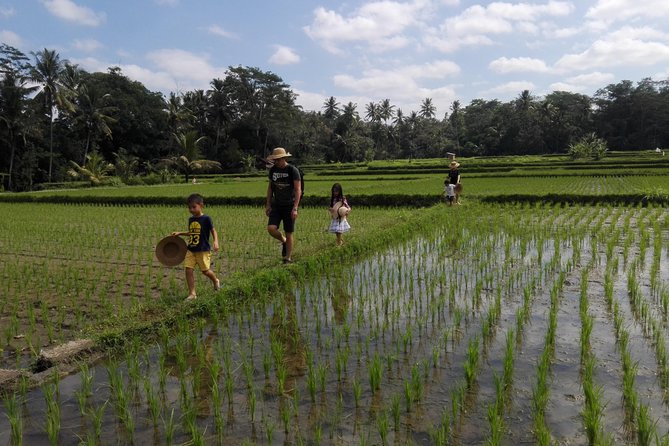
After the welcome, you walk through the community farm with the staff. The pace appears relaxed rather than rushed, allowing time to look at fruit, vegetables, herbs, and spices growing around you.
You will pick ingredients for the cooking session as you go. That is one of the strongest parts of the activity. It turns the farm tour into a useful step in the meal instead of a separate sightseeing stop.
The garden also gives children something concrete to do. Families with children aged six, nine, 12, and 13 have found the harvesting easy to follow and enjoyable. Younger participants can help collect produce, examine plants, and take part in the group preparation without needing to manage every cooking task.
The food walk can include tasting fruit straight from the farm and smelling spices for the first time. Exact crops vary, so you should not expect a fixed garden checklist. The appeal is the connection between what is growing nearby and what later appears on your plate.
Wear shoes you do not mind using around a farm, and bring protection from sun or rain. The activity requires good weather, and the farm setting means you should expect outdoor walking rather than a fully enclosed venue.
Six dishes and a traditional fire
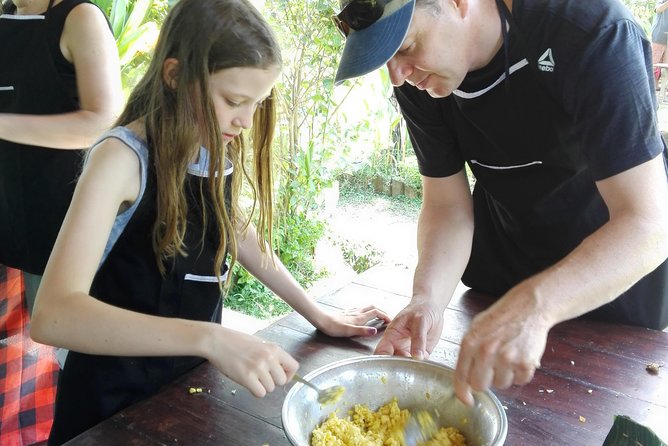
The cooking takes place after the farm walk, at the Mai Organic Farm community center. The class prepares six Balinese dishes, with examples including tuna sate and corn fritters. The advertised highlights also include sate lilit, a Balinese minced-meat kebab shaped around a skewer.
The exact menu may vary, but the format remains hands-on. You help prepare herbs, vegetables, sauces, and other ingredients gathered from the farm. You may also use the outdoor grill and traditional wood-fired stove.
That fire is part of the charm, but it also makes the class less predictable than cooking on a modern electric range. Heat control can require more attention. Smoke, outdoor conditions, and shared equipment are part of the setting. If you want a polished demonstration where every step is timed for you, this may feel rustic. If you want to understand how communal cooking actually works, the wood stove adds real character.
You can participate as much or as little as you like. That flexibility suits a family group, a couple with different cooking interests, or anyone who wants to watch a few steps before joining in. Still, you will get more from the class if you volunteer for the messy jobs: chopping, mixing, shaping the sate, and helping with the sauces.
The instructors have been praised for keeping the mood easy and inclusive. Korong is specifically associated with an energetic, cheerful teaching style, while Kadek has been noted for asking how the class could improve. Those details suggest a team that pays attention to the human side of the lesson, not only the food.
Drinks make the five hours feel generous
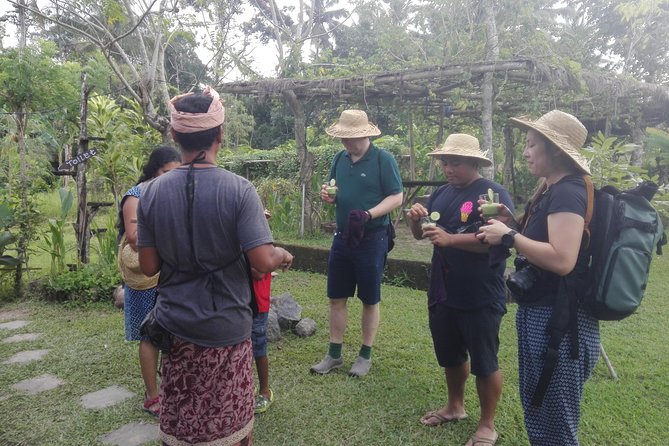
This is not a class where you pay for lunch and receive one small glass of water. The day includes a welcome drink, fresh juice made with local fruit and vegetables, infused water, herbal drinks, Balinese coffee, and lemongrass tea.
The fresh juice comes after the farm walk, before the main cooking session. It is a sensible pause after time outdoors and reinforces the use of local produce.
Balinese coffee and lemongrass tea help round out the meal and give you a taste of everyday drinks alongside the food. The menu of refreshments is a useful part of the value, especially since the outing lasts about five hours.
A small environmental detail also deserves credit. One French-language account praised the class for avoiding plastic from beginning to end. The available information does not spell out every serving method, but the farm’s low-waste approach appears to be part of its appeal.
More Cooking Classes around Indonesia:
- Balinese Farm Cooking Class by Pemulan Bali
★ 5.0 · 410 reviews - Balinese Vegan Cooking Class with Fresh Harvesting & Garden Tour
★ 5.0 · 86 reviews - Small-Group Farm Tour & Balinese Cooking Class in Ubud with Kadek
★ 5.0 · 16 reviews - Farm-to-Table Balinese Cooking Experience
★ 4.0 · 3 reviews
Lunch in the gubuk
Once the dishes are ready, you eat together in a tranquil gubuk, or hut, near the farm. This shared meal is the payoff for the group work.
The setting changes the character of lunch. Instead of sitting in a restaurant where the kitchen work is hidden, you can look at the food and remember who chopped, stirred, shaped, or cooked each part. The meal becomes a group achievement.
The food is intended to be delicious, but this is also a chance to compare flavors and ask questions. You may find that a dish tastes different from Balinese food served in a hotel or tourist restaurant because the cooking method and ingredients are more closely tied to the farm setting.
The class provides a recipe book, which is a valuable extra. Without recipes, a cooking lesson can become a pleasant memory that is difficult to repeat. With them, you have a better chance of making at least some of the dishes at home.
A practical look at the price
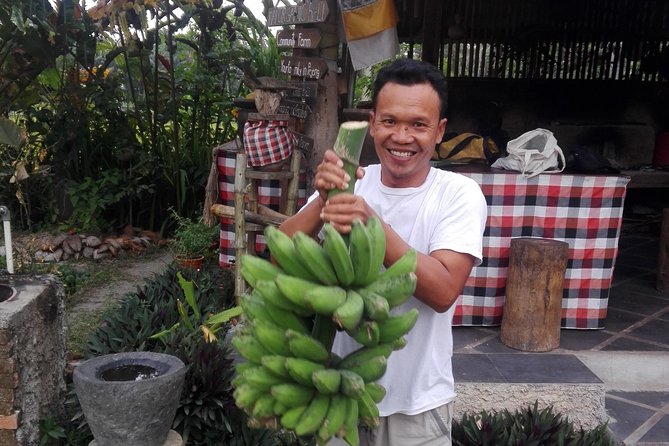
At $40 per person, the class offers a solid amount for a half-day outing. The fee includes roughly five hours of activity, farm access, instruction, ingredients, several drinks, the meal, and round-trip transfers from central Ubud hotels and rentals when arranged.
That package compares well with a standard cooking class because the farm tour and cultural explanation are built in. You are paying for a full sequence: transport, welcome, garden visit, ingredient gathering, cooking, and lunch.
The value is strongest if you want more than recipes. If you only care about learning a few dishes as quickly as possible, a shorter kitchen-based lesson might suit you better. This class spends meaningful time on farming and community work, so the price includes context as well as food.
The outing is also capped at a small number. The main description gives a limit of eight, while the additional tour information says a maximum of 10. That is a minor inconsistency, but it is worth checking when you reserve. A group of eight will feel more personal than a group of 10, especially around a shared fire.
Getting there from Ubud
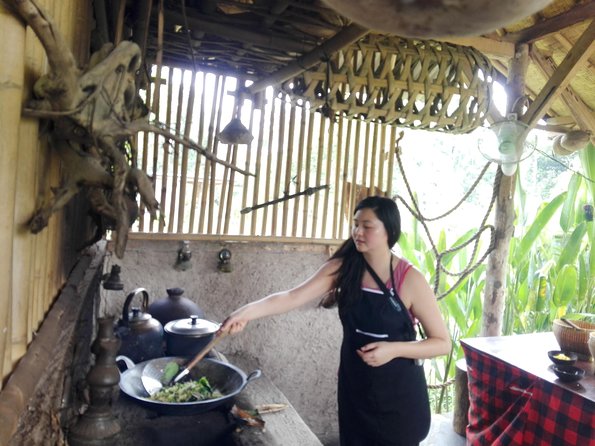
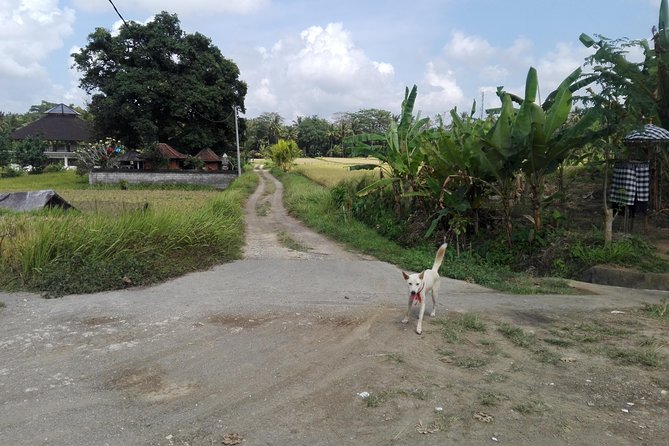
The farm’s meeting point is Mai Organic Farm Bali in Subak Kana, Banjar Panglan, Pejeng, in the Gianyar region. The activity ends back at the same meeting point unless you use the offered return transfer.
Pickup is available from central Ubud hotels and rentals. This makes the class easier to arrange than finding the farm independently, but do not assume every Ubud address qualifies. Confirm your pickup location and time after booking.
Confirmation is sent within 48 hours, subject to availability. Since the activity averages booking about 17 days ahead, I would not leave it until the last moment if the date matters to you.
The class requires good weather. If poor weather forces cancellation, you are offered another date or a full refund. You can cancel for a full refund up to 24 hours before the start time, but changes or cancellations inside that period are not accepted.
Who will enjoy it most
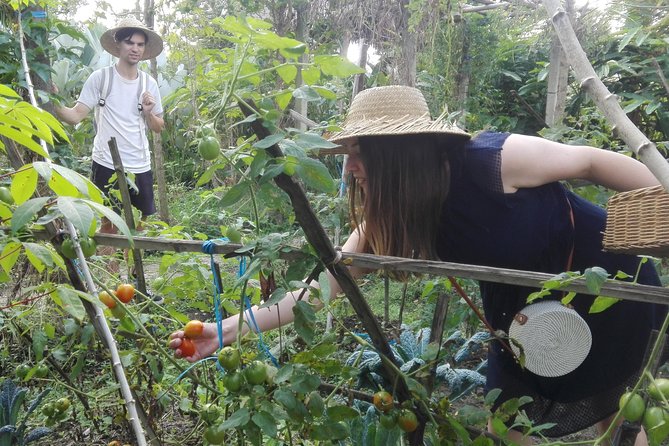
I would choose this class for visitors who want food tied to farming and community life. It is especially suitable for:
- Couples who want a shared activity rather than a restaurant meal
- Families with children who enjoy picking ingredients and helping with lunch
- First-time visitors who want an introduction to Balinese food and the subak system
- Repeat Bali visitors who have already taken a standard cooking class
- People who prefer small, locally focused activities over large group tours
The class also works for people who are not confident cooks because participation can be adjusted. You can take a leading role or watch more closely.
I would hesitate if you dislike outdoor conditions, smoke, communal cooking, or flexible timing. The experience is designed around a farm and wood fire, not a cool, spotless studio kitchen. It is also not the best choice if you need a tightly scheduled activity with no weather risk.
Is Mai Organic Farm worth booking?
Yes, for the right kind of day. I like the way this class connects the soil, the stove, and the table. You see the ingredients growing, pick some of them, cook six dishes with a local team, and sit down to eat what you helped prepare.
The strongest reasons to book are the farm visit, the small group, the wood-fired cooking, and the community focus. The drinks, recipe book, and included transfers add real value at $40.
Before paying, confirm the pickup area, final group size, menu, and meeting instructions. If those details work for you, this is a worthwhile Ubud activity that offers much more than a recipe lesson.
FAQ
Where does the Balinese cooking class take place?
It takes place at Mai Organic Farm Bali in Subak Kana, Banjar Panglan, Pejeng, in the Gianyar region of Bali.
How long does the activity last?
The experience lasts approximately five hours.
Is pickup available from Ubud?
Yes. Round-trip pickup is offered from central Ubud hotels and rentals. Confirm that your exact location is within the pickup area.
How many dishes will I cook?
You will prepare six Balinese dishes. Examples include tuna sate, sate lilit, and corn fritters.
Will I visit the farm before cooking?
Yes. The day includes a guided walk through the community farm, where you learn about organic growing and pick ingredients for the class.
What drinks are included?
The experience includes a welcome drink, fresh juice, infused water, herbal drinks, Balinese coffee, and lemongrass tea.
Is the class suitable for children?
Yes. Children have taken part in harvesting and cooking, including children aged six, nine, 12, and 13. Participants can help as much or as little as they wish.
What happens if the weather is poor?
The activity requires good weather. If it is canceled because of poor weather, you will be offered a different date or a full refund.
What is the cancellation policy?
You can cancel up to 24 hours before the start time for a full refund. Cancellations or changes made less than 24 hours before the activity are not accepted.
More Workshops around Indonesia
- Half-Day Thai Cooking Class at Organic Farm in Chiang Mai
★ 5.0 · 19,087 reviews - Florence Pizza or Pasta Class with Gelato Making at a Tuscan Farm
★ 5.0 · 6,801 reviews - Cooking Class and Lunch at a Tuscan Farmhouse with Local Market Tour from Florence
★ 5.0 · 4,831 reviews - Chiang Mai: Authentic Cooking Class with Market & Farm Visit
★ 4.9 · 4,546 reviews
Just added around Indonesia
- Ubud Eco-Adventure: Farm, Rice Terraces, River & Dance Show!★ 5.0 · 2 reviews
- Yogyakarta Cycling Tour Around the Villages and Fish Farm★ 5.0 · 16 reviews
- Farm-to-Table Balinese Cooking Experience★ 4.0 · 3 reviews
- Small-Group Farm Tour & Balinese Cooking Class in Ubud with Kadek★ 5.0 · 16 reviews
- Farmer market, waterfalls, holy spring – All Inclusive★ 5.0 · 4 reviews
- Seaweed Farming Activity and Sightseeing at Diamond Beach★ 4.5 · 3 reviews
- Safari Lagoi & Eco Farm Bintan★ 3.0 · 7 reviews
- Ubud: Organic Farm Harvest, Bali Cooking Class by Pemulan★ 4.8 · 12 reviews
Organic Farm Visits, farm by farm.
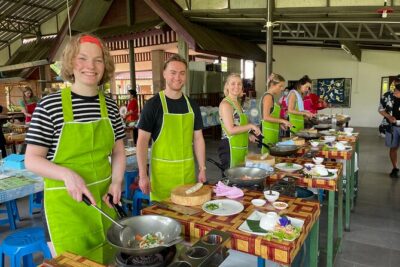
Half-Day Thai Cooking Class at Organic Farm in Chiang Mai
Read our review →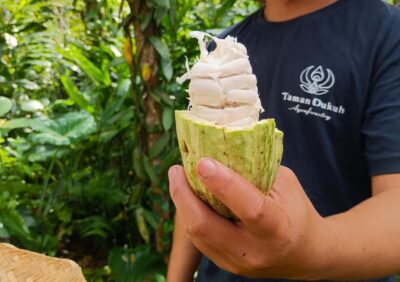
Evening Cooking Class in Organic Farm with Local Market Tour
Read our review →
ATV to Macao Beach and Water Cave with Organic Farm
Read our review →
Buggy Tour with Organic Farm, Macao Beach Visit from Punta Cana
Read our review →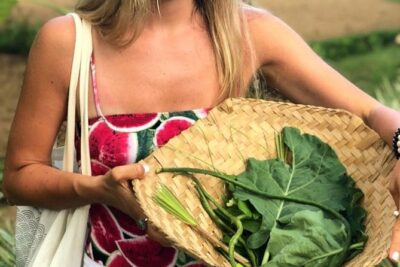
Authentic Bali Farm Cooking School & Organic Farm
Read our review →
Farm To table Experience on an organic hilltop estate in Tuscany
Read our review →Other lists this farm sits on