
REVIEW · ITALY
From Parma: Parmigiano Reggiano Farm Tour & Tasting with Transfer
Cheese is the main event here. This morning visit takes you from Parma’s train station area into the countryside, where a working caseificio shows you how authentic Parmigiano Reggiano is cooked, shaped, salted, aged, tested, and branded. I especially like the small-producer setting and the included hotel transfer, which removes the need to arrange rural transport. The tasting of two aged cheeses with balsamic vinegar and regional sparkling wine is another strong point.
The main consideration is value. At $89.49 per person, this is not a cheap cheese sample with a quick photo stop. You are paying for transport, a guided factory visit, and access to a working dairy, but anyone expecting a full-day food tour or a large meal may find the experience short for the price.
Key points at a glance
- See the full cheese-making process: Watch the milk become Parmigiano Reggiano, from cooking and whey separation to shaping, salting, aging, testing, and fire branding.
- Visit a smaller working producer: The caseificio setting feels more personal than a large commercial attraction, with the chance to see cheesemakers at work.
- Taste two ages of cheese: The tasting shows how aging changes flavor and texture, with balsamic vinegar, honey, and local sparkling wine included in the experience.
- Ride from central Parma: Pickup and drop-off are provided at the NH Parma hotel beside the train station.
- Learn what makes the name official: The tour explains why only cheese made in approved areas of Emilia-Romagna and nearby provinces can be called Parmigiano Reggiano.
- Plan for a compact morning: The experience begins at 8:30 a.m., lasts about two and a half hours, and accepts a maximum of 15 people.
From the NH Parma to the countryside
The meeting point is the NH Parma hotel at Viale Paolo Borsellino 31, next to the train station. This is a practical starting point if you arrive in Parma by train, and several people have found the transfer easy to manage. The tour returns to the same place, normally around late morning.
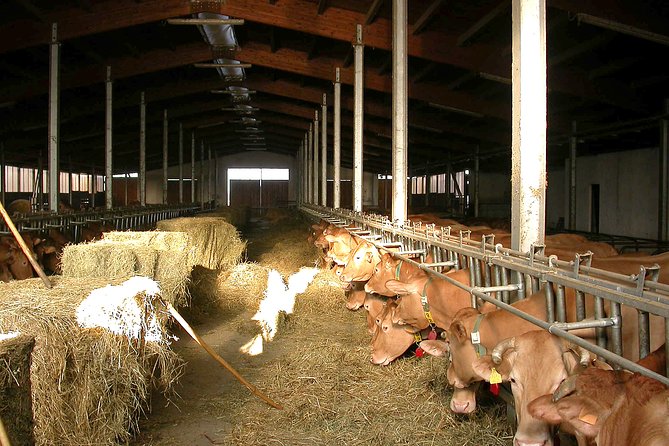
The drive is part of the lesson. As you leave town, you pass fields and farm buildings tied to Parmigiano Reggiano production. The cows’ feed is not an afterthought. The consortium sets rules for the fresh and dried forage used to produce the milk, and the guide explains how the chain begins well before the milk reaches the copper kettles.
You ride in an air-conditioned vehicle, with a group limited to 15 people. That is small enough for questions and conversation, though the experience can still feel like a shared group outing rather than a private visit. The drive through the Parma countryside is brief, and the farm setting gives the morning a useful sense of place.
Bring only what you need. Large bags and luggage are not allowed in the van, and you should contact the operator before arrival if you need storage information.
More Food and Drink Tours around Italy:
- Sorrento Farm and Food Experience including Olive Oil, Limoncello, Wine tasting
★ 5.0 · 2,524 reviews - Pizza School with Wine and Limoncello Tasting in a Local Farm
★ 5.0 · 845 reviews - Authentic Farm Tour with Pizza, Cheese, Wine & Limoncello Tasting
★ 5.0 · 698 reviews
Inside the caseificio: where the milk becomes cheese
The heart of the morning is the caseificio, the Italian word for cheese factory. This is an active production site, not simply a museum display. You watch the cheesemakers work and follow the stages in the same order the cheese itself does.
The milk is heated in large copper kettles. The process separates the whey from the solids, and the cheesemakers then lift and divide the developing cheese before shaping it into its familiar wheel. Seeing this by hand makes the finished wedge in your pasta bowl seem considerably less simple.
The guide explains the role of the milk, the cows, and the surrounding farms. At some producers, you may also see how the operation connects its own cows, forage, milk, and final cheese. One especially memorable detail from the visit can be the contrast between the unseasoned curd and the finished product. Before salting, the cheese is not pleasant to taste, which helps show how much time and treatment are needed.
The shaping room and salting area follow. These rooms reveal why Parmigiano Reggiano is a slow food in the most literal sense. The wheels must be formed carefully, salted, and prepared for a long period of aging. A quick factory visit might skip these stages, but here they are part of the central story.
The stagionatura and thousands of aging wheels
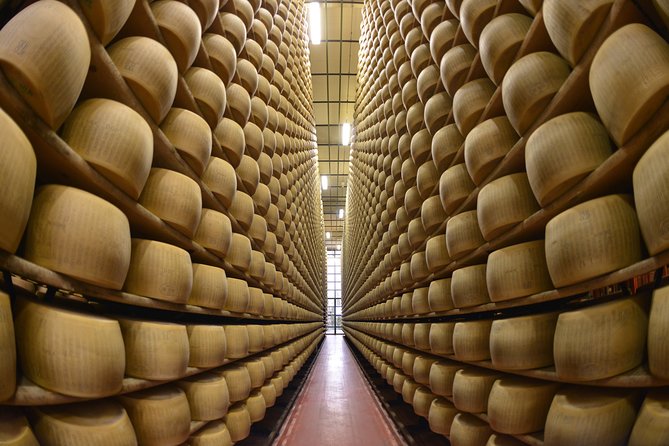
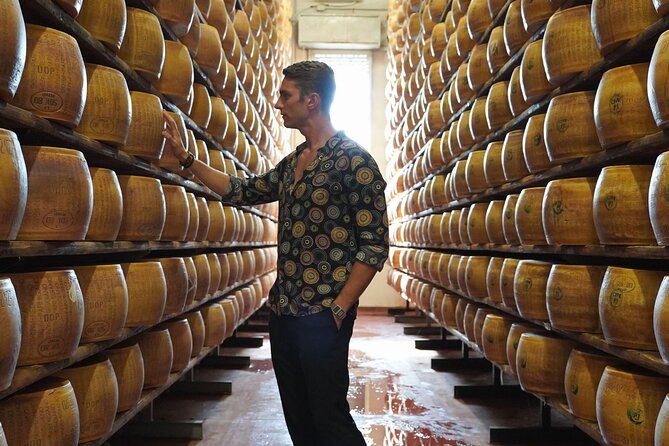
The aging room, known as the stagionatura, is the visual highlight. Rows of wheels fill the shelves, and the air carries the unmistakable smell of aging cheese. This is where the young wheels gain the firm texture, granular bite, and concentrated taste associated with mature Parmigiano Reggiano.
You learn why age matters. The tasting includes two different ages, allowing you to compare them rather than treating Parmesan as one fixed product. The older cheese has a firmer texture and a more pronounced flavor, while the younger wheel is generally milder and easier to slice. The exact ages served can vary, so do not expect a particular number unless the operator confirms it.
The aging room also makes the price of good Parmigiano easier to understand. A producer has money tied up in cheese that cannot be sold immediately. Every wheel occupies shelf space, receives care, and remains subject to inspection before it can carry the official name.
Why authentic Parmigiano Reggiano is geographically limited
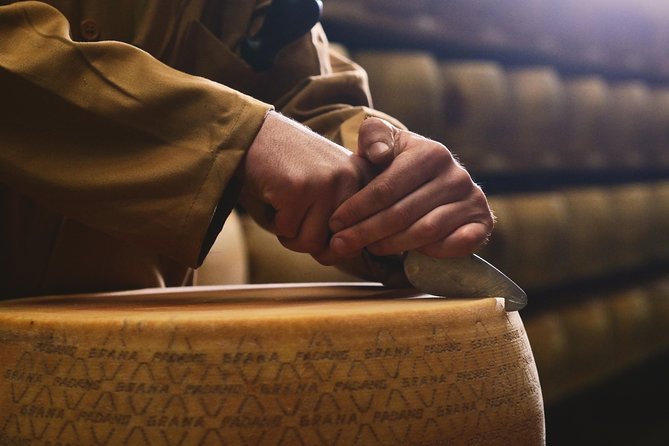
The tour gives useful context about the protected name. Authentic Parmigiano Reggiano can be produced only in the approved areas around Parma, Modena, Reggio Emilia, and parts of Bologna and Mantova. Cheese made elsewhere must use another name, even if it resembles Parmesan.
This rule is not just a marketing detail. The production area, milk, animal feed, methods, aging, and inspection all form part of the protected standard. The guide connects those rules to what you see at the dairy, so the certification feels practical rather than bureaucratic.
That makes this experience worthwhile even if you already eat Parmigiano Reggiano at home. You learn what to look for and why an authentic wheel is different from an imitation. The guide may also explain how the cheese relates to other Parma specialties, including Prosciutto di Parma.
More Farm Tours around Italy:
- Florence Pizza or Pasta Class with Gelato Making at a Tuscan Farm
★ 5.0 · 6,801 reviews - Cooking Class and Lunch at a Tuscan Farmhouse with Local Market Tour from Florence
★ 5.0 · 4,831 reviews - Sorrento: Pizza Lesson, Wine, and Limoncello at a Local Farm
★ 5.0 · 1,513 reviews - Florence: Pizza or Pasta Class with Gelato at a Tuscan Farm
★ 4.9 · 1,181 reviews
Hammer tests, fire branding, and the final approval
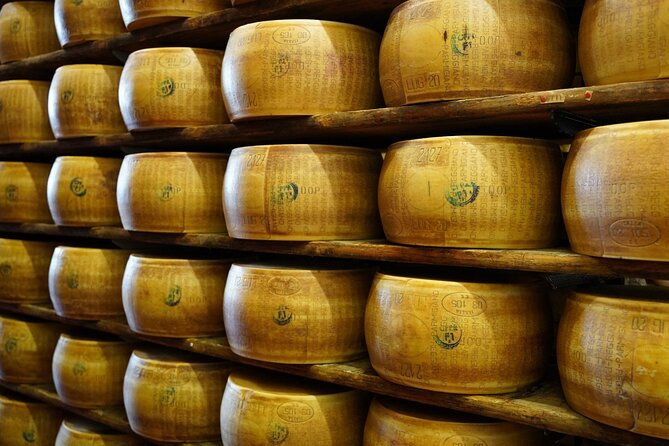
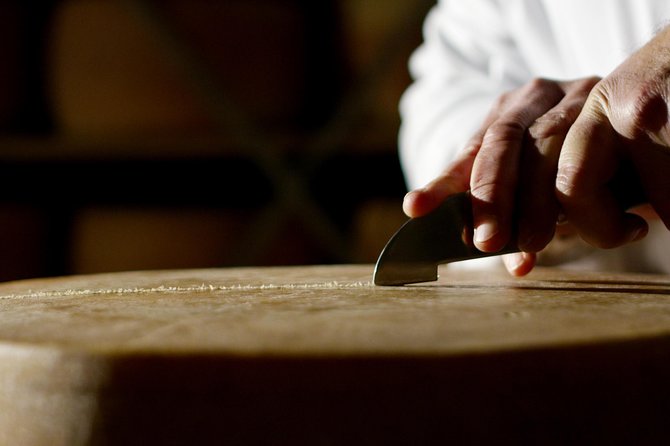
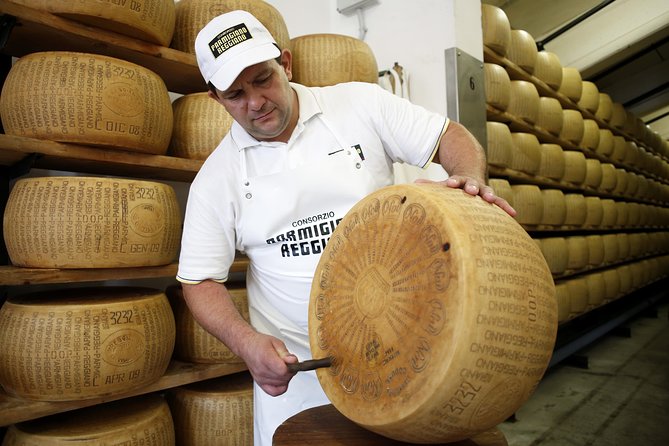
One of the more surprising parts of the tour is the inspection process. Before a wheel can be sold as official Parmigiano Reggiano, an inspector checks it by tapping the surface with a small hammer. The sound helps reveal whether the interior has the proper structure or contains flaws.
Approved wheels receive the familiar fire branding. This ritual marks the cheese as authentic and links the finished product to the consortium’s rules. Wheels that do not pass are not permitted to carry the official name in the same way.
You may have seen the branding on a supermarket wedge without thinking much about it. After this visit, the mark has a clearer meaning. It is the result of production standards and inspection, not just a decorative logo.
The tasting: two cheeses, balsamic, and local wine
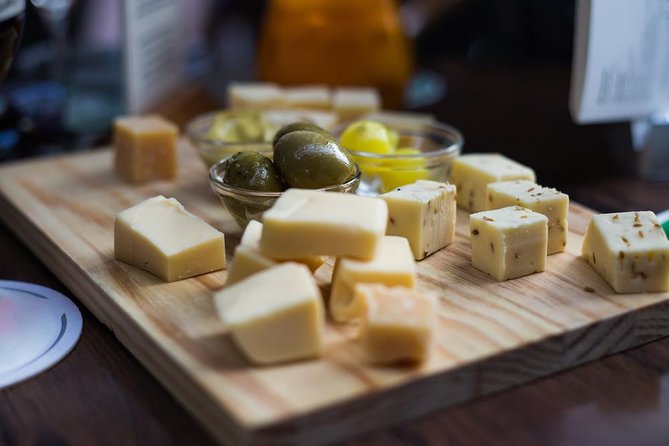
The tasting closes the visit and is more useful than a single bite of cheese. You sample two ages of Parmigiano Reggiano, which gives you a direct comparison in texture and flavor. Balsamic vinegar adds sweetness and acidity, while local sparkling wine provides a traditional regional pairing.
The published details also mention honey as part of the tasting. The exact combination can vary, but the basic idea is consistent: taste the cheese on its own first, then try it with the accompaniments. That way, you notice what the aging has done before the sweetness of honey or balsamic changes the balance.
Portions are described as generous enough to make the tasting satisfying, but this is not a replacement for lunch. If you are hungry after the morning visit, plan a separate meal in Parma.
Many people also buy cheese at the farm shop. Some producers can arrange shipping, which is useful if you do not want to carry a wedge through the rest of your trip. Ask about shipping and storage directly at the dairy, since those arrangements are not guaranteed as part of the tour.
The guides make a real difference
The guide is important here because the production process can look repetitive if nobody explains what you are seeing. Several guides have been praised for making the morning lively and clear, including Sergio, also called George, Loris, Daniele, Matteo, and Pietro.
The strongest guiding style combines technical facts with local context. One guide has been praised for explaining both the Parmigiano process and the wider Parma region. Others have helped with restaurant suggestions and wider Italy trip advice. You should feel free to ask questions, especially during the shaping, aging, and inspection stages.
Guide quality can vary slightly from one departure to another. One less positive experience described a guide who seemed unsure of some facts and delivered the information less confidently. That is worth keeping in mind, though the overall rating is 4.8 out of 5 from 113 reviews, with 96 percent of participants recommending the experience.
Timing, group size, and practical limits
The tour starts at 8:30 a.m. and lasts about two hours and thirty minutes, including the transfer. It works well on a morning when you want to see one major food producer and still have most of the day for Parma’s historic center, museums, or another meal.
The stated factory visit itself takes about two hours. The total duration can vary slightly depending on the drive, group movement, and questions. A maximum of 15 people keeps the group manageable, although one account describes a group of roughly 15 to 20, so the exact number may depend on the departure.
The experience operates in poor weather when conditions remain safe. Part of the visit takes place at an active farm, so wear practical shoes and clothing that can handle a working agricultural setting. The tour is generally suitable for most people, but anyone with mobility concerns should ask the operator about the exact conditions before booking.
Children of every age must be included in the reservation and pay the stated fee. This is because seating in the van is limited. Do not arrive with an unbooked child and expect spare space.
Free cancellation is available if you cancel at least 24 hours before the local start time. Cancellations or changes made inside that window are not refundable.
Is $89.49 a fair price?
The price makes the most sense if you value convenience and access. You receive a round-trip transfer from central Parma, an English-language guide, a visit to a working cheese producer, and a tasting with regional pairings. If you would otherwise need to arrange rural transport, the included van adds real value.
The price feels less appealing if you want a long food-focused day. The tour covers one producer, lasts only a morning, and does not include a full meal. One person considered it too costly compared with major sightseeing tours, while others felt the small farm, full production process, and tasting justified the expense.
I would compare it with the cost and effort of reaching a dairy independently. For a short stay in Parma, the simple pickup and drop-off can be worth paying for. For a car-based trip with plenty of time, you may prefer to seek out a producer on your own, though you would need to confirm access and English guiding separately.
Who should book this Parma cheese tour?
I would recommend it to you if Parmigiano Reggiano is more than a topping in your kitchen. You see the cows’ feed, the milk, the kettles, the shaping, the salt, the aging shelves, the inspection, and the branding. That complete chain is the reason the visit feels more substantial than a tasting counter.
It also suits solo visitors. The shared van and small group create easy opportunities to meet people, and the morning does not require you to organize complicated transport.
Families can take part, but remember that every child must have a paid booking and that luggage is not allowed in the vehicle. Wine is included in the tasting, so families should confirm arrangements if that matters to them.
I would be less enthusiastic if you dislike early starts, active farm settings, or guided group visits. The tour is focused and informative, not leisurely. You will spend much of the morning standing, walking through working areas, and listening to explanations.
Should you book it?
Book this experience if you want to understand why Parmigiano Reggiano costs what it does and prefer a real producer to a polished city tasting. The small-scale setting, rows of aging wheels, hammer inspection, and comparison of two cheeses are the best reasons to go.
Skip it if you want a full-day culinary tour, a substantial meal, or the freedom to explore at your own pace. For most short visits to Parma, though, the included transfer and well-regarded guides make this a practical and memorable morning.
FAQ
Where does the tour start?
The tour starts at 8:30 a.m. at the NH Parma hotel, Viale Paolo Borsellino 31, beside Parma train station.
Is hotel pickup and drop-off included?
Yes. Pickup and drop-off are included from the NH Parma hotel near the train station, and the activity ends back at the same meeting point.
How long does the experience last?
The total experience lasts approximately two hours and thirty minutes. The cheese factory visit itself is listed as about two hours.
What will I taste?
You will taste Parmigiano Reggiano paired with balsamic vinegar and local sparkling wine. Honey is also included in the tour description, and two different aged cheeses are served.
Can I bring luggage or a large bag?
No. Luggage and large bags are not allowed on the van. You should contact the operator for information about storage.
What happens if I need to cancel?
You can cancel for a full refund if you do so at least 24 hours before the local start time. Cancellations or changes made less than 24 hours before departure are not accepted for a refund.
Just added around Italy
- Volterra: Pizza Cooking Class in a tuscan farmhouse★ 4.6 · 11 reviews
- Volterra: Fresh Pasta Cooking Class at a Tuscan Farmhouse★ 5.0 · 33 reviews
- Visit Siena and San Gimignano with lunch at a family farm★ 5.0 · 8 reviews
- Vico Equense: Tour in the dairy “Mozzarella Experience”★ 5.0 · 19 reviews
- Turin: Meet the Monviso Alpacas at the Educational Farm with a Guide★ 5.0 · 5 reviews
- Bardolino: Garda Lake Pasta Cooking Class at the Agritourism★ 5.0 · 32 reviews
- Rialto Farmers & Fish Market Food Tour in Venice with Wine Tasting & Sightseeing★ 5.0 · 3 reviews
- Rialto Market Food Tour: Wine Tasting and Sightseeing in Venice★ 5.0 · 57 reviews
Food & Drink, farm by farm.
Sorrento Farm and Food Experience including Olive Oil, Limoncello, Wine tasting
Read our review →
Maui Ku’ia Estate Guided Cacao Farm Tour and Tasting
Read our review →
Ría de Arousa: Boat Ride to Mussel Farm with Tasting
Read our review →
Pizza School with Wine and Limoncello Tasting in a Local Farm
Read our review →
Authentic Farm Tour with Pizza, Cheese, Wine & Limoncello Tasting
Read our review →
Olive Farm Tour with Tasting of Local Delicacies
Read our review →Other lists this farm sits on