
REVIEW · FRANCE
Lavender Harvesting and Distillation Workshop in Bellegarde
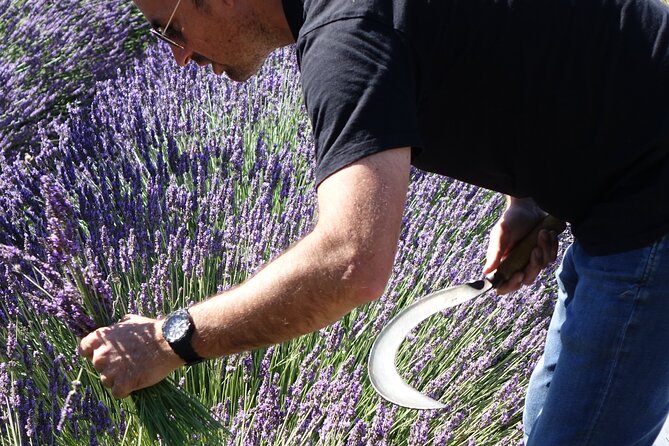
A morning among lavender plants stays with you. This small-group workshop near Nîmes gives you two things I especially like: hands-on harvesting with a traditional Provençal pruning hook and a clear look at how plants become organic essential oil. You also fill a bottle with floral water and oil, so the result is more than a pleasant morning out. You take home something tied to the work you did.
The main point to consider is the physical side. You will cut plants in the fields, handle protective equipment, and take part in loading the still, so this is not a sit-back-and-watch visit. Children under 10 cannot join, and the workshop needs good weather.
Key points before you book
- Cut lavender with a traditional pruning hook: You receive the cutting tool and protective gloves for the fieldwork.
- Follow the plants into the distillery: The workshop explains how freshly cut plants are loaded into the still.
- See essential oil production from start to finish: You learn how organic oil is extracted for cosmetics and perfumery.
- Take home floral water and oil: Your harvested plants contribute to the bottles you fill.
- Meet the people behind the family business: Gaël and Laura are praised for warmth, humor, and passionate teaching.
- Plan for a sunny morning: Bring sunscreen, and buy a hat on site if needed.
Starting at 9:30 at Le Mas Neuf
Your morning begins at un MAS en PROVENCE, the organic essential-oil and cosmetics distillery at Le Mas Neuf on Avenue du Félibrige in Bellegarde. Bellegarde is near Nîmes, but this is not a city sightseeing stop. The appeal comes from getting into the fields and production area at the source.
The start time is 9:30 am, and the activity lasts about two and a half hours. That timing gives the workshop enough room for fieldwork, explanations, and distillation without turning the visit into an all-day commitment.
The meeting point is also the end point, which keeps the morning simple. You do not need to track several locations or arrange a separate return transfer. The activity is offered in English, and confirmation is provided when you book.
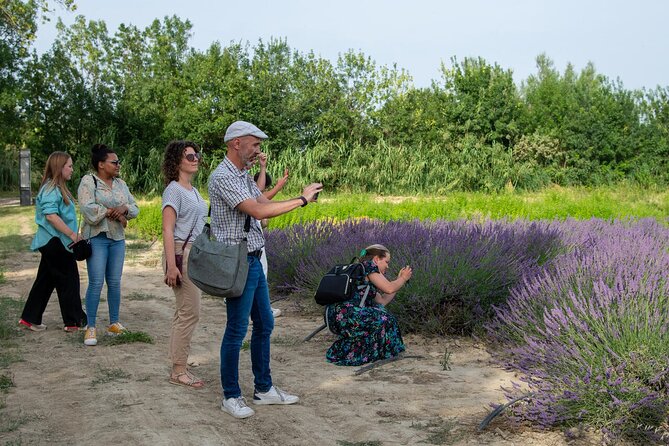
The group can include up to 20 people. That is not an intimate private lesson, but it is still a controlled size for a practical workshop. A group of this scale allows the guide to demonstrate the tools and equipment while keeping the session social.
More Workshops around France:
- Sturgeon Fish-Farm Visit and Caviar Master Class Tasting in Neuvic
★ 5.0 · 8 reviews - From location: Truffle farm visit, culinary workshop, meal
★ 5.0 · 3 reviews - Half-Day Thai Cooking Class at Organic Farm in Chiang Mai
★ 5.0 · 19,087 reviews
Cutting lavender with a Provençal tool
The first major part of the workshop takes place among the flowering plants and aromatic herbs. You learn to use a serpe, or pruning hook, a traditional Provençal cutting tool. Protective gloves and the cutting tool are included.
This is where the workshop earns its hands-on character. Instead of simply walking past rows of lavender and taking photographs, you take part in the harvest. The work is straightforward, but you should still expect to use your hands and maintain a moderate level of physical effort.
The staff explain the plants as you work. One useful point brought up during the session is that there are three types of lavender, each linked to different strengths in perfume. That detail helps explain why lavender is not one single uniform product. Scent, use, and strength can vary by plant.
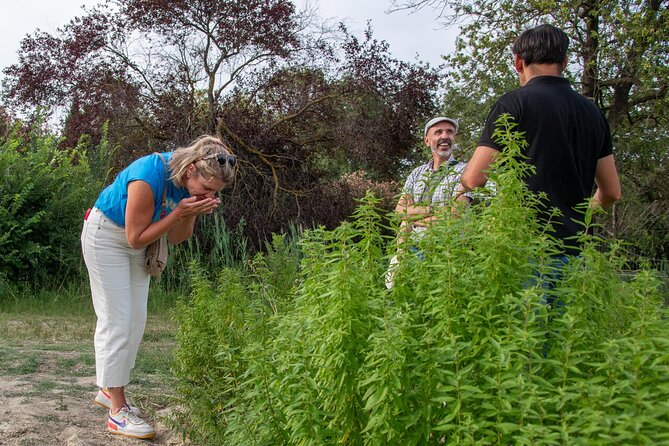
You also get the chance to smell the plants in the field. That matters because the plant’s scent is part of the lesson, not just a pleasant background detail. You can connect the living plant with the oil and floral water produced later.
Gaël has been praised for mixing clear instruction with humor, while Laura is singled out for her warm guiding style. The atmosphere seems to be one of shared work rather than a formal lecture. That makes this a good choice if you prefer learning through simple tasks and conversation.
Bring sunscreen. A cap or hat is not included, although one is available to buy on site for €6. The provided information does not give the amount of shade in the fields, so sun protection is a sensible part of your packing list.
Following the plants into the distillery
After harvesting, you take the plants to the distillery and help load them into the still. This link between field and equipment is one of the strongest parts of the morning. You see that essential oil production is not a vague natural process. It depends on collecting the plant, handling it, and preparing it for extraction.
The workshop explains the complete process used to extract organic essential oils. These oils are used in cosmetics and perfumery, so the lesson has a practical connection to products you may already use.
You do not need specialist knowledge to follow along. The point is to show each stage in a clear way, from the plant in the field to the liquid product. Gaël’s passion for the family business is a recurring part of the experience, and that personal connection gives the distillery visit more character than a detached factory demonstration.
The group format may mean you sometimes listen while someone else is helping with the equipment. Still, the chance to load the plants yourself gives the workshop a physical link that a standard guided tour would lack.
Filling your own bottle of oil and floral water
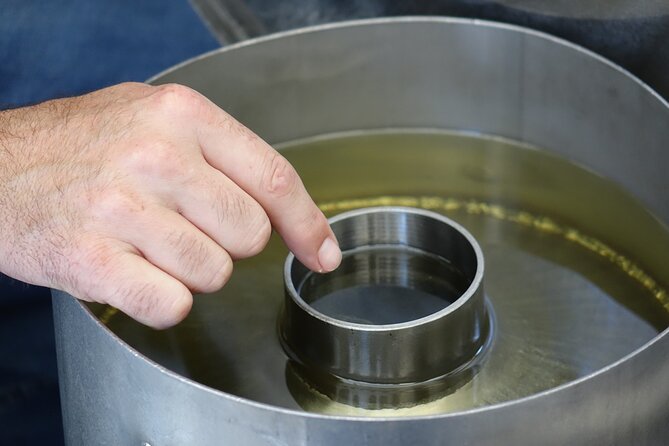
The final part brings the process back to you. You fill your bottle with floral water and the oil extracted with help from the plants you harvested.
That small take-home element gives the workshop real value. At $36.01 per person, you are paying for instruction, access to the field and distillery, equipment, and a personal product. The bottle is not just a shop purchase made at the end. It is connected to the work completed during the morning.
The activity is also useful if you want to understand the difference between essential oil and floral water. The supplied details do not describe bottle sizes, so do not book based on an expected quantity. The value is the process and the participation, with the take-home products as a fitting finish.
Some sessions may also spark interest in perfume-making. The team has invited returning participants to create their own perfume, but that is not listed as part of this lavender harvesting and distillation workshop. You should treat it as a possible future activity, not something included in this booking.
More Farm Tours around France:
- Versailles Bike Tour with Palace & Queen Farm Entrance
★ 4.9 · 492 reviews - Loupian: Tour guide of our oyster farm and tasting
★ 4.9 · 86 reviews - Sturgeon Fish-Farm Visit and Caviar Discovery Tasting in Neuvic
★ 4.5 · 81 reviews - Provençal Farmers market tour
★ 5.0 · 15 reviews
A warm teaching style, with Gaël and Laura
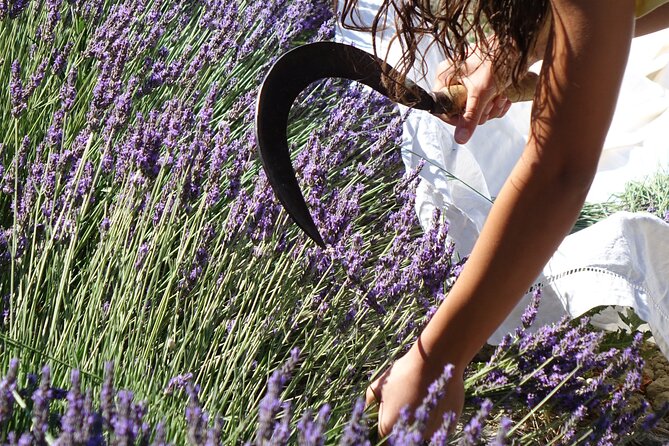
The human side is a major reason this workshop receives such strong praise. Gaël is described as the owner who developed the family enterprise, and he speaks about the work with obvious affection. His approach combines facts, stories, and humor.
Laura is also praised as a wonderful guide. The staff are described as friendly, willing to answer questions, and happy to explain the plants from start to finish. That matters because a field workshop can feel rushed or overly technical if the teaching is not clear.
The session has also been described as educational for both adults and children old enough to take part. That does not mean it is designed only for families. Adults who want a more sensory and practical morning should find plenty to enjoy, especially if they like learning how everyday products are made.
The experience has even brought back childhood memories for one participant who had previously cut lavender with a serpe. That detail hints at the workshop’s old-fashioned quality. The pruning hook is not a decorative prop. It gives the harvest a direct connection to older rural work in Provence.
Who will get the most from this workshop?
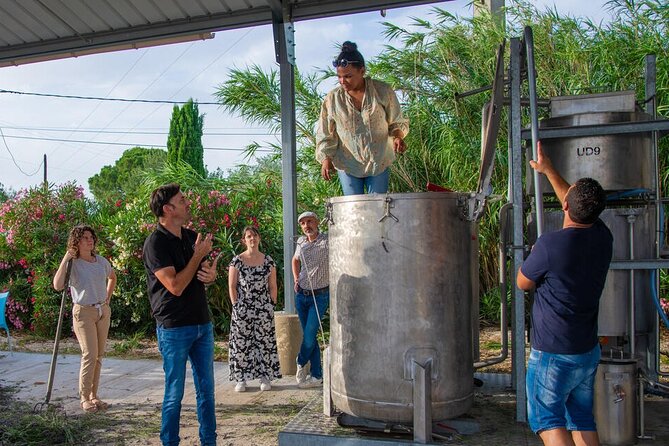
I would recommend this activity to you if you like local production, plants, fragrance, and practical demonstrations. It suits people who want a break from monuments and museums and would rather spend a morning handling a tool, smelling plants, and seeing a real production process.
It also works well for anyone curious about cosmetics or perfume. The explanation of three lavender types and their different perfume strengths adds useful context, especially if you normally think of lavender as one basic scent.
Families with children aged 10 or older may enjoy it, since the session combines movement, smells, tools, and a clear finished product. The age limit is firm: children under 10 are not permitted.
You should think twice if you have limited mobility or dislike outdoor work. The required fitness level is moderate, and the activity involves cutting plants and helping with the still. The supplied details do not give information about accessible surfaces or seating, so contact the provider before booking if you need specific assistance.
Service animals are allowed, and the meeting point is near public transportation. Those details make the visit easier to fit into a wider day around Bellegarde and Nîmes, although no exact route information is provided.
Is $36.01 good value?
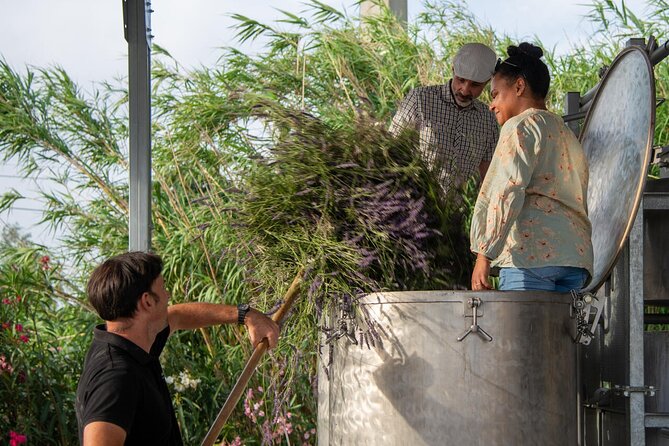
For $36.01 per person, I think the workshop offers fair value, particularly because it is active rather than purely observational. You receive the tool and gloves, take part in harvesting, see the distillation process, and fill bottles with floral water and oil.
The price also covers access to a working organic distillery and direct teaching from the people who run the business. That personal contact gives the workshop more substance than buying lavender products in a shop.
Still, the value depends on what you want. If you only want a quick photo stop in a lavender field, two and a half hours and the practical work may feel like too much. If you want a deeper look at how aromatic plants become usable products, the price is easier to justify.
Remember that a hat costs an extra €6 on site, and drinks are also sold separately. Sunscreen is not listed as included, so bring your own.
Timing, weather, and cancellation details
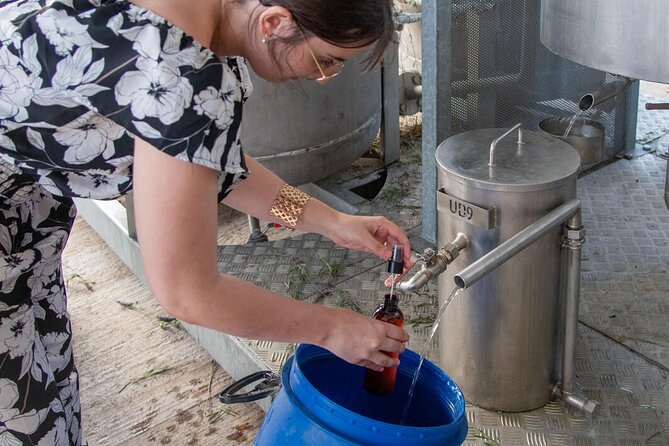
The workshop begins at 9:30 am and ends back at the same meeting point after about two hours and thirty minutes. You should arrive ready for fieldwork, with sunscreen and clothing suitable for outdoor activity.
Good weather is required. If poor weather forces a cancellation, you are offered another date or a full refund. You can also cancel for a full refund if you do so at least 24 hours before the local start time.
Changes or cancellations made less than 24 hours before the start are not accepted for a refund. That policy makes it wise to check the forecast and your transport plans before the final day.
The activity is offered in English. The source information does not say how much French is used alongside English, so ask the provider if language support is especially important to you.
Should you book the Bellegarde lavender workshop?
Book it if you want to understand lavender through your hands, nose, and eyes. The strongest parts are the traditional pruning hook, the move from field to still, and the chance to take home oil and floral water connected to your own work.
I would be especially keen to book this for a morning near Nîmes when I wanted something personal and local rather than another sightseeing circuit. Gaël’s passion, Laura’s warm guidance, and the small-production setting add heart to the practical lesson.
Skip it if you want a passive visit, cannot manage moderate physical activity, or are traveling with a child under 10. For everyone else, the $36.01 price buys a useful, good-humored introduction to lavender harvesting and organic distillation.
FAQ
Where does the lavender workshop start?
It starts at un MAS en PROVENCE Distillerie d’huiles essentielles BIO & Cosmétique en Occitanie, Le Mas Neuf, Avenue du Félibrige, 30127 Bellegarde, France.
What time does the workshop begin?
The workshop starts at 9:30 am.
How long does the activity last?
It lasts approximately two hours and thirty minutes.
How much does the experience cost?
The listed price is $36.01 per person.
Is the workshop offered in English?
Yes. The activity is offered in English.
What is included in the price?
A cutting tool and protective gloves are included.
Is a hat included?
No. Hats are available to buy on site for €6.
Are drinks included?
No. Drinks are available for purchase on site.
Can children under 10 attend?
No. Children under 10 are not permitted to take part.
How many people can join the workshop?
The group can include a maximum of 20 people.
Can I cancel for a full refund?
Yes, if you cancel at least 24 hours before the experience start time. If poor weather causes the provider to cancel, you are offered another date or a full refund.
Just added around France
- Valensole : Visit of a winery and lavender farm★ 5.0 · 5 reviews
- Versailles: Farmers Market & Royal Vegetable Garden Food Tour★ 5.0 · 11 reviews
- Award winning “From Farm to Table, A Culinary Day in Lyon”★ 5.0 · 10 reviews
- Half Day Grape Harvest Experience with Tasting in Epernay★ 5.0 · 2 reviews
- Cannes Ooh La La Food Tour★ 5.0 · 10 reviews
- English Tour into the Sturgeon Farm With a Discovery Tasting★ 5.0 · 6 reviews
- English Tour into the Sturgeon Farm With a Initiation Tasting★ 3.5 · 2 reviews
- Sturgeon Fish-Farm Visit and Caviar Master Class Tasting in Neuvic★ 5.0 · 8 reviews
Workshops, farm by farm.
Half-Day Thai Cooking Class at Organic Farm in Chiang Mai
Read our review →
Florence Pizza or Pasta Class with Gelato Making at a Tuscan Farm
Read our review →
Cooking Class and Lunch at a Tuscan Farmhouse with Local Market Tour from Florence
Read our review →
Authentic Cooking Class with Market & Farm Visit
Read our review →
Pizza Lesson, Wine, and Limoncello at a Local Farm
Read our review →

Hands-On Cooking Class & Farmhouse Tour on the Amalfi Coast
Read our review →Other lists this farm sits on