
REVIEW · ITALY
Wine and olive oil tasting & farm tour
Good food tastes better at its source. At Azienda Agricola Colle di Bordocheo, you get a short farm walk, a tasting of five wines and olive oil, and a simple lunch of bread, cheese, and local dishes in a hilltop setting near Lucca. I like the warm, personal hosting, especially from guides such as Antonella and Barbara, and I like that the tasting comes with real food rather than a few lonely sips. The main drawback is clear: this is more strongly focused on wine than olive oil, and the walking portion may be brief or skipped when the farm is busy.
The tour costs $43.25 per person and lasts about an hour, although several people found the overall visit felt closer to a leisurely afternoon. It is a good fit if you want a quick taste of rural Tuscany without committing to a full-day excursion. If you want a detailed olive oil production tour, though, you may find the coverage too light.
Key points to know before booking
- Five wines and one olive oil: The tasting gives wine the larger role, with local bread, cheeses, and other foods alongside the pours.
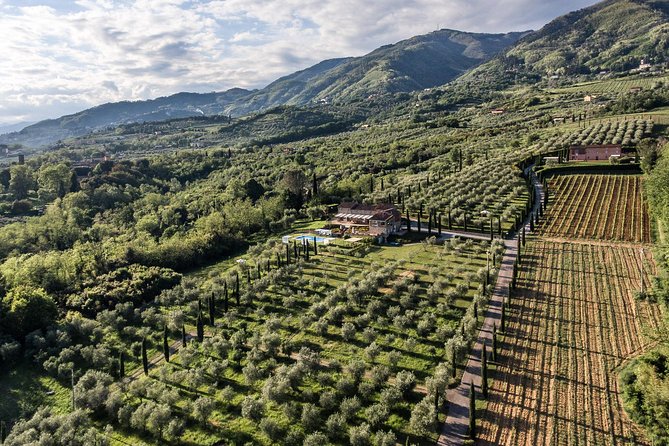
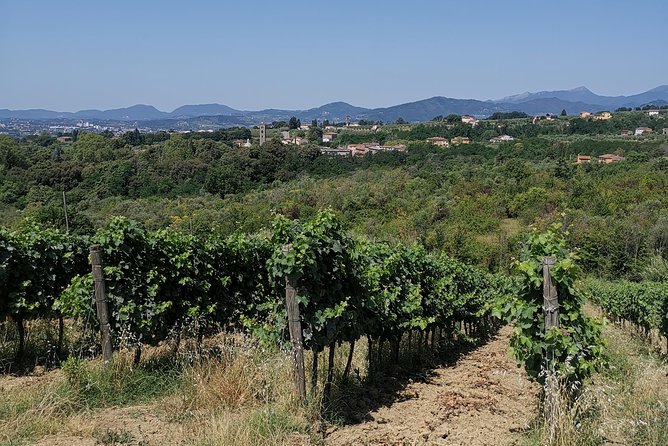
- A short walk with wide views: The grounds, vineyards, olive trees, gardens, and courtyard help explain how the farm fits into the surrounding countryside.
- Friendly English-speaking hosts: Antonella and Barbara receive repeated praise for clear explanations, warmth, and practical tips about Italian food.
- Small-group setting: The experience is advertised for no more than 10 people, while the official maximum is 12.
- A useful Lucca break: The farm sits at Via di Piaggiori Basso 123 in Capannori, outside the city center, so plan transportation carefully.
- Organic farming is part of the appeal: The farm produces organic wine and olive oil, an important detail if responsible agriculture matters to you.
Arriving from Lucca to the farm
The meeting point is Via di Piaggiori Basso 123, 55012 Capannori LU, Italy. This is not a walk-up tasting room inside Lucca’s historic center. You need to arrange your own way there, and transportation can be the least tidy part of the experience.
Several people had trouble finding taxis in the Lucca area, particularly for the return trip. In one case, the farm helped arrange a minivan back to the train station outside Lucca’s walls. Another group paid 30 euros for a driver on the way out and 45 euros for a minivan back. These amounts are not part of the tour price, but they show why you should sort out transport before setting off.
If you are traveling with several people, a private driver or shared taxi can make the trip much easier. The tasting itself is reasonably priced at $43.25, but the total cost rises once you add transport. For a couple, the convenience of a prearranged ride may be worth more than trying to find a taxi after wine tasting.
More Wine Tours around Italy:
- Sorrento Farm and Food Experience including Olive Oil, Limoncello, Wine tasting
★ 5.0 · 2,524 reviews - Sorrento: Pizza Lesson, Wine, and Limoncello at a Local Farm
★ 5.0 · 1,513 reviews - Pizza School with Wine and Limoncello Tasting in a Local Farm
★ 5.0 · 845 reviews
The short walk through vineyards and olive trees
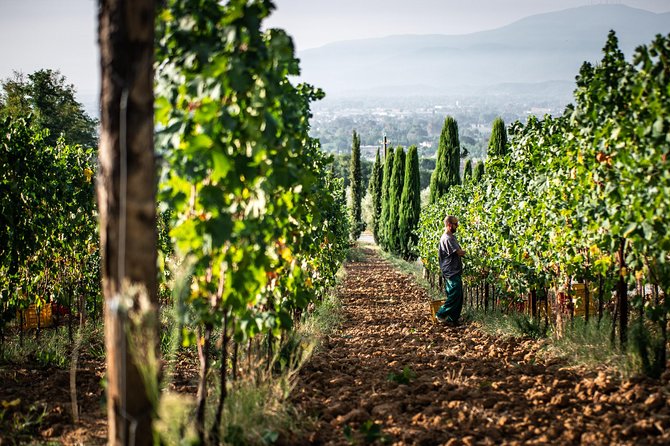
The visit begins with a short walk around the property. The goal is not strenuous hiking. It is a quick introduction to the farm, its plants, and the setting around it.
You may see vineyards, olive trees, gardens, orchards, and other crops such as fava beans. The walk gives the tasting a useful sense of place. Wine and oil are not presented as anonymous products from a shop shelf. You can connect them to the vines, trees, soil, and family work around you.
The walk is also where the farm’s history and methods come into the conversation. One particularly warm account describes meeting a third-generation owner and hearing about the family connection behind the wines. That kind of personal link is valuable. A tasting becomes more memorable when you understand who tends the land and how the products reached your glass and plate.
Keep your expectations modest about the walking section. The official description calls it short, and one scheduled visit did not include it because the farm was very busy. If walking around the property is the main reason you are booking, ask about the planned format before you go. The farm setting remains attractive, but the tour is not a long agricultural study.
The panoramic tasting room
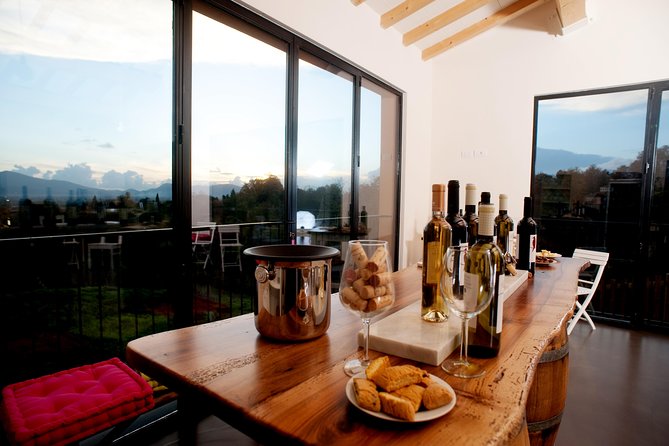
After the walk, the group moves to a panoramic room or terrace with broad views over the surrounding area. This is one of the strongest parts of the experience. The setting gives you room to slow down, enjoy the food, and look beyond the tasting table.
The room is described as clean and comfortable, with a covered patio that helps on hot or humid days. That shade matters in Tuscany, where a beautiful outdoor setting can become uncomfortable under the midday sun. You can enjoy the view without sitting directly in the heat.
The group size should also help. The experience is promoted as a small-group visit for no more than 10 people, although the stated maximum is 12. That slight difference is worth noting. You should expect an intimate format, but not assume you will always receive a private tasting. One lucky couple or small group may have the host almost entirely to themselves, while a full departure can feel more like a social tasting.
The hosts are a major strength. Antonella is praised for being friendly, clear, and easy to understand in English. Barbara receives similar praise for her warmth and explanations of the farm, wine, olive oil, and local traditions. Their approach seems relaxed rather than formal, which suits a family-run agricultural visit.
Five wines, olive oil, bread, and cheese
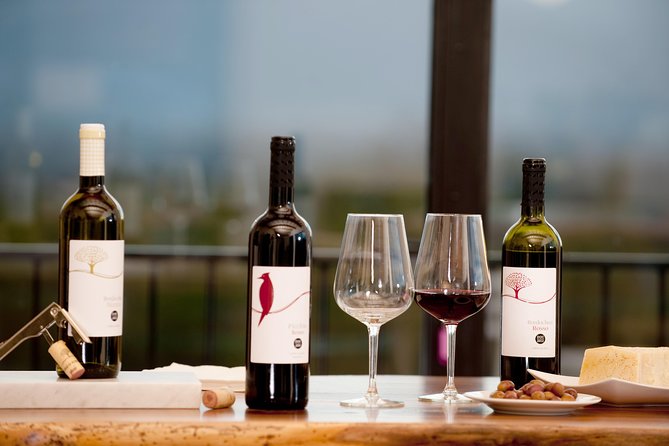
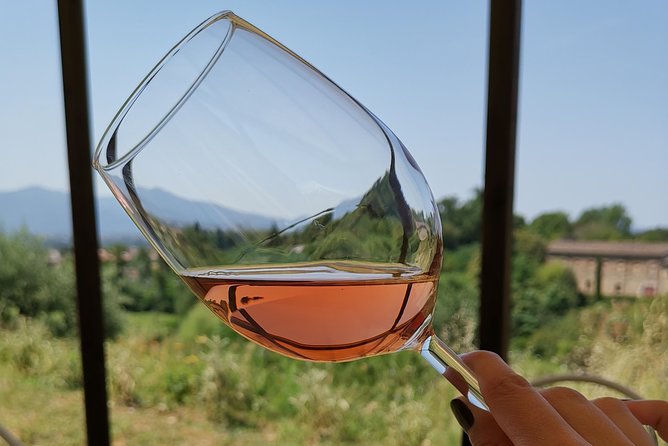
The tasting normally includes five wines and one olive oil. Wine is therefore the main event, while the olive oil is an important but smaller part of the program.
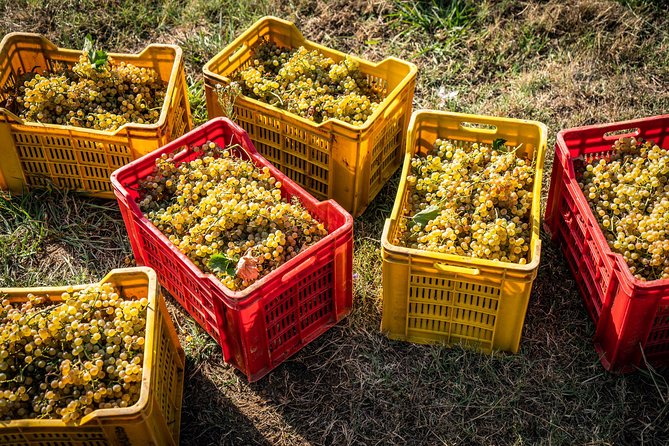
The wines are introduced with an explanation of production and the farm’s methods. You can expect to learn how grapes and olives are handled, along with some background on the region and the family operation. The precise wines served may vary, so do not book this expecting a fixed list of labels.
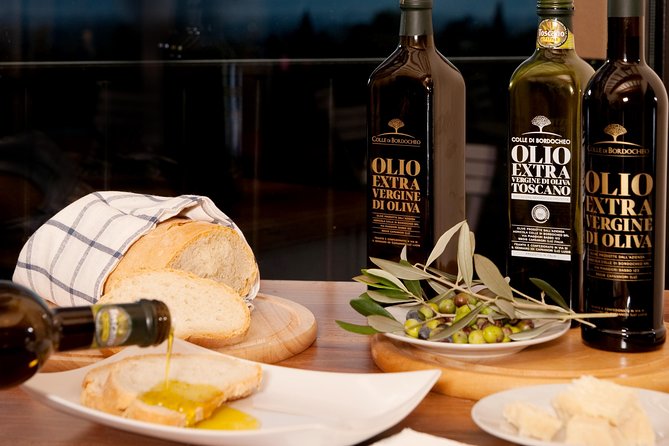
The food makes the tasting feel more like lunch than a technical sampling. Bread, cheeses, bruschetta, and other local snacks accompany the pours. The simple combination works well: bread gives you a neutral base, cheese adds salt and texture, and bruschetta turns the tasting into a proper light meal.
The included food is an important part of the price. If you paid $43.25 only for five small wine pours and one oil sample, the value would be less convincing. With food, a farm walk, instruction, and a scenic setting included, the cost becomes fair for a short rural experience.
Several accounts single out the olive oil as especially good, even calling it the best tasted during an Italian trip. That praise should encourage you to pay attention during the oil sample. Smell it first, taste it on bread, and ask questions about harvesting and storage. You will get more from the experience if you treat the oil as a serious tasting rather than just a condiment for lunch.
Still, the olive oil portion has limits. One person wanted more detail about the production process. If you are specifically interested in pressing, filtering, storage, and harvest timing, this visit may leave you wanting a longer specialist tour. The program is best understood as a combined wine tasting with an olive oil introduction.
More Food and Drink Tours around Italy:
- Authentic Farm Tour with Pizza, Cheese, Wine & Limoncello Tasting
★ 5.0 · 698 reviews - Sorrento: Farm Tour with Cheese Tasting & Pizza Making Class
★ 5.0 · 503 reviews - Alghero: Wine and Olive Oil Tasting at a Local Farm
★ 4.8 · 294 reviews - Florence Sunset Food Tour with Wine & Dine at a Tuscan farmhouse
★ 5.0 · 194 reviews
What you learn about Tuscan production
The educational side is friendly and practical. The hosts explain the stages of wine and olive oil production, the care of grapevines and olive trees, and the traditions connected with the farm. You are not expected to know wine vocabulary before arriving.
The strongest benefit is the chance to ask questions. A good host can explain a confusing point in ordinary language, then connect it to what is in your glass. Antonella and Barbara are repeatedly praised for speaking excellent English and handling questions with patience.
You may also learn about organic farming. The farm is described as an organic winery and olive oil producer, a detail that was a welcome surprise to some people. The organic approach adds meaning to the walk, since you are not simply viewing attractive fields. You are seeing a working farm with its own methods and priorities.
The farm’s family identity also comes through. Stories about generations, vineyards, and individual bottles give the wine a personal context. That does not make every bottle automatically superior, but it makes the tasting more connected to local life than a generic retail sampling.
Do not expect a formal sommelier lecture or a technical olive oil certification class. The experience works better as an accessible introduction. You learn enough to notice differences, understand the basic process, and appreciate what is on the table.
How long does the experience really take?
The official duration is about one hour. That makes it easy to fit between other plans in Lucca, especially if you want a break from churches, museums, and the city walls.
In practice, the visit may feel longer when you include the walk, food, questions, and relaxed conversation. Some people described spending a couple of enjoyable hours at the farm. The exact pace may depend on group size, the host, and how much time is available that day.
This flexible feel is a benefit if you dislike rushed tastings. You can ask about the wines, olive oil, crops, and local dishes instead of being pushed straight from one sample to the next. It can be less helpful if you have a tightly packed schedule and need to return to Lucca at a precise time.
Book with a little breathing room around the one-hour estimate. The tasting ends back at the meeting point, so you are responsible for the return journey.
The value of the $43.25 price
At $43.25 per person, this is not the cheapest way to drink wine in Tuscany. Lucca has bars and restaurants where you can order a glass for less. That comparison misses the point, though.
Here you are paying for access to a working farm, a host who explains the products, a short walk, five wine samples, olive oil, food, and views outside the city. For a visitor who wants a compact taste of rural life, the package is solid.
The food is what makes the value work. Bread, cheese, bruschetta, and other local dishes turn the tasting into a light lunch. You are not left to search for a meal immediately afterward.
Transport can change the calculation. If you need an expensive private ride, the outing may cost considerably more than the advertised price. Families and groups can spread that cost across several people. Solo visitors should compare the total with other farm visits that include transport.
I would also consider the quality of the hosting. A warm, capable guide can make a modest tasting feel special, while a large impersonal group can make a beautiful farm feel less memorable. Here, the small-group format and personal attention are central to the value.
Who will enjoy this farm visit?
This experience suits you if you like wine, simple local food, and countryside views. It is especially useful during a stay in Lucca when you want to see something beyond the city center without giving up an entire day.
Food lovers will appreciate the pairing of wine, olive oil, bread, and cheese. First-time visitors to Tuscany may also find the explanations helpful because they connect familiar foods to farming and local custom.
It works well for couples, families, and small groups. The covered patio can be helpful on hot days, and most people can take part. Service animals are allowed.
You may want another tour if you do not drink wine. Five wines are part of the standard tasting, and the olive oil receives less attention. You may also be disappointed if you expect a long guided walk, a full olive mill demonstration, or a detailed technical lesson.
The setting is a good reason to go, but it should not be the only reason. The best experience comes when you enjoy all three parts: the farm, the food, and the conversation.
A few practical tips for a smoother visit
- Arrange transportation to and from Capannori before you arrive, especially for the return after tasting wine.
- Confirm the walking portion if seeing the vineyards and olive trees is important to you.
- Treat this as a wine-led tasting with olive oil included, not as a dedicated olive oil tour.
- Leave enough time for food and conversation beyond the stated one-hour duration.
- Ask about the organic farming methods and the family history. These details add meaning to the tasting.
- If you are visiting in hot weather, make use of the covered patio and take water seriously before the wine begins.
The activity accepts mobile tickets and is offered in English. Confirmation is sent when you book. Free cancellation is available if you cancel at least 24 hours before the start time. Changes or cancellations inside that window are not accepted for a refund.
Should you book Colle di Bordocheo?
I would book this experience if you want a friendly, small-scale taste of Tuscan farm life near Lucca. The strongest reasons are the generous food, five-wine tasting, beautiful views, organic production, and hosts such as Antonella and Barbara, who make the visit feel personal rather than scripted.
I would skip it if your priority is a long olive oil lesson or a guaranteed walking tour. The farm may be busy, and the walking portion is short by design. For most food and wine lovers, though, $43.25 is a reasonable price for a relaxed outing that combines local products with a real sense of place.
FAQ
Where does the wine and olive oil tasting take place?
It takes place at Azienda Agricola Colle di Bordocheo, at Via di Piaggiori Basso 123, 55012 Capannori LU, Italy.
How long does the experience last?
The listed duration is approximately one hour. The visit may take longer when you include the walk, food, tasting, and conversation.
How many wines and olive oils are included?
The standard tasting includes five wines and one olive oil.
Is food included in the price?
Yes. The experience includes typical local food and produce, with bread, cheeses, bruschetta, and other snacks mentioned as part of the tasting.
Is the tour offered in English?
Yes. The experience is offered in English, and the hosts are described as speaking English well.
Can I cancel for a full refund?
Yes, if you cancel at least 24 hours before the experience start time. Cancellations or changes made less than 24 hours in advance are not refunded.
Just added around Italy
- Volterra: Fresh Pasta Cooking Class at a Tuscan Farmhouse★ 5.0 · 33 reviews
- Volterra: Pizza Cooking Class in a tuscan farmhouse★ 4.6 · 11 reviews
- Visit Siena and San Gimignano with lunch at a family farm★ 5.0 · 8 reviews
- Vico Equense: Tour in the dairy “Mozzarella Experience”★ 5.0 · 19 reviews
- Turin: Meet the Monviso Alpacas at the Educational Farm with a Guide★ 5.0 · 5 reviews
- Bardolino: Garda Lake Pasta Cooking Class at the Agritourism★ 5.0 · 32 reviews
- Rialto Farmers & Fish Market Food Tour in Venice with Wine Tasting & Sightseeing★ 5.0 · 3 reviews
- Rialto Market Food Tour: Wine Tasting and Sightseeing in Venice★ 5.0 · 57 reviews
Wine Tours, farm by farm.
Sorrento Farm and Food Experience including Olive Oil, Limoncello, Wine tasting
Read our review →
Montserrat Lunch & Wine at Farmhouse Small Group from Barcelona
Read our review →
Amazing Yarra Valley Wine Tour + Chocolate, Farm Fresh, Gin
Read our review →
Pizza Lesson, Wine, and Limoncello at a Local Farm
Read our review →
Montserrat Full Day Tour with Farmhouse Lunch and Winery Visit
Read our review →
Montserrat & Winery Visit Tour with Traditional Farmhouse Lunch
Read our review →
Hidden Gems: Boutique Full-Day Wine, Farm & Lunch Tour
Read our review →Other lists this farm sits on