
REVIEW · HOI AN
Farming- Market- Lantern making- Coffee- Cooking (JHA4)
Start with soil, not a stovetop. This six-hour Hoi An experience links an organic garden, local market, lantern workshop, Vietnamese coffee, and a home cooking lesson in one friendly morning. I especially like the farm-to-table route, which lets you see herbs and produce before they reach the kitchen, and the handmade lantern gives you a useful souvenir rather than another fridge magnet. The main drawback is the early start and a schedule that may feel full if you prefer a slow morning.
The $70 price includes lunch, coffee or tea, the cooking class, lantern making, and the farm and market visits. That is fair value for a small group of no more than 10 people, but you should remember that pickup and drop-off are not included. You will need to reach 53 Dinh Tien Hoang in Hoi An and make your own way back afterward.
Key points at a glance
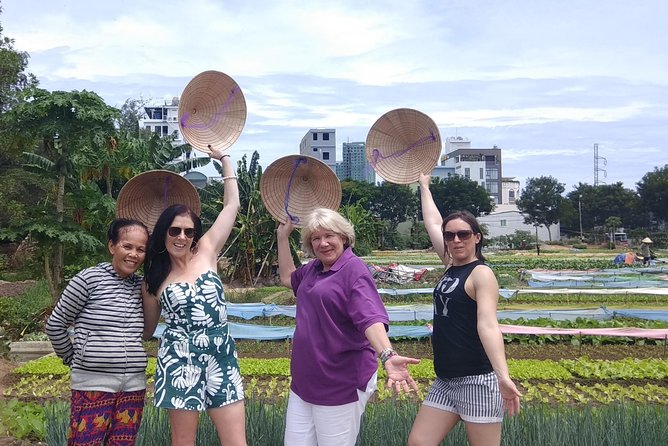
- Farm before food: Spend about 30 minutes in an organic garden with local farmers and learn how everyday Vietnamese produce is grown.
- Shop like a local: Visit a Hoi An market and help choose the fresh ingredients used later in the cooking class.
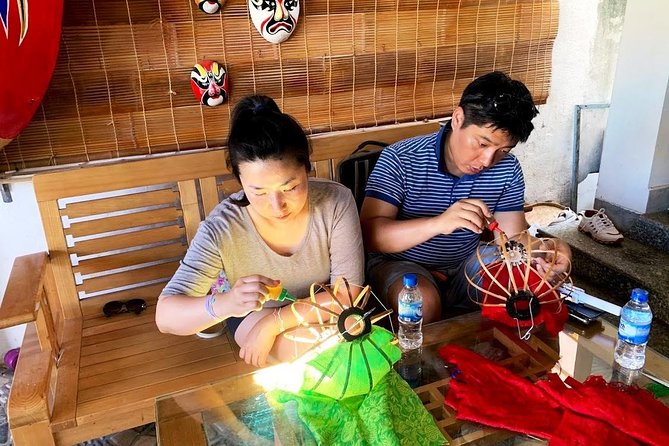
- Make Hoi An’s symbol: Build a simple lantern to take home as a Vietnamese gift.
- Coffee break included: Pause for a cup of local coffee, including the much-praised iced coffee style known as ca phe sua da.
- Cook four dishes: Use the market ingredients at Jolie’s home, then sit down to eat what you prepared.
- Small and social: The group is capped at 10, with music and guitar or piano available after lunch.
What this Hoi An morning is really about
This is not just a cooking lesson with a market stop attached. The experience is designed as a chain of ordinary local activities: farming, shopping, craftwork, coffee, conversation, and lunch.
That order matters. You first see where ingredients come from, then watch how people shop for them, then use them in a home kitchen. I find that approach more useful than simply arriving at a cooking school and being handed a bowl of premeasured vegetables.
The day also has a social side. At Jolie’s home, you have a welcome drink and hear stories about local life before cooking begins. After lunch, there may be time to play guitar or piano. You do not need to be a musician, but the option adds a relaxed, informal finish.
The experience is especially well suited to visitors who want more than Hoi An’s old streets and lantern-lit riverfront. It gives you contact with daily routines outside the historic center, while still keeping the food and craft elements easy to enjoy.
More Coffee Farm Tours around Hoi An:
- Farming- Market- Coffee- Cooking (JHA1)
★ 5.0 · 9 reviews - Award Winning Farm Tour: Coffee, Chocolate and Unique Gifts
★ 5.0 · 484 reviews - La Herradura Coffee Farm: tour in Europe’s only plantation
★ 4.8 · 430 reviews
Meeting at 53 Dinh Tien Hoang
The stated meeting point is 53 Đinh Tiên Hoàng, Sơn Phong, Hội An, and the activity ends back at that meeting point. The published start time is 8:00 a.m., while the timed schedule says to meet at 8:30 a.m., so I would confirm the exact meeting time before setting out.
That small discrepancy is worth checking. An early start is part of the appeal because markets and gardens are better in the morning, but it also means you should not leave the timing to guesswork.
Pickup and drop-off are not included. You are responsible for reaching the start point and returning to your accommodation after the class. The meeting point is near public transportation, which helps if you are staying outside the center.
The group limit is 10 people. That is a good size for a cooking lesson because you can usually see what is happening and take part without waiting behind a large crowd. It also makes the visit to a private home feel more manageable.
Thirty minutes among Hoi An’s organic gardens
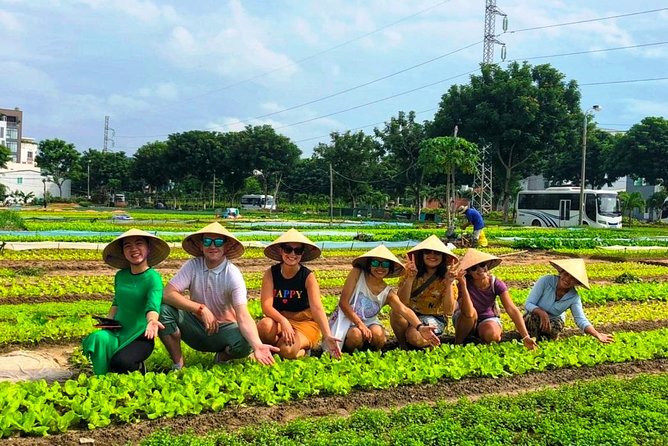
The first scheduled activity takes you to one of Hoi An’s organic gardens. You spend around 30 minutes with local farmers and learn about the practical side of Vietnamese farm life.
Do not expect a long agricultural tour. Half an hour is enough for an introduction, not a full lesson in farming. Still, this short visit gives the cooking class a useful foundation. You can see herbs and produce in their growing environment before handling them in the kitchen.
One of the best parts is the human contact. The experience focuses on real working life, not just on taking photographs of plants. Guides have introduced visitors to local people described as a grandmother, who showed how daily routines are carried out and enjoyed the chance to laugh and chat.
That kind of exchange can be simple and brief, but it is often more memorable than a long speech. You are seeing a working garden through the eyes of the people who care for it.
The garden visit also helps you notice how much Vietnamese cooking depends on fresh herbs. Later, when you sit down to cook, the ingredients are not abstract items from a recipe card. You have already seen some of them growing.
Choosing ingredients at a Hoi An market
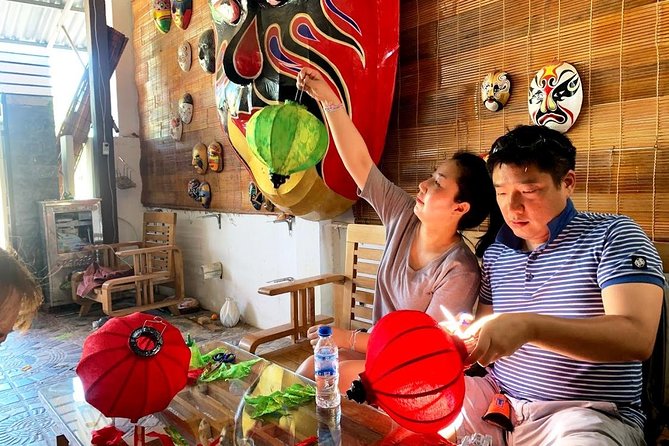
Next comes the local market, where you help buy the fresh products needed for the cooking class. This is one of the strongest parts of the experience because you are not simply shown a market from the edge of a tour group.
You learn how Vietnamese shoppers choose and buy food. The guide helps you identify the ingredients and explains their place in the meal. The exact dishes can vary, but the class is built around four typical dishes prepared from the items bought earlier.
A market is also a practical place to learn food vocabulary and local habits. You may find unfamiliar herbs, vegetables, sauces, or other products that make more sense once you see how they are selected and used.
The stop is fairly short, listed at about 30 minutes. That keeps the morning moving, but it may feel brief if you enjoy markets and want time to browse on your own. The purpose here is not a free shopping session. It is a focused ingredient run for lunch.
I like that distinction. You get a look at the market without losing half the day there, and the food you buy has an immediate purpose. If you want a long, unhurried market visit, plan another morning for it.
More Cooking Classes around Hoi An:
- Cocolocal Farm Cooking Class with market tour and basket boat
★ 5.0 · 231 reviews - Rural Hoi An Cycling, Cooking Class at Organic Farm
★ 5.0 · 72 reviews - Farming & Cooking Class in Hoi An – Small Group Tour
★ 5.0 · 71 reviews - Rural Cycle, Market Tour, Basket Boat & Organic Farm Cooking
★ 5.0 · 64 reviews
Making a lantern to take home
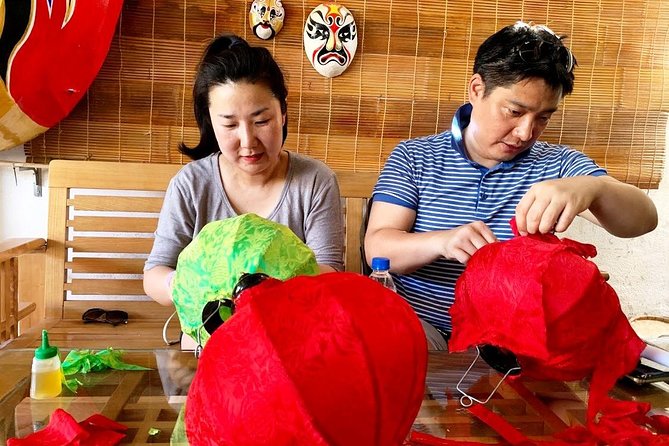
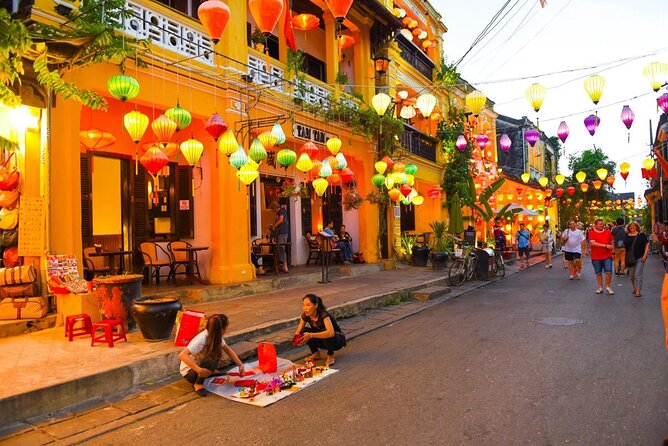
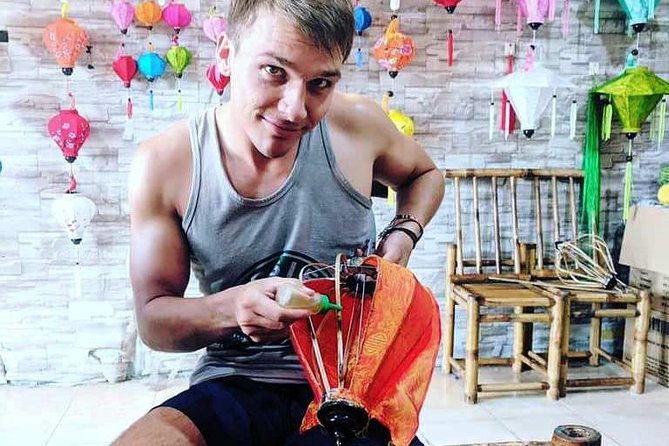
After the market, you go to a local house for lantern making. Hoi An is closely associated with colorful lanterns, so this craft session connects directly with the town you are visiting.
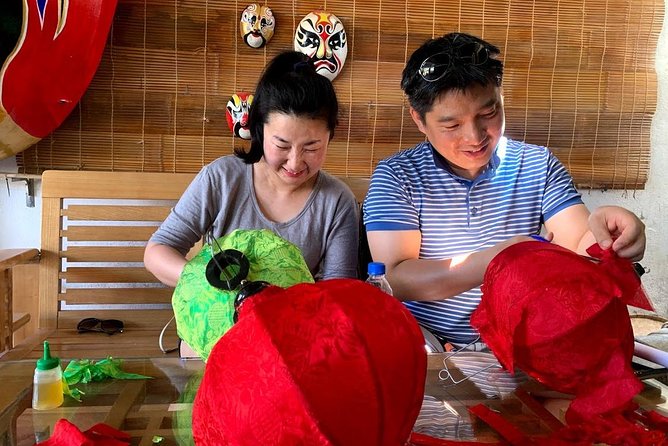
You learn to make a simple lantern and take it home as a Vietnamese gift. The class is presented as suitable for beginners, with the emphasis on making something lovely rather than producing a perfect work of art.
This is a welcome change of pace after the market. You are no longer moving through stalls or discussing ingredients. You sit down, work with your hands, and have time to talk with the group.
A coffee break is included during the lantern activity. One particularly well-liked drink is ca phe sua da, Vietnamese iced coffee with sweetened condensed milk. It is strong, sweet, and cool, though coffee and tea are both listed as included options.
The craft stop also gives the schedule a little breathing room. Cooking classes can become a rush from one task to the next. Here, you have a separate activity and a small souvenir before entering the kitchen.
Be realistic about the result. The lantern is described as simple, so expect a handmade keepsake rather than a professional-quality decoration. That is part of its charm. You made it during a morning connected to Hoi An’s everyday culture.
Welcome drinks and local stories at Jolie’s home
Around 10:30 a.m., you head to Jolie’s home for a welcome drink. This marks the shift from outdoor visits to the main cooking session.
Before the knives and chopping boards appear, Jolie shares stories about local life. That conversation matters because it gives the meal a personal setting. You are cooking in a home connected to a family and a community, not only following instructions in a commercial classroom.
The hosts and cooks have received warm praise for being friendly and patient. Names connected with the experience include Jolie, Kelly, Hannah, and Ut, although the person leading your particular day may differ. Kelly is described as a talented teacher, while Hannah and Ut are linked with especially personal introductions to local routines.
I would treat those names as useful context, not a guarantee of who will be present. The important point is the style of the experience: small-group, welcoming, and centered on conversation as much as on technique.
The home setting may also mean less polish than a formal culinary school. That is not a flaw for most people, but it is worth knowing. If you want a highly structured professional kitchen, this may feel informal. If you want a friendly look at local life, the home setting is a major advantage.
Cooking four Vietnamese dishes
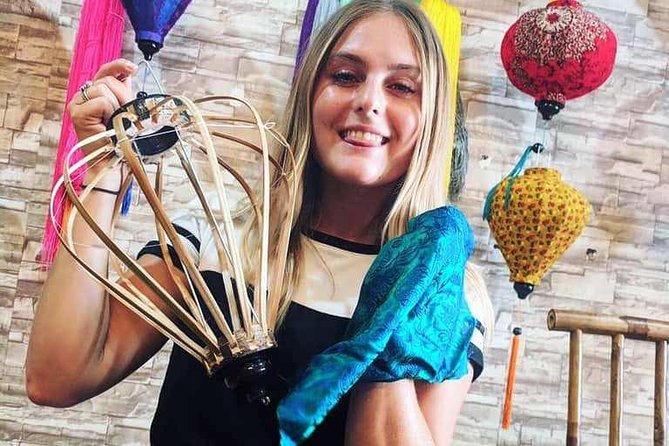
Cooking begins at about 10:45 a.m. using the ingredients purchased at the market. The class prepares four typical dishes, and lunch is included.
The strongest feature here is the full path from purchase to plate. You are involved in the food before cooking, then use the same ingredients in the kitchen, and finally eat the meal you helped prepare. That makes the lunch feel earned.
The available information does not name the four dishes, so you should not book this expecting a specific menu. It also means the class can respond to seasonal ingredients and the market selection. Vegetarians are welcome, with vegetarian ingredients provided.
That vegetarian option is important to confirm when booking or at the start of the activity. The class is not limited to meat eaters, and you should be able to take part in the same general cooking experience with suitable ingredients.
The timing gives you roughly two and a half hours from arriving at the home to eating lunch. That should allow time for demonstrations, preparation, cooking, and conversation, though the pace will depend on the group.
I like classes that let you do the work rather than watch a chef perform. This one is presented as hands-on, but the exact amount of individual cooking time can vary when up to 10 people share a kitchen. If you want to master advanced knife skills or several complex techniques, this is probably not the right format. If you want an approachable introduction to Vietnamese home cooking, it fits well.
Eating what you prepared at 1:15 p.m.
Lunch is scheduled for about 1:15 p.m. You sit down to enjoy the dishes you cooked yourself, with coffee or tea included.
The timing works well after an early start. You will have been active for several hours, and the meal provides a clear payoff. It also gives you time to compare results with the rest of the group and ask questions about flavors or methods.
The lunch is not simply an add-on. It is the main reason the earlier stops connect so neatly. You have seen the farm, selected the food, learned about local life, and spent time preparing the dishes. The finished meal brings those pieces together.
Keep your expectations practical. Four dishes does not mean a gourmet banquet with endless courses. It means a satisfying meal built around typical local food and your own participation. The value comes from the complete experience, not only the amount of food on the table.
Music, a flexible ending, and the return
After lunch, you may play guitar if you can, and piano or guitar are available for an informal musical moment. This detail will matter more to some people than others.
If you enjoy group activities, it is a cheerful way to end the day. If you are ready to leave after lunch, the schedule suggests the return to your accommodation is on your own, so you are not locked into a long final performance.
The listed itinerary also names Chuc Thanh Pagoda, Hoi An Ancient Town, and Hoi An Night Market. The detailed schedule, however, concentrates on the organic garden, market, lantern workshop, coffee stop, Jolie’s home, and cooking session. I would ask the operator how those three listed places fit into your particular date rather than assume you will receive separate guided visits to all of them.
That clarification is especially important because the activity is only about six hours long. The garden, market, craft session, and cooking class already fill most of the morning and early afternoon.
Is $70 a fair price?
At $70 per person, the experience is not the cheapest cooking class in Hoi An. But it includes much more than a kitchen lesson: the garden visit, market shopping, lantern making, coffee or tea, lunch, local stories, and a small-group format.
I think the price is fair if you value variety and personal contact. You are paying for a connected half-day experience, not just a recipe demonstration. The lantern and lunch add tangible value, while the farm and market visits give you context that a standard class may skip.
The value is weaker if your only goal is to learn Vietnamese recipes. In that case, a shorter cooking class may cost less and leave you more time for Hoi An’s old town.
There is also a $9 per person surcharge on public holidays, payable on site. Pickup and drop-off cost extra in the sense that neither is included, so factor in your own transport when comparing prices.
Who should book this experience?
I would recommend it to couples, families, solo visitors, and small groups who enjoy trying several activities in one day. It should suit anyone who likes food but also wants a glimpse of farming, shopping, craftwork, and home life.
Vegetarians are welcome, making the class useful for mixed groups with different diets. The lantern workshop also gives families a hands-on activity that does not depend on cooking skill.
The experience may be less suitable if you dislike early starts, prefer a slow and private morning, or want a clearly fixed menu. The six-hour program has several parts, so you will spend much of the morning moving from one activity to another.
The group cap of 10 keeps the experience from becoming a large bus outing, but it is still a shared activity. You should expect conversation and cooperation rather than complete independence.
Free cancellation is available up to 24 hours before the start time. Changes or cancellations inside that period are not refunded, and poor weather or a failure to reach the minimum group size can lead to a new date, another experience, or a full refund.
Should you book the farm, market, and cooking day?
Book it if you want your Hoi An food lesson to begin before the kitchen. The garden, market, lantern, coffee, and home visit make this more personal and varied than a basic cooking class, and the small group keeps the day manageable.
I would confirm the start time, ask how the named pagoda and night market stops fit the detailed schedule, and check the menu if specific dishes matter to you. If you are happy with a flexible menu and an early, active morning, $70 buys a generous slice of local life, with lunch and a lantern to carry away.
FAQ
Where does the experience start?
It starts at 53 Đinh Tiên Hoàng, Sơn Phong, Hội An, Quảng Nam 51308, Vietnam. The activity ends back at the meeting point.
What time does the tour begin?
The published start time is 8:00 a.m., while the detailed schedule gives an 8:30 a.m. meetup. Confirm the exact time with the provider before the day of the experience.
How long does the experience last?
The experience lasts approximately six hours. Lunch is scheduled for about 1:15 p.m., followed by music and the return to the meeting point.
Are vegetarian ingredients available?
Yes. Vegetarians are welcome, and vegetarian ingredients are provided.
Is transportation included?
Pickup and drop-off are not included. You must reach the meeting point yourself and return to your accommodation independently.
Can I cancel for a full refund?
Yes, if you cancel at least 24 hours before the local start time. Cancellations or changes made less than 24 hours in advance are not refunded.
More Market Tours around Hoi An
- Cooking Class with Tra Que Eco Farm & Local Market Discovery
★ 5.0 · 5 reviews - Farming – Local Market – Cooking Class In Tra Que Vegetable
★ 5.0 · 2 reviews - Cooking Class and Lunch at a Tuscan Farmhouse with Local Market Tour from Florence
★ 5.0 · 4,831 reviews - Chiang Mai: Authentic Cooking Class with Market & Farm Visit
★ 4.9 · 4,546 reviews
Just added around Hoi An
- Tra Que Village Vegetable Farm Experience by Bike★ 5.0 · 2 reviews
- Experience Buffalo Ride and Farmer in Hoi An★ 5.0 · 3 reviews
- Sunset photo tour with the farmers★ 4.5 · 7 reviews
- Tra Que Village Cycling And Farming★ 5.0 · 15 reviews
- Hoi An Rural Life And Cooking At Organic Farm★ 5.0 · 7 reviews
- Hoi An Rice Farm Tour and Buffalo Riding with Local Home Meal★ 5.0 · 6 reviews
- Hoi An Farming And Fishing Life★ 5.0 · 45 reviews
- Hoi An Home Hosted Meal in Rice Farmer Home★ 5.0 · 3 reviews
Coffee Farm Tours, farm by farm.
Award Winning Farm Tour: Coffee, Chocolate and Unique Gifts
Read our review →
La Herradura Coffee Farm: tour in Europe’s only plantation
Read our review →

Small-Group Big Island Tour: Hawaii Volcanoes National Park and Kona Coffee Farm
Read our review →
Medellín Coffee Farm Tour with Trolley and Cable Car Ride
Read our review →
Private Cocora Valley, Salento & Coffee Farm Tour
Read our review →
Liamuiga Natural Farm Tour – St.Kitts’ Coffee Farm
Read our review →
Other lists this farm sits on